
Did you know the average American throws away about 4.4 pounds of trash daily? A lot of this waste comes from our bathrooms. Starting a zero waste lifestyle can greatly help our planet.
Starting with a zero-waste bathroom makeover is a smart move. By using reusable items and picking products with little packaging, you can cut down on waste. This guide will show you how to make your bathroom more eco-friendly. You’ll learn the benefits and get practical tips to keep your space green.
Key Takeaways
- Simple changes can make a significant impact on reducing bathroom waste.
- Adopting reusable products is a key step towards a zero-waste bathroom.
- Choosing products with minimal packaging reduces environmental impact.
- A zero-waste bathroom makeover is a practical step towards a sustainable lifestyle.
- Maintaining an eco-friendly bathroom is easier with the right strategies.
Understanding the Concept of Zero-Waste Living
My journey to a sustainable lifestyle started with learning about zero-waste living. It changed how I think about using things and reduced my impact on the environment.
What Does Zero-Waste Mean?
Zero-waste living means trying to send less waste to landfills. It’s about using less, reusing what you can, and recycling or composting the rest. For me, it meant changing my daily habits, like finding eco-friendly bathroom products.
Benefits of Going Zero-Waste
Living zero-waste has many benefits. It helps reduce pollution and makes you think more about what you buy. By following sustainable living tips, I’ve saved money and live better.
Some key benefits are:
- Less waste in landfills
- A smaller carbon footprint
- Less money spent
- A cleaner, less cluttered home
For tips on making your bathroom zero-waste, check out this resource. It helped me a lot.
My Journey to a Sustainable Lifestyle
Starting my zero-waste journey was a big change. It was hard, but the benefits are huge. I’ve learned to love the simple things and how sustainable living helps the planet.
This journey taught me to be patient and keep trying. It’s about making small changes and being open to new ways of living. I’m excited to share more sustainable living tips with you.
Assessing My Current Bathroom Waste
Starting a zero-waste bathroom journey means first looking at our daily waste. This step is key to spotting where we can cut down. It helps us make smart choices to lessen plastic waste.
Identifying Single-Use Products
First, we need to find out which products we use once and then throw away. These include plastic toothbrushes, disposable razors, and travel toiletries.
- Take stock of your bathroom products.
- Note down products used daily and their packaging.
- Identify products with excessive or non-recyclable packaging.
Tracking My Waste for a Week
I tracked my bathroom waste for a week to understand better. I saved all packaging, empty containers, and disposable items.
This exercise showed me how much waste I produce in just a week. It was shocking to see how much waste piles up.
Recognizing Areas for Improvement
After seeing my waste, I knew where to make changes. I started using sustainable alternatives and reducing packaging waste.
Key areas to focus on:
- Switching to reusable or biodegradable products.
- Choosing products with minimal or recyclable packaging.
- Avoiding products with microbeads or other harmful ingredients.
By making these changes, I greatly reduced my bathroom waste. This move helped me live more sustainably.
Choosing Sustainable Bathroom Products
Starting my zero-waste journey made me see how key it is to pick eco-friendly bathroom items. It’s not just about cutting down on trash. It’s about living in a way that’s better for our planet.
Eco-Friendly Toiletries
I began by switching to green toiletries. I ditched regular toothpaste tubes for toothpaste tablets or toothpaste in recyclable containers. I also chose natural soaps and shampoos without harsh chemicals. They come in minimal or biodegradable packaging.
The Power of Refillable Options
Refillable items have really changed my bathroom. I now use refillable containers for soap, lotion, and toothpaste. This move cuts down on plastic waste and saves money over time. Brands that offer refills help me stick to my zero-waste goals.
Brands I Love for Zero-Waste
Some brands are now essential in my zero-waste bathroom. I’m a big fan of Lush for their products with little packaging. And I appreciate The Body Shop for their eco-friendly and cruelty-free products. These brands have made my switch to zero-waste easier and more fun.
Choosing green bathroom products has not only lessened my environmental impact. It’s also taught me a more thoughtful way to care for myself. This journey keeps growing, with new finds and ideas making sustainable living simpler.
Ditching Plastic: A Step-By-Step Guide
At first, getting rid of plastic in my bathroom felt overwhelming. But, it ended up being freeing. I found that small changes can make a big difference in cutting down plastic waste.
Start by looking at your bathroom products. See where you can replace plastic with something better.
Alternatives to Plastic Bottles
I replaced plastic bottles with better options. Here are a few:
- Refillable containers: Many brands offer refill options for shampoo, conditioner, and body wash.
- Bar soaps and shampoos: Solid bars don’t need plastic bottles and are more concentrated.
- Glass containers: Glass jars are great for lotion and oil instead of plastic.
DIY Solutions for Common Products
Making your own bathroom products is fun and helps reduce waste. Here are some easy recipes:
- Natural face mask: Mix honey, yogurt, and oatmeal for a soothing mask.
- Toothpaste: Combine baking soda, coconut oil, and essential oils for a natural toothpaste.
- Body scrub: Use sugar, olive oil, and lemon juice for a nourishing scrub.
DIY products not only cut down on plastic but also let you choose what goes on your skin.
My Favorite Plastic-Free Brands
While DIY is great, sometimes it’s easier to use ready-made products. Here are my top picks for plastic-free brands:
- Lush: Known for their solid shampoo bars and conditioners.
- The Soap Kitchen: Offers soap-making supplies and natural ingredients.
- Ethique: Provides eco-friendly, plastic-free bathroom products.
Using these alternatives, DIY recipes, and plastic-free brands has made my bathroom more sustainable.
Transitioning from Disposable to Reusable
Starting my zero-waste bathroom journey, I learned the key was switching to reusable products. It wasn’t just about replacing items. It was about changing my lifestyle for the planet’s sake.
Finding the Right Reusable Products
I first identified my most used disposable bathroom items. I swapped disposable cotton pads for reusable cotton rounds and plastic razors for safety razors. I also ditched paper towels for reusable cloths.
Choosing the right reusable products was important. I looked for durable, easy-to-clean items made from sustainable materials. Bamboo and stainless steel were top choices for their eco-friendliness and longevity.
Tips for Making the Switch
Switching to reusable products takes planning and dedication. Here are some tips that helped me:
- Start small: Begin with one or two products and gradually make your way through your bathroom.
- Research: Look for products made from sustainable materials that are easy to clean and durable.
- Invest in quality: While reusable products might be more expensive upfront, they save money in the long run.
Managing Laundry for Reusables
One worry about reusable products is the extra laundry. I created a simple routine to manage this:
| Product | Washing Frequency | Drying Method |
|---|---|---|
| Reusable Cotton Rounds | After every use | Air dry |
| Bamboo Cloths | Weekly | Machine dry on low |
| Menstrual Cloth | After every use | Air dry or machine dry on low |
This routine helped me keep my reusable products clean and in good shape.
Changing to a zero-waste bathroom is a journey. Every small change helps. By using reusable products and managing them well, we can greatly reduce waste and help the planet.
Organizing My Zero-Waste Bathroom
My journey towards a sustainable lifestyle led me to focus on my bathroom. A tidy space looks better and helps me stick to my zero-waste lifestyle. It makes upkeep simpler.
Storage Tips for Minimalism
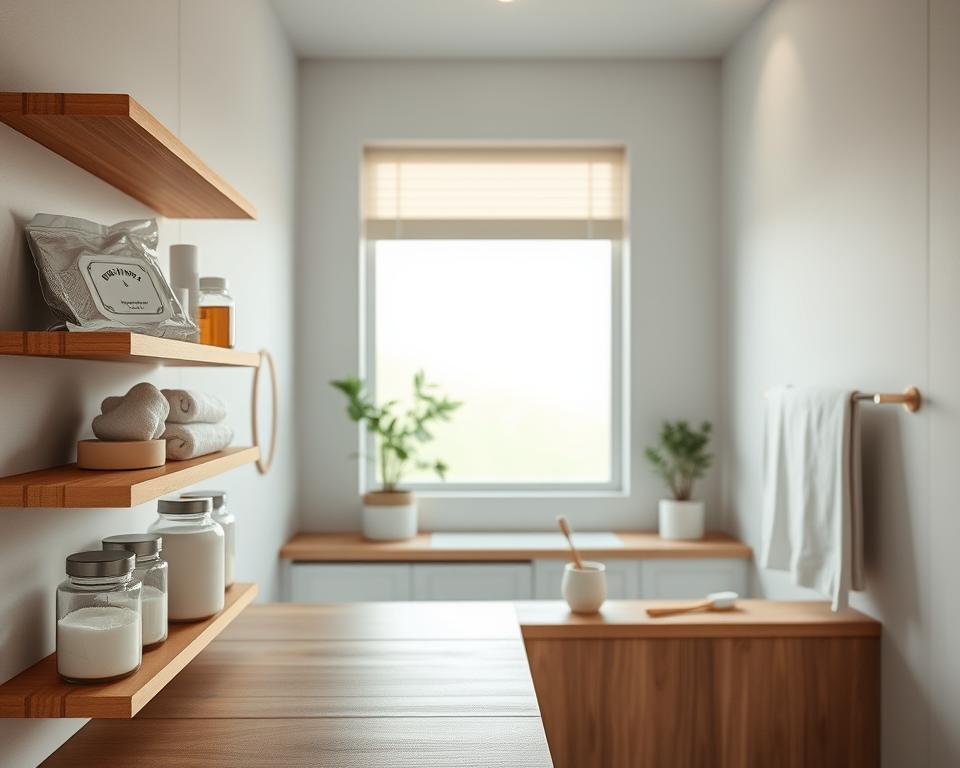
To simplify my bathroom, I chose multi-functional furniture and kept only the basics. I swapped a big cabinet for a smaller shelving unit. This move cut down on clutter and made cleaning a breeze.
Using glass jars for cotton balls, Q-tips, and other small items is a top tip. It keeps things tidy and in sight.
Using Containers and Baskets
Containers and baskets have been a big help in organizing my bathroom. Wicker baskets hold towels and robes, keeping them off the floor. For smaller items, I use glass or bamboo containers for a stylish touch.
“The key to a well-organized bathroom is not just about the containers you use, but also about the habit of putting things back in their place,” a principle that has guided my daily routine.
Creating a Functional Space
Functionality is key in my zero-waste bathroom. I made sure each item has its spot, making it easy to find what I need. This prevents clutter from piling up.
By following these tips, I’ve made my bathroom more organized and strengthened my zero-waste lifestyle. It’s a continuous effort, but it’s made a big impact on my daily life.
Composting Bathroom Waste
Composting bathroom waste has been a game-changer for me. It’s cut down my landfill waste a lot. Plus, it makes a great fertilizer for my garden.
Compostable Items
Not all bathroom items can go into the compost. But, many can. Here are some examples:
- Toilet paper rolls and paper products
- Cotton balls and swabs (without plastic sticks)
- Hair and nail clippings
- Natural fiber towels and cloths
But, don’t compost things that aren’t biodegradable. This includes plastic, synthetic fibers, and some personal care items.
Setting Up a Compost Bin
To compost in your bathroom, you need a special bin. You can buy one or use something you already have. Make sure it has a lid to keep smells in and pests out.
Put your compost bin under the sink or in a corner. It should be easy to reach. For tips on making a zero-waste bathroom, check out this guide.
Benefits of Composting Bathroom Waste
Composting bathroom waste has many perks. It cuts down on landfill waste and greenhouse gas emissions. It also makes a compost that’s good for plants.
This practice helps you live more sustainably. It turns waste into something useful.
Key benefits include:
- Reducing landfill waste
- Creating nutrient-rich compost
- Decreasing greenhouse gas emissions
As I keep working towards a zero-waste life, composting bathroom waste is key. It helps me live more sustainably.
Eco-Friendly Cleaning Habits
As I went on my zero-waste journey, I saw how important eco-friendly cleaning is. Cleaning products can harm our environment, from chemicals to waste. By picking the right products and methods, we can keep our bathrooms clean and protect the planet.
Choosing Green Cleaning Products
I’ve learned to choose cleaning products that are good for the planet. Look for products with natural ingredients, little packaging, and no harsh chemicals. Brands that offer refills and use eco-friendly packaging are my favorites.
Key considerations when choosing green cleaning products:
- Natural ingredients
- Minimal or biodegradable packaging
- Free from harsh chemicals like bleach or ammonia
DIY Cleaning Solutions I Use
Discovering DIY cleaning solutions has been a highlight of my journey. They save money, cut down on waste, and avoid harsh chemicals. Simple recipes mix baking soda, vinegar, and essential oils for effective cleaners.
A simple DIY all-purpose cleaner:
- 1 cup water
- 1/2 cup white vinegar
- 2 tablespoons baking soda
- 10 drops of your preferred essential oil (optional)
Mix these in a spray bottle and shake. It’s perfect for cleaning surfaces and smells great.
Maintaining a Clean and Green Bathroom
Keeping a bathroom clean and green is about making sustainable habits. Use eco-friendly products, save water, and choose wisely. These actions make our bathrooms healthier.
Tips for a cleaner, greener bathroom:
- Clean regularly to prevent grime buildup.
- Use a microfiber cloth to reduce water and chemical usage.
- Opt for a water-efficient toilet and fix leaks promptly.
By adopting these eco-friendly habits, we help the planet and make our homes safer and more sustainable.
Educating Myself on Recycling
As I keep working towards zero waste, learning about recycling is key. Recycling helps a lot in reducing plastic waste. It’s important to know how to recycle right.
I first had to figure out what can be recycled. Knowing this helps me choose better products and throw things away correctly.
What Can Actually Be Recycled?
Not all “recyclable” items actually get recycled. It’s important to check your local recycling rules. These can change a lot from place to place.
Here are some common things that can be recycled:
- Plastic bottles and containers (check the resin identification code)
- Glass bottles and jars
- Newspaper and cardboard
- Certain types of plastic bags and wrapping (at specific stores)
Local Recycling Resources
Looking for local recycling spots has been a big help. I search for community recycling centers, places for hazardous waste, and curbside pickup.
Some good resources include:
- Local government websites
- Recycling apps
- Community newsletters
How to Dispose of Products Responsibly
It’s not just about recycling. We also need to know how to handle hazardous waste, electronic waste, and other things that can’t be recycled.
| Waste Type | Disposal Method |
|---|---|
| Hazardous Waste (batteries, chemicals) | Special collection events or facilities |
| Electronic Waste | Manufacturer take-back programs or e-waste recycling centers |
| Non-Recyclable Plastics | Landfill or waste-to-energy facilities |
By learning about recycling and how to dispose of things properly, I’m helping the environment. I’m also getting closer to my zero-waste goals.
Embracing Minimalism in My Bathroom
Adopting minimalist principles in my bathroom was a big change for me. It made my space simpler and reduced waste. Plus, it made my bathroom feel more calm and peaceful.
The Art of Decluttering
Decluttering was the first step for me. I sorted through my toiletries and got rid of expired, unused, or unnecessary items. This was very freeing, as it cleared my space and routine.
To declutter well, I followed these steps:
- Empty out all cabinets and drawers.
- Sort items into categories (e.g., skincare, haircare, oral care).
- Purge any expired or unused products.
- Organize remaining items in a way that makes them easily accessible.
My Favorite Minimalist Brands
As I moved towards a minimalist bathroom, I found some great brands. Some of my favorites are:
- Lush for their minimal packaging and effective products.
- The Body Shop for their commitment to sustainability and natural ingredients.
- Bamboo Toothbrush for eco-friendly oral care options.
These brands helped me cut down on waste. They also gave me quality products that I love using.
“Simplicity is the ultimate form of sophistication.” – Leonardo da Vinci
How to Maintain Minimalism
Keeping my bathroom minimalist takes regular effort and sticking to my values. Here are some tips that help:
- Regularly declutter to prevent the buildup of unnecessary items.
- Be mindful of purchases and consider whether they align with my minimalist goals.
- Keep surfaces clear and tidy to maintain a sense of calm.
By embracing minimalism, I’ve not only reduced my environmental footprint. I’ve also made my bathroom a peaceful and welcoming space.
Engaging My Family in Zero-Waste Practices
Getting my family involved in our zero-waste journey has brought us closer. It also made our efforts more effective. As we turned our bathroom into a waste-free bathroom, it was clear that family participation was key.
Tips for Encouraging Participation
To get my family on board, I explained the benefits of living zero-waste. I showed them how it helps our planet. I also let them help pick the eco-friendly products we use.
Making the switch fun was a smart move. We turned it into a game, seeing who could find the best DIY solutions for our bathroom. This made everyone excited to participate and work together.
Sharing My Journey with Others
Sharing our journey with others has been a big motivator. By talking about our ups and downs, my family is more committed to our goals. We share tips and ideas, creating a supportive environment.
Also, sharing our story with friends and family has helped spread the word. Seeing others inspired to make changes in their homes is rewarding.
Celebrating Small Wins Together
Celebrating our small victories has been important. It keeps us motivated and encouraged. Whether it’s using refillable toiletry containers or reducing plastic waste, we celebrate our successes.
This practice has strengthened our commitment to a waste-free bathroom. It has also brought us closer as a family. It shows that every step we take together can make a big difference.
Tracking My Progress and Adjusting
As I keep going on my zero-waste path, it’s key to track my progress and tweak things as needed. This helps me stay focused and find ways to get better. I add valuable green living tips to my everyday life.
Setting Realistic Goals
It’s important to set goals that are doable. I aim for small changes that I can keep up with, not big changes all at once. This method is a big part of living sustainably.
Reflecting on My Zero-Waste Journey
Regularly looking back helps me see what’s working and what’s not. I can then make smart choices about how to keep moving forward. I look for new green living ideas and strategies.
Future Challenges and Opportunities
Looking ahead, I’m ready for new challenges and chances to cut down on waste. By sticking to my zero-waste goals and using sustainable living tips, I’m sure I can keep making a difference.