
Did you know the average American household wastes thousands of gallons of water each year? I’m all about green living tips and have seen how small changes can make a big difference. One simple way to start is by paying more attention to how much water we use.
By making a few easy changes, we can significantly reduce our water waste. For example, fixing leaky faucets and using low-flow fixtures can help a lot. I’ll share my best tips on how to cut down on water waste and save money too.
Key Takeaways
- Simple changes can significantly reduce household water waste.
- Fixing leaky faucets is an easy way to save water.
- Installing low-flow fixtures can make a big difference.
- Being mindful of our daily water usage is key.
- Reducing water waste can also help save money.
Understanding Water Waste and Its Impact
Water conservation begins with knowing the problem of water waste. It affects our planet deeply. Simple changes can make a big difference in reducing waste.
What Is Water Waste?
Water waste means using water in ways that are unnecessary or inefficient. This can happen with leaky faucets, overwatering plants, or old appliances that use too much water.
Reasons to Reduce Water Use
Reducing water use helps the environment and saves money. It lowers water bills and supports a sustainable future.
- Save money on utility bills
- Help protect local water resources
- Reduce the energy used to treat and transport water
Environmental Impacts of Water Waste
Water waste has many environmental impacts. It can deplete water sources, harm aquatic life, and increase energy use. Saving water helps our planet.
Knowing the causes and effects of water waste is key. It helps us start reducing water use and promoting conservation.
Simple Changes in the Kitchen
Reducing water waste in the kitchen is easy and affordable. A few simple changes can make a big difference. With eco-friendly plumbing solutions getting easier to find, it’s simpler to save water and money.
Fixing Leaks in Faucets and Pipes
Fixing leaks in faucets and pipes is a simple way to save water. A dripping faucet can waste up to 20 gallons a day. Check your kitchen for leaks often and fix them fast. Using eco-friendly plumbing solutions like leak detectors can help catch problems early.
The Environmental Protection Agency (EPA) says a leaky faucet can waste over 3,000 gallons a year. This shows how important it is to fix leaks quickly.
Efficient Dishwashing Tips
Dishwashing uses a lot of water every day. Here are some tips to save water:
- Scrape off food instead of rinsing dishes before washing.
- Fill the sink with water instead of letting it run.
- Use a basin to rinse dishes instead of running water.
These habits can greatly reduce water used for washing dishes.
Using a Dishwasher Wisely
Dishwashers can be more water-efficient than hand washing, if used right. To save water:
- Run full loads to get the most from each cycle.
- Choose a dishwasher with a high Energy Star rating.
- Use “light wash” or “eco-mode” when you can.
The EPA says using a dishwasher can save up to 5,000 gallons a year. By using your dishwasher wisely, you can save water and have clean dishes.
Optimizing Bathroom Water Use
Making a few simple changes in the bathroom can greatly reduce water use. The bathroom is a big part of household water use. So, it’s key for saving water.
Water-Saving Toilets
Installing water-saving toilets is a great way to cut down on bathroom water use. Old toilets use a lot of water, but new ones use much less. Look for toilets with the EPA’s WaterSense label for the best water-saving options.
Here’s a comparison of water usage between traditional and low-flow toilets:
| Toilet Type | Water Usage per Flush |
|---|---|
| Traditional Toilet | 3.5 – 5 gallons |
| Low-Flow Toilet | 1.28 gallons |
Shortening Shower Times
Shorter showers also help save water. Try to keep showers under 5 minutes. Using low-flow showerheads can also cut down water use.
Tips for Water-Efficient Bathing
There are more ways to save water in the bathroom. Turn off the water while you’re soaping up. Use a showerhead with different settings to control water flow. And think about getting a shower timer.
- Turn off the water while soaping up or shampooing.
- Use a showerhead with multiple settings to control water flow.
- Consider installing a shower timer to help keep showers short.
By using these sustainable water practices and efficient water management strategies in the bathroom, you can really help save water at home.
Efficient Laundry Practices
Reducing household water waste is key. Making a few simple changes in laundry can make a big difference. This can help us use less water.
Choosing a High-Efficiency Washer
Using a high-efficiency (HE) washer is a smart move. HE washers use less water than old models. Look for the ENERGY STAR label when buying a new washer. It shows the washer meets energy standards.
Full Loads Only: A Must
Running full loads in the washer saves water. It cuts down on the number of cycles needed. Adjust the load size setting to match your load size.
Caring for Clothes to Reduce Washing
Proper care for clothes can cut down on washing. Spot clean stains instead of washing the whole garment. Wear clothes more than once before washing. Follow care labels to avoid damage.
By following these tips, we can save a lot of water. This not only helps the environment but also saves money on bills. Plus, it makes our clothes last longer.
Outdoor Water Conservation
Reducing water use at home is important, and it’s not just about indoor changes. Outdoor water use can be a big part of it, more so in warmer months. Simple steps can help cut down on outdoor water waste.
Smart Gardening Techniques
Smart gardening is key to saving water outside. Choose drought-resistant plants that need less water. Also, mulch helps keep soil moist, so you don’t have to water as often.
“The best time to plant a tree was 20 years ago. The second best time is now.” – Chinese Proverb
Getting an efficient irrigation system is also vital. Drip irrigation, for example, waters plants right at the roots. This cuts down on evaporation and runoff.
Using a Rain Barrel
Using a rain barrel is a smart move. It collects rainwater for your garden and outdoor needs. This saves water and cuts down on stormwater runoff.
- Place the rain barrel under a downspout to collect rainwater.
- Use a screen to keep debris out of the barrel.
- Connect multiple barrels together to increase storage capacity.
Timing Your Watering Schedule
Watering at the right time is important. Water in the early morning or late evening to reduce evaporation. Avoid midday watering to save water.
| Watering Time | Advantages |
|---|---|
| Early Morning | Less evaporation, prepares plants for the day |
| Late Evening | Reduces evaporation, cools the soil overnight |
| Midday | Significant water loss due to evaporation |
By using these outdoor water-saving tips, you can cut down on water use at home. It’s about making smart choices and using eco-friendly plumbing solutions for a greener future.
Install Water-Efficient Appliances
Installing water-efficient appliances is key to cutting down on household water waste. By picking the right appliances and keeping them in good shape, homes can use a lot less water.
Choosing Energy Star Appliances
Looking for the Energy Star rating is a smart move when buying appliances. Energy Star appliances use less water and energy but work just as well. For example, Energy Star dishwashers use less water than old models, which is good for the planet.
Always check for the Energy Star label when buying new appliances. It’s a quick way to know you’re saving water.
Benefits of Flow Restrictors
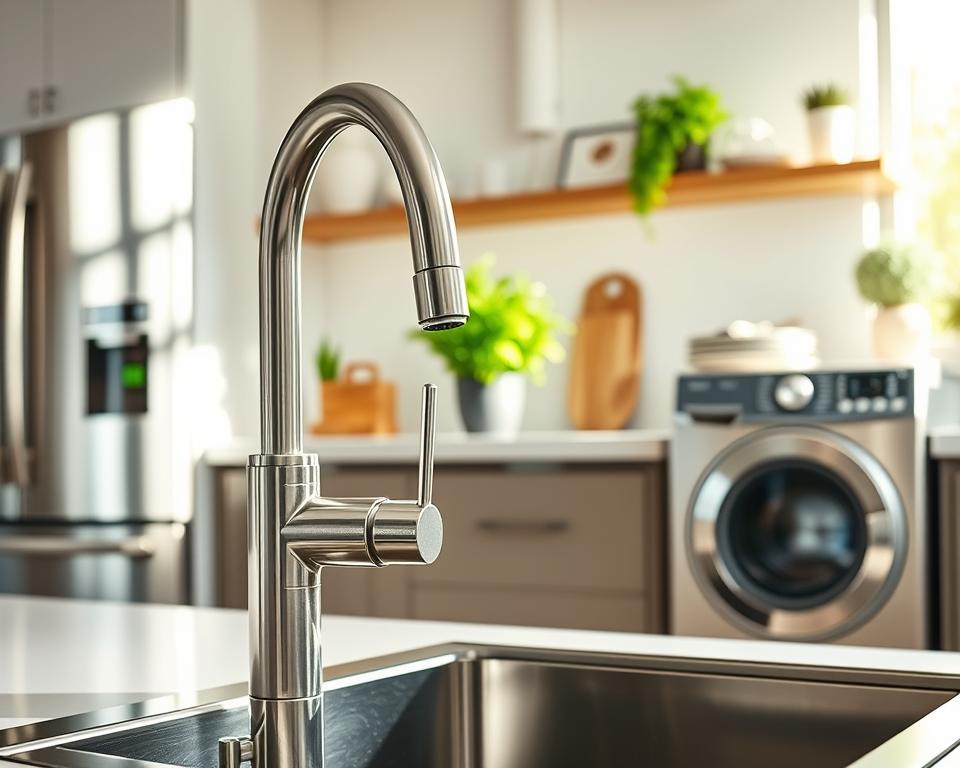
Flow restrictors are gadgets that can be put in faucets and showerheads to cut down water flow. They save water without making things less comfortable for users. Using them can lower your water bill too.
Flow restrictors really help homes save water. They’re easy to install and don’t cost much, making them a smart choice for saving water.
Importance of Regular Maintenance
Keeping water-efficient appliances in good shape is important. This means checking for leaks, cleaning filters, and replacing old parts. Doing this helps homes use water wisely.
Regular upkeep not only makes appliances last longer but also helps them work better. This saves water and energy.
In summary, getting water-efficient appliances, picking Energy Star products, using flow restrictors, and keeping them in good condition are all good ways to save water. By doing these things, homes can help make the future more water-friendly.
Understanding Water Meter Readings
Knowing your water meter readings is key to managing water well. It lets you track your use, spot leaks, and plan your water budget. This info is vital for saving water and living greener.
How to Monitor Your Water Usage
To keep an eye on your water use, learn to read your meter. For a step-by-step guide, check out this guide. Regular meter checks help you see your usage patterns and find odd uses.
Here’s a simple way to track your water use:
- Check your meter at the same time each day or week.
- Write down the readings to see how your use changes over time.
- Look at your usage during different times to spot trends or big changes.
Signs of Leaks and Waste
Leaks and waste can really up your water bill. Look out for these signs:
- Big jumps in your water use.
- Your meter keeps moving, even when everything is off.
- Water damage or pools around your fixtures and appliances.
Checking your plumbing and fixtures often is key to catching leaks early. Early detection can save you money and cut down on water waste.
Setting Water Budgets
Having a water budget helps you use water better. To set one:
- Find out how much water you use on average each month.
- Choose a realistic goal for using less water, based on your past use.
- Keep an eye on your use to stay within your budget.
Here’s a simple example of a water budget table:
| Month | Average Usage (gallons) | Target Usage (gallons) |
|---|---|---|
| January | 5000 | 4500 |
| February | 4800 | 4300 |
| March | 5200 | 4700 |
By using your water meter readings wisely, you can make a big difference. Start tracking your water use today and help the environment.
Educating Family and Housemates
Teaching my household about water waste is key. We can all work together to cut down on it. This teamwork is essential for making a big difference in saving water.
Creating Awareness about Water Waste
First, we need to know why water waste happens and its effects. I’ll tell my family and housemates how their actions affect water use. I’ll also explain why saving water is important.
- Discuss the environmental impact of excessive water use.
- Share tips on how to save water in the house effectively.
- Highlight the financial benefits of reducing water waste.
Encouraging Good Habits
It’s important to encourage good habits for saving water. Simple actions, like turning off the tap while brushing teeth or taking shorter showers, help a lot.
- Promote the use of water-efficient appliances.
- Encourage full loads in the washing machine.
- Teach everyone to report leaks promptly.
Involving Everyone in Conservation Efforts
Getting everyone involved in saving water is important. It spreads out the responsibility and builds teamwork. We can all follow water conservation tips that fit our lives.
By making saving water a family project, we can do more and create lasting benefits for the environment.
Incorporating Landscaping Solutions
I’ve found that smart landscaping can cut down on water waste at home. Using eco-friendly practices, I save water and make my outdoor area more beautiful and sustainable.
Choosing Native Plants
Choosing native plants is a great way to save water in your garden. These plants fit well with the local climate and soil, needing less water and care. Native plants also fight off pests and diseases better, cutting down on harmful chemicals.
- They need less watering.
- They resist local pests and diseases well.
- They help local wildlife.
Benefits of Xeriscaping
Xeriscaping uses low-water plants and smart irrigation to save water. It makes a beautiful, water-efficient outdoor space. The perks of xeriscaping include:
- Big water savings.
- Lower upkeep costs.
- Higher property value.
Drip Irrigation Systems
Drip irrigation systems send water straight to plant roots, cutting down on evaporation and runoff. Drip irrigation works well with native plants or xeriscaping. It ensures plants get the right water without wasting any.
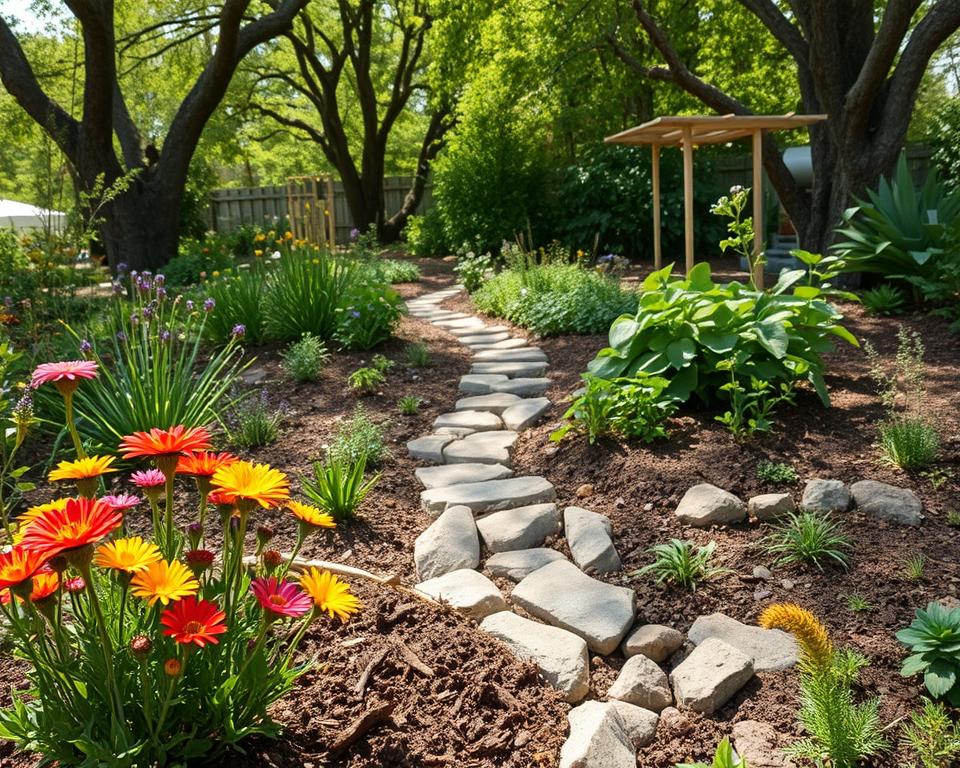
By using these landscaping tips, I can greatly reduce water use at home. My outdoor space stays beautiful and sustainable. These eco-friendly solutions also boost my property’s value.
Adopting Sustainable Practices
In my quest to cut down on water waste, I’ve learned that sustainable habits are key. By making these habits part of our daily lives, we can use less water. This helps our planet and ensures a better future.
Rainwater Harvesting
Rainwater harvesting is a smart way to save water. It involves collecting and storing rainwater for tasks like watering plants and washing cars. This method lowers the need for city water and cuts down on stormwater runoff.
Benefits of Rainwater Harvesting:
- Reduces water bills
- Provides a natural source of water for plants
- Decreases the burden on stormwater drainage systems
Composting and Its Benefits
Composting is a green practice that helps save water. It turns organic waste into a soil that holds water better. This means we need less water for our gardens and yards.
“Composting is a powerful tool in reducing waste and enriching soil, which supports water conservation efforts.”
Reusing Greywater Safely
Greywater reuse is a smart way to save water. It uses wastewater from sinks, showers, and washing machines for irrigation and toilet flushing. But, it’s important to do it safely to avoid health problems.
Safe Greywater Reuse Practices:
- Use greywater only for irrigation and toilet flushing
- Avoid storing greywater for extended periods
- Ensure greywater systems are properly maintained
By embracing these green practices, we can greatly help save water. These methods not only cut down on waste but also encourage a greener lifestyle.
Community Efforts in Water Conservation
Getting involved in community efforts is a great way to help save water. By joining local initiatives, you can make a big difference. This helps reduce water waste.
Participating in Local Initiatives
Local groups often host clean-up events, workshops, and educational campaigns. These activities encourage green living tips and build community spirit. They teach us how to care for our water resources.
Joining Water Conservation Programs
Many places have programs to save water. These offer rewards for using less water. You can get rebates for water-saving gadgets and advice on using less water.
Sharing Tips with Neighbors
Telling your neighbors about water-saving tips is helpful. Simple steps like fixing leaks and using rain barrels can make a big difference. It’s all about working together and supporting each other.
| Community Effort | Impact on Water Conservation |
|---|---|
| Participating in Local Initiatives | Promotes awareness and community involvement |
| Joining Water Conservation Programs | Provides access to resources and incentives |
| Sharing Tips with Neighbors | Fosters community engagement and mutual support |
Together, we can save more water and build a sustainable future. It’s a team effort that benefits our planet and brings us closer as a community.
Conclusion: Your Role in Water Conservation
As we wrap up our guide on saving water, it’s clear that every little bit helps. By following the tips we’ve shared, we can save money and help the planet. It’s a small step towards a greener future.
Practical Steps to a Water-Efficient Home
We’ve looked at many ways to use less water at home. Fixing leaks and using the dishwasher smartly are just the start. We also talked about saving water in the bathroom and laundry room, and how to make our gardens water-friendly.
Long-term Impact of Water Conservation
Conserving water has big benefits for our planet and for future generations. Using water-saving appliances and collecting rainwater are key actions. They make a big difference in the long run.
Continuing the Conversation
Now it’s time to put these water-saving tips into action. Share your own tips and experiences with others. Let’s build a community that cares about saving water. Together, we can make a real change.