

I remember the day my kitchen was too cluttered. It was a Sunday morning, and I was looking for a spice. Then, I thought, “There must be a better way to organize without spending a lot.”
Using cereal boxes for a DIY organizer is a smart, budget-friendly idea. It can make your kitchen tidy and organized. This method is also good for the environment and fun to do.
Starting my kitchen makeover was rewarding. It saved me money and made me feel accomplished. With a few easy steps, you can make your kitchen better and more enjoyable.
Key Takeaways
- Create a customized storage system using cereal boxes.
- Reduce kitchen clutter and improve efficiency.
- Save money by repurposing materials you already have.
- Get creative and have fun while organizing your kitchen.
- Transform your kitchen into a clutter-free haven.
Introduction to DIY Kitchen Organizers
Many people search for ways to organize their kitchens better. I’ve found making DIY storage solutions to be both fun and useful. It’s exciting to turn simple items into useful storage spaces.
DIY kitchen organizers save money and give you a sense of accomplishment. Cereal boxes are a great starting point. They can be turned into various storage solutions that are good for the planet and fit your kitchen perfectly.
Using cereal boxes for storage is creative and helps declutter your kitchen. You can store spices, utensils, and even kitchen gadgets in them. The options are endless.
| Material | Eco-Friendly | Cost-Effective |
|---|---|---|
| Cereal Boxes | Yes | Yes |
| Cardboard Tubes | Yes | Yes |
| Repurposed Wood | Yes | Variable |
When thinking about organizing your kitchen, consider DIY solutions like cereal box organizers. They help keep your kitchen tidy and support a greener lifestyle.
Benefits of Using Cereal Boxes for Organization
Cereal boxes can be turned into useful organizers. They offer a cost-effective and environmentally friendly way to tackle kitchen clutter. This method helps keep your kitchen tidy while also reducing waste.
Eco-Friendly Solution
Using cereal boxes for organization is a sustainable home organization choice. It cuts down on the need for new materials and waste. By giving old boxes a new purpose, you’re living more sustainably.
This approach not only cuts down on waste but also inspires others to adopt eco-friendly habits in their daily lives.
Cost-Effective Materials
Another big plus of using cereal boxes is that they’re budget-friendly kitchen organizers. Most homes already have them, making it a free solution. Even if you need to buy them, they’re cheap and easy to find.
- Reduces the need for expensive storage solutions
- Utilizes materials you likely already have at home
- Encourages creativity in repurposing everyday items
By opting for cereal boxes, you’re organizing your kitchen affordably. It’s a smart move for your wallet.
Gathering Your Supplies
The first step in making your easy DIY storage solution is to gather the needed materials. To create a DIY cereal box organizer, you’ll need a few simple items. These items are probably in your home or easy to find.
Essential Materials:
- Cereal boxes (various sizes)
- Scissors
- Glue or a glue stick
- Markers or paint for decoration
- Ruler or measuring tape
- Cutting mat or other protective surface
As “The Spruce Crafts” points out, using cereal boxes again is a smart way to cut down on waste. You can find cereal boxes in your pantry or ask friends and family to save them for you. Scissors, glue, and markers are common household items, making this project very accessible.
When you’re gathering your supplies, think about the size and number of cereal boxes you have. Larger boxes are great for bigger storage needs. Smaller boxes work well for organizing smaller items like spices or office supplies. The secret to a successful DIY storage solution is to be creative with what you have.
By gathering your supplies and getting creative, you can make a useful and eco-friendly storage solution. As you continue with your project, remember that the beauty of this DIY project is its simplicity and flexibility.
Preparing the Cereal Boxes
Getting your cereal boxes ready is key to making a useful kitchen organizer. It involves a few easy steps. These steps will turn your cereal boxes into handy storage spots.
Cleaning and Removing Labels
The first thing to do is clean the boxes well. Wash them with soap and warm water to get rid of any leftover cereal. This makes sure your organizer is clean and free from dust and food bits. Dry the boxes completely before moving on.
Then, take off the labels from the cereal boxes. You can soak them in warm water or use a label remover. Gently scrape off the labels to avoid harming the boxes. After removing the labels, dry the boxes again to keep the cardboard from getting wet.
Cutting the Boxes for Use
Once the boxes are clean and label-free, it’s time to cut them to size. Use a craft knife or scissors to cut the boxes into the right dimensions. Be sure to measure carefully so the pieces fit well together. You can cut them into different shapes and sizes based on your storage needs.
For a project like this, being precise and patient is important. Take your time to cut the boxes carefully. This way, you’ll get a beautifully made cereal box organizer that makes your kitchen more organized.
Creative Design Ideas for Your Organizer
Turning cereal boxes into kitchen organizers is a smart move. It makes your kitchen more organized and efficient. This way, you can use everyday items in a new way.
One great idea is to make drawer dividers from cereal boxes. These dividers help keep utensils and tools in order. It’s easier to find what you need.
Drawer Dividers
To make drawer dividers, cut the cereal boxes to fit your drawer. Then, decorate them with paint, stickers, or other designs. This makes them match your kitchen’s look.
- Measure the drawer space to determine the size of the dividers.
- Cut the cereal boxes to fit snugly.
- Decorate the dividers to add a personal touch.
Vertical Storage Solutions
Another creative idea is to stack cereal boxes for vertical storage solutions. This creates a unique storage unit for your kitchen.
You can store spices, oils, or other kitchen items in these boxes. Just label each box for easy access.
Decorative Labeling Options
To finish your cereal box organizers, use decorative labeling options. Labels, stickers, or paint can add a personal touch.
Here are some ideas for decorative labeling:
- Use a label maker for uniform labels.
- Add colorful stickers for a playful look.
- Paint the labels to match your kitchen’s colors.
By using these creative ideas, you can make your kitchen both functional and stylish. It will show off your personality.
Step-by-Step Guide to Making Your Organizer
Making a DIY Kitchen Organizer using Cereal Boxes is easy and fun. It only needs some planning and creativity. We’ll show you how to turn cereal boxes into a useful and budget-friendly kitchen organizer.
Measuring and Planning
First, measure the space for your organizer. It could be a drawer, shelf, or countertop. Knowing the size helps you figure out how many boxes you need and how to arrange them. Think about what you’ll store and plan the size and number of compartments.
Think about how your organizer will look and work. You can use a simple grid or get creative with different layouts. Sketching your design can help a lot.
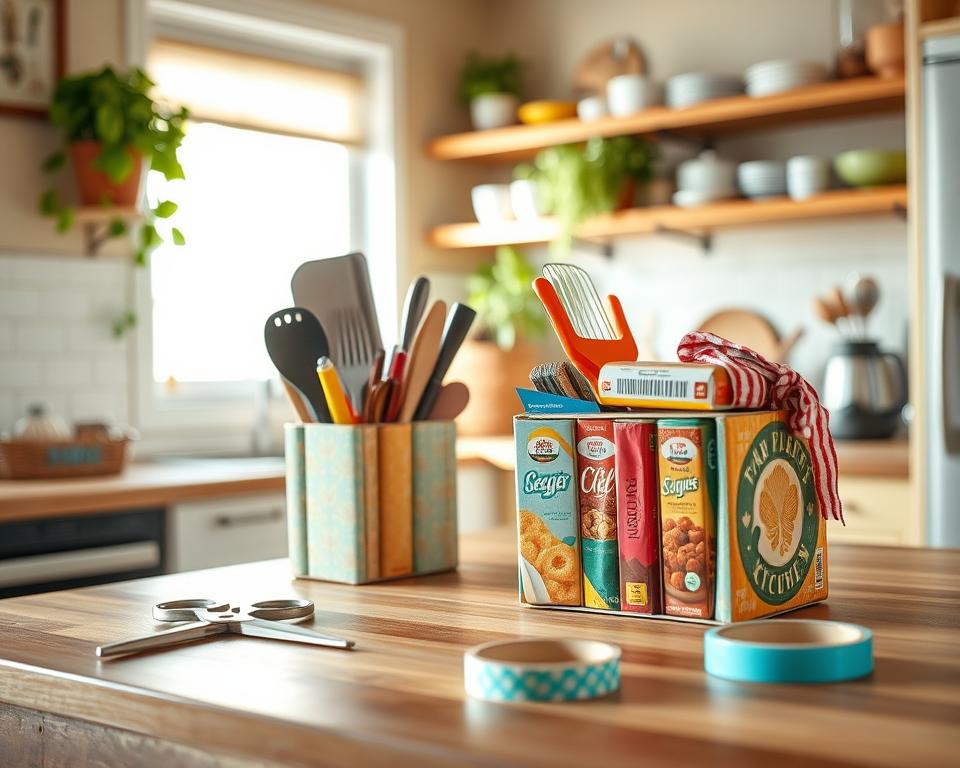
Assembly Instructions
After preparing your cereal boxes and planning your design, it’s time to build your organizer. Start by arranging the boxes as you planned. Use a hot glue gun to hold the boxes together, making a strong unit.
If your organizer goes in a drawer, add a non-slip mat at the bottom. This keeps it from sliding. For shelf or countertop use, add decorative edges or labels to make it look better.
- Start with the base layer, gluing the boxes together.
- Add more layers as needed, making sure it’s stable.
- Finish with any decorative touches, like labels or paint.
By following these steps, you can make a budget-friendly kitchen organizer. It not only declutters your space but also adds a personal touch to your kitchen.
Tips for Maximizing Your Kitchen Space
Effective kitchen storage solutions can make cooking easier. By using a few simple strategies, you can make your kitchen more organized. One great homemade kitchen storage remedy is cereal box organizers.
Using cereal boxes for utensils and ingredients saves space and adds creativity. It’s all about thinking creatively and finding kitchen organization ideas that work for you.
You can turn cereal boxes into dividers in drawers or spice holders on counters. These organizers are perfect for anyone wanting to tidy up their kitchen.
Here are more tips to make your kitchen space better:
- Stack or hang your cereal box organizers to use vertical space.
- Label each organizer for easy access to what you need.
- Place your organizers where they fit best in your kitchen workflow.
By using these kitchen organization ideas, you can make cooking more fun and efficient. Creativity and repurposing items like cereal boxes are key to a well-organized kitchen.
Maintaining Your DIY Cereal Box Organizer
To keep your DIY cereal box organizer in top shape, regular care is key. A well-kept organizer not only looks great but also keeps your kitchen tidy and functional.
Regular cleaning is a must. Dust and spills can pile up fast. So, it’s smart to wipe your organizer with a damp cloth often. For stubborn stains, a mild soap mix works well. Always dry it well to avoid moisture damage.
Regular Cleaning Practices
Creating a cleaning schedule can really help. Spend a few minutes each week dusting and tidying your organizer. For a deeper clean, mark a monthly cleaning date. This keeps your organizer looking fresh and prevents dirt and grime buildup.
“A clean kitchen is a happy kitchen,” many home cooks say. Keeping your DIY cereal box organizer clean is key to a pleasant cooking space.
Upcycling Old Boxes
Using cereal boxes for your organizer means they can be swapped out or upcycled easily. When a box wears out, think about turning it into a new storage spot or craft project. This reduces waste and lets you be creative.
You can turn old cereal boxes into planters for small herbs or succulents. This adds greenery to your kitchen and uses materials that would be thrown away. As upcycling projects grow in popularity, you’ll find lots of ideas online to spark your next DIY project.
By caring for your DIY cereal box organizer and finding new uses for old boxes, you’ll make your organizer last longer. Your kitchen will stay organized and stylish.
Inspirational DIY Projects Online
Looking to make your kitchen more organized? Online DIY projects are full of ideas. The internet is packed with creative tutorials to turn your kitchen into a better space.
Start by checking out websites focused on DIY and home organization. You’ll find lots of kitchen organization ideas to match your style. For example, The Fab Home shows you how to use cereal boxes for kitchen organization.
DIY projects can make your kitchen more organized and personal. You can make your own storage, decorations, and more with items like cereal boxes. They’re easy to find and good for the planet.
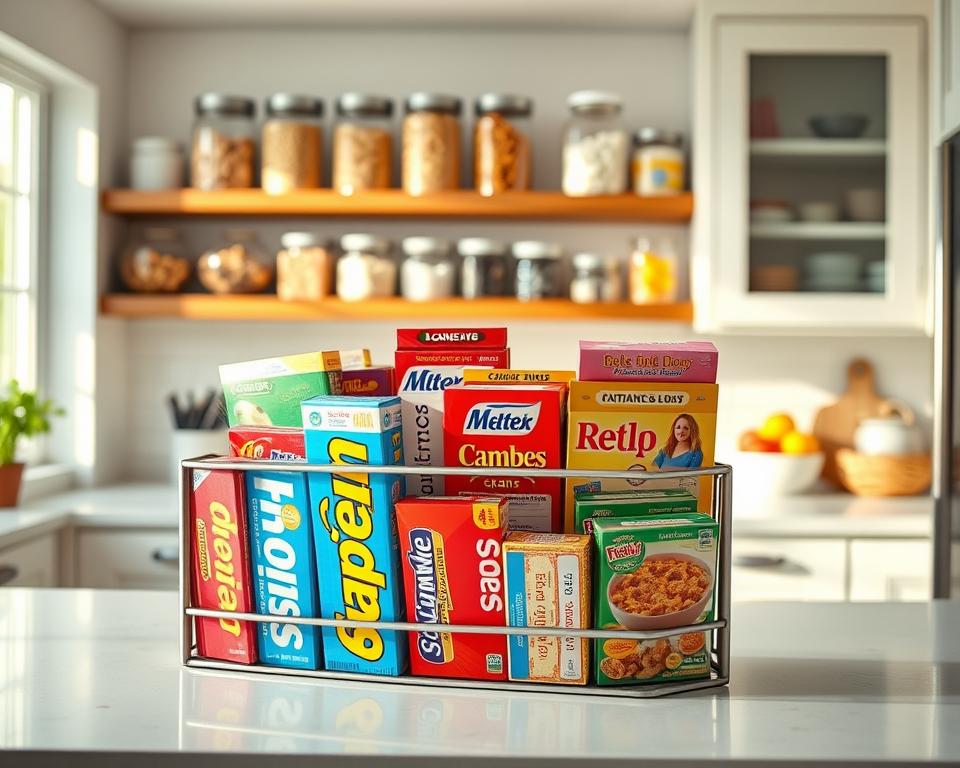
- Custom drawer dividers
- Vertical storage units
- Decorative labeling systems
These projects are not only useful but also add a creative touch to your kitchen. You can adjust them to fit your needs and style.
| Project | Materials Needed | Complexity Level |
|---|---|---|
| Custom Drawer Dividers | Cereal boxes, scissors, glue | Easy |
| Vertical Storage Units | Wood, screws, drill | Moderate |
| Decorative Labeling Systems | Labels, printer, label maker | Easy |
Exploring these DIY projects can inspire you to improve your kitchen’s organization. It will also make it more efficient.
Troubleshooting Common Issues
When making an easy DIY storage solution with cereal boxes, you might hit some bumps. One big worry is keeping your organizer strong and steady over time.
Durability Concerns
To tackle durability worries, you need to make your cereal box organizer stronger. Use glue, tape, or staples to hold the boxes together and to any supports. Also, a varnish or sealant coat can shield the boxes from moisture and damage.
Stability and Weight Limits
Stability and weight limits are also key. Make sure your organizer’s base is broad and heavy enough to hold the items. You can add weight with pebbles or sand in containers. Tall or heavy parts should be anchored to avoid tipping.
- Check the weight of the items you’ll store.
- Choose sturdy materials for the base and supports.
- Think about the height and design to prevent tipping.
By tackling these common problems, you can make a creative reuse of cereal boxes that’s both useful and long-lasting. The secret to a great DIY project is careful planning and doing it right.
Final Thoughts on Cereal Box Organizers
Now you know how to make a useful and green cereal box organizer for your kitchen. By using cereal boxes, you can make a storage solution that fits your kitchen perfectly.
Cereal box organizers are great for saving money and the planet. They turn trash into something useful. This way, you can organize your kitchen without spending a lot or harming the environment.
When you make your cereal box organizer, you’ll see how versatile it is. It can help organize your pantry, drawers, or countertops. I suggest trying more DIY projects to keep improving your kitchen.
In short, cereal box organizers are a smart, easy, and green way to make your kitchen better. By doing this DIY project, you’re not just cleaning up. You’re also helping the planet.
Encouragement to Get Started Today
Now that you’ve seen the benefits of using cereal boxes for kitchen organization, it’s time to get started. Creating a homemade kitchen storage remedy is easier than you think. Using cereal boxes is a great way to start.
By making a DIY Kitchen Organizer using Cereal Boxes, you’ll not only declutter your kitchen. You’ll also contribute to a more eco-friendly lifestyle. The process is simple, cost-effective, and lets you get creative with your storage solutions.
I encourage you to gather your supplies, get crafting, and enjoy the satisfaction of having a more organized kitchen. With your new DIY organizer, you’ll be able to find what you need quickly and efficiently. This makes cooking and meal prep a breeze.
Take the first step towards a more organized kitchen today. Start your DIY cereal box organizer project. Experience the benefits of homemade kitchen storage remedies for yourself.