

Did you know microgreens can be ready in just 6-12 days? They are young, packed with nutrients, and up to 40 times more than full-grown greens. As a gardener, I’m thrilled to share how growing microgreens can give you a quick and healthy harvest.
For more details on different microgreens and how to grow them, check out the ultimate microgreen cheat sheet. It’s a great resource to start your microgreens journey.
Key Takeaways
- Microgreens can be harvested in as little as 6-12 days.
- They are packed with up to 40 times more nutrients than mature greens.
- Varieties like arugula, broccoli, and cabbage can be grown as microgreens.
- Microgreens require minimal space and can be grown indoors.
- They add a burst of flavor and nutrition to various dishes.
What Are Microgreens and Why They Matter
As someone who cares about health, I’ve found microgreens to be a great way to add nutrition to my meals. These young, nutrient-rich greens and veggies are perfect for adding flavor and color to dishes.
Definition of Microgreens
Microgreens are harvested in just 1-3 weeks after they start growing. They’re not the same as baby greens, which are picked a bit later. Their intense flavors and bright colors make them a favorite among chefs and home cooks.
Nutritional Benefits
Microgreens are full of nutrients like vitamins, minerals, and antioxidants. They have more of these good stuff than their full-grown versions. For example, red cabbage microgreens have up to 40 times more vitamin E and six times more vitamin C than full-grown red cabbage.
Eating microgreens can help your immune system and reduce inflammation. Plus, they’re low in calories, making them great for those trying to manage their weight.
Differences from Sprouts
Microgreens and sprouts are both young plant versions, but they’re grown and eaten differently. Sprouts grow in water and are eaten with their roots. Microgreens grow in soil and are picked without their roots.
Microgreens are safer to eat than sprouts because they’re grown in a cleaner environment. They’re picked when they’re less likely to have harmful bacteria.
Choosing the Right Varieties for Your Needs
Exploring the world of microgreens is essential for your kitchen. They come in many flavors and textures. Picking the right ones can make your dishes better.
Popular Microgreens to Grow
Pea shoots, sunflower greens, and radish microgreens are favorites. They are easy to grow and full of nutrients.
- Pea shoots are sweet and tender.
- Sunflower greens have a nutty taste and lots of vitamins.
- Radish microgreens add a spicy flavor to salads and sandwiches.
Flavor Profiles and Culinary Uses
Each microgreen has its own taste. Basil microgreens are great for Italian food. Mustard microgreens add a tangy taste to salads.
| Microgreen Variety | Flavor Profile | Culinary Use |
|---|---|---|
| Basil | Sweet, aromatic | Pasta, salads, Italian dishes |
| Mustard | Tangy, slightly spicy | Salads, sandwiches, Asian-inspired dishes |
| Cilantro | Fresh, citrusy | Mexican dishes, salsas, salads |
“Microgreens are not just a garnish; they’re a way to add depth and complexity to any dish,” says a renowned chef.
Specialty Varieties for Unique Dishes
Specialty microgreens like purslane and sorrel offer unique tastes. Purslane is tangy and slightly sour. Sorrel tastes like lemon.
Growing a mix of popular and specialty microgreens opens up new culinary paths. They’re great in smoothies, as garnishes, or in your favorite recipes. Microgreens can make your cooking even better.
Essential Supplies for Growing Microgreens
The right supplies are key to growing microgreens well. You need the right containers, soil, light, and temperature control. Also, the right tools and techniques for watering are important.
Containers and Soil Options
Choosing the right containers and soil is vital for indoor microgreen gardening. Containers should be shallow and have holes for drainage. You can use trays or old CD cases or wooden crates.
For soil, a good potting mix or a soilless medium like coconut coir or peat moss is best. These options keep your microgreens in a clean, sterile environment.
Light Sources and Temperature Control
Microgreens need enough light to grow. The type and intensity of light depend on the variety. Natural light is best, but grow lights are good for indoor growing.
LED grow lights are popular because they save energy and don’t get too hot. Keeping the temperature right is also key. Most microgreens like daytime temperatures between 65-75°F (18-24°C) and cooler nights.
Watering Tools and Techniques
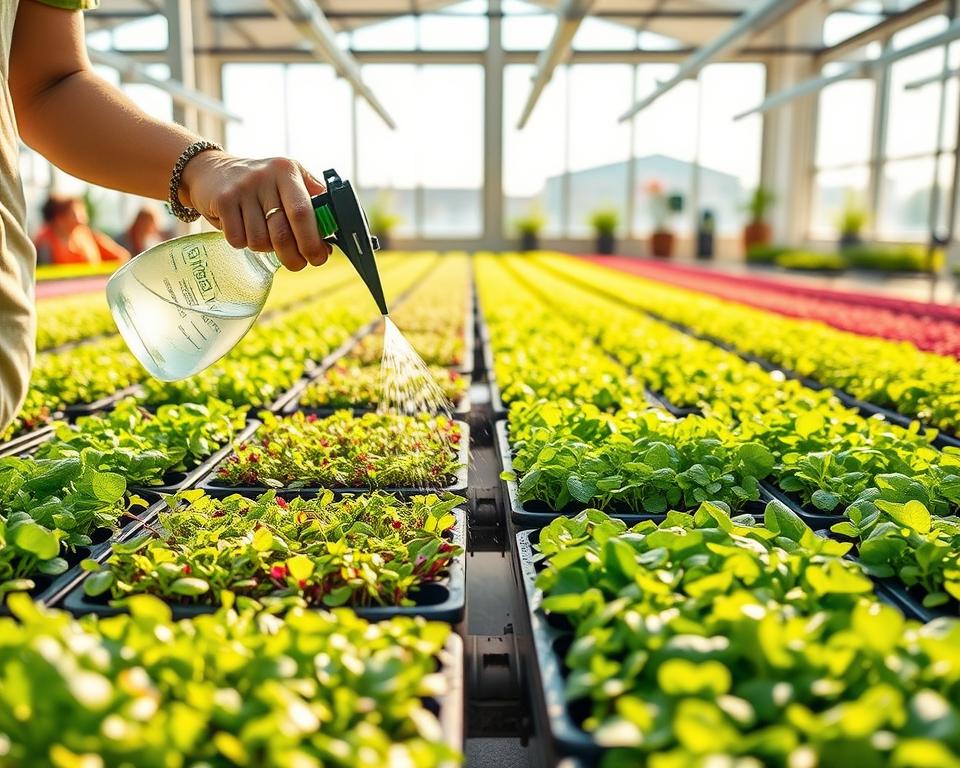
Watering is critical for microgreen farming. Use a gentle watering can or spray bottle. This way, you avoid damaging the delicate microgreens with strong water jets.
Try bottom-watering to prevent overwatering. Place the container in a tray of water. Let the soil absorb water from the bottom up.
By focusing on these essential supplies and techniques, you can create the best environment for growing microgreens. This ensures a healthy and nutritious crop.
Steps to Successfully Grow Microgreens
To grow tasty microgreens, start by preparing the right soil, sowing seeds carefully, and keeping the water just right. Follow these steps for a fresh and healthy harvest.
Preparing Your Growing Medium
The first step is to prepare the soil. Use a top-notch potting mix or a soilless mix made for microgreens. This ensures the soil is clean and helps your greens grow well.
- Fill your container with the chosen growing medium, leaving about a quarter inch at the top for watering.
- Gently firm the medium to create a smooth surface, ensuring there are no air pockets.
- Moisten the growing medium with water before sowing your seeds.
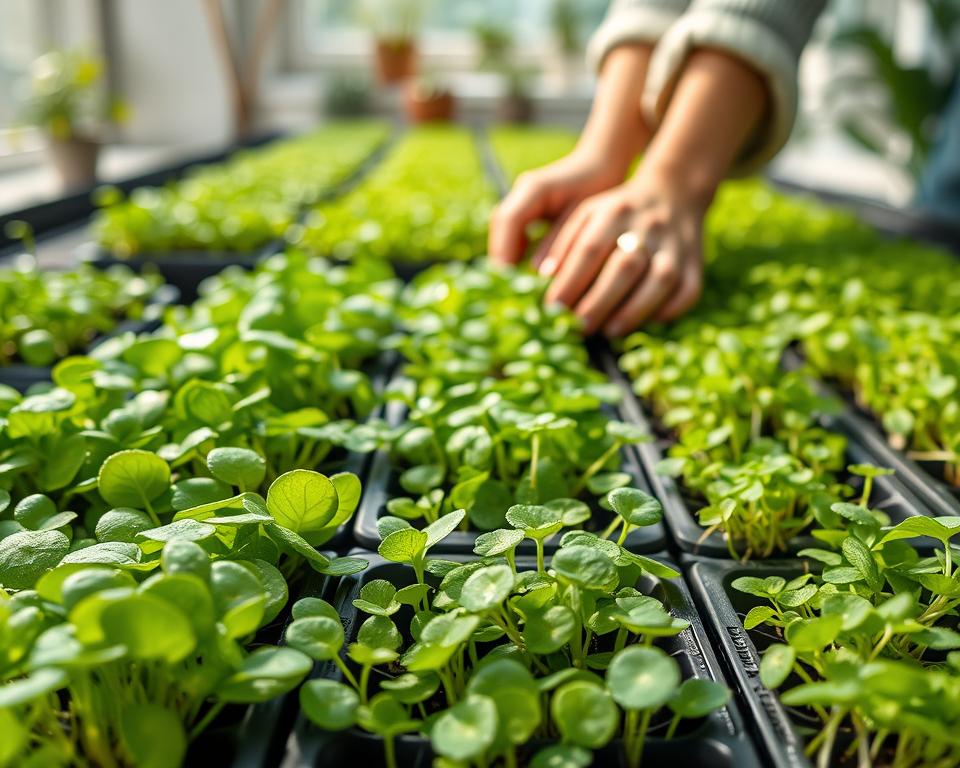
Sowing Seeds with Care
Planting seeds is key to growing microgreens. Spread the seeds evenly over the soil. This helps them grow well.
- Spread the microgreen seeds evenly across the prepared growing medium.
- Gently press the seeds into the soil to ensure good contact.
- Cover the seeds with a thin layer of the growing medium, if recommended for the specific variety.
Some microgreens, like peas and beans, need a special way of planting. So, learn about the specific needs of your variety.
Watering Techniques for Optimal Growth
Watering is vital for microgreens. You want the soil to be moist but not too wet.
- Use a gentle watering can or spray bottle to water your microgreens, avoiding washing away the tiny seeds.
- Water your microgreens in the morning to ensure they have the entire day to absorb the water.
- Monitor the moisture level of the growing medium and adjust your watering schedule as needed.
By following these steps and keeping the right conditions, you’ll grow delicious microgreens. Happy growing!
Light Requirements for Healthy Microgreens
Light is key for microgreens to grow well indoors. Knowing how much light they need can greatly improve your gardening. Microgreens need light to make food through photosynthesis, which is essential for their growth.
Natural Light vs. Grow Lights
You can choose between natural light and grow lights for microgreens. Natural light is best, but it’s not always available, mainly indoors. Grow lights provide a steady and controlled light source.
Here’s a comparison of natural light and grow lights:
| Light Source | Pros | Cons |
|---|---|---|
| Natural Light | Free, spectrum beneficial for plants | Variable intensity, limited duration |
| Grow Lights | Consistent intensity, adjustable spectrum | Initial investment, energy consumption |
Duration and Intensity for Different Varieties
Microgreens need different amounts of light. Some need more, while others need less. Most microgreens need 12-18 hours of light daily.
- Pea Shoots: Require moderate to high light intensity.
- Radish: Can grow well under lower light conditions.
- Cilantro: Prefers higher light intensity for optimal growth.
Signs of Insufficient Light
Microgreens may show signs if they don’t get enough light. These include:
- Leggy growth: Microgreens stretch towards the light source.
- Pale color: Insufficient light can lead to less chlorophyll production.
- Slow growth: Microgreens may grow more slowly than expected.
Changing the light source or how long it’s on can help fix these problems.
Maintaining Ideal Conditions for Growth
To grow microgreens well, you need to keep the right conditions. Microgreens are very sensitive to their surroundings. Even small changes can affect their growth and nutritional value.
Temperature Control Tips
Keeping the right temperature is key for growing microgreens. Most do best in temperatures between 60°F to 75°F (15°C to 24°C). Use a thermometer to check the temperature and adjust your growing area as needed. Consistency is key; don’t place your microgreens near heating or cooling vents, fireplaces, or drafty windows.
Brent Ridge, a well-known expert in microgreens, said, “Temperature changes can harm microgreens. Keeping the temperature steady is vital for their health.” This shows how important a controlled environment is.
Humidity Levels and Air Circulation
It’s important to keep the right humidity levels to prevent mold and ensure healthy growth. Aim for a relative humidity of 40-60%. Use a humidifier or dehumidifier as needed. Air circulation is also key; it helps prevent fungal diseases by reducing moisture around the plants. Make sure there’s good air flow around your microgreens by keeping them at least 6 inches away from walls or other plants.
Monitoring Growth Progress
It’s important to regularly check your microgreens’ growth. Look for signs of healthy growth like vibrant color and sturdy stems. If you see any problems, like yellowing or weak growth, adjust your conditions. Keep a growth journal to track your progress and note what works and what doesn’t.
By following these tips, you can create the best environment for your microgreens. This will lead to a rich harvest of nutritious and tasty microgreens.
Harvesting Microgreens for Maximum Flavor
Harvesting microgreens is an art that requires timing and technique. It’s not just about growing them. It’s about getting the most flavor and nutrition from them.
When to Harvest for Peak Nutrition
Microgreens are ready to pick in 7-21 days, depending on the type. Look for the right time by checking their color, size, and first true leaves. Picking them at the best time means they taste great and are super nutritious.
Here’s a quick guide for when to harvest different microgreens:
| Variety | Days to Harvest | Characteristics at Harvest |
|---|---|---|
| Pea Shoots | 7-10 days | Tender shoots with first true leaves |
| Radish | 7-10 days | Bright color, first true leaves emerging |
| Cilantro | 10-14 days | Fully developed cotyledons, first true leaves |
Techniques for Gentle Harvesting
It’s important to harvest microgreens gently to avoid harming them. I use sharp scissors or a microgreen tool to cut them just above the soil. This way, I get clean cuts and don’t damage the plants.
Tools I Use for Cutting Microgreens
Using the right tools makes harvesting microgreens easier. I like sharp, clean scissors or a microgreen knife. These tools help me make precise cuts and keep things clean.
By following these tips and using the right tools, you can enjoy your microgreens at their best. They’ll taste amazing and be super nutritious.
Storing Microgreens After Harvest
Proper storage is key to keeping microgreens fresh and nutritious. They can stay fresh for up to a week or more. This depends on the type and how they are stored.
Best Practices for Keeping Them Fresh
To keep microgreens fresh, store them in a way that keeps them moist but not soggy. Here are some tips:
- Store microgreens in a sealed container to keep humidity in and prevent drying.
- Use a paper towel to soak up extra moisture and keep the container dry.
- Keep the container away from direct light to prevent wilting or bitterness.
Tips for Refrigeration
Refrigeration is vital for storing microgreens. Cool temperatures slow down decay, keeping them fresh longer. Here are some tips for refrigerating microgreens:
- Put the sealed container with microgreens in the fridge at a consistent temperature below 40°F (4°C).
- Avoid storing microgreens near strong-smelling foods, as they can absorb odors easily.
- Keep microgreens away from the fridge’s coldest areas to prevent freezing.
How Long Microgreens Last
The shelf life of microgreens varies. It depends on the type, storage, and handling. Generally, most microgreens last:
- 5 to 7 days when stored properly in the fridge.
- Up to 2 weeks for some hardier varieties like pea shoots or sunflower greens.
By following these storage tips, you can enjoy your microgreens for a longer time. They will stay nutritious and flavorful.
Creative Ways to Use Microgreens in Meals
Microgreens can turn simple meals into amazing dishes. They are full of nutrients and add flavor and color. This makes any meal better.
Adding Microgreens to Salads and Wraps
Adding microgreens to salads and wraps is easy. They add a peppery taste and a crunchy feel. For example, pea shoots in chicken salad or radish microgreens in wraps make dishes better.
Incorporating Into Smoothies and Juices
Microgreens are great in smoothies and juices for extra nutrition. A little goes a long way, so start small. Adding spinach microgreens to a green smoothie boosts its health benefits.
Garnishing Dishes for Presentation
Microgreens make dishes look professional. Their bright colors and soft texture are perfect for soups, sandwiches, and main dishes. Just sprinkle a few on top before serving for a fancy look.
Here’s a quick guide for using microgreens in different dishes:
| Dish | Microgreen Suggestion | Benefit |
|---|---|---|
| Salads | Pea shoots or radish microgreens | Adds crunch and flavor |
| Smoothies/Juices | Spinach or kale microgreens | Boosts nutritional content |
| Garnishes | Any variety | Enhances presentation |
Using microgreens in your cooking makes meals tastier and healthier. It also adds a creative twist to your dishes.
Troubleshooting Common Issues
Knowing how to solve common problems is key to successful microgreen farming. Growers may face challenges that can harm their harvest. It’s important to address these issues quickly.
Pests and Diseases to Watch Out For
Pests and diseases can harm microgreen crops. Common pests include aphids, fungus gnats, and spider mites. Keeping the growing area clean and using organic pest control is vital.
Diseases like damping off and root rot are also common. Good air circulation and avoiding too much water can help prevent these. Remove sick plants to stop the disease from spreading.
Signs of Overwatering or Underwatering
Watering is critical in microgreen farming. Overwatering can cause root rot, while underwatering stresses the plants. Check the soil moisture often and adjust your watering schedule.
- Signs of overwatering include waterlogged soil and yellowing leaves.
- Signs of underwatering include dry soil and wilted leaves.
Solutions for Weak Growth
Weak or spindly growth can be due to several reasons. These include not enough light, wrong temperature, or poor soil. Ensure your microgreens get enough light and keep the temperature right, between 65-75°F (18-24°C).
Using quality growing medium and enough nutrients helps too. If needed, add grow lights to help with light, even in winter or dark places.
The Joy of Growing Microgreens at Home
Growing microgreens at home has been a rewarding experience. It gives me fresh and nutritious produce right in my kitchen. Watching them grow and harvesting them for a meal is incredibly satisfying.
My Personal Experience
I started growing microgreens for their added nutrition and flavor. Over time, I’ve found joy in cultivating these young greens. I’ve tried different varieties, from peppery arugula to spicy radish, adding unique flavors to dishes.
Satisfaction of Homegrown Nutrition
Enjoying homegrown nutrition through microgreens has changed my health and cooking. Growing Microgreens for Fast and Nutritious Harvests lets me control what I eat. I know it’s free from additives and pesticides.
Joining the Microgreen Movement
I encourage others to try growing microgreens at home. With a bit of practice and patience, anyone can enjoy the freshest and most nutritious greens. It’s a great way to experience homegrown nutrition.