
Did you know that over 8 million tons of plastic waste enter our oceans every year? This harms marine life and contaminates our food. We can all help by choosing eco-friendly habits in our daily lives.
Using beeswax wraps for food storage is a great way to cut down on plastic. In this article, I’ll show you how to make your own DIY beeswax wraps. You’ll learn about their benefits and how to use them effectively.
Key Takeaways
- Learn how to make your own eco-friendly food storage solutions.
- Understand the benefits of using beeswax wraps for food storage.
- Discover tips for effectively using and maintaining your beeswax wraps.
- Reduce your plastic waste and contribute to a more sustainable lifestyle.
- Get started with a simple and fun DIY project.
Understanding Beeswax Wraps and Their Benefits
Looking for a greener kitchen? Reusable beeswax wraps are a great choice. They offer many benefits, as I’ve discovered.
What Are Beeswax Wraps?
Beeswax wraps are a natural, reusable option instead of plastic wrap. They’re made from cotton, beeswax, jojoba oil, and tree resin. This mix makes them flexible and strong, perfect for covering bowls or wrapping food.
Why Use Beeswax Wraps?
Beeswax wraps have many perks. Here are a few:
- Reusable: You can use them many times, saving money over time.
- Breathable: They let air in, helping food stay fresh longer than plastic wrap.
- Versatile: They come in different sizes for various uses, from snacks to big bowls.
- Eco-friendly: They help cut down on single-use plastics.
Environmental Impact of Plastic Wrap
Plastic wrap is a big problem for our environment. It’s used once and then thrown away, often into landfills or oceans. Switching to reusable beeswax wraps can greatly reduce this waste.
Here are some facts about plastic wrap:
- Millions of tons of plastic waste come from single-use items like plastic wrap every year.
- Plastic wrap doesn’t break down and can take centuries to decompose.
- Making plastic wrap uses a lot of fossil fuels and energy.
Choosing beeswax wraps is a simple way to help reduce plastic waste and live more sustainably.
Materials Needed for DIY Beeswax Wraps
Making beeswax wraps at home is easy. It starts with picking the right materials. You’ll need a few basic supplies that are easy to find.
Types of Fabric Suitable for Beeswax Wraps
The fabric is key for your beeswax wraps. Cotton fabric is a good choice because it’s breathable and absorbs beeswax well. Choose a lightweight cotton for small items and a heavier fabric for bigger ones.
Here are some popular fabric choices for beeswax wraps:
- Cotton lawn
- Muslin cotton
- Organic cotton
Beeswax Selection
The quality of your beeswax matters. Use pure, raw beeswax without additives. You can buy it online or at local craft stores. Start with about 1 ounce of beeswax per square foot of fabric.
Additional Ingredients and Tools
You’ll also need some extra ingredients and tools:
| Ingredient/Tool | Purpose |
|---|---|
| Jojoba oil or coconut oil | To help the wax adhere to the fabric and improve flexibility |
| Pine resin (optional) | Adds tackiness to the wrap, improving its ability to stick to surfaces |
| Baking sheet lined with parchment paper | For melting the wax and applying it to the fabric |
| Oven or a heat gun | For melting the wax mixture |
| Scissors and a brush | For cutting the fabric and applying the wax mixture |
Choosing the right materials and following a simple process lets you make effective beeswax wraps. They’re reusable and help reduce plastic use. Plus, they add a personal touch to your kitchen.
Step-by-Step Guide to Making Beeswax Wraps
DIY beeswax wraps are a fantastic way to cut down on kitchen plastic. Making them is quite simple. You just need a few basic items to make reusable food wraps. For a detailed guide, check out this complete guide to DIY beeswax wraps.
Preparing Your Fabric
Start by preparing your fabric. Pick 100% cotton, as it’s good for breathing and takes beeswax well. You can use old clothes, sheets, or buy fabric by the yard. Cut it into the sizes and shapes you need for your wraps.
Melting and Applying Beeswax
To melt the beeswax, use a double boiler or a wax melter. Grate the beeswax for even melting. Once melted, add jojoba oil or pine resin if you like. Dip your fabric into the wax mixture or use a brush for control.
Here are some tips for melting and applying beeswax:
- Use a thermometer to monitor the temperature and prevent overheating.
- Stir well after adding any additional ingredients.
- Apply the wax mixture evenly to avoid thick spots.
Setting Your Wraps
After applying the wax, place your fabric on a baking sheet lined with parchment paper. Heat it in the oven at 200°F for a few minutes. Or, use a hairdryer to dry and set the wax. Once set, your wraps are ready to use.
| Material | Pros | Cons |
|---|---|---|
| Cotton | Breathable, absorbent | May shrink if not pre-treated |
| Linen | Durable, natural texture | Can be more expensive than cotton |
| Hemp | Eco-friendly, strong | Can be rough on skin |
By following these steps, you can make your own beeswax wraps at home. It’s a fun DIY project that also helps the environment.
Tips for Perfectly Crafted Wraps
Want to make your DIY beeswax wraps stand out? It’s not just about following a recipe. You need to pay attention to the details and use some insider tips. This way, your wraps will be both useful and look great.
Ensuring Even Wax Distribution
Getting the wax evenly spread is key to making top-notch beeswax wraps. Here’s how to do it:
- Use a consistent heat source when melting the beeswax to avoid hot spots.
- Gently stir the melted wax to ensure it’s fully incorporated with any additional ingredients.
- Apply the wax mixture evenly across the fabric using a brush or similar tool.
Common Mistakes to Avoid
Mistakes can happen even when you’re careful. Here are some common ones to watch out for:
- Insufficient wax: Using too little wax can result in wraps that are not durable or effective.
- Overheating: Beeswax can burn or discolor if overheated, affecting the quality of your wraps.
- Poor fabric choice: Selecting a fabric that’s not suitable for beeswax wraps can lead to disappointing results.
By avoiding these mistakes and following the tips for even wax distribution, you’ll make sustainable food storage solutions that work well and are good for the planet.
How to Use Your DIY Beeswax Wraps
Beeswax wraps are not just good for the planet; they’re also super easy to use. They’ve really changed how I store food at home.
To use your DIY beeswax wraps right, know how to wrap different foods. For fruits and veggies, just put them in the middle and fold the edges over. For bowls, cover them with the wrap and fold the edges around.
Wrapping Different Types of Food
Beeswax wraps are really versatile. You can use them to wrap:
- Sandwiches and snacks for when you’re on the move
- Fruits and veggies to keep them fresh
- Bowls and containers for leftovers
- Cheese and charcuterie boards for a cool look
Preventing Cross-Contamination
To avoid cross-contamination, keep your wraps clean and store them right. Here’s how:
- Always wash your hands before touching food and wraps.
- Use a clean wrap for each food type.
- Keep wraps in a cool, dry spot, out of sunlight.
By following these tips, you can enjoy the perks of eco-friendly food storage solutions like beeswax wraps. You’ll cut down on plastic use and make your kitchen greener.
Cleaning and Caring for Beeswax Wraps
Knowing how to clean and care for your homemade beeswax wraps is key. It keeps them working well and lasting longer. This helps keep your food fresh.
Proper Cleaning Techniques
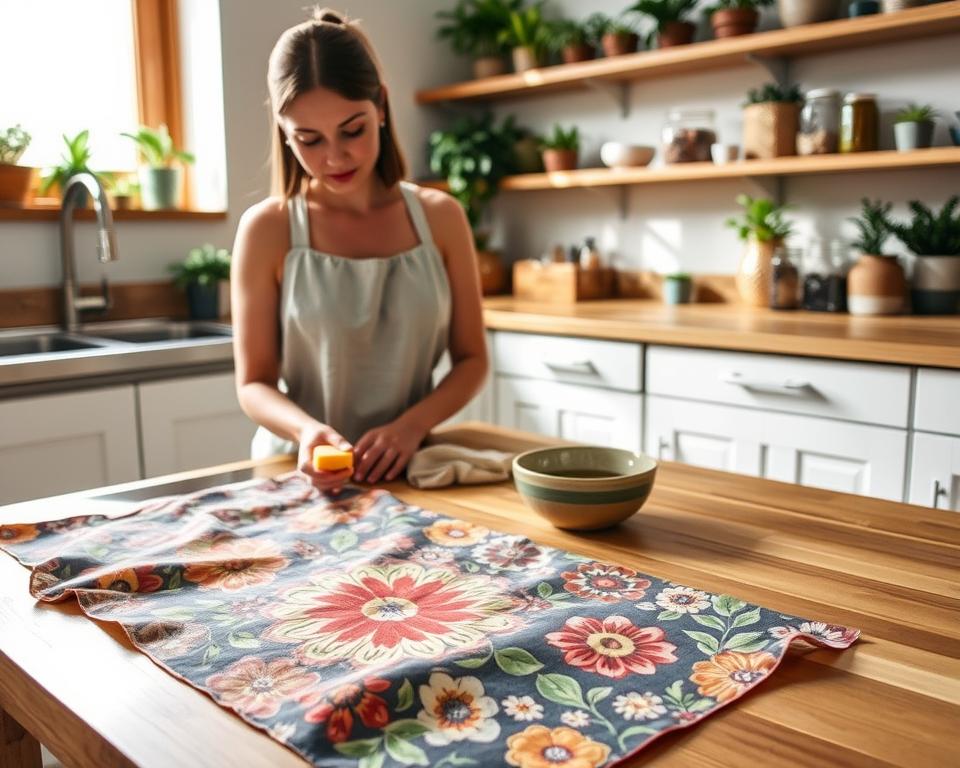
Cleaning your wraps is easy. I use a damp cloth and mild soap to wipe them down. For tough stains, a soft sponge works well.
Don’t use hot water or harsh chemicals. They can harm the wax coating. After cleaning, let them air dry. This stops moisture from causing mold or mildew.
For hard stains, try a mix of water and white vinegar. It’s effective.
Tips for Longevity
To keep your wraps in good shape, handle them carefully. Don’t expose them to extreme heat or direct sunlight. This can melt or harden the wax.
- Store your wraps in a cool, dry place.
- Avoid using them in the microwave or oven.
- Gently fold or roll them to prevent creasing.
By following these tips, your beeswax wraps will last longer. They become a valuable part of your eco-friendly food storage.
Storing Your Beeswax Wraps
Proper storage is key to keeping your DIY beeswax wraps in good shape. Store them in a cool, dry place away from sunlight. This helps them last longer.
Finding the Right Storage Spot
Choose a special drawer or shelf in your kitchen for storing them. Avoid places near heat or humidity to prevent damage. You can also use a breathable container or bag.
“The way we store our kitchen essentials can significantly impact their longevity and our environmental footprint.”
By picking the right spot, you extend your wraps’ life and help the planet.
Duration of Use
How long your wraps last depends on care and use. With proper care, they can last up to a year or more. Regular cleaning and avoiding extreme temperatures helps a lot.
Check your wraps often for wear. If damaged, you can fix them with beeswax or replace the fabric.
Follow these tips to use your DIY beeswax wraps longer. This reduces waste and supports your eco-friendly kitchen goals.
Creative Ways to Personalize Your Wraps
You can make your beeswax wraps special by picking fun patterns and colors. This makes your kitchen lively and lets you show off your creativity.
Choosing Fun Patterns and Colors
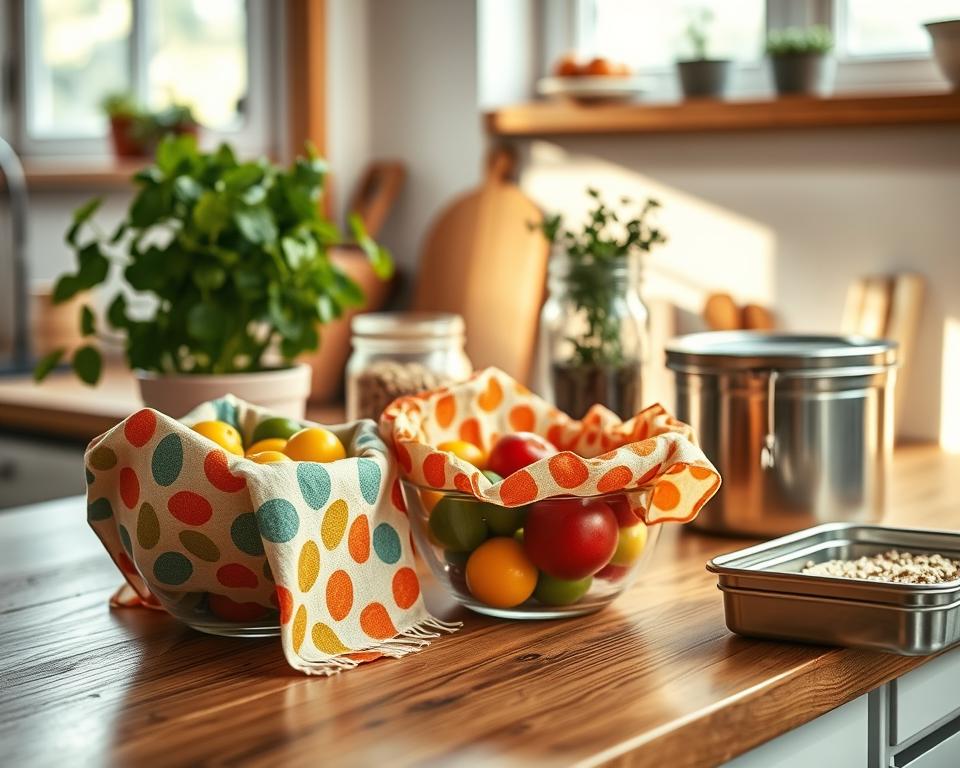
The fabric you pick is key to personalizing your wraps. Go for bright colors and fun patterns that fit your kitchen or taste. Here are some favorites:
- Floral patterns for a classic, garden-inspired look
- Geometric shapes for a modern, sleek appearance
- Stripes or polka dots for a playful touch
Using different fabrics makes your wraps more attractive. It also helps you quickly know what’s inside.
Adding a Personal Touch
There’s more to personalizing your wraps than just fabric. Think about:
- Embroidering your name or a special message on the wrap
- Using different colored threads for stitching to match or contrast with your fabric
- Adding decorative edges or trims to give your wraps a finished look
Personalizing your beeswax wraps makes them more than just useful. They become a part of your personality. Whether for a gift or yourself, the effort is worth it.
Beeswax Wraps vs. Other Food Storage Options
Choosing the right food storage can be tough. Beeswax wraps stand out as a unique option. Let’s look at the pros and cons of each choice.
Comparing with Plastic Wrap
Plastic wrap has been common in kitchens for years. But, it harms the environment a lot. Beeswax wraps offer a green alternative. Here’s how they compare:
| Feature | Plastic Wrap | Beeswax Wraps |
|---|---|---|
| Reusable | No | Yes |
| Eco-Friendly | No | Yes |
| Breathability | No | Yes |
The table shows beeswax wraps beat plastic wrap in many ways. They’re better for the planet.
Advantages over Reusable Containers
Reusable containers are good, but they have their limits. Beeswax wraps are more flexible and convenient. They can wrap around bowls or food easily, making them versatile.
Beeswax wraps have several advantages over reusable containers:
- Easier to use for odd shapes
- Light and simple to store
- Great for covering bowls or wrapping food
Choosing beeswax wraps means you get a handy and eco-friendly way to store food. It fits well with your kitchen habits.
Sustainability and Beeswax Wraps
In my quest to reduce my environmental impact, I’ve found a simple yet effective solution: DIY beeswax wraps.
As someone who loves sustainable living, I’ve seen a big change by using beeswax wraps. They help me avoid plastic wrap, which is great for the planet and cuts down on waste.
Supporting Eco-Friendly Practices
Choosing beeswax wraps is more than a practical choice; it’s a commitment to the environment. By making your own wraps, you cut down on plastic use, helping to reduce waste.
Beeswax wraps are great because they can be used many times. Unlike plastic wrap, which is used once and then thrown away, beeswax wraps are reusable. This makes them a smart and green choice.
Reducing Kitchen Waste
Beeswax wraps have a big impact on reducing kitchen waste. By using them, homes can greatly decrease plastic waste from food packaging.
| Storage Method | Waste Generation | Reusability |
|---|---|---|
| Plastic Wrap | High | No |
| Beeswax Wraps | Low | Yes |
| Reusable Containers | Low | Yes |
The table shows beeswax wraps are a better choice than plastic wrap. They’re reusable, which helps reduce waste and promotes sustainable food storage.
By using beeswax wraps and other eco-friendly methods, we can make a big difference. We can reduce waste and live more sustainably every day.
Where to Buy Pre-Made Beeswax Wraps
Making your own beeswax wraps is fun, but buying them is quicker. Many brands offer high-quality wraps for convenience.
Popular Brands to Consider
Some brands stand out in the beeswax wrap market. These include:
- Abeego: Known for their durable and versatile wraps.
- Bee’s Wrap: Offers a variety of sizes and patterns.
- Etee: Provides eco-friendly options with a focus on sustainability.
These brands are easy to find online and in some stores. Look at reviews, material quality, and price when choosing.
Cost Comparison with DIY
Cost is a big factor in choosing between pre-made wraps and DIY. Here’s a look:
| Option | Initial Cost | Long-term Cost |
|---|---|---|
| Pre-made Beeswax Wraps | $10-$20 per wrap | Replacement cost every 1-2 years |
| DIY Beeswax Wraps | $5-$10 for materials (makes multiple wraps) | Minimal, just replacement materials as needed |
Pre-made wraps might seem affordable at first, but DIY is cheaper over time. This is true if you use them often.
“Using beeswax wraps has been a game-changer for my kitchen. They’re reusable, sustainable, and easy to use.” – Emily, eco-conscious consumer
In conclusion, buying or making beeswax wraps helps reduce kitchen waste. Think about your needs, budget, and preferences to decide.
FAQs About Beeswax Wraps
Starting to use your DIY beeswax wraps might raise some questions. Here, I tackle common concerns and offer tips to enhance your eco-friendly kitchen storage. This will help you get the best out of your wraps.
Practical Uses and Limitations
Many wonder if beeswax wraps can go in the microwave or freezer. They can cover bowls in the microwave briefly, but avoid long heating times. For the freezer, they’re a good choice over plastic, just remember to label them.
Troubleshooting Common Issues
If your wraps lose stickiness or become brittle, it could be from too much washing or heat. To fix it, wash with cold water and mild soap, then air-dry. For a detailed guide on refreshing your wraps, check our previous sections on cleaning and care.
By following these tips, you’ll enjoy a smooth DIY eco-friendly kitchen storage experience with your beeswax wraps.