

When thinking about updating my home’s lighting, I’m drawn to LED lighting. It’s amazing how much less energy LED lighting uses compared to old lights. Some homes even cut their energy use by up to 80%.
This big drop in energy use doesn’t just save money on bills. It also helps the planet. With longer lifespans and energy efficiency, LED lighting has changed how we light our homes.
Key Takeaways
- Significant energy savings with LED lighting
- Longer lifespan compared to traditional lighting
- Environmentally friendly due to reduced energy consumption
- Lower utility bills
- Increased safety with reduced heat emission
Understanding LED Lighting: A Brief Overview
To fully appreciate the benefits of LED lighting, it’s important to know how it works. LED, or Light Emitting Diode, lighting has changed how we light our homes and workplaces.
What is LED Lighting?
LED lighting uses semiconductors to produce light. It’s not only energy-efficient but also lasts longer than traditional lights. It’s amazing how LEDs offer such big advantages over older lights.
How LED Works
LEDs work through electroluminescence. An electric current goes through a semiconductor material, releasing photons. This creates light without making too much heat, making LEDs safer.
Popular Types of LED Bulbs
There are many types of LED bulbs for different needs. Here’s a quick look at some popular ones:
| Type of LED Bulb | Characteristics | Common Applications |
|---|---|---|
| A19 Bulbs | Standard shape, dimmable | General lighting in homes |
| BR30 Bulbs | Directional lighting, often dimmable | Recessed lighting, track lighting |
| Candle Bulbs | Decorative, flicker-free | Chandeliers, decorative fixtures |
Knowing these types helps you pick the right LED bulbs. Whether for saving energy or looks, you can find the perfect one.
Energy Efficiency: Save on Utilities
LED lighting is very energy efficient, helping homeowners cut down on utility bills. LEDs use much less power than old lighting, making them great for saving money.
Lower Energy Consumption
LEDs need significantly less energy than incandescent and halogen bulbs. Some LEDs use up to 90% less energy. This saves money and helps the planet. For more info, check out Energy.gov.
| Lighting Type | Energy Consumption (Watts) | Lifespan (Hours) |
|---|---|---|
| Incandescent Bulb | 60 | 1,000 |
| Halogen Bulb | 43 | 2,000 |
| LED Bulb | 9 | 25,000 |
Cost Savings Over Time
The cost savings from LED lighting are big over time. Even though LEDs cost more upfront, they last longer and use less energy. This means big savings for homeowners.
For example, swapping five 60-watt incandescent bulbs for LEDs can save about $75 a year. This is if you use them 8 hours a day. Over their long life, the savings are huge.
Longevity: LED Bulbs Last Longer
LED lighting has a big advantage: it lasts a long time. LED bulbs are made to last longer than other lights.
Average Lifespan of LED Bulbs
LED bulbs can last up to 50,000 hours or more. This is much longer than incandescent bulbs, which last only 1,000 to 2,000 hours. So, LED bulbs can last 25 times longer.
If you use LEDs for 8 hours a day, they can light your home for over 17 years. You won’t need to replace them often.
Reduced Maintenance Costs
LED bulbs last so long, they save you money on maintenance. You won’t need to replace them as often. This means you save on bulb costs and the time it takes to change them.
Changing bulbs less often also means less waste. This makes your home more sustainable.
LED bulbs are reliable, which means less hassle. This is great for big buildings or homes with many floors. Switching to LEDs makes lighting easy and affordable.
In short, LED bulbs are a smart choice for your home. They last a long time and save you money on maintenance. This makes them a great option for upgrading your lighting.
Environmental Impact: Go Green
LED lighting is great for the environment because it uses less energy. As we all care more about the planet, LED lights are a better choice than old lighting.
LED lights are good for the planet in many ways. They use less electricity and make less carbon dioxide.
Less Electricity Usage
LED bulbs use much less electricity than old bulbs. This means lower bills and less strain on power plants that burn fossil fuels.
Energy efficiency is key to LED technology. It lets people have bright homes without using a lot of energy.
Reduced Carbon Footprint
LED bulbs use less energy, which means less carbon dioxide. This helps keep our air clean.
- Lower emissions make the air cleaner.
- Using less energy saves natural resources.
- LEDs don’t have toxic chemicals like mercury.
Choosing LED lights helps protect our planet. It’s a small change that can make a big difference if everyone does it.
Quality of Light: Bright and Beautiful
LED lighting stands out for its superior light quality. It’s a favorite among homeowners. LED bulbs come in various options to brighten up any room.
LEDs do more than just light up spaces. They create welcoming and functional atmospheres. Thanks to tech advancements, LEDs now have features we didn’t have before.
Color Temperature Options
LEDs offer different color temperatures. You can pick from warm white, cool white, or daylight bulbs. This choice depends on your needs and likes.
- Warm White (2700K-3000K): Great for living rooms and bedrooms, it’s cozy.
- Cool White (3500K-4100K): Good for kitchens and bathrooms, it’s bright and energizing.
- Daylight (5000K-6500K): Ideal for home offices or reading nooks, it’s perfect for tasks.
Choosing the right color temperature changes your home’s feel. Warm white makes rooms relaxing. Cool white energizes them.
| Color Temperature | Kelvin Scale | Best Used In |
|---|---|---|
| Warm White | 2700K-3000K | Living Rooms, Bedrooms |
| Cool White | 3500K-4100K | Kitchens, Bathrooms |
| Daylight | 5000K-6500K | Home Offices, Reading Nooks |
Dimmability Features
LEDs are also great because they can be dimmed. Adjusting the brightness makes rooms more functional and cozy.
Dimmable LED bulbs let you change the light for different activities or moods. They’re perfect for creating a relaxing vibe or brighter light for tasks.
Using dimmable LEDs creates a flexible lighting scheme. It’s great for spaces with multiple uses.
Safety: LEDs vs. Traditional Bulbs
Safety is key in home lighting, and LEDs shine in this area. They outperform traditional bulbs in many ways. This makes LEDs a better choice for your home.
Heat Emission Comparison
LEDs are safer because they don’t get hot like traditional bulbs do. This means less chance of burns or fires.
| Lighting Type | Heat Emission | Risk of Burns/Fires |
|---|---|---|
| LED Bulbs | Low | Minimal |
| Traditional Bulbs | High | Significant |
Fragility and Breakage
LEDs are also less likely to break than traditional bulbs. This makes them safer for your home.
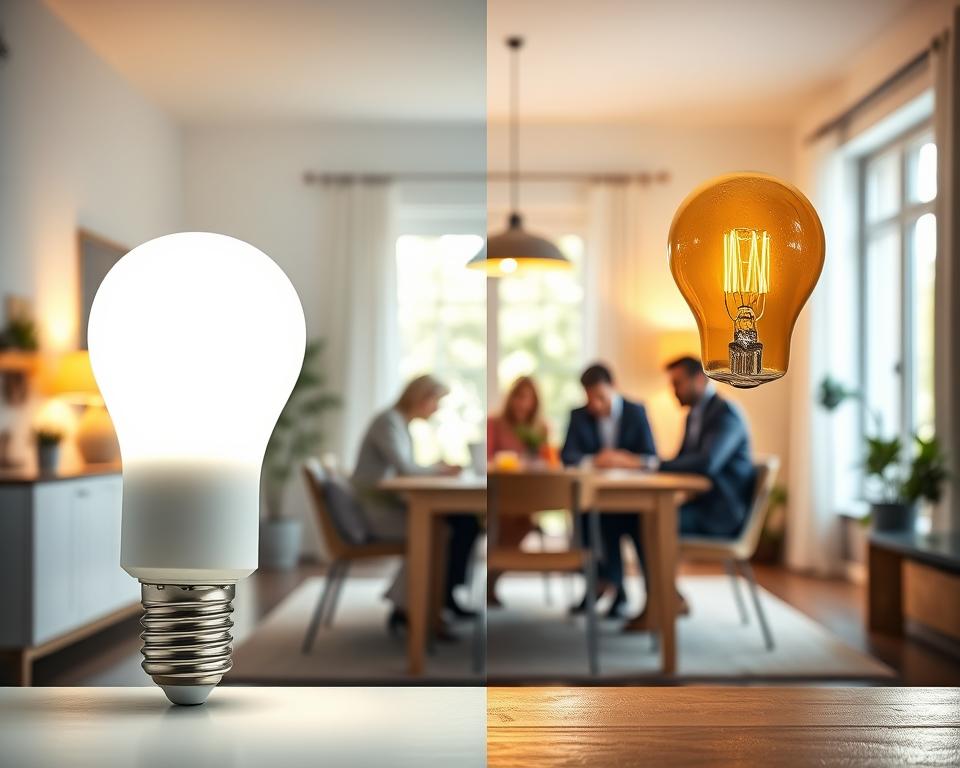
Choosing LEDs means a safer home for you. The benefits of switching to LED lighting at home go beyond saving energy. They also bring safety features that give you peace of mind.
Versatility: Applications in Home
LED lighting has changed how we light our homes, opening up many creative options. Its versatility makes it perfect for different uses around the house.
Outdoor Lighting Options
LED lights can make your outdoor spaces look amazing. They create a warm welcome and keep your home safe. For example, LED strip lights can show off your home’s design or light up your garden beautifully.
Some top picks for outdoor LED lighting are:
- Pathway lights to guide visitors
- Floodlights to light up big areas
- String lights for a decorative look
Indoor Decorative Uses
Indoor LED lighting lets you decorate your home in many ways. It can make your living room cozy or your kitchen modern. LEDs also save energy, making your home look better and use less power.
Here are some ideas for indoor LED lighting:
- Accent lights to highlight art or decor
- Under-cabinet lights for kitchen counters
- LED candles for a warm dining area glow
In summary, LED lighting is great for both inside and outside your home. It offers many benefits, like being energy-efficient and stylish. By using LED Lighting Advantages, you can make your home look and feel amazing.
Initial Investment: Cost vs. Benefit
At first, the cost of LED bulbs might seem too high. But, it’s important to look at the bigger picture of switching to LED lighting.
Understanding Upfront Costs
LED bulbs cost more than traditional bulbs at first. This is because they use advanced technology.
Several factors make them more expensive. These include:
- The cost of production, which involves complex manufacturing processes.
- The use of high-quality materials that ensure durability and efficiency.
- Research and development costs associated with improving LED technology.
Long-Term Financial Benefits
Even though they cost more upfront, LED bulbs save money in the long run. This is mainly due to energy savings and lower maintenance costs.
Some key long-term benefits are:
- Energy Efficiency: LEDs use much less energy than traditional lights, which means lower bills.
- Longer Lifespan: LEDs last up to 50,000 hours or more. This means you don’t have to replace them as often, saving on maintenance costs.
To show how LEDs are cost-effective, let’s compare them:
| Lighting Type | Initial Cost | Energy Consumption | Lifespan |
|---|---|---|---|
| LED | $5-$10 per bulb | Low | Up to 50,000 hours |
| Incandescent | $1-$5 per bulb | High | 1,000-2,000 hours |
The table shows that while LEDs cost more at first, their long lifespan and low energy use make them cheaper in the long run.
Smart Technology: LED Innovations
Smart technology has changed LED lighting a lot. It now offers more control and flexibility. This makes it easier to manage lights from anywhere.
LED Smart Bulbs Features
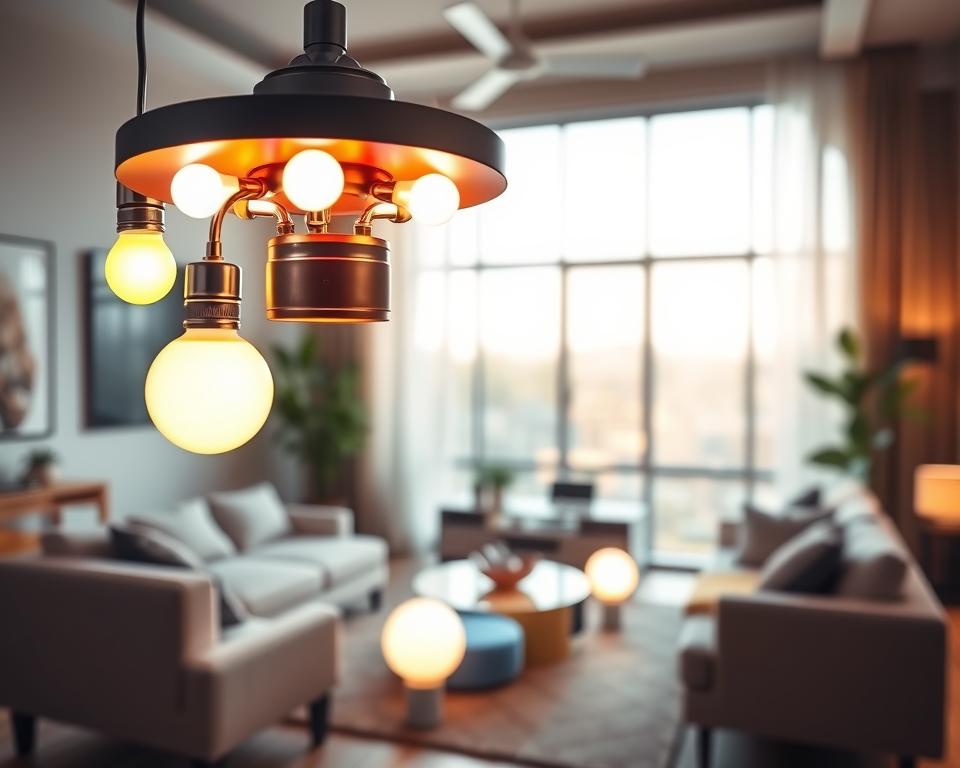
LED smart bulbs have cool features. You can change their color temperature to match your mood. They also let you adjust brightness to your liking.
Some bulbs can change colors too. This lets you set different moods in your room. It’s great for decorating or just to change the feel of a space.
Compatibility with Home Automation
LED smart bulbs work well with home automation systems. This means you can control them with other smart devices. You can use Amazon Alexa or Google Home to manage your lights easily.
You can also set up schedules and scenes. For example, lights can turn on for movie nights or dinner. This makes your home lighting better and saves energy.
Using LED smart bulbs with home automation brings many benefits. You get more control, better energy use, and a lighting experience that’s just right for you.
Impact on Mood: Lighting and Wellbeing
LED lighting does more than just light up a room. It also shapes the mood and wellbeing of those inside. The lighting in our homes can greatly affect how we feel and our overall happiness.
Psychological Effects of Lighting
Lighting has a big impact on our minds. It can change how we feel, our energy, and even how productive we are. For example, bright lights can make us feel more awake and focused. Soft, warm lights, on the other hand, help us relax and unwind.
Color temperature is key here. LEDs come in different colors, from cool white to warm white. Cool white is great for places where we need to pay attention, like kitchens or offices. Warm white is better for living rooms and bedrooms, where we want to feel cozy.
Creating Ambiance with LEDs
LEDs are special because they can be dimmed. This lets us change the light to fit our mood and needs. Whether we want bright lights for a party or soft lights for a quiet night, LEDs can do it all.
Here’s a table showing how LEDs can change the mood in different situations:
| Scenario | Recommended LED Setting | Effect |
|---|---|---|
| Reading | Bright, Cool White | Enhances focus and reduces eye strain |
| Relaxation | Dim, Warm White | Creates a cozy, calming atmosphere |
| Entertaining | Bright, Color-Changing | Sets a lively, festive mood |
In summary, LED lighting gives us many ways to improve our home’s atmosphere. By picking the right color and brightness, we can really boost our mood and wellbeing.
Choosing the Right LED Bulbs for Your Home
Choosing the right LED bulbs for your home means looking at brightness and color temperature. With many options, it’s key to think about what you need. This ensures you pick the best bulbs for your space.
Factors to Consider
When picking LED bulbs, consider a few important things. These include:
- Brightness: Brightness is measured in lumens. A 60W incandescent bulb is like an 800 lumen LED bulb.
- Color Temperature: Color temperature is in Kelvin (K). Warm white (2700K-3000K) is cozy, while cool white (3500K-5000K) is brighter and energizing.
- Compatibility: Make sure the LED bulb fits your fixtures, like dimmer switches.
- Energy Efficiency: Choose bulbs with high lumens per watt (lm/W) for energy savings.
As LED Lighting Advantages grow, more people switch to LED. A study shows LED lighting can cut energy use by up to 80% compared to old lighting.
| Feature | Traditional Bulbs | LED Bulbs |
|---|---|---|
| Energy Consumption | High | Low |
| Lifespan | Short (1,000 – 2,000 hours) | Long (15,000 – 50,000 hours) |
| Environmental Impact | Higher due to energy use and disposal | Lower due to energy efficiency and longer life |
“LED lighting is not just about energy efficiency; it’s also about creating a more comfortable and inviting living space.”
Popular Brands to Consider
Some top LED lighting brands include:
- Philips LED
- LIFX
- GE Lighting
- Cree LED
These brands offer a variety of products. They have features like color changing, smart home integration, and high CRI for natural light.
By looking at these factors and checking out well-known brands, you can choose wisely. This will improve your home’s lighting and save money with Cost-Effective LED Lighting.
Conclusion: Making the Switch
Switching to LED lighting at home brings many benefits. You save energy, get better lighting, and stay safe. Knowing these advantages helps homeowners choose the right lighting.
Key Advantages
LED lighting cuts down on energy use, lasts longer, and is better for the planet. You get to enjoy
Energy Savings with LED Lights
that save you money in the long run.
Take the First Step
Think about using LED lighting in your home. It’s a smart choice for a greener, cheaper lighting option. Start by looking at your current lighting and check out LED options from brands like Philips and LIFX.