

I recently found out that a lot of a home’s energy is lost through windows. Up to 30% of heating and cooling energy is lost this way. This shows how important it is to find ways to keep indoor temperatures natural.
Energy-efficient window treatments are a simple yet effective way to reduce this energy loss. By using natural ways to regulate room temperature with window coverings, homeowners can make their homes more sustainable. They can also save money on energy costs.
As we explore the role of curtains and blinds in natural temperature regulation, you’ll learn how to make informed choices about your window treatments. This will help make your home more comfortable and efficient.
Key Takeaways
- Understand how window treatments impact your home’s energy efficiency.
- Learn natural ways to regulate room temperature using window coverings.
- Discover the benefits of energy-efficient window treatments for your home.
- Find out how to choose the right curtains and blinds for your climate.
- Get tips on maximizing your home’s comfort while reducing energy costs.
Understanding the Importance of Temperature Regulation
Keeping the right temperature in my home is key. It makes me comfortable and helps with my energy bills. It’s not just about being cozy; it’s about health and work too.
Having a steady and comfy temperature is important. It affects my comfort, energy use, and air quality. When my home is just right, I feel better and can focus.
Why Temperature Matters in My Home
Temperature control is essential for my health and home. Bad temperatures can make me uncomfortable, sick, and cost more to heat or cool. For example, too much heat can make me dehydrated or overheated, while too little can make me cold.
Key reasons why temperature matters include:
- Comfort and relaxation
- Energy efficiency and cost savings
- Improved indoor air quality
- Health and well-being
Benefits of Natural Temperature Control
Using curtains and blinds for natural temperature control has many benefits. They help cut down on the need for air conditioning and heaters, saving energy and money.
Some of the key benefits include:
| Benefit | Description |
|---|---|
| Energy Efficiency | Reduces the need for mechanical heating and cooling |
| Cost Savings | Lowers energy consumption and utility bills |
| Indoor Air Quality | Helps maintain a healthier indoor environment |
Comparing Natural and Mechanical Methods
Natural and mechanical methods both have their good and bad sides. Natural methods, like curtains and blinds, are good for the planet and save money over time.
Mechanical methods, like air conditioning, work fast but use a lot of energy and cost more.
A comparison of natural and mechanical methods reveals that:
- Natural methods are sustainable and energy-efficient
- Mechanical methods offer rapid temperature adjustments
By understanding the importance of temperature control and using natural methods like curtains and blinds, I can make my home more comfortable and energy-smart.
Types of Curtains for Temperature Regulation
Curtains do more than just look good; they help keep my home at a comfortable temperature. By picking the right curtains, I can use less energy for heating and cooling. This makes my home more energy-efficient.
The material and thickness of curtains are key for controlling temperature. Different fabrics and weights block sunlight and keep warmth in or out.
Heavy Drapes vs. Light Fabrics
Heavy drapes keep warmth in during winter and out in summer. They’re thick and insulate well. Light fabrics let more sunlight in and are better for warmer places or milder seasons.
Heavy drapes are great for sunny rooms or places with cold drafts. They can be velvet, thermal, or even blackout to block light.
Thermal Insulated Curtains
Thermal insulated curtains offer top-notch insulation. They have layers, including a thermal lining, to keep warmth in and cold out. These are perfect for saving energy, mainly in cold areas.
Using thermal insulated curtains helps stop heat loss through windows. This keeps my home warmer and cuts down on heating needs.
Blackout Curtains and Energy Efficiency
Blackout curtains are great for controlling temperature. They block sunlight, keeping my home cool in summer. This stops sunlight from heating up my home.
Blackout curtains also offer privacy and better sleep by keeping rooms dark. They come in many styles and materials, fitting any decor.
Choosing the right curtains, like thermal curtains for energy savings, makes my home more comfy and efficient. Whether it’s heavy drapes, thermal, or blackout, each type has its own benefits for temperature control.
Exploring Different Blinds for Your Space
I’ve found that different blinds can really change how my home feels. There are many types to pick from. Each one helps control light, keeps my home warm or cool, and makes it comfy inside.
Roller Blinds for Versatile Control
Roller blinds are loved for their easy use and flexibility. They can be rolled up or down to let in the right amount of light. They also come in many fabrics, so I can pick the perfect one for my needs.
Venetian Blinds for Adjustable Light
Venetian blinds let you control light with their slats. You can turn them to catch sunlight just right. They come in materials like aluminum, PVC, or wood, giving you lots of style choices.
Cellular Shades for Insulation
Cellular shades, or honeycomb shades, are great for keeping your home warm or cool. Their special design traps air, helping to keep your home’s temperature steady. They’re perfect for keeping warm in winter and cool in summer.
To see how each blind type compares, here’s a table:
| Blind Type | Light Control | Insulation | Customization |
|---|---|---|---|
| Roller Blinds | Excellent | Good | High |
| Venetian Blinds | Excellent | Fair | High |
| Cellular Shades | Good | Excellent | Medium |
By picking the right blinds, I can keep my home’s temperature just right. This means I use less energy for heating and cooling. Plus, it makes my home more eco-friendly.
How Curtains Can Keep My Home Cool in Summer
I’ve found that using curtains is a simple yet effective way to cool my home in summer. By controlling sunlight, I can use less air conditioning. This helps keep my home at a comfortable temperature.
Blocking Sunlight with Drapes
Blocking direct sunlight with drapes is a great way to cool my home. Thick, heavy drapes work best at keeping sunlight out. Closing them during the hottest times stops my home from getting too hot.
Choosing Light Colors for Sun Reflection
The color of my curtains also matters for cooling. Light-colored curtains reflect sunlight, keeping my home cooler. This simple choice helps keep my home cooler.
Best Curtain Positions for Shade
Where I place my curtains is also important. Keeping curtains closed on sunny windows stops heat from coming in. For shaded windows, I adjust curtains to let in light but not heat.
| Curtain Type | Effectiveness in Summer | Best Use |
|---|---|---|
| Thick, Heavy Drapes | High | Blocking direct sunlight |
| Light-Colored Curtains | Medium | Reflecting sun rays |
| Thermal Insulated Curtains | High | Keeping homes cool in summer and warm in winter |
Using these strategies, I can keep my home cool in summer. This reduces my need for air conditioning. It makes my home a more comfortable place to live.
Blinds for Winter Warmth and Comfort
As winter gets colder, I’m looking into energy-efficient window treatments to stay warm. I’ve discovered that blinds are key to keeping my home cozy.
Blinds help keep cold air out, which is important for a warm home. They seal well, helping to keep the temperature inside just right.
Keeping Cold Air Out with Proper Sealing
To block cold air, my blinds need to seal well. I use blinds that fit tightly or add strips to seal the edges. This helps a lot in keeping my home warm.
Positioning Blinds for Optimal Heat Retention
It’s also important to position my blinds right. At night, I close them to add insulation. This keeps warmth in and cold out, making my home more efficient.
Using blinds wisely makes my home warmer and cozier in winter. It also means I use less heat, saving energy and money.
Blend of Curtains and Blinds for Maximum Effectiveness
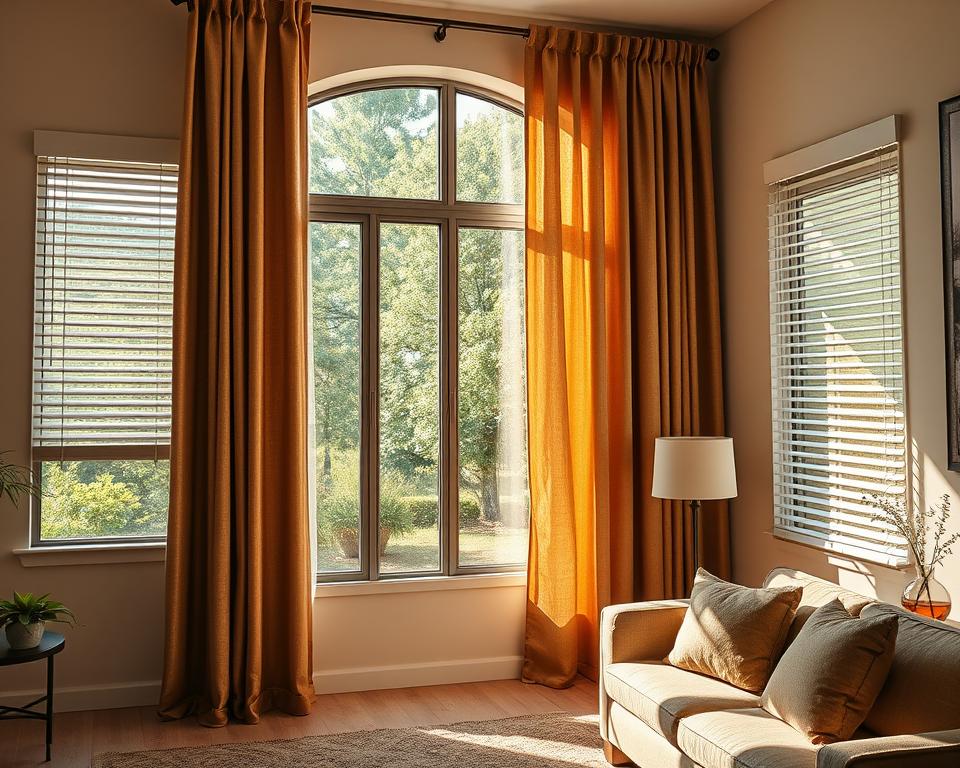
Using both curtains and blinds is a smart way to keep your room cool naturally. By stacking these window treatments, I can block sunlight and make my home more energy-efficient.
Layering Techniques for Temperature Control
Layering curtains and blinds lets me control the room’s temperature in different ways. In the day, blinds filter sunlight to keep it cool in summer. At night, curtains add insulation to keep warmth in during winter.
For more tips on mixing blinds with curtains, I can check out Bumblebee Blinds. They have lots of ideas and methods to try.
Complementary Color Schemes and Fabrics
Choosing the right colors and fabrics for my curtains and blinds helps with temperature control. Light colors reflect sunlight, cooling rooms. Darker colors absorb heat, which is good in cold months.
By picking fabrics that match, I get a window treatment that’s both stylish and functional. It keeps the room at a good temperature and looks great too.
Creating a Cozy Atmosphere with Textures
The texture of my curtains and blinds also affects the room’s feel. Thicker fabrics make a room warmer and more welcoming. Smoother textures give a modern, sleek look.
Mixing different textures creates a layered look. It’s not only pretty but also helps keep the room at a comfortable temperature.
Maintenance Tips for Curtains and Blinds
Proper care for curtains and blinds can make them last longer. It keeps them clean and working well. This helps control my home’s temperature.
Cleaning and Care for Longevity
To keep curtains and blinds in top shape, I follow simple steps. For curtains, vacuuming or shaking off dust works well. For deeper cleaning, I check the label to see if they can be washed or need dry cleaning.
For blinds, a soft cloth or a blind duster is best for dusting. A damp cloth can tackle tough stains, but I dry them well to avoid water spots.
Regular cleaning keeps them looking good and working right. It helps control light and temperature.
Seasonal Adjustments for Optimal Performance
Adjusting curtains and blinds with the seasons boosts their performance. In summer, I use light-colored curtains to reflect sunlight. In winter, I switch to thicker curtains or add thermal linings to keep warm.
For blinds, adjusting slats by season also helps. In summer, I block direct sunlight when it’s hottest. In winter, I open them for sunlight and close at night to save heat.
“The key to effective window treatment is not just in the initial choice but also in how well they are maintained and adjusted throughout the year.”
By following these tips and adjusting with the seasons, my curtains and blinds stay effective. They help keep my home comfortable all year.
The Role of Window Size and Orientation
Knowing how window size and orientation affect temperature is important. The position and size of my windows greatly impact the sunlight and heat they let in.
Assessing My Windows’ Exposure
To choose the right window treatments, I need to understand my windows’ exposure. This means looking at the direction they face and how that affects the sunlight they get. For example:
- South-facing windows get the most sunlight and heat.
- North-facing windows get the least sunlight and stay cooler.
- East- and west-facing windows get morning and afternoon sun, respectively.
Knowing my windows’ exposure helps me pick the best treatments for thermal insulation for windows. This boosts my home’s energy efficiency.
Custom Solutions for Different Room Types
Different rooms in my home might need different window treatments. This depends on their size, orientation, and purpose. For instance:
- Living rooms with big south-facing windows might need heavy drapes or blackout curtains to control sunlight and heat.
- Bedrooms with smaller windows might do better with lighter, more transparent options. This lets in natural light while keeping things private.
By customizing my window treatments for each room, I can improve thermal insulation for windows. This makes my home more comfortable.
My Favorite DIY Projects for Curtains and Blinds
I’ve found making my own curtains and blinds to be rewarding and eco-friendly. It lets me personalize my space and make my home more energy-efficient.
One of the best parts of DIY window treatments is upcycling old fabrics. This gives them a new life and cuts down on waste. Old sheets, linens, or fabric scraps can turn into beautiful, useful curtains.
Upcycling Old Fabrics for Sustainable Use
To upcycle, I start with materials I already have at home. For example, an old sheet can become a lovely curtain with a simple hem. I like to use a contrasting thread for a decorative touch. Here’s how to do it:
- Choose the fabric: Pick something durable and right for curtains or blinds.
- Measure your windows: Getting the measurements right is key for a perfect fit.
- Hem the edges: A simple hem can make your fabric look finished.
- Add any embellishments: Think about adding ties, tassels, or other decorations.
Making custom blinds is another DIY project I enjoy. It lets me tailor the blinds to my windows and home’s decor.
Crafting Custom Blinds for Unique Spaces
For custom blinds, I often use natural materials like bamboo or wood. These add warmth and control light well. Here’s a simple guide to making custom blinds:
| Material | Light Control | Durability |
|---|---|---|
| Bamboo | Excellent | High |
| Wood | Good | High |
| Fabric | Variable | Medium |
By making my own curtains and blinds, I can ensure they fit my windows perfectly and match my home’s look. It’s a fun and rewarding process that also helps the environment.
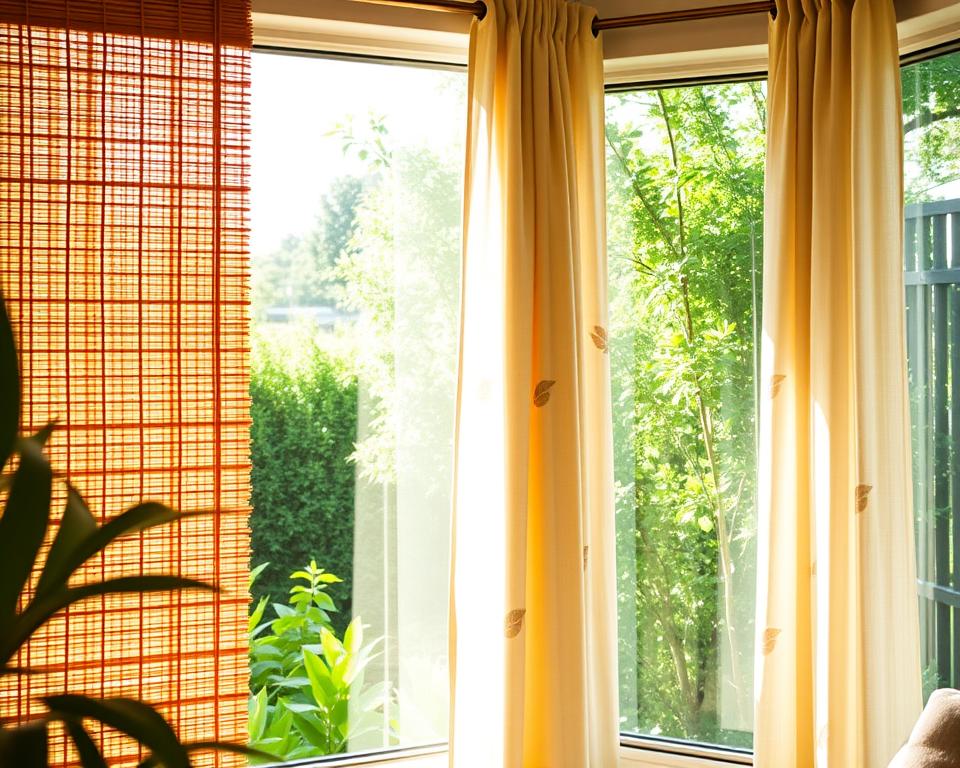
Whether you’re upcycling old fabrics or making custom blinds, DIY window treatments are a creative way to make your home more sustainable and stylish.
Measuring for Perfect Fit
Getting your windows measured right is key for using curtains and blinds to control temperature. When I make sure my window treatments fit just right, they work better at keeping my home cool or warm.
Gaining Accurate Measurements for My Windows
To get the perfect fit, I need to measure my windows carefully. I measure the width and length of each window. I also check for any handles or molding that might affect the fit.
I use a steel tape measure for accuracy. And I take multiple measurements to make sure they’re consistent.
Tips for Accurate Measurements:
- Measure the width of the window at the top, middle, and bottom to account for any variations.
- Measure the length of the window from the top of the molding to the desired endpoint, whether it’s the sill, apron, or floor.
- Consider the depth of the window recess if you’re planning to install blinds or curtains inside it.
Other Factors to Consider for a Good Fit
Other things can also affect how well curtains and blinds fit and work. For example, the type of window frame and the room’s decor can play a role. As “The right window treatments can make a significant difference in a room’s ambiance and functionality.”
Some key things to think about include:
| Factor | Impact on Fit |
|---|---|
| Window Orientation | Affects the amount of sunlight and heat gain. |
| Window Type | Influences the type of curtain or blind that can be installed. |
| Decor Style | Dictates the style and material of the curtains or blinds. |
By thinking about these factors and measuring accurately, I can pick curtains and blinds that fit perfectly. They also make my home more comfortable and look better.
Budget-Friendly Options for Temperature Control
I’ve found that using curtains and blinds is a cheap way to control my home’s temperature. By picking the right window treatments, I can use less heating and cooling. This saves me money and helps the planet.
One great way to control temperature is with thermal curtains for energy savings. These curtains keep warmth in winter and out in summer. They’re perfect for staying comfy all year.
Affordable Curtain and Blind Solutions
There are many affordable curtain and blind options. For example, eco-friendly window coverings help with temperature and look good in my home.
Here are some budget-friendly tips:
- Shop during sales or use online discount codes.
- Try DIY projects, like making new curtains from old fabrics.
- Check local thrift stores or second-hand shops for cheap materials.
Where to Find Good Deals and Sales
Looking for deals on curtains and blinds takes some effort. I check online, home goods stores, and local shops for discounts. Also, signing up for newsletters and following social media can help find sales.
As
“A penny saved is a penny earned,”
being smart about spending on window treatments lets me save for other home needs.
Conclusion: Embracing Natural Regulation Techniques
Reflecting on my journey to improve my home’s temperature, I’ve found simple yet effective methods. Using curtains and blinds helps me control the room’s temperature. This way, I’ve cut down on using mechanical heating and cooling, making my home more energy-efficient.
My Reflections on Window Treatments
I’ve discovered that different curtains and blinds can greatly affect my home’s temperature. From heavy drapes to thermal insulated curtains, each has its own benefits. Understanding these options helps me choose the best for my windows.
Future Plans for Energy Efficiency
Looking ahead, I’m eager to find more ways to make my home more energy-efficient. I plan to use different window coverings together and explore new technologies. By using natural methods to control room temperature, I aim to create a more comfortable and sustainable home.