
Did you know that urban farming can boost food security and cut carbon emissions in cities? As someone who loves sustainable gardening, I’m thrilled to share the perks of growing your own food in urban areas.
By using composting and gardening, people can change their urban surroundings. This makes communities healthier. This guide will cover the basics of urban gardening and composting. It will give you tips and insights to begin.
Key Takeaways
- Discover the benefits of urban gardening for food security and environmental sustainability.
- Learn how composting can enhance your gardening experience.
- Explore tips for starting your own urban garden.
- Understand the impact of sustainable gardening on community health.
- Get insights into transforming your urban space into a green oasis.
What is Urban Gardening?
Urban gardening is a new way to grow plants in cities. It offers many benefits for people and communities. Let’s explore the different types and advantages of urban gardening.
Definition and Benefits
Urban gardening means growing plants in cities. It includes growing veggies, fruits, flowers, and herbs. The benefits are many, like more food security, better mental health, and more biodiversity.
Types of Urban Gardens
Urban gardens come in many styles, based on space and preference. Here are a few:
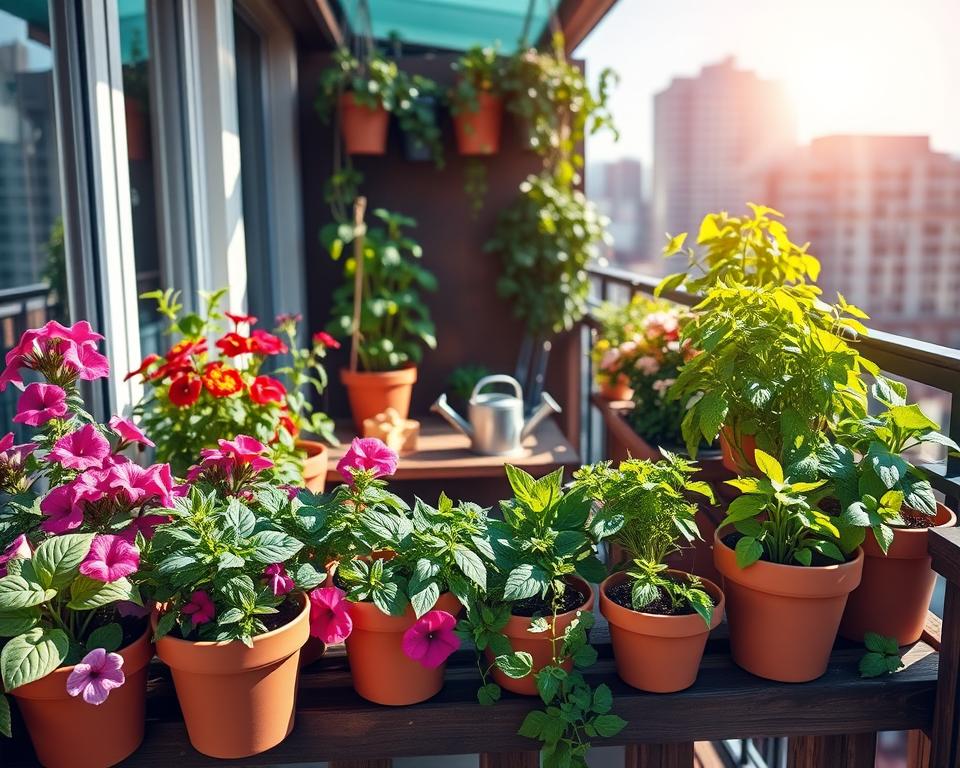
- Container gardens use pots on balconies, patios, or rooftops.
- Vertical gardens use walls to create green spaces.
- Community gardens are shared plots where people work together.
How to Start Your Own Urban Garden
Starting an urban garden is rewarding. First, check your space and pick the best spot. Think about sunlight, soil, and how easy it is to get to. Start small with containers or a few beds and grow your garden over time.
The Importance of Composting
Composting is key in urban gardening. It turns waste into a valuable resource for your garden. This process is simple yet effective.
What is Composting?
Composting breaks down organic materials like food scraps and leaves into a nutrient-rich soil. Microorganisms turn these materials into a humus-like substance. This substance is full of beneficial microbes.
Benefits of Composting for Urban Gardeners
Composting has many benefits for urban gardeners. It makes the soil richer in nutrients and improves its structure. It also supports healthy microbial activity.
By composting, gardeners can reduce waste and adopt a sustainable practice.
Some key benefits of composting include:
- Improved soil fertility and structure
- Increased microbial activity
- Reduced waste sent to landfills
- Enhanced plant growth and health
To get the most out of composting, here are some composting tips:
- Balance “green” materials (food scraps, grass clippings) with “brown” materials (dried leaves, straw)
- Maintain adequate moisture and aeration
- Monitor temperature to ensure optimal decomposition
| Composting Materials | Carbon-to-Nitrogen Ratio | Moisture Level |
|---|---|---|
| Food Scraps | Low C:N Ratio | High |
| Dried Leaves | High C:N Ratio | Low |
| Grass Clippings | Medium C:N Ratio | Medium |
Understanding composting’s importance and using these composting tips helps urban gardeners. They can make their gardens more sustainable and productive.
Planning Your Urban Garden Space
Starting an urban garden requires careful planning. I’m setting up my own urban oasis and need to think about a few important things. I must assess the space, pick the best location, and plan my plants.
Assessing Available Space
First, I look at the space I have. I check both indoor and outdoor areas around my home. For outdoor spots, I consider size, sunlight, and soil quality. Indoor areas need good light and stable temperatures.
Choosing the Right Location
After checking my space, I pick the best spot for my garden. For outdoor gardens, I choose a spot with enough sunlight for my plants. Most plants need at least 6 hours of direct sunlight daily. For indoor gardens, a south-facing window is ideal.
Creating a Planting Plan
Now, I plan what to plant and where. I think about growing plants together to help each other. I also plan to rotate crops to keep the soil healthy and prevent pests.
By following these steps, I can make a vibrant urban garden. Whether I have a small balcony or a big backyard, planning is essential for success.
Selecting Plants for Urban Gardening
The secret to a great urban garden is picking the right plants for limited spaces. This is key for balcony gardening. With smart choices, you can have a lush garden in even the tiniest spots.
Best Plants for Limited Spaces
For small areas, pick plants that are compact or grow up. Here are some top picks:
- Herbs like basil, mint, and cilantro do well in small pots.
- Leafy greens such as lettuce, kale, and spinach grow great in containers.
- Succulents and cacti need little care and look good.
- Climbing plants like tomatoes and peas grow up on trellises.
Seasonal Planting Tips
Think about the season when gardening in the city. Here’s how:
- In the spring, start with cool-season crops like broccoli, carrots, and peas.
- When it’s summer, plant warm-season crops like tomatoes, peppers, and eggplants.
- In the fall, go back to cool-season crops, and add some hardy greens.
- In winter, try indoor gardening or cold frames to keep growing.
By following these tips and picking the right plants, your urban garden will thrive all year.
Composting Methods for Beginners
Effective organic waste management is key to successful urban gardening, and composting is at the heart of this process. As a beginner, understanding the different composting methods can help you choose the best approach for your needs.
Traditional Composting
Traditional composting is one of the most common methods used in urban gardening. It involves breaking down organic materials like kitchen scraps, leaves, and grass clippings into a nutrient-rich compost. This method requires a compost bin or pile where you layer ‘green’ materials (like food scraps) with ‘brown’ materials (like dried leaves).
Benefits of Traditional Composting: It’s cost-effective and can handle a large volume of organic waste. But, it requires regular maintenance, including turning the compost pile to ensure aeration.
Bokashi Composting
Bokashi composting is a fermentation-based method that uses microorganisms to break down organic matter. It’s perfect for urban gardeners with limited space, as it can be done indoors and doesn’t produce unpleasant odors.
How Bokashi Composting Works: You layer kitchen scraps and other organic materials in a sealed container, sprinkling Bokashi bran between layers. The fermentation process typically takes a few weeks, after which the compost is ready to be buried in the garden or added to a traditional compost pile.
Vermicomposting
Vermicomposting, or worm composting, involves using red wiggler worms to break down organic waste. This method is ideal for small-scale urban gardening and can be done indoors.
Advantages of Vermicomposting: It’s a low-maintenance method that produces high-quality compost. Vermicomposting is also a great way to recycle kitchen scraps without generating odors or attracting pests.
By understanding these composting methods, beginners can make informed decisions about how to manage their organic waste effectively, contributing to a healthier urban garden.
Tools and Materials for Urban Gardening
Urban gardening needs the right tools and materials for success. Choosing wisely is key to a thriving garden. The right equipment is essential for a healthy garden.
Essential Gardening Tools
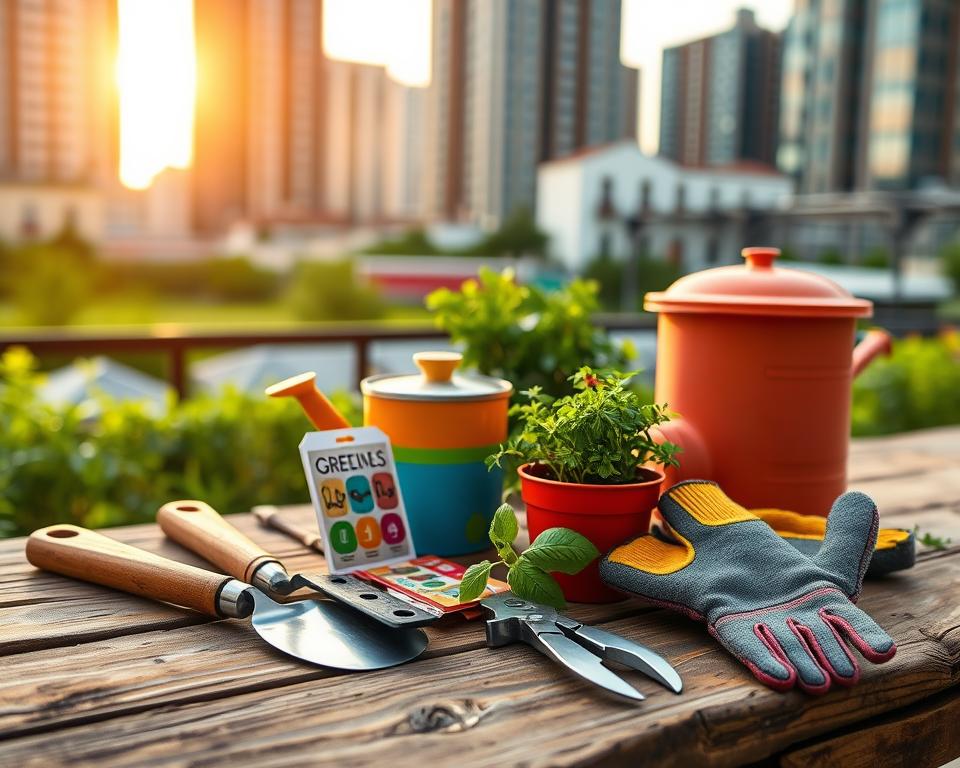
Every urban gardener needs basic tools. A trowel for planting, pruners for trimming, and a gardening fork for turning soil are must-haves. These tools keep your garden healthy and vibrant.
Other important tools include a watering can or hose with a spray nozzle, a rake for leveling soil, and a measuring tape for garden layouts. Quality tools may cost more at first, but they save money and effort in the long run.
Eco-Friendly Materials
Using eco-friendly materials is good for the planet and your garden. Recycled plastic planters, bamboo gardening stakes, and natural fiber gardening twine are great options. They reduce waste and help gardening be more sustainable.
Also, choose organic or compost-based fertilizers. They help plants grow without harmful chemicals. Eco-friendly materials make gardening more sustainable.
| Tool/Material | Description | Eco-Friendly Alternative |
|---|---|---|
| Trowel | For planting and mixing soil | Recycled metal or sustainably sourced wood handle |
| Pruners | For trimming plants | Bamboo or ergonomic handles with recycled materials |
| Gardening Fork | For turning and aerating soil | Sustainably sourced wood or recycled metal |
Maintaining Your Urban Garden
Keeping your urban garden healthy is all about maintenance. This includes watering, fertilizing, and controlling pests. As an urban gardener, it’s key to use sustainable gardening methods for your garden’s health and growth.
Watering and Fertilizing
Watering and fertilizing right is vital for your garden. Too much water can harm roots, while too little stresses plants. Check the soil moisture often and adjust your watering schedule as needed.
For fertilizing, compost is a great choice. It gives plants the nutrients they need. Composting tips can help you make a fertilizer that boosts plant health.
Remember, different plants need different nutrients. Leafy greens need more nitrogen, while fruiting plants need phosphorus. Compost can help meet these needs naturally.
Pest Control in Urban Settings
Pest control is a big part of garden care. Pests like aphids, slugs, and snails can be a problem. To fight them sustainably, try natural methods like introducing beneficial insects or using organic pest control.
Composting tips can also help by making the soil healthier. This makes plants more resistant to pests. Keeping your garden clean by removing weeds and debris also helps prevent pests.
By following these sustainable gardening tips, you can keep your urban garden thriving.
Community Urban Gardening Initiatives
Community urban gardening is changing cities for the better. It makes cities greener and more sustainable. It also brings people together, creating a sense of community.
Getting Involved in Community Gardening
To join a community garden, find one near you. Look for local groups like the Urban Growers Collective. They help urban gardeners. You can also join local events or online forums to meet other gardeners.
Volunteering is a great way to help. Community gardens need people to plant, maintain, and harvest. You’ll learn new things and meet others who share your interests.
Benefits of Community Gardens
Community gardens offer many benefits. You can get fresh produce, meet new people, and learn gardening skills. They also help make cities cooler and cleaner.
They’re also places for learning. You can take workshops on how to garden sustainably. This helps you understand the value of living green and how to do it every day.
Key benefits of community gardens include:
- Increased access to fresh, locally grown produce
- Opportunities for socializing and community building
- Education on sustainable gardening practices
- Promotion of urban green spaces
Tips for Effective Composting
Composting is key for a thriving urban garden and managing organic waste well. By using the right methods, you can make a soil amendment full of nutrients. This supports healthier, more robust plants.
Compost Materials
Knowing what to add and what to skip is vital for composting. Good additions include fruit and veg scraps, coffee grounds, and eggshells. But, avoid meat, dairy, and oily foods. For more tips on what to compost, check out Green Paper Products.
Troubleshooting Compost Issues
Problems like bad smells or pests can be fixed by tweaking your composting. Turn the pile often and keep it moist. These steps help avoid issues and make composting more effective for your garden.