


As a gardener, I’ve learned that composting is key for a healthy garden. Did you know composting can cut up to 30% of household waste from landfills? This simple act not only cuts down on waste but also makes soil full of nutrients.
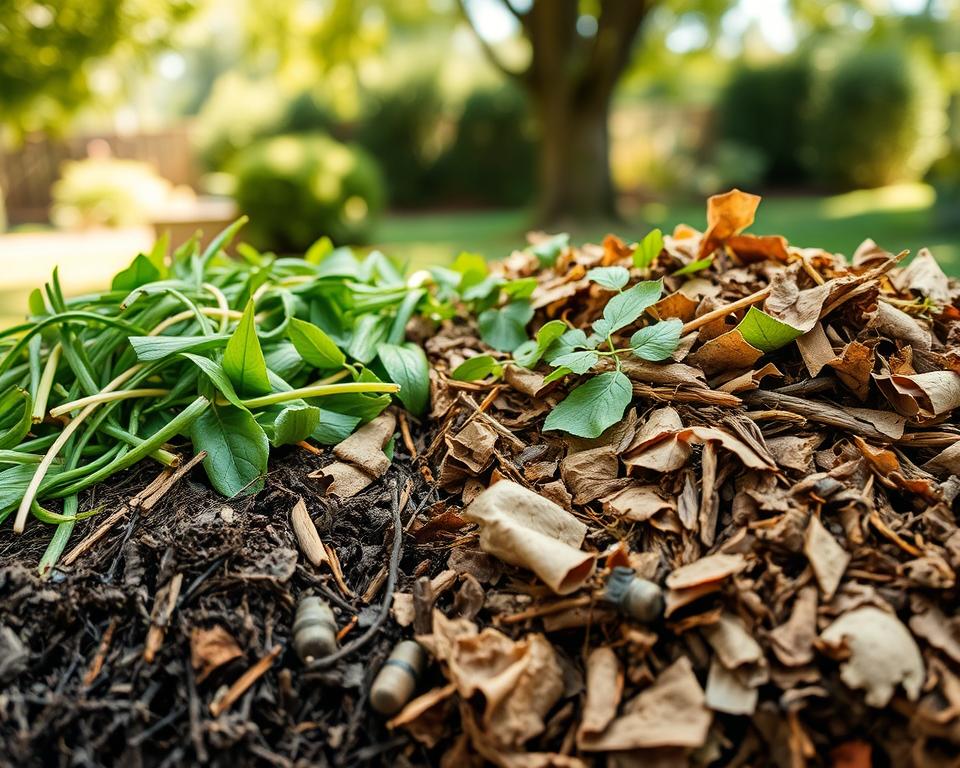
Knowing the differences between green and brown composting materials is important for good composting. Green stuff like food scraps and grass clippings add nitrogen. Brown stuff, like dried leaves and straw, bring carbon.
Key Takeaways
- Composting reduces household waste and creates nutrient-rich soil.
- Green composting materials provide nitrogen.
- Brown composting materials offer carbon.
- Balancing green and brown materials is key for effective composting.
- A well-maintained compost pile can support a healthy garden ecosystem.
Understanding Composting: A Brief Overview
Composting is a simple way to turn waste into something valuable for your garden. It’s about making a compost pile that helps your plants and the environment.
What is Composting?
Composting breaks down organic materials like food scraps and leaves into a nutrient-rich soil. Microorganisms like bacteria and fungi do the work, making compost full of nutrients.
A study on composting explains it well. “Composting is a complex process that breaks down organic materials by microorganisms, resulting in a stable, humus-like product” (Understanding the Greens and Browns of). It reduces waste and gives gardeners a valuable resource.
Benefits of Composting
Composting has many benefits for gardeners and the environment. Some key advantages include:
- Reducing waste sent to landfills
- Creating a nutrient-rich soil amendment
- Improving soil structure and fertility
- Supporting healthy plant growth
- Mitigating climate change by reducing greenhouse gas emissions
By composting, you can keep organic waste out of landfills. Landfills produce methane, a harmful gas. Instead, you make a resource that improves soil health and supports sustainable gardening.
Composting Process Explained
The composting process has several steps. It starts with collecting organic materials and ends with maintaining the pile for optimal decomposition. The process has three main stages:
| Stage | Description | Characteristics |
|---|---|---|
| Initial | Collection of organic materials | High carbon-to-nitrogen ratio |
| Active | Microorganisms break down materials | High temperatures, rapid decomposition |
| Mature | Compost is fully decomposed | Stable, humus-like product |
Knowing these stages helps you manage your compost pile better. This way, you can make high-quality compost for your garden.
Defining Green Compost Materials
Green compost materials are key in the composting process. They are rich in nitrogen and help the compost pile work well. This supports healthy microbes.
Green materials are the heart of a good compost pile. They include grass clippings, kitchen scraps, and manure. These items are full of nitrogen and speed up composting.
Sources of Green Materials
You can find green materials in your kitchen, garden, and local farms. Here are some common sources:
- Kitchen scraps like fruit and vegetable peels
- Grass clippings from your lawn
- Manure from herbivores
- Fresh leaves and green weeds
Using kitchen scraps and other green materials helps reduce waste. It turns waste into a valuable resource for our gardens.

Nutrient Composition
Green materials have a lot of nitrogen, which is key for composting. Nitrogen helps microorganisms break down organic matter. This turns it into a rich compost.
The nutrients in green materials vary. But they usually have nitrogen, phosphorus, and potassium. They also have other micronutrients. This makes them vital for a balanced compost pile.
Role in Composting
Green materials are essential for composting. They provide the nitrogen needed for microbes to grow. A good compost pile needs both green and brown materials for the right carbon-to-nitrogen ratio.
“A good compost pile is like a good recipe; it requires the right balance of ingredients to produce something truly valuable.”
Adding green materials to your compost makes a nutrient-rich soil amendment. This supports healthy plant growth and sustainable gardening.
Defining Brown Compost Materials
Brown materials are key for composting. They add carbon, which helps microbes grow. This makes the compost pile decompose well.
Sources of Brown Materials
Sources of Brown Materials
You can find brown materials around your home or yard. Some common ones are:
- Dry leaves
- Shredded newspaper
- Cardboard
- Straw or hay
- Wood chips or sawdust
These items are full of carbon. They balance out the nitrogen in green materials.
Nutrient Composition
Brown materials have lots of carbon. This is good for microbes. They usually have a carbon-to-nitrogen ratio (C:N) of 25:1 or more. This carbon helps:
- Give energy to microbes
- Balance out green materials
- Help decomposition
For example, straw has a C:N ratio of 80:1. Shredded newspaper is 400:1. Wood chips are 600:1.
Role in Composting
Brown materials do many things in composting. They:
- Soak up extra moisture
- Give carbon to microbes
- Balance green materials
- Support a diverse microbial community
Adding brown materials makes the compost pile work better. It creates a place where organic matter breaks down well.
In short, brown materials are very important for composting. Knowing where to find them, what they’re made of, and how they help is key. This way, you can make a compost mix that’s good for microbes and makes great soil.
The Importance of Balance in Composting
Composting works best when you mix materials just right. It turns organic stuff into a soil booster. Getting the mix just right is key for this magic to happen.
What is the Carbon-to-Nitrogen Ratio?
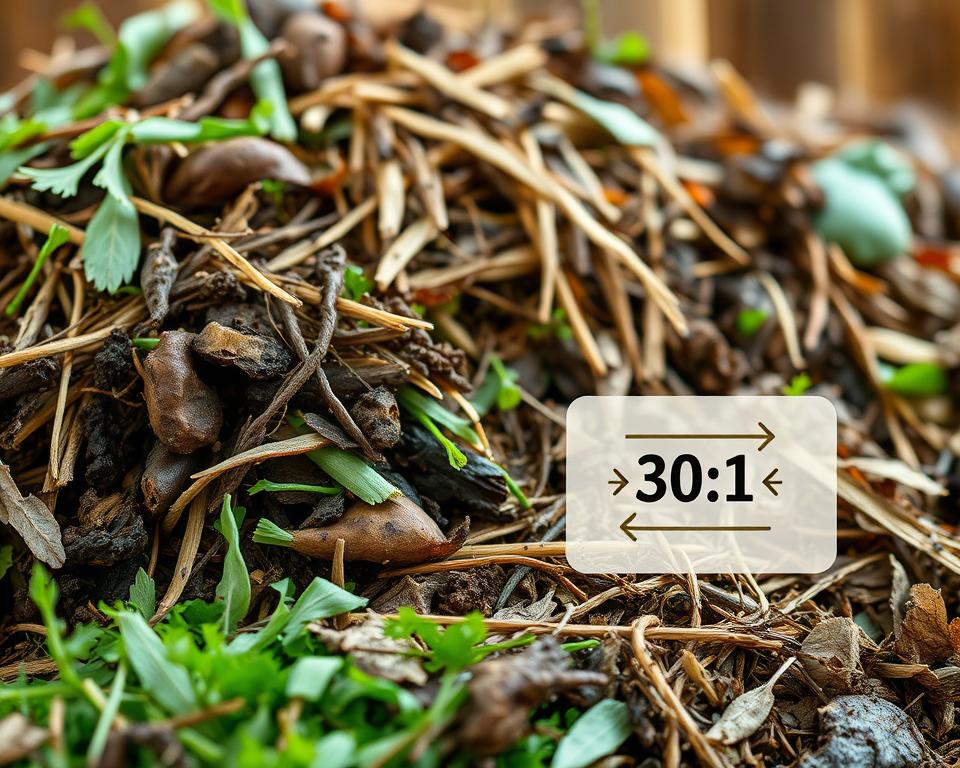
The carbon-to-nitrogen ratio (C:N ratio) is a big deal in composting. It’s about the mix of dry stuff (brown) and wet stuff (green) in your pile. A good mix is vital for composting to work well. Aim for a C:N ratio of 25:1 or 30:1.
- Carbon-rich stuff includes dry leaves, straw, and shredded newspaper.
- Nitrogen-rich stuff includes food scraps, grass clippings, and manure.
Why Balance Matters
Balance is key because it affects how well things break down. A pile that’s too dry or wet, too hot or cold, can mess up the process. But a balanced pile breaks down well, making great compost for your garden.
Tips for Achieving Balance
To get the mix right, pay attention to what you add to your pile. Here are some tips:
- Match “green” and “brown” materials in the right amounts.
- Keep an eye on the pile’s moisture, making sure it’s just right.
- Turn the pile often to keep air flowing and speed up breakdown.
By following these tips and understanding the C:N ratio, you can make a compost pile that’s perfect for your garden.
How to Properly Mix Green and Brown Materials
To make a good compost, you need to mix green and brown materials right. A balanced compost pile is key to making nutrient-rich soil for your garden.
Layering Techniques
Layering is a basic composting technique. It means making layers of green and brown materials to get the right mix. Start with a 4-6 inch layer of brown materials at the bottom. This helps with airflow and soaking up extra moisture.
Here’s a simple layering guide:
- Begin with brown materials (dry leaves, straw, or shredded newspaper)
- Add a layer of green materials (food scraps, grass clippings, or manure)
- Repeat the process, ending with a layer of brown materials on top
Mixing Methods
After layering, it’s time to mix. Mixing spreads heat evenly and stops anaerobic pockets. Use a pitchfork or shovel to gently mix the pile.
Some effective mixing methods include:
- The “turn and mix” method, where you turn the pile over every few days
- The “bin rotation” method, where you rotate the compost bin to mix the materials
| Mixing Method | Description | Frequency |
|---|---|---|
| Turn and Mix | Turn the pile over to mix materials | Every 3-5 days |
| Bin Rotation | Rotate the compost bin to mix materials | Every 7-10 days |
Troubleshooting Common Issues
Even with good layering and mixing, problems can happen. Here are some common issues and how to fix them:
- Pests or odors: Too many green materials; add more brown materials to balance
- Slow decomposition: Not enough nitrogen; add more green materials
- Excess moisture: Too many wet materials; add more brown materials to absorb moisture
By using these layering, mixing, and troubleshooting tips, you’ll make a great compost pile. This will enrich your garden soil.
Common Misconceptions About Composting
Exploring composting, I found many myths that can stop people from trying. Composting is easy and helps reduce waste, making soil better. But, myths can keep people from composting.
Let’s look at some common myths and clear them up. Knowing the truth helps you compost better.
Green Materials are Always Better
Many think green stuff like food scraps is key for compost. But, it’s not just about green stuff. Brown materials, like dried leaves, are also important.
Too much green stuff makes compost wet and smelly. Mixing green and brown materials creates a balanced compost.
Brown Materials Take Too Long to Compost
Some worry brown materials take too long to break down. But, they’re vital for compost balance and carbon.
Brown materials may take longer, but they’re key for a healthy compost. Layering them with green materials helps everything decompose well.
You Can Compost Anything
Not everything can go into compost. Some items can harm the compost or attract pests. Meat, dairy, and oily foods can attract rodents and smell bad. Pet waste can harm plants.
Stick to safe composting materials like fruit and vegetable scraps, tea bags, coffee grounds, and yard trimmings. This way, you avoid problems and make great soil.
Seasonal Considerations for Composting
Understanding seasonal composting is key to a thriving pile. As seasons change, your compost pile may need adjustments. This ensures it decomposes well and avoids problems.
Spring Composting Tips
Spring is perfect for reviving your compost pile after winter. Start by removing debris or weeds that built up. Add fresh green materials like grass clippings or kitchen scraps to boost nitrogen. Mix these well with the existing compost to keep the carbon-to-nitrogen ratio balanced.
Also, check the moisture level of your compost pile. Spring rains can make it too wet, causing anaerobic conditions. Turn the pile as needed to keep it moist and healthy.
Summer Composting Challenges
Summer brings heat and dryness, posing challenges for composting. High temperatures speed up decomposition but can dry out the pile. Keep it moist, even during dry spells.
Managing odors and pests is another summer challenge. Regularly turn the pile and balance green and brown materials to control these issues.
Fall and Winter Composting
In fall, add more brown materials like fallen leaves to balance the green materials from summer. This maintains the carbon-to-nitrogen ratio. Winter composting slows down, but you can keep your pile active.
Consider insulating your compost pile with straw or other brown materials to retain heat. Continue adding materials at a slower rate to keep the pile active until spring.
Composting Techniques for Beginners
Beginners can greatly benefit from learning about composting techniques that fit their needs. Composting is flexible and can work for many lifestyles and settings. Picking the right method makes composting easier and more successful.
Hot vs. Cold Composting
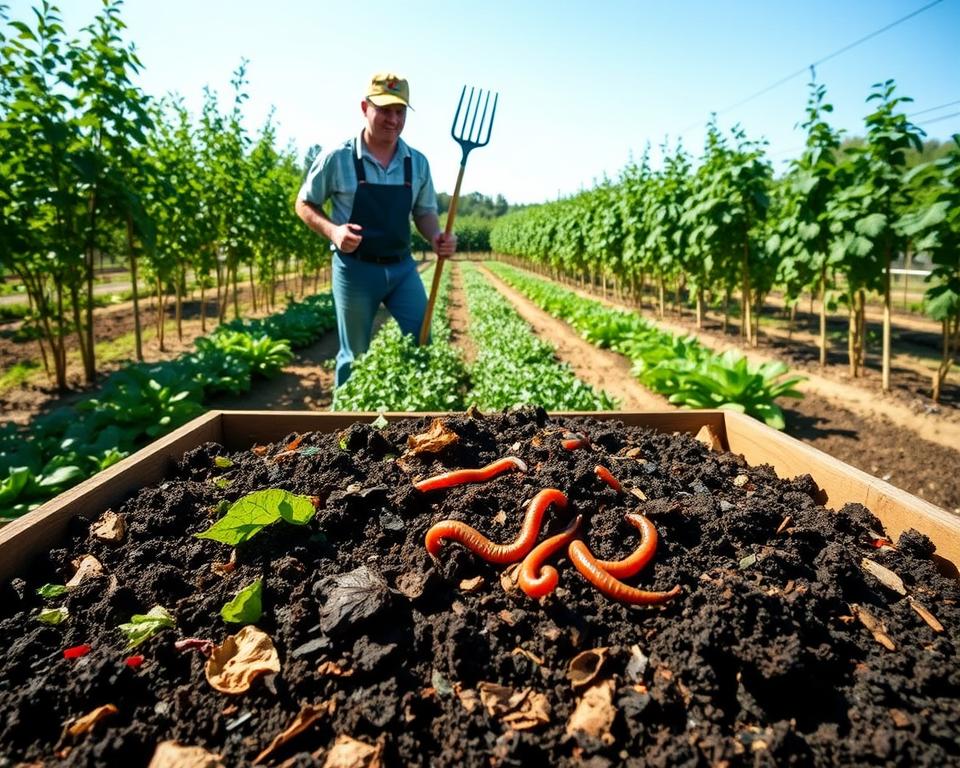
When starting to compost, you’ll decide between hot and cold methods. Hot composting involves managing the pile to keep it hot. This kills pathogens and weed seeds and works faster, taking a few months.
Cold composting is a simpler, slower method. You just add materials as you go, without worrying about temperature. It’s easier and needs less work, but takes longer.
Tumblers vs. Bins
Choosing between compost tumblers and bins depends on your needs. Compost tumblers make turning easier, speeding up decomposition. They’re convenient but cost more upfront.
Compost bins are cheaper and work well too. They come in many sizes and materials, fitting your space and needs.
Kitchen Composting Solutions
For kitchen scraps, there are many options. Kitchen compost bins are small and don’t smell, great for indoors. Worm composting (vermicomposting) is also good for small spaces and is efficient.
Learning about these techniques helps you pick the best one for you. Whether it’s hot or cold composting, tumblers or bins, or kitchen solutions, there’s a method for everyone.
Harvesting and Using Your Compost
Your compost is now a valuable resource for your garden. After months of care, it’s time to use it. This will make your garden healthier.
Signs Your Compost is Ready
Before using your compost, make sure it’s mature. Look for a dark, crumbly texture and a rich smell. If it looks and smells right, it’s ready.
- It’s dark and crumbly
- It has an earthy smell
- It’s free of recognizable pieces of the original materials
How to Use Finished Compost
Finished compost has many uses for your garden. You can mix it into soil to make it better. Or use it as mulch to keep soil moist. You can even make compost tea for extra nutrients.
- Mix it into garden beds to enhance soil quality
- Use it as a top dressing for lawns
- Incorporate it into potting mixes for container gardens
Storage Tips for Compost
Proper storage keeps your compost quality high. Keep it in a covered area or bin. This protects it from weather and pests. Keep it moist, like a damp sponge, to stay active.
By following these tips, you’ll enjoy your compost’s benefits. It will help make your garden healthier and more sustainable.
Final Thoughts on Composting Success
Getting good at composting takes time, effort, and practice. Knowing how to mix green and brown materials is key. This helps your compost pile grow strong, helping your garden and the planet.
Practicing Sustainable Composting
To keep composting green, check your pile often. Make sure it has the right mix of materials and enough water. Doing this well will give you great compost for your soil.
Exploring Resources for Further Learning
There are many ways to learn more about composting. You can find online tutorials, gardening books, and local workshops. These can help you solve problems and improve your composting skills.
Connecting with Local Composting Communities
Being part of local composting groups is very helpful. You can share tips, swap materials, and work on projects together. It makes composting better and helps the environment.