
Reflecting on my journey in container gardening, I see how it can change small spaces into lush gardens. Did you know a good container garden can give up to 1/2 pound of fresh food per square foot? This shows how container gardening can be both efficient and fruitful for city folks and garden experts.
Choosing the right edible plants is key when space is limited. In this article, we’ll look at the top edible plants that do well in containers. This will help you start your own container garden and enjoy the fresh food you grow.
Key Takeaways
- Discover the most productive edible plants for container gardening.
- Learn tips for successfully growing these plants in containers.
- Understand how to maximize your space with container gardening.
- Explore the benefits of growing your own food, even with limited space.
- Get started with container gardening and enjoy fresh, home-grown produce.
Why Choose Container Gardening for Edibles?
Edible container gardening is a great way to grow your own food, even in small spaces. You can use containers to grow many types of edible plants. It’s perfect for both new and experienced gardeners.
Benefits of Growing Edibles in Containers
Container gardening has many benefits. You can control the soil better, which is good for your plants. You can also place containers where they get the most sunlight.
It also keeps your plants safe from diseases and pests. For more tips on choosing the right plants, check out this resource.
Space-Saving Solutions
Container gardening is great for small spaces. You can grow food on balconies, patios, or even windowsills. Containers come in many sizes, helping you use every inch of space.
Versatility in Plant Selection
Container gardening lets you grow a wide variety of plants. You can have everything from leafy greens to tomatoes. It’s easy to change up your garden as you like, making it perfect for trying new recipes.
Factors to Consider When Choosing Edible Plants
When picking edible plants for your container garden, think about a few key things. The right plants will help you grow a successful garden and enjoy the process.
Climate and Temperature Requirements
Edible plants need different climates and temperatures. For example, leafy greens like spinach and lettuce do best in cooler weather. On the other hand, tomatoes and peppers love warmer spots. Knowing your local climate and what your plants need is very important.
- Check the average temperature in your area to choose plants that will thrive.
- Consider using containers that can be moved to different locations based on temperature needs.
Container Size and Material
The size and material of your containers matter a lot for your plants. Bigger containers hold more water but are heavier and harder to move. The container material can also change how the soil feels and how much water it keeps.
- Choose containers that are at least 5-7 gallons for most edible plants.
- Consider using containers made from breathable materials like terracotta or fabric.
Maintenance and Care
Each edible plant has its own care needs. Some, like herbs, need regular trimming, while others, like root vegetables, need special soil. Knowing these needs helps you plan your garden well.
- Research the specific care needs of each edible plant you choose.
- Plan your container garden layout to accommodate the maintenance needs of your plants.
Top Edible Plant: Tomatoes
Tomatoes are a top pick for container gardening. They grow well in small spaces. Growing tomatoes in containers lets you enjoy fresh, homegrown produce.
Best Types of Container Tomatoes
Not all tomatoes are the same for container gardening. Here are some top picks:
- Patio Tomatoes: These compact varieties are perfect for small containers and produce a high yield.
- Tiny Tim Tomatoes: Another compact variety, Tiny Tim Tomatoes are known for their sweet flavor and small size.
- Red Robin Tomatoes: With their deep red color and compact growth, Red Robin Tomatoes are a popular choice for container gardens.
These varieties are great because they’re specifically bred for container gardening. They grow compactly and yield more in smaller spaces.
Care Tips for Container Tomatoes
Here’s what you need to know to care for tomatoes in containers:
- Soil Quality: Use a high-quality potting mix that drains well to prevent waterlogged soil.
- Watering: Tomatoes need consistent moisture, so water deeply but avoid overwatering.
- Sunlight: Tomatoes need full sun to produce well. Choose a spot that gets at least 6 hours of direct sunlight.
- Fertilization: Feed your tomatoes with a balanced fertilizer once a month. This helps them grow and fruit well.
By following these container gardening tips, you can enjoy a bountiful harvest of delicious, homegrown tomatoes.
Leafy Greens That Flourish in Containers
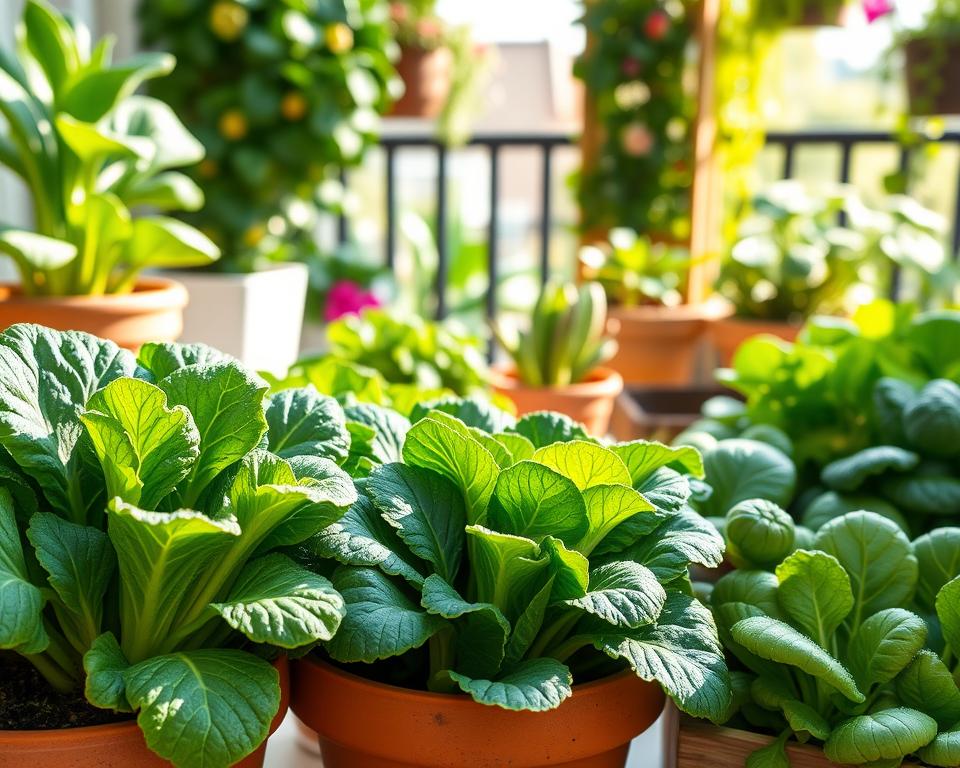
Leafy greens are great for container gardens because they grow easily and are versatile. They add greenery to your garden and give you fresh produce right there.
Popular Options: Spinach and Lettuce
Spinach and lettuce are top picks for container gardening. They need little care and grow well in many conditions. Spinach does well in cooler weather, perfect for spring or fall. Lettuce comes in many types, like loose-leaf and romaine, giving you options.
Soil and Water Needs for Leafy Greens
Leafy greens like soil that drains well and is rich in organic matter. A container mix can give them the nutrients they need. They like moist soil but can get root rot if it’s too wet.
| Plant | Soil Preference | Watering Needs |
|---|---|---|
| Spinach | Well-draining, rich in organic matter | Consistent moisture |
| Lettuce | Well-draining, fertile | Regular watering, avoid overwatering |
Knowing what your leafy greens need helps you create the best container garden. This way, you can enjoy a lot of fresh, tasty greens all season long.
Herbs That Are Perfect for Container Gardening
Herbs add amazing flavors and smells to any garden. They grow well in containers if they get enough sunlight and water.
Container gardening lets you control the soil and water. This is key for herbs’ health. Plus, it’s easy to pick fresh herbs for cooking.
Best Herbs for Beginners
Beginners should start with easy-to-grow herbs. Basil, mint, and parsley are great choices. They’re simple to care for and versatile in cooking.
- Basil is a favorite for gardens and is used in many dishes.
- Mint grows well and is perfect for containers to keep it in check.
- Parsley is full of vitamins and makes salads and soups fresh.
Unique Flavors from Container-Grown Herbs
Herbs grown in containers can have special tastes. For example, Thai basil has a unique anise flavor. Lemon balm adds a citrusy taste. Trying different herbs can make your cooking better and more interesting.
Choosing the right herbs and taking good care of them will give you a great harvest from your container garden.
Peppers: Hot and Sweet Varieties
Peppers are a great choice for container gardens. They add heat or sweetness to your meals. With many colors, shapes, and sizes, they’re tasty and pretty.
Choosing the Right Peppers for Containers
When picking peppers for containers, think about the plant’s size and type. Small containers work best with compact varieties. Larger containers are better for bigger plants. You can grow both hot and sweet peppers, depending on what you like to cook.
Popular choices include ‘Thai Hot’, ‘Bird’s Eye’, and ‘Sweet Mini Bell’ peppers. These are productive and fit well in containers.
Caring for Pepper Plants
Peppers need full sun to grow well. Place containers in a spot with at least 6 hours of direct sunlight. The soil should drain well and be rich in organic matter. Water regularly but avoid waterlogged soil.
Feed the plants with a balanced fertilizer once a month. Watch out for pests and diseases like aphids, spider mites, and fungi. Organic pest control and good garden hygiene can help prevent these problems.
Growing peppers in containers is a top choice for best container plants for food. With the right care, you’ll have a fresh supply of peppers. They’re perfect for growing food in pots.
Root Vegetables and Tubers
Root vegetables and tubers can grow well in containers. They add flavor and nutrition to meals. Container gardening is great for small spaces, perfect for city dwellers or those with little yard.
Best Choices for Container Root Crops
Choosing the right root vegetables and tubers for containers is key. Some top picks include:
- Radishes: They grow fast and need shallow containers.
- Carrots: Compact varieties like ‘Parisienne’ or ‘Thumbelina’ work well in containers.
- Beets: Both the greens and roots are tasty, and they don’t take up much space.
- Potatoes: They need more space but can grow in containers. Try ‘Nicola’ or ‘Red Thumb’.
- Turnips: Great for both roots and greens, they’re versatile.
Pick varieties that are compact or made for container gardening. This ensures the best results.
Harvesting Tips for Container-Grown Roots
Harvesting root vegetables from containers needs timing for the best taste and texture. Here’s how:
- Check the seed package for harvest times, as each variety is different.
- When digging, be gentle to avoid damaging the roots or tubers.
- For ongoing harvests, try succession planting by planting new crops every few weeks.
Here’s a simple table to help with harvest times for common root vegetables:
| Root Vegetable | Days to Harvest |
|---|---|
| Radishes | 20-25 days |
| Carrots | 60-70 days |
| Beets | 50-60 days |
By following these tips, you can enjoy a rich harvest of root vegetables and tubers. They’ll add variety and nutrition to your meals.
Berries and Small Fruits
Looking to add variety to your container garden? Berries and small fruits are perfect for this. They bring delicious and nutritious food to your garden.
Container-Friendly Berry Varieties
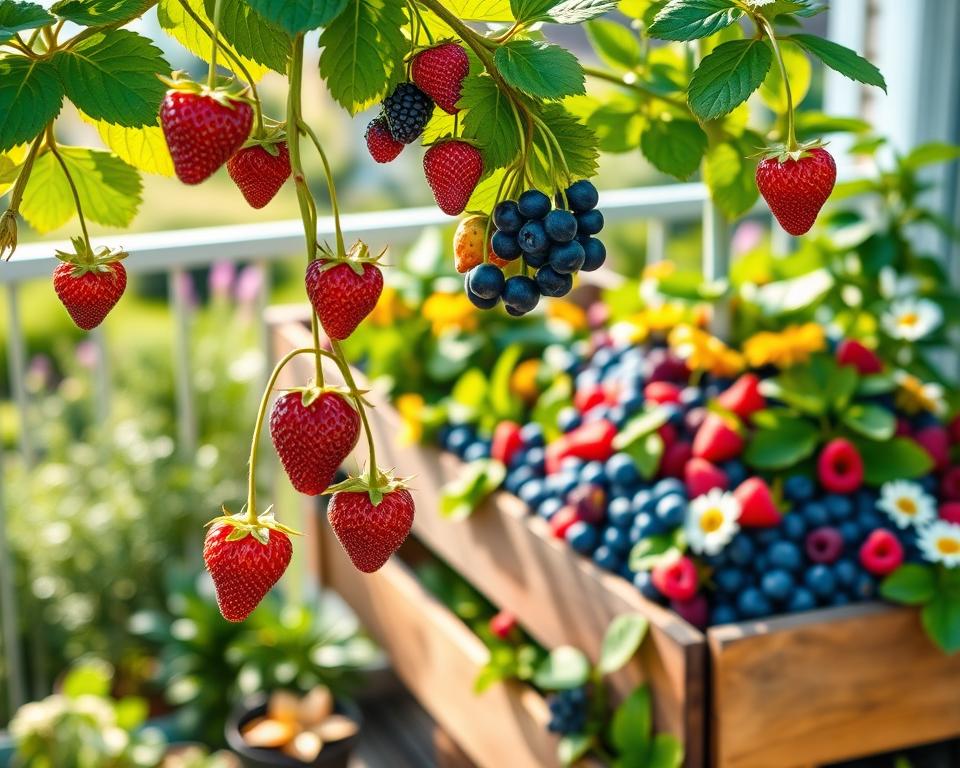
Many berries do well in containers. Think strawberries, blueberries, raspberries, and blackberries. Pick compact or dwarf types made for small spaces.
- Strawberries: Alpine strawberries are perfect for containers. They’re small and produce lots of fruit.
- Blueberries: Dwarf varieties like ‘Tophat’ or ‘Bluecrop’ are great for containers. They need acidic soil and lots of water.
- Raspberries and Blackberries: Choose compact or thornless types for larger containers. Make sure they get enough support.
Pollination and Care for Fruit Plants
Good pollination and care are key for a great berry harvest. Many berries need cross-pollination. So, you might need more than one plant. Water, fertilize, and prune regularly to keep your plants healthy and productive.
- Pollination: Check if your berry needs a pollinator. Some, like strawberries, can pollinate themselves. Others need a friend plant.
- Watering: Berries need steady moisture, more when they’re producing fruit. Make sure your containers drain well to avoid soggy soil.
- Fertilization: Feed your berry plants with a balanced fertilizer during the growing season. Follow the instructions on the package.
Choose the right berry varieties and care for them well. You’ll get a big harvest of tasty berries from your container garden.
Legumes to Grow in Containers
Legumes are great for container gardens because they’re full of nutrients. They have lots of protein, fiber, and other important nutrients. This makes them a great choice for a healthy diet. For more tips on growing edible plants in containers, check out this resource.
Best Beans for Container Gardening
Beans are a top pick for container gardening. They’re easy to care for and grow well in different conditions. Here are some of the best beans for containers:
- Bush Beans: These are small, produce a lot, and fit well in small spaces.
- Pole Beans: They need support but grow well in bigger containers and are very productive.
- Soybeans: They’re not only healthy but also versatile, great for many dishes.
Nutritional Benefits of Growing Legumes
Growing legumes in containers gives you fresh food and lots of health benefits. Legumes are:
- Full of protein, perfect for those who don’t eat meat.
- High in fiber, which helps with digestion and can lower cholesterol.
- Loaded with essential vitamins and minerals, like iron, zinc, and folate.
Adding legumes to your container garden means you’ll always have these nutritious foods ready to eat.
Creative Container Ideas for Edibles
Growing food in pots is not just useful; it’s also a chance to get creative with your garden. Container gardening lets you explore new ways to grow your favorite foods. You can make a thriving edible garden, no matter the size of your space.
Vertical Gardening Techniques
Vertical gardening is a cool way to grow edibles in containers. It saves space and adds a unique look to your garden. Use trellises, wall-mounted planters, or DIY systems to grow plants like peas, cucumbers, and tomatoes.
Benefits of Vertical Gardening include better air flow, less soil loss, and more food. Growing plants up saves space and boosts your harvest.
“Vertical gardening is a game-changer for urban gardeners. It allows you to maximize your space while creating a stunning display of greenery.” – Urban Gardening Expert
Using Unconventional Containers
Another creative idea is using unusual containers. Don’t stick to traditional pots. Try old boots, wooden crates, or plastic bottles as planters for your edibles.
- Old colanders are great for herbs and leafy greens.
- Wooden pallets can make a tiered garden.
- Metal tubs and buckets add a rustic feel.
Being creative with containers can make your garden unique. Just make sure your containers drain well for healthy plants.
Conclusion: My Container Gardening Journey
Reflecting on my container gardening journey, I see many benefits. It’s perfect for growing food in small spaces. This guide has given you the tools to create a thriving edible garden.
Growing with Experience
My journey taught me that container gardening needs attention to detail. You must choose the right containers and care for your plants well. By following tips like ensuring drainage and soil quality, you’ll get a great harvest.
Starting Your Journey
If you’re new to container gardening, start small and be patient. With time and practice, you’ll learn to grow many delicious edibles in containers. The joy of harvesting your own food is incredibly rewarding.