


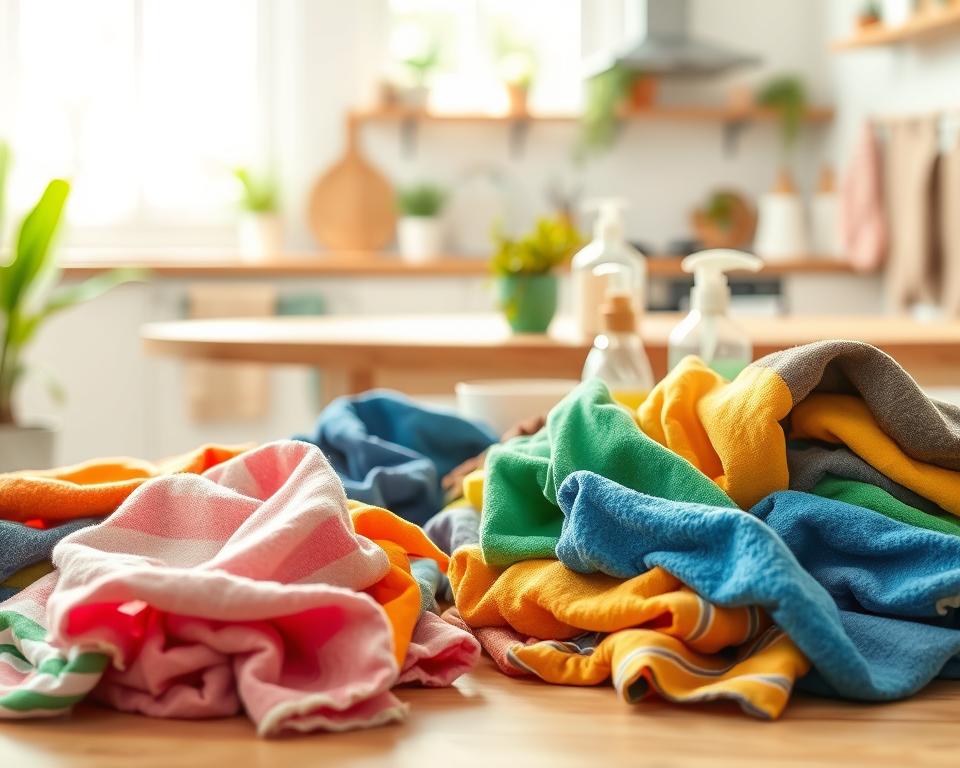
Did you know millions of tons of clothing end up in landfills each year? This contributes to environmental pollution. One simple way to reduce waste is by giving old t-shirts a new life as eco-friendly cleaning rags. This not only cuts down on landfill waste but also offers a green alternative to paper towels and other disposable cleaners.
By adopting this eco-friendly habit, you can make a big difference. It’s a simple process that requires little effort but has big environmental benefits. In this article, we’ll show you how to turn your old t-shirts into durable cleaning rags. We’ll also talk about the advantages of this sustainable practice.
Key Takeaways
- Reduce landfill waste by repurposing old clothing.
- Create a sustainable alternative to disposable cleaning products.
- Minimize environmental pollution with eco-friendly cleaning rags.
- Learn a simple, effective method to transform old t-shirts.
- Adopt an eco-friendly habit with significant environmental benefits.
Why Choose Old T-Shirts for Cleaning Rags?
Old t-shirts can be turned into tough cleaning rags. This is a green way to clean instead of using regular products. It also saves money and helps reduce waste.
Environmental Benefits of Upcycling
Turning old t-shirts into cleaning rags cuts down on waste. The fashion world is a big polluter. By giving old clothes a new life, we help the planet.
This method also cuts down on the need for new products. Making new cleaning rags uses a lot of energy and resources. It also makes greenhouse gases.
Cost Savings Compared to Store-Bought Rags
Using old t-shirts for cleaning is cheaper than buying rags. Most homes have old t-shirts they don’t need. This makes it a free option.
It also means you don’t have to buy cleaning stuff often. This saves money, which is great for big families or busy homes.
Versatility and Availability of T-Shirts
T-shirts are everywhere, making them easy to upcycle. Cotton t-shirts work well because they soak up spills and last long. You can cut them into many shapes for different cleaning jobs.
Because t-shirts are so common, it’s easy to start upcycling. You don’t need to buy special materials. This makes it a simple way to clean better for the planet.
Preparing Your T-Shirts for Upcycling
Before you start cutting your old T-shirts, it’s essential to prepare them properly for upcycling. This involves a few simple steps that ensure your DIY cleaning cloths are effective and durable.
Sorting Your T-Shirt Collection
Start by sorting through your T-shirt collection. Separate the T-shirts into categories based on their material, condition, and color. Prioritize T-shirts made from 100% cotton as they tend to be more absorbent and durable for cleaning purposes. Discard any T-shirts that are worn out, stained beyond recovery, or made from synthetic materials that may not be suitable for cleaning.
Cleaning and Sanitizing the Fabric
Once you’ve sorted your T-shirts, it’s important to clean and sanitize them. Wash the T-shirts in hot water with a mild detergent to remove any dirt or residue. Adding a cup of white vinegar to the wash cycle can help sanitize the fabric. Make sure to rinse them thoroughly to remove any detergent residue, which can affect their absorbency.

Cutting Techniques for Different Rag Sizes
The size and shape of your cleaning rags depend on your specific needs. For general cleaning, cutting T-shirts into squares or rectangles is effective. You can also use the sleeves for smaller, more maneuverable rags. Here’s a simple table to guide you on cutting different sizes:
| Rag Size | T-Shirt Part | Best Use |
|---|---|---|
| Large Square | Body | General cleaning, dusting |
| Small Rectangle | Sleeve | Cleaning tight spaces, dusting |
| Strip | Hemmed edge | Cleaning grout, tight crevices |
By following these steps, you’ll be able to create a variety of DIY cleaning cloths that are perfect for different cleaning tasks around the house.
The Best T-Shirt Materials for Cleaning Rags
Choosing the right T-shirt material is key for making strong and effective cleaning rags. Upcycling old T-shirts means the fabric matters a lot. It affects how well they work for different cleaning tasks.
Cotton vs. Blends: What Works Best?
Cotton T-shirts are top picks for cleaning rags because they soak up well and last long. Cotton is a natural fiber that holds up to many washes. Blended fabrics, with cotton and synthetic fibers like polyester, are good too but not as good at soaking up.
- Cotton: Highly absorbent, durable, and gentle on surfaces.
- Blends: Can be more durable but less absorbent than pure cotton.
Think about what you need to clean when choosing between cotton and blends. Cotton is best for general cleaning around the house.
Weight and Texture Considerations
The weight and feel of the T-shirt fabric matter too. Thicker T-shirts are tougher and good for hard cleaning jobs. Thinner ones are better for dusting and polishing.
- Thicker fabrics: Ideal for heavy-duty cleaning tasks.
- Thinner fabrics: Suitable for lighter tasks like dusting.
Avoiding T-Shirts with Graphics and Prints
It’s smart to skip T-shirts with designs for cleaning rags. The ink can rub off and stain surfaces. Plain T-shirts are safer to use on different surfaces.
“Using plain, unprinted T-shirts for cleaning rags minimizes the risk of transferring ink or other substances to the surfaces you’re cleaning.”
By picking the right T-shirt materials and thinking about fabric type, weight, and texture, you can make cleaning rags that work well. They’ll last a long time and help with your cleaning tasks.
Cleaning Techniques for T-Shirt Rags
Proper care for your t-shirt rags starts with understanding the best cleaning practices. To extend their lifespan and maintain their effectiveness, it’s important to adopt the right cleaning techniques.
Handwashing vs. Machine Washing
When it comes to washing your t-shirt rags, you have two primary options: handwashing and machine washing. Handwashing is a gentle method that can help preserve the fabric, making it great for delicate tasks. On the other hand, machine washing is more convenient and can be more effective for heavily soiled rags.
I prefer handwashing for my t-shirt rags when they’re not too dirty. It lets me control the temperature and detergent used. But for tougher messes, machine washing is a more practical choice.
Proper Drying Methods for Longevity
Drying your t-shirt rags properly is just as important as washing them. Air drying is an excellent method, as it prevents shrinkage and damage from high heat. If you need to dry your rags quickly, using a low heat setting on your dryer can help.
Stain Removal Tips Before Upcycling
Before you upcycle your old t-shirts into cleaning rags, it’s a good idea to remove any stubborn stains. Pre-treating stains with a mixture of baking soda and water or using a stain remover can be effective. For tougher stains, letting the treatment sit for a few hours before washing can make a big difference.
By following these cleaning techniques, you can ensure your t-shirt rags remain durable and effective for a long time.
Creative Ways to Cut T-Shirts for Rags
Cutting T-shirts into rags is a great DIY project. It helps you declutter and clean in a sustainable way. By using old T-shirts, you reduce waste and make something useful for your home.
Simple Squares and Rectangles
The easiest way to make rags is by cutting squares or rectangles. It’s quick and simple, perfect for beginners. Lay the T-shirt flat, smooth out wrinkles, and cut it into your size with scissors or a rotary cutter. Using a grid or template helps make uniform pieces.
DIY Tulip Rags for More Absorbency
For more absorbent rags, try making DIY tulip rags. Cut the T-shirt into strips and roll them into a tulip shape. Secure with a small stitch or knot. This design absorbs better and is great for cleaning spills. Start by cutting 1-inch wide strips, then roll and secure them as you like.
Using the Sleeves for Smaller Rags
Don’t overlook the sleeves when upcycling T-shirts. They can be cut into smaller rags for tight spaces or detailed work. Cut along the seam to separate the sleeve, then cut it into your desired length. Sleeve rags are perfect for dusting and cleaning small areas.
Exploring these creative ways to cut T-shirts for rags lets you make various cleaning tools. Whether you’re making simple squares or tulip designs, you’re helping the environment. You’re using eco-friendly cleaning rags and upcycling t-shirts.
Storing and Organizing Your Cleaning Rags
Keeping your sustainable cleaning solutions in top shape is key. A few simple steps can help your DIY cleaning cloths stay effective and ready to use.
Best Practices for Storage
Here are some tips to keep your cleaning rags fresh:
- Store rags in a dry, well-ventilated area to prevent moisture buildup.
- Use a designated container or basket to keep rags organized and easily accessible.
- Avoid storing rags in direct sunlight, as this can cause fading and degradation of the fabric.
Keeping Rags Fresh and Ready to Use
Regular washing is vital for your cleaning rags. Here’s how to do it right:
- Wash rags in hot water with a mild detergent to remove dirt and grime.
- Dry rags thoroughly, either by air-drying or using a low-heat setting on your dryer.
- Store clean rags in a separate container from dirty ones to prevent cross-contamination.
Creating an Efficient Cleaning Station
An organized cleaning station is essential for your DIY cleaning cloths. Here’s how to set one up:
- Designate a specific area for your cleaning supplies, including your upcycled rags.
- Use a caddy or bucket to keep frequently used cleaning products and rags within easy reach.
- Consider labeling your storage containers to help you quickly identify what’s inside.
With these tips, you can create a cleaning station that’s both efficient and eco-friendly. It will make cleaning your home easier and more sustainable.
Essential Cleaning Tasks for Upcycled Rags
Upcycled t-shirt rags are great for cleaning around the house. They work well for many tasks, making them a must-have for cleaning.
Dusting and General Household Cleaning
Upcycled t-shirt rags are perfect for dusting and cleaning. Their soft fabric won’t scratch surfaces. It’s great for dusting furniture, blinds, and electronics.
For more tips on upcycling, check out Ecoboo’s guide on upcycling household items into cleaning tools.
Tackling Spills and Messy Surfaces
Upcycled t-shirt rags are also good for spills and messy surfaces. They absorb liquids fast, stopping stains and messes. They’re perfect for the kitchen and bathroom.
Specialized Uses in the Kitchen and Garage
In the kitchen, they clean countertops, sinks, and stoves. They’re also good for drying dishes and wiping down appliances. In the garage, they clean tools and machinery, helping with DIY projects.
Using upcycled t-shirt rags for cleaning helps reduce waste. They’re a simple, eco-friendly way to clean. Adding them to your cleaning supplies is a smart move.
Safety Tips for Using Repurposed Cleaning Rags
Using old T-shirts as cleaning rags is good for the planet. But, safety comes first. Here are some tips to use them safely and well.
Ensuring the Fabric is Safe for Different Surfaces
Not every fabric works on every surface. For gentle surfaces, a soft cotton rag is best. For tough messes, you might need something stronger. Always test a small, hidden area first to avoid damage.
Identifying Worn-Out Rags Ready for Replacement
Cleaning rags can wear out over time. Check your rags often for fraying or color changes. If they’re too worn, it’s time to get new ones for better cleaning and hygiene.
Allergy Considerations for Household Cleaning
For homes with allergy issues, be careful of fabric dyes or residues. Using undyed, washed T-shirts can reduce allergy risks. This makes cleaning safer for everyone at home.
Inspiring Others: Share Your Upcycling Journey
When you start upcycling old t-shirts into cleaning rags, you feel proud. You’re helping reduce waste. Now, it’s time to share this with others and inspire them to use sustainable cleaning solutions.
Organizing a Community Effort
Think about hosting a t-shirt upcycling workshop in your area. It’s a great way to teach people about upcycling. Plus, it’s a fun activity. You can also team up with local green groups to make it even bigger.
Sharing Your Experience on Social Media
Post about your upcycling adventures on Instagram and Facebook. Show off your rags and share tips for beginners. Use hashtags to reach more people and get them to share their own stories.
Spreading the Word
Get your loved ones involved in upcycling their t-shirts. By sharing your love for green cleaning, you can inspire a chain reaction. This can lead to a big positive change for our planet.
Together, we can really make a difference. Start sharing your upcycling journey today. Let’s inspire others to join us in making sustainable cleaning solutions a norm.