


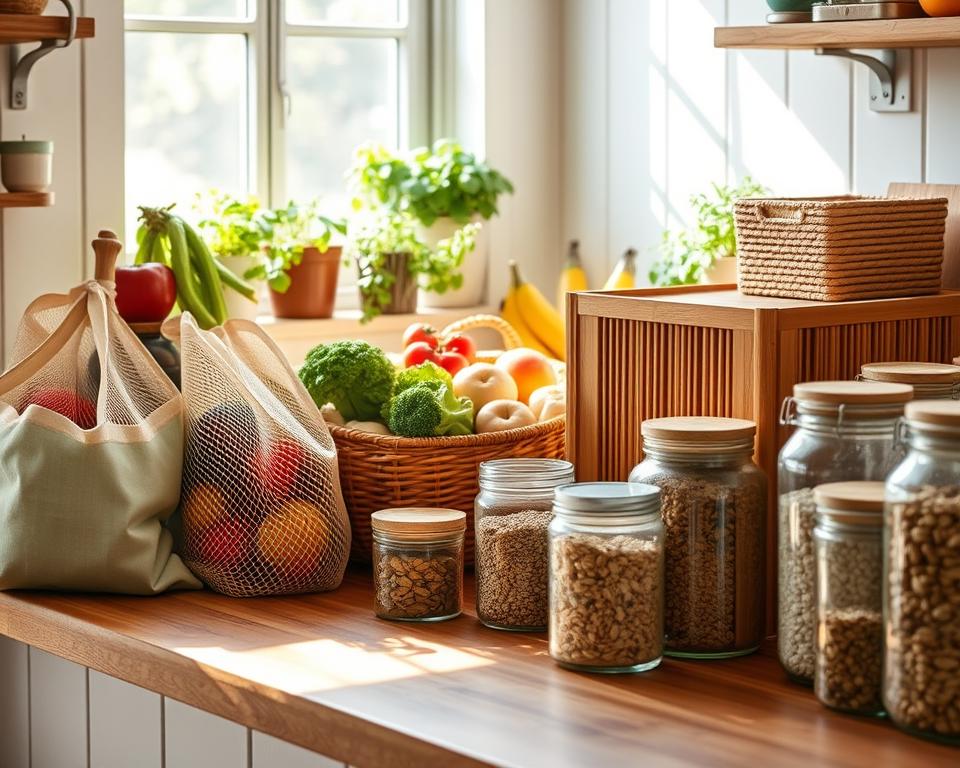
The average American throws away about 4.4 pounds of trash every day. A lot of this waste comes from packaging, like plastic bags used for grocery storage.
Getting rid of plastic bags is a simple step towards living greener. By using eco-friendly grocery storage methods, you can lessen your impact on the environment.
Let’s look at some alternatives to plastic bags. You’ll find easy and creative ways to store your groceries in a sustainable way.
Key Takeaways
- Small changes in how you store groceries can make a big difference.
- There are many eco-friendly alternatives to plastic bags that work well.
- Choosing sustainable practices can help reduce your environmental impact.
- We’ll discuss practical ways to store groceries without plastic bags.
- There are innovative methods that make sustainable grocery storage easy and convenient.
Why Choose Eco-Friendly Grocery Storage Solutions?
In today’s world, plastic pollution is a big problem. Choosing the right storage for our groceries is key. The impact of our choices goes beyond our kitchens.
The Environmental Impact of Plastic Bags
Plastic bags are everywhere in grocery shopping. But, they harm our environment. They don’t break down and often end up in oceans, hurting marine life.
By using sustainable food storage tips, we can cut down plastic waste. This change helps our planet.
Health Concerns Linked to Plastics
Plastic bags and containers also pose health risks. Chemicals from plastics can get into our food. This is bad, as it can harm our health.
Choosing plastic-free pantry organization helps the environment and our health. It makes our kitchen a safer place.
Benefits of Going Plastic-Free
Going plastic-free has many benefits. It reduces waste and helps our planet. It also saves money and promotes a healthier lifestyle.
- Reduced environmental pollution
- Healthier food storage options
- Cost savings through reusable products
- A step towards a more sustainable lifestyle
Choosing eco-friendly storage is a big step. It reduces our environmental impact and makes our homes healthier. It’s a simple change with a big impact.
Creative Alternatives to Plastic Bags
As we strive for a greener lifestyle, finding new ways to store groceries is key. We can start by using eco-friendly alternatives that keep our food fresh. These options are not only good for the planet but also practical.
Reusable Produce Bags
Reusable produce bags are a great choice for fruits and veggies. They’re made from materials like cotton, mesh, or recycled plastics. These bags breathe, can be washed, and used many times.
I use them for my weekly produce. It’s cut down a lot of plastic waste in my kitchen.

Glass Containers for Bulk Items
Glass containers are perfect for bulk items like nuts, grains, and cereals. They keep things fresh and are safe to use. Plus, they’re recyclable.
According to a HuffPost article on sustainable alternatives, glass containers help a lot in reducing plastic waste.
Beeswax Wraps for Fresh Foods
Beeswax wraps are a natural choice for keeping food fresh. They’re made from beeswax, jojoba oil, and cotton. These wraps are breathable and can be molded to fit different shapes.
They’re a fantastic addition to any kitchen wanting to cut down on plastic. Using these wraps helps in reducing plastic waste.
By choosing these creative alternatives, we can make a big difference. It’s about making smart choices and adopting habits that are better for our planet.
Proper Organization for Grocery Storage
As we move towards a plastic-free lifestyle, organizing our grocery storage in an eco-friendly manner becomes increasingly important. Proper organization is key to effective grocery storage. It’s not just about having space, but also about maintaining an environmentally friendly kitchen storage system.
By implementing a few simple strategies, you can keep your kitchen tidy. You’ll make the most of your storage space and ensure your groceries remain fresh. One of the most effective ways to achieve this is by utilizing bins and baskets. They help categorize and store different types of groceries.
Utilizing Bins and Baskets
Bins and baskets are versatile storage solutions for various grocery items. They come in different sizes and materials, such as wicker, plastic, or fabric. For an environmentally friendly approach, consider using bins made from sustainable materials or repurposing old containers.
- Use large bins for storing bulk items like grains, nuts, or dried fruits.
- Employ smaller baskets for organizing snacks, spices, or baking supplies.
- Label each bin or basket to ensure easy identification of contents.
Creating a System for Different Food Types
A well-organized grocery storage system also involves categorizing different food types. This not only helps in maintaining freshness but also in planning meals and reducing food waste. For instance, you can dedicate specific areas or containers for fruits, vegetables, dairy products, and meats.
Consider the following tips when creating your system:
- Store fruits and vegetables in separate, ventilated containers to maintain their freshness.
- Keep dairy products and meats in sealed containers to prevent cross-contamination.
- Use airtight containers for storing grains and cereals to keep them fresh and pest-free.
By adopting these strategies, you’ll not only be contributing to a more sustainable kitchen. You’ll also enhance your overall cooking experience. Remember, the goal is to create a system that is both functional and eco-friendly, making grocery storage a breeze.
Best Practices for Storing Fruits and Vegetables
Keeping fruits and vegetables fresh is easier than you think. The right storage techniques can make a big difference. You can enjoy your groceries longer without plastic bags.
Optimal Conditions for Fresh Produce
Different fruits and vegetables need different storage conditions. Some should stay at room temperature, while others need the fridge. Knowing these needs is essential for keeping produce fresh.
- Store fruits like apples and bananas at room temperature until ripe.
- Refrigerate vegetables like carrots and beets to keep them crunchy.
- Use bags or containers that breathe to store produce, allowing air and preventing moisture.
Leafy greens need to stay dry and cool. Store them in a breathable container or bag with a paper towel to soak up moisture. This trick can make your greens last longer.
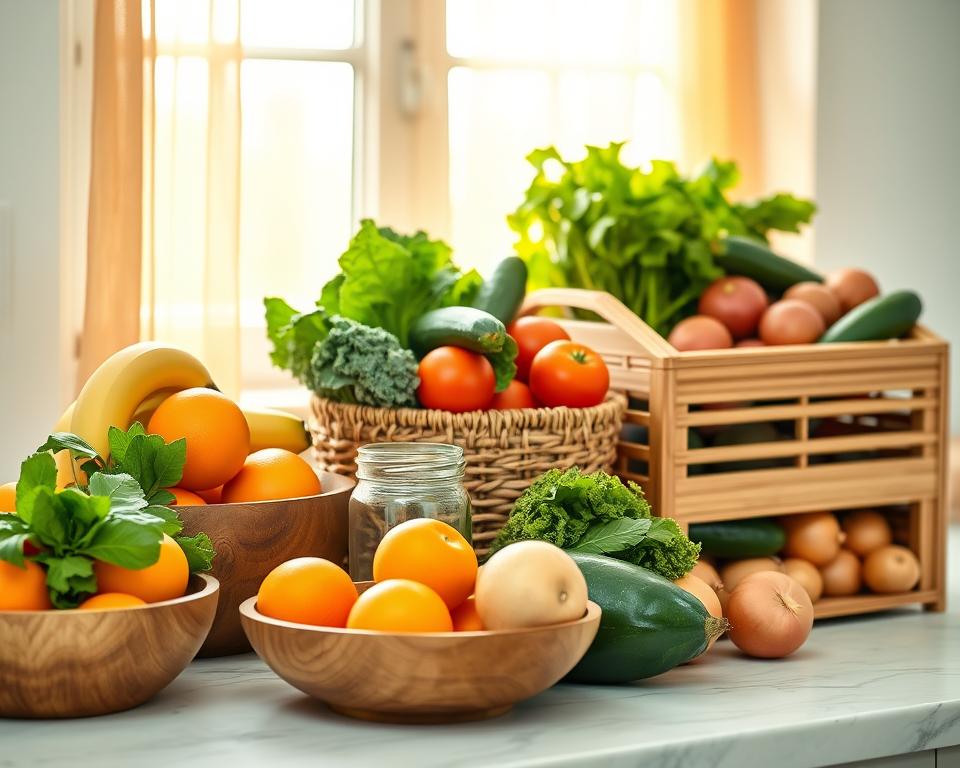
Tips for Keeping Fruits and Veggies Fresh Longer
There are more ways to keep your produce fresh. Here are some plastic-free living hacks:
- Don’t wash produce before storing it. Moisture can cause mold and spoilage.
- Use natural waxes or beeswax wraps to cover cut fruits and veggies. This keeps them fresh and prevents drying out.
- Store fruits and vegetables separately. Some fruits, like apples, release gas that can make nearby veggies ripen faster.
Using these strategies can help you use less plastic. It also means you’ll have healthier, fresher produce. This is great for reducing plastic waste and eating well.
Ideal Storage Solutions for Pantry Items
Choosing the right storage for pantry items is key to keeping food fresh and organized. A tidy pantry makes cooking easier and cuts down on food waste.
Glass Jars for Grains and Cereals are a top pick for pantry storage. They’re airtight, safe, and let you see what’s inside. Glass jars help avoid pests, a big problem with grains and cereals. As Bon Appétit said, “The key to a fresh pantry is airtight containers.”
Glass Jars for Grains and Cereals
Glass jars are great for grains and cereals because they block moisture and pests. This keeps food fresh longer. Options like Mason and Kilner jars are durable and look good.
Eco-Friendly Airtight Containers
Eco-friendly airtight containers are also a smart choice for pantry storage. They’re made from safe, sustainable materials. They come in many sizes and are ideal for storing pasta and snacks. As more people choose sustainable living, demand for these containers grows.
A recent survey found “75% of consumers are willing to change their habits to help the environment.” This includes how we store food. By picking eco-friendly containers, we keep our pantry neat and help reduce plastic waste.
“The best way to predict the future is to create it.” – Alan Kay
This quote fits perfectly with making eco-friendly choices in our daily lives. Choosing sustainable storage helps make our planet a better place.
The Importance of Using Reusable Bags
Using reusable bags has changed my life for the better. It’s helped me cut down on plastic waste. Making simple choices, like using the right bags for grocery shopping, is key to a greener lifestyle.
Reusable bags do more than just reduce plastic waste. They help us form habits that protect our planet. By picking the right bags, we can greatly reduce single-use plastic bags in landfills and oceans.
Selecting Durable Cloth Bags
When picking reusable bags, look for durability. I choose bags made from strong materials like cotton or canvas. They should last a long time and can be washed many times.
Consider the size and design of the bags too. They should fit your needs and be easy to carry.
- Material: Opt for bags made from sustainable, durable materials.
- Size: Choose bags that are large enough to hold your groceries.
- Design: Consider bags with reinforced stitching and comfortable handles.
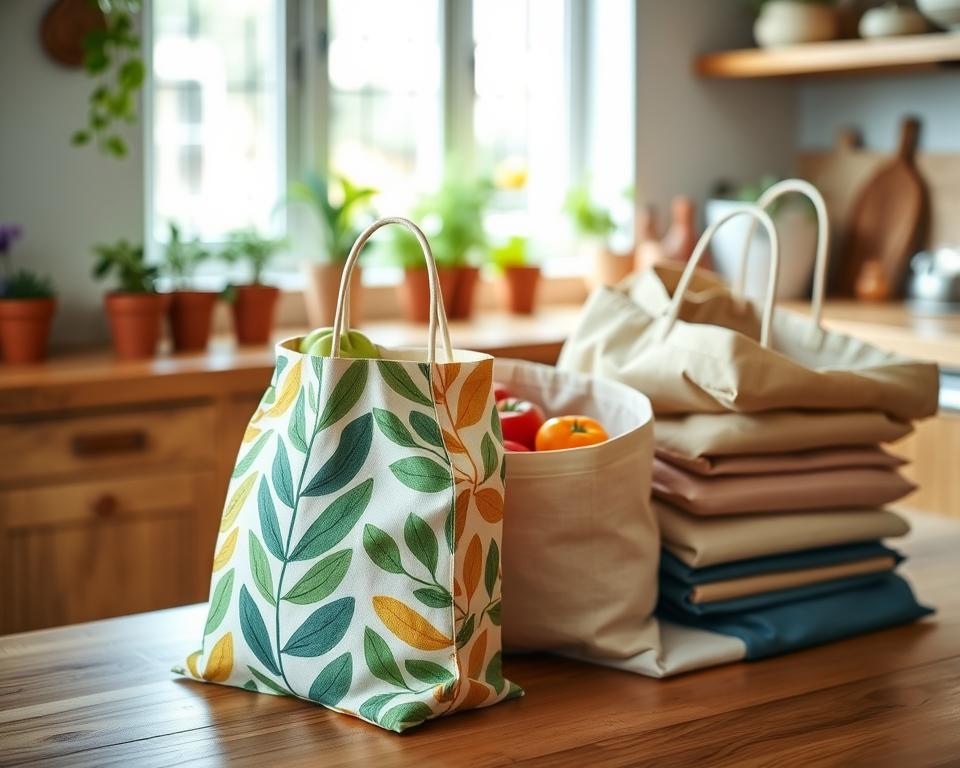
Implementing a Bag Return System
To get the most out of reusable bags, having a bag return system is essential. Pick a spot in your home to keep your bags. This makes it easy to grab them when you go shopping.
Creating a routine helps keep track of your bags. Store them near your front door or in your car. This way, they’re always ready when you need them.
| Bag Return System Tips | Benefits |
|---|---|
| Store bags near the front door | Easy to grab on the way out |
| Keep bags in your car | Always have them when you’re out |
| Create a routine for returning bags | Ensures bags are washed and ready for the next use |
By following these tips, you can make a big difference. You’ll help reduce plastic waste and live more sustainably.
Tips for Traveling with Groceries
To keep your groceries fresh on the go, use portable and eco-friendly storage. Whether you’re going home from the farmer’s market or picking up essentials, the right storage makes a big difference.
Portable Storage Solutions
Reusable produce bags and insulated bags are great for traveling with groceries. These bags keep your produce fresh and are easy to carry. I find that reusable produce bags made from breathable materials like cotton or mesh work best for fruits and veggies.
For items like dairy or meat, use insulated containers with ice packs. This keeps them cool during transport, which is key in warm weather.
Safe Handling of Perishables
When you’re traveling with perishable groceries, it’s important to handle them safely. Here are some tips:
- Keep perishables in insulated bags with ice packs.
- Avoid leaving groceries in a hot car for extended periods.
- Store perishables in the refrigerator as soon as possible.
Here’s a comparison of different storage solutions to show the best practices for traveling with groceries:
| Storage Solution | Best For | Benefits |
|---|---|---|
| Reusable Produce Bags | Fruits and Vegetables | Breathable, washable, and eco-friendly |
| Insulated Containers | Perishable Items | Keeps items cool, durable, and reusable |
| Glass Containers | Bulk Items and Leftovers | Air-tight, non-toxic, and environmentally friendly |
By using these environmentally friendly kitchen storage solutions, your groceries stay fresh and safe. Plus, you reduce your environmental impact.
Educating Others on Plastic-Free Storage
When we choose plastic-free storage, we should share what we learn. This helps start a bigger change towards a greener life.
Telling others about our switch to eco-friendly storage is key. For example, using reusable bags keeps food fresh and cuts down on plastic.
Sharing Your Knowledge
It’s easy to share by suggesting eco-friendly products. Glass containers, for instance, are great for keeping food fresh and are good for the planet.
“The best way to get started is to quit talking and begin doing.”
We can start small and share our changes. Using beeswax wraps or eco-friendly containers are simple steps we can take.
Engaging in Community Initiatives
Getting involved in local efforts is another great way to spread the word. This could mean joining environmental events, hosting workshops, or just talking about eco-friendly living.
| Initiative | Description | Impact |
|---|---|---|
| Community Workshops | Organize workshops to educate on DIY storage solutions and plastic-free living. | Empowers community members with knowledge and skills. |
| Local Events | Participate in or organize local events focused on sustainability. | Raises awareness and fosters a sense of community. |
| Online Forums | Engage in online forums and social media groups to share tips and experiences. | Reaches a wider audience and encourages global participation. |
By doing these things, we help the planet and motivate others to make a difference too.
The Role of Local Farmers Markets
Shopping at local farmers markets helps the environment and supports local economies. These markets let you buy fresh, seasonal produce and build community ties.
Buying locally cuts down on carbon emissions from long-distance transport. You get fresher food and help a sustainable food system grow.
Benefits of Sourcing Locally
There are many good things about buying from local farmers markets:
- Freshness: Produce is picked at its best, tasting better and being more nutritious.
- Community Support: Your money helps local farmers and businesses thrive.
- Sustainable Practices: Local farmers use eco-friendly methods, reducing harm to the environment.
“Shopping at local farmers markets is not just about buying groceries; it’s about building a relationship with the people who grow your food.”
Supporting Sustainable Practices
Local farmers markets play a big role in promoting green practices. By shopping there, you encourage farmers to keep using eco-friendly methods. Some of these include:
- Organic farming that avoids harmful chemicals.
- Crop rotation and other methods that improve soil and biodiversity.
- Less packaging waste by selling produce without packaging or in reusable containers.
By choosing local farmers markets, we move closer to a greener food system. It’s about making choices that are good for us and the planet.
Innovative DIY Storage Ideas
With a little creativity, you can turn household items into useful storage solutions. This method not only cuts down on waste but also makes your kitchen more personal.
Upcycling Household Items
Upcycling gives old or discarded items a new life. For example, you can use old mason jars to store grains, nuts, or dried fruits. Wooden crates can become shelves or storage for your kitchen tools.
- Old cardboard boxes can help organize your pantry or storage areas.
- Transform glass bottles into vases or containers for small items like spices or tea bags.
- Repurpose old t-shirts or cloth napkins into reusable produce bags, cutting down on single-use plastic bags.
Crafting Homemade Storage Solutions
Making your own storage solutions is both fun and practical. It helps you stick to your zero-waste goals. You can sew cloth bags for produce or use natural fibers like cotton or linen for durable, eco-friendly bags.
- Making your own beeswax wraps to keep food fresh.
- Sewing pockets or bags for small kitchen gadgets or utensils.
- Creating a wooden or bamboo utensil holder for your kitchen counter.
By choosing DIY storage, you’re not just reducing waste. You’re also making your kitchen a reflection of your style and commitment to the environment.
Moving Toward a Plastic-Free Lifestyle
Starting a plastic-free lifestyle is a big step. It needs dedication and effort. Making small changes, like using eco-friendly kitchen storage, can make a big difference.
Reducing Plastic Use
It’s important to set achievable goals to cut down on plastic. Begin by finding ways to use less plastic, like carrying reusable bags or containers. Slowly, you’ll build habits that help the planet.
Resources for Sustainable Living
There are many resources to help you keep going on your plastic-free path. Look for online tips on living plastic-free, like using old items for storage or beeswax wraps for food. Staying informed and inspired will keep you on track.