

Did you know the average American throws away about 4.4 pounds of trash every day? A lot of this waste is organic. Bokashi composting is a smart way for people living in small apartments to handle their waste.
I’ve found that using Bokashi composting in my small apartment cuts down on waste. It also makes a great fertilizer for my plants. In this article, I’ll show you how to start and keep a Bokashi bin. It’s easy to make this green choice.
Key Takeaways
- Understand the benefits of Bokashi composting in small apartments.
- Learn how to set up a Bokashi bin.
- Discover tips for maintaining your Bokashi bin.
- Explore the advantages of using Bokashi compost.
- Find out how Bokashi composting can reduce your waste.
What is Bokashi Composting?
Bokashi composting is a new way to deal with kitchen waste in small spaces. It uses fermentation to turn kitchen waste into compost indoors. This works even in tiny apartments.
The idea of Bokashi comes from Japan and is now popular everywhere. It helps cut down on landfill waste and lowers greenhouse gas emissions. Bokashi composting is odorless and doesn’t attract pests, making it great for city living.
The Benefits of Bokashi for Urban Living
Bokashi composting is great for city folks. It lets you compost indoors, which is perfect for small homes. It’s also low-maintenance, needing little care.
“Bokashi composting is a game-changer for urban residents who want to reduce their waste and live more sustainably.”
The benefits of Bokashi for city living are listed below:
| Benefit | Description |
|---|---|
| Indoor Composting | Allows for composting in small spaces |
| Low Maintenance | No regular turning or monitoring required |
| Odorless | Doesn’t produce unpleasant odors |
How Bokashi Differs from Traditional Composting
Bokashi composting is different from traditional composting. It’s a fermentation-based process that doesn’t need oxygen. This lets you compost meat, dairy, and other animal products, unlike traditional composting.
Bokashi composting is also faster than traditional composting. It takes just a few weeks to ferment. This makes it perfect for quickly composting kitchen waste.
Essential Supplies for Your Bokashi Bin
Before starting Bokashi composting, you need the right supplies. You’ll need a few key items to manage kitchen waste and make a nutrient-rich fertilizer for plants.
Choosing the Right Bokashi Bin
You’ll first need a Bokashi bin for fermenting kitchen waste. Bokashi bins vary in size, so pick one that suits your needs. A smaller bin is good for singles or small families, while larger bins are better for bigger households.
Think about your kitchen space when choosing a Bokashi bin. Some bins are compact for under the sink or corners. Others are larger and need more room. Also, consider the bin’s material and how durable it is.
Bokashi Bran: What You Need to Know
Bokashi bran is key for Bokashi composting. It’s a special mix that helps break down waste into a nutrient-rich liquid fertilizer. This bran is full of beneficial microbes.
Make sure to buy high-quality Bokashi bran for Bokashi composting. Some kits include a Bokashi bin and bran, which is great for beginners.
To keep your Bokashi bin healthy, add Bokashi bran regularly. How often you add it depends on your bin use and waste amount.
Step-by-Step Guide to Starting Your Bokashi Bin
Now that you have your Bokashi bin, let’s get started. Starting your Bokashi bin is easy. Just follow a few simple steps to start composting like a pro.
Choosing a Location in Your Apartment
First, pick a good spot for your Bokashi bin in your apartment. It should be easy to reach for daily waste but not too close to living areas. Think about putting it under the sink or in a kitchen corner. Make sure it’s in a well-ventilated area to avoid smells.
Adding Kitchen Waste to Your Bin
After finding the right spot, start adding kitchen waste to your Bokashi bin. You can compost many kitchen scraps, like:
- Vegetable and fruit peels
- Cooked and raw food
- Bones and meat
- Dairy products
- Bread and grains
Chop big pieces into smaller ones to help with composting. Then, add a layer of Bokashi bran on top. Keep adding waste and Bokashi bran, ending with a Bokashi bran layer on top.
By following these steps, you’ll be on your way to effective urban composting in your apartment. You’ll make a big difference in reducing waste.
Maintaining Your Bokashi Bin
Keeping your Bokashi bin in good shape is key for eco-friendly composting. It’s vital for managing kitchen waste in small spaces. Regular care helps your bin work well and avoids problems.
Monitoring Odors and Moisture Levels
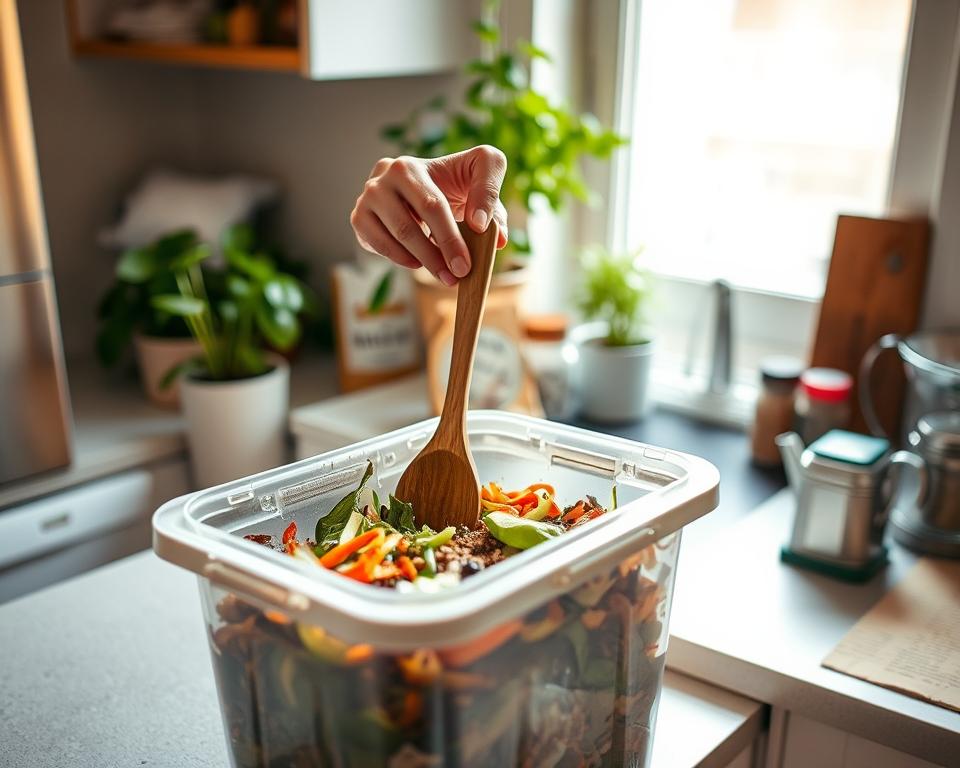
Watching odors and moisture levels is important. Bokashi bins are made to have little smell, but can smell bad if not cared for. Check your bin often to keep it just right, avoiding too much wet or dry.
Common Mistakes to Avoid
There are mistakes that can mess up your Bokashi bin. Not draining it often, adding too much waste, and not enough Bokashi bran are common errors. To avoid these, drain your bin regularly and add waste slowly with enough Bokashi bran. This way, your bin will work well and efficiently.
Fermentation Process Explained
Fermentation is the core of Bokashi composting. It’s where microorganisms turn organic matter into a rich compost. This happens without oxygen, thanks to the Bokashi bran in the bin.
The Bokashi bran’s microorganisms, like lactic acid bacteria, eat the kitchen waste. They produce compounds that make the waste smell sour. This not only breaks down the waste but also pre-digests it. This makes the nutrients easier for plants to use when the waste is added to the soil or compost pile.
How Long Does Fermentation Take?
The time it takes for fermentation can change. It depends on how much waste you add, the temperature, and how well you maintain the bin. Usually, it takes 7-14 days for the waste to ferment well in a Bokashi bin.
Signs Your Bokashi Bin is Ready
So, how do you know when it’s time to empty your Bokashi bin? Look for these signs:
- The liquid (Bokashi tea) is dark brown and smells sour.
- The solid waste has broken down a lot and looks mushy.
- The smell is sour but not too strong.
Here’s a simple table to summarize the key points about the fermentation process in Bokashi composting:
| Aspect | Description | Timeline |
|---|---|---|
| Fermentation Process | Anaerobic breakdown by microorganisms | 7-14 days |
| Signs of Readiness | Dark brown liquid, broken-down waste, sour smell | After 7-14 days |
| Maintenance | Regular draining of Bokashi tea, monitoring moisture | Ongoing |
Using Bokashi Tea
Bokashi composting is great for reducing kitchen waste and making Bokashi tea. This natural fertilizer is perfect for your plants. It’s a key part of gardening in a small apartment.
Nutrient-Rich Bokashi Tea
Bokashi tea comes from your Bokashi bin. It’s full of nutrients and microbes that help plants grow well. To use it, mix the liquid with water.
Dilution Ratio: The right mix is between 1:100 and 1:500. For most plants, 1:100 works best.
Using Bokashi Tea in Gardening
To use Bokashi tea in your garden, follow these steps:
- Watering Plants: Replace regular water with Bokashi tea once a week. It boosts plant health.
- Soil Conditioning: Bokashi tea also makes soil better. Use it to improve soil around your plants.
Here’s a simple table to guide you on how to use Bokashi tea for different plants:
| Plant Type | Dilution Ratio | Application Frequency |
|---|---|---|
| Houseplants | 1:100 | Once a week |
| Seedlings | 1:200 | Every 10 days |
| Mature Plants | 1:500 | Every 2 weeks |
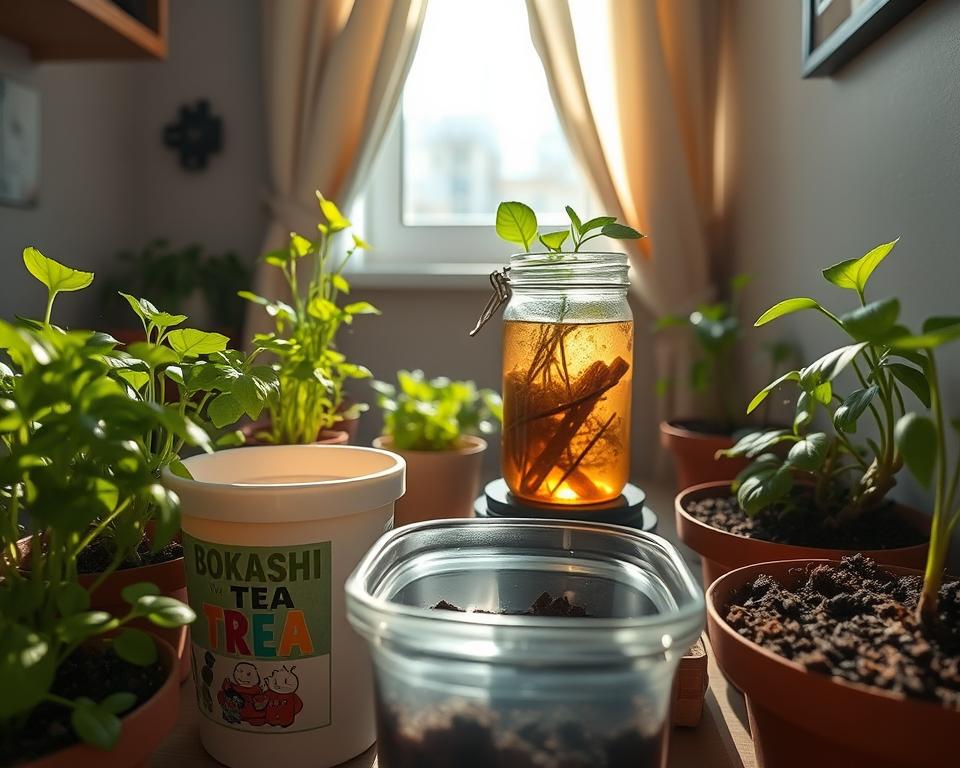
Using Bokashi tea in your garden makes it sustainable and healthy. It shows how Bokashi composting is versatile and beneficial.
Transitioning to Traditional Composting
Bokashi composting is just the start. The real magic happens when you mix the fermented waste into your garden. As you keep using your Bokashi bin, you’ll need to move the fermented waste to a traditional composting setup or directly into your garden. This step is key for finishing the composting cycle and making a nutrient-rich soil amendment for your plants.
Using Fermented Waste in Your Garden
The fermented waste from your Bokashi bin is full of beneficial microbes. These microbes can improve soil health. You can bury it directly in your garden or mix it into your existing compost pile.
When burying it directly, dig a hole 6-8 inches deep. Then, cover the waste with soil. This method lets the microbes spread into the soil, making it more fertile.
Benefits of Using Fermented Waste:
- Rich in beneficial microbes
- Improves soil structure and fertility
- Enhances nutrient availability for plants
For more detailed guidance on composting, visit Composting 101: A Guide for Apartments and, which offers tips on starting composting in small spaces.
Tips for Composting in Small Spaces
Composting in small spaces needs careful planning and management. Use a compact composting bin or tumbler that fits in a corner of your balcony or patio. Regularly turn and check moisture levels to keep the composting process healthy.
As expert composters say, “The key to successful small-space composting is balancing the carbon-to-nitrogen ratio and ensuring adequate aeration.” Following this advice helps create a thriving composting system even in tight spaces.
Additional tips for small-space composting include:
- Using a worm composter for indoor composting
- Selecting a compost bin that fits your available space
- Keeping your compost pile aerated and moist
By moving to traditional composting and using the fermented waste from your Bokashi bin, you can make your soil more fertile. This supports a more sustainable gardening practice.
Troubleshooting Your Bokashi Bin
Keeping a Bokashi bin running smoothly can sometimes be a challenge. Even with a Bokashi starter kit and regular care, problems can pop up. We’ll look at common issues and how to solve them, ensuring your kitchen composting stays on track.
Common Issues and Their Solutions
One frequent problem is bad smells. If your bin smells, it might be too full or not draining right. To fix this, drain the liquid often and don’t overfill the bin. Also, pests can be a problem if you’re adding too much meat, dairy, or oily foods.
To tackle odors and pests, follow these steps:
- Drain the Bokashi tea regularly.
- Keep a balance by adding more Bokashi bran.
- Don’t add too much of foods that attract pests.
| Issue | Solution |
|---|---|
| Unpleasant Odors | Regularly drain liquid, avoid overfilling, balance with Bokashi bran |
| Pests | Avoid adding meat, dairy, or oily foods in large quantities |
| Mold | Ensure proper drainage, maintain a balanced carbon-to-nitrogen ratio |
When to Seek Help or Advice
If you’ve tried to fix problems and they persist, it’s time to ask for help. Look for advice online or in local composting groups. Sometimes, a new idea or expert advice can solve long-standing issues with your kitchen composting setup.
For ongoing problems, consider these resources:
- Online forums for Bokashi composting.
- Local gardening or composting groups.
- The store where you bought your Bokashi starter kit.
Final Thoughts on Bokashi in an Apartment
Starting Bokashi composting in your small apartment is a big step towards a greener life. It helps you cut down on waste and supports local composting efforts.
Sustainable Living Made Easy
Bokashi composting is great for handling kitchen waste, even in tiny spaces. It turns your waste into a nutrient-rich fertilizer for your plants. This helps them grow strong and healthy, cutting down on the need for chemical fertilizers.
Sharing the Benefits with Others
Once you get the hang of Bokashi composting, share your knowledge with others. Talking about the perks of composting can motivate your friends and family to live more sustainably. This can start a positive change in your community.