


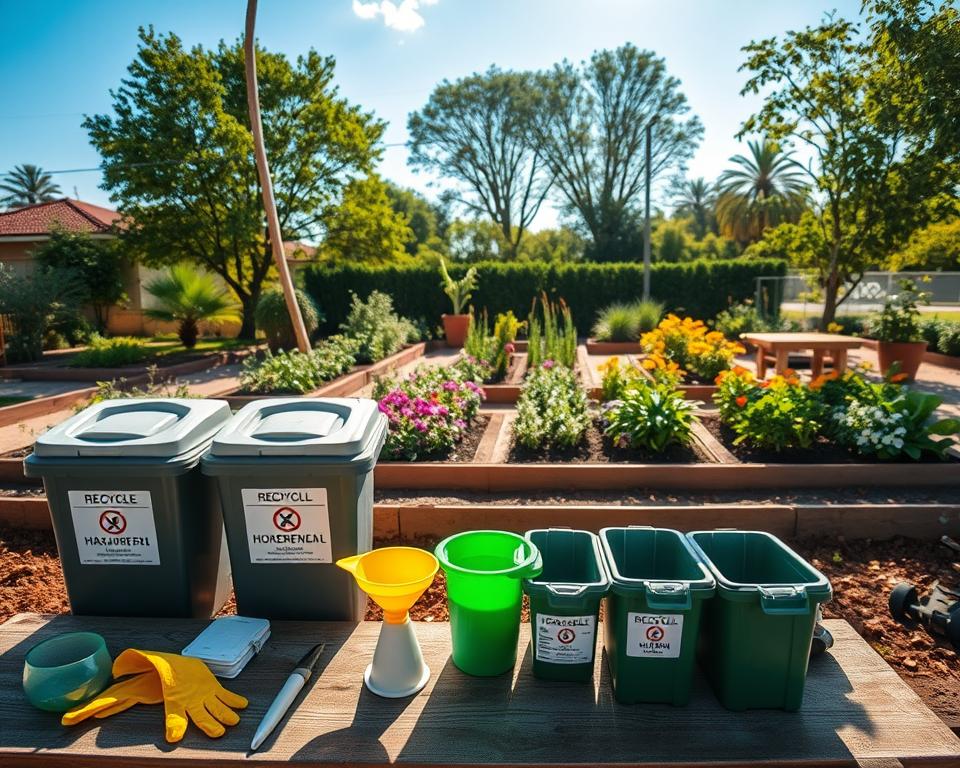
Did you know that throwing away household chemicals the wrong way can harm our soil and water? This can really hurt our environment and our health. Many of us don’t realize the dangers in our own homes.
I’ve seen the bad effects of irresponsible chemical disposal. That’s why using environmentally safe disposal methods is so important. Getting rid of old household chemicals the right way is not just a duty. It’s a way to make our community safer and healthier.
In this article, we’ll look at effective and eco-friendly ways to get rid of unwanted household chemicals. We’ll make sure we protect our environment and health.
Key Takeaways
- Understand the risks associated with improper disposal of household chemicals.
- Learn about environmentally safe disposal methods.
- Discover eco-friendly ways to discard old household chemicals.
- Find out how to participate in community collection programs.
- Explore alternatives to disposing of chemicals at home.
What Are Household Chemicals and Their Risks?
It’s important to know the dangers of household chemicals. This knowledge helps us use green disposal practices and keep our environment safe. Household chemicals are everyday items we use for cleaning, pest control, and more.
Common Types of Household Chemicals
Household chemicals include cleaners, pesticides, and paint thinners. They can be harmful if not used right. For example, cleaning agents like ammonia or bleach can hurt our skin and lungs.
- Cleaning agents (detergents, disinfectants)
- Pesticides (insecticides, rodenticides)
- Paints and solvents
- Aerosol products
Health and Environmental Risks
Using and throwing away household chemicals wrong can harm us and the planet. These chemicals can pollute water, soil, and air. This affects people and animals alike. Some chemicals can even cause serious health problems like skin issues, breathing troubles, and cancer.
Environmental risks include:
- Water pollution
- Soil contamination
- Air pollution
Understanding Hazard Labels
Hazard labels on chemicals tell us how to handle them safely. They warn us about risks and how to dispose of them right. It’s key to read and understand these labels to dispose of chemicals eco-consciously.
Important things to look for on labels include:
| Label Element | Description |
|---|---|
| Warning Signs | Symbols or words indicating possible dangers (e.g., toxic, corrosive) |
| Safety Instructions | Steps for safe use, handling, and storage |
| Disposal Information | How to dispose of them properly |
Knowing the risks of household chemicals and how to read labels helps us make better choices. This leads to safer and more sustainable chemical disposal options.
Signs You Need to Dispose of Household Chemicals
It’s important to get rid of household chemicals at the right time. This keeps your home safe and healthy. These chemicals can become dangerous if not disposed of correctly.
Expired Products
When household chemicals expire, it’s time to throw them away. Expired products might not work well anymore. They could even be harmful. Always check the expiration dates on your chemical containers.
Damaged Containers
Damage to the containers is another sign. Leaks or cracks can cause spills and accidents. If you see any damage, get rid of the chemical right away.
Unused or Unwanted Chemicals
Chemicals you no longer need or have been replaced should be disposed of. Unused or unwanted chemicals waste space and are risky. They can harm your home.
Being aware of these signs helps you use earth-friendly disposal techniques. This makes your home and the environment safer.
Eco-Friendly Disposal Methods
Dealing with household chemicals can be tough. Looking for green solutions is key. Eco-friendly ways to dispose of them help protect our planet and keep our communities safe.
Recycling Programs for Chemicals
Many places have recycling for household chemicals. These programs make sure chemicals are handled right. They keep our environment clean.
Some programs let you recycle certain containers. This cuts down on waste and saves resources.
I’ve seen how these programs help. They greatly reduce hazardous waste in landfills.
Return to Retailers
Some stores have take-back programs for chemicals. This makes it easy to get rid of old or unwanted products. It’s part of a bigger effort towards sustainable retail practices.
When I buy chemicals, I check if stores offer take-back. It shows I care about how they’re disposed of.
Community Hazardous Waste Events
Community events for hazardous waste are great for eco-friendly disposal. Local governments or groups organize them. They offer a safe way to get rid of hazardous waste.
Going to these events helps dispose of waste properly. It also teaches us about the importance of managing waste well.
Using these eco-friendly methods helps a lot. It’s a step towards a greener future. Our actions today make tomorrow’s planet healthier.
How to Store Chemicals Safely Until Disposal
Household chemicals need careful storage until they can be disposed of safely. This prevents accidents and protects the environment. I will share the best ways to store these chemicals safely.
Best Storage Practices
To store household chemicals safely, follow some key practices. First, keep them in their original containers. This keeps the labels and instructions with the product. If you need to move a chemical, use a compatible container and label it correctly.
Key storage tips include:
- Store chemicals in a cool, dry place away from sunlight.
- Keep them out of children’s and pets’ reach.
- Avoid areas that might flood or where water could collect.

Using Clear Labels
Clear labels are essential for safe chemical storage. Labels should be easy to read and include the chemical’s contents, use instructions, and safety tips. If a label is damaged or missing, replace it right away. Use a permanent marker to keep the label in good condition.
Tips for effective labeling:
- Use a label maker for clear and durable labels.
- Include the date you stored the chemical.
- Put any specific storage instructions on the label.
Safe Locations for Storage
Choosing the right place for storing household chemicals is important. Store them in a well-ventilated area that’s not used often, like a garage or utility room. Make sure the storage area is secure and not accessible to unauthorized people.
| Storage Location | Safety Considerations |
|---|---|
| Garage or Utility Room | Ensure good ventilation, secure, and out of reach of children. |
| Basement | Avoid areas prone to flooding, ensure dry conditions. |
| Shed | Keep away from living areas, ensure the shed is secure. |
By following these guidelines, you can store your household chemicals safely until disposal. This minimizes risks to your health and the environment.
DIY Methods for Safe Disposal
Using DIY methods for disposing of household chemicals is good for the environment and saves money. These methods help reduce waste and are cost-effective.
Neutralizing Certain Chemicals
Some chemicals can be made safe before throwing them away. This reduces harm to the environment. Always wear gloves and goggles when working with these chemicals.
- For acidic substances like vinegar or citrus cleaners, baking soda works well.
- White vinegar can neutralize alkaline substances, like drain cleaners.
Safe Disposal of Paints and Solvents
Paints and solvents need special care when getting rid of them. Here’s how to do it right:
- Let paint dry completely before throwing it away. You can speed up drying with paint hardeners or cat litter.
- For solvents, let them evaporate in a well-ventilated area. Then, follow local guidelines for disposing of what’s left.
Homemade Eco-Friendly Alternatives
Making your own eco-friendly cleaners is easy and cuts down on harsh chemicals. Here are some ideas:
- Make your own cleaners with baking soda, vinegar, and lemon juice.
- Use essential oils for scents instead of chemical air fresheners.
By using these DIY methods, you can lessen your impact on the environment. This helps make the world a safer, greener place.
Legal Regulations Surrounding Chemical Disposal
Understanding the laws about chemical disposal is tough but vital for our planet. As I look into the rules for getting rid of household chemicals, it’s clear there are many laws to follow.
Federal Guidelines
The Environmental Protection Agency (EPA) is key at the federal level for handling hazardous waste. The Resource Conservation and Recovery Act (RCRA) sets the rules for managing hazardous waste.
The EPA gives tips on how to handle, store, and get rid of hazardous materials. Some chemicals are so dangerous they need special care when thrown away.
| Chemical Type | Disposal Method | Federal Regulation |
|---|---|---|
| Batteries | Recycling | RCRA |
| Paints and Solvents | Hazardous Waste Facilities | RCRA |
| Fluorescent Lights | Special Collection Events | TSCA |
State Regulations
States also have their own rules for chemical disposal. For example, California has the California Hazardous Waste Control Law, which is stricter.
It’s important to know your state’s rules to follow them. Some states have special places for getting rid of hazardous waste.
Local Laws to Consider
Local governments have their own rules for getting rid of household chemicals. They might have special collection events or drop-off spots.
Many cities work with waste companies to make it easy and safe to get rid of hazardous waste.
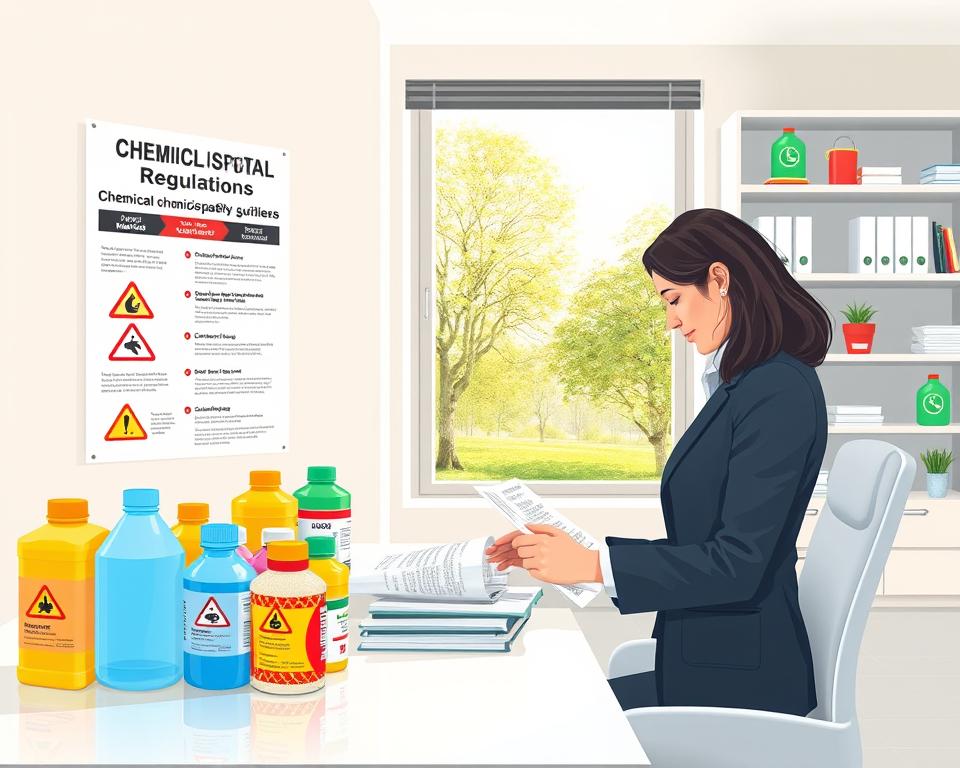
Following these laws helps us dispose of chemicals responsibly and protects our planet. By knowing and following federal, state, and local laws, we can lessen the harm chemicals cause to our environment.
How to Identify Eco-Friendly Products
Exploring household chemicals has taught me the value of eco-friendly products. Knowing what makes a product green is key. It helps us live more sustainably and protect our health and the planet.
Reading Labels and Certifications
Start by reading labels and looking for certifications. Look for EPA Safer Choice or Leaping Bunny labels. These show the product is safe and eco-friendly.
Here are some important certifications to spot:
- USDA BioPreferred: Shows the product comes from renewable resources.
- Energy Star: Means the product saves energy.
- Green Seal: Guarantees the product meets strict environmental standards.
Choosing Non-Toxic Alternatives
Opting for non-toxic products is also essential. Many cleaning products are harmful. I choose non-toxic or biodegradable products for my family’s and the planet’s safety.
Here are some safe alternatives:
- Vinegar and Baking Soda: Natural cleaners that work well and are safe.
- Castile Soap: A versatile, eco-friendly soap for cleaning.
- Essential Oils: Natural scents for cleaning products.
Brands Committed to Sustainability
I also look for brands dedicated to sustainability. Brands that use eco-friendly packaging or source ingredients sustainably are better. Seventh Generation and Ecover are great examples.
When choosing brands, consider these points:
| Brand | Sustainability Practices | Certifications |
|---|---|---|
| Seventh Generation | Uses plant-based ingredients, recyclable packaging | USDA BioPreferred, EPA Safer Choice |
| Ecover | Plant-based formulas, sustainable sourcing | Green Seal, EcoLogo |
Tips for Reducing Chemical Use in the Home
One simple way to make your home greener is to use fewer household chemicals. By trying a few easy steps, you can cut down on harsh chemicals. This makes your home healthier for you and your family.
Natural Cleaning Solutions
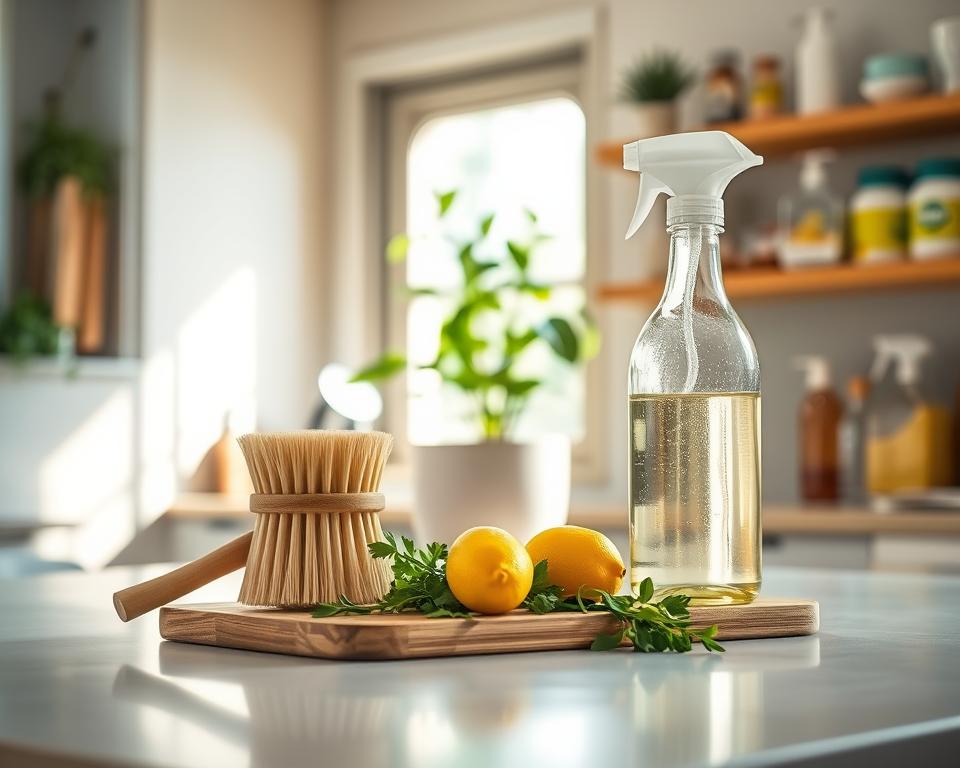
Choosing natural cleaners is a smart move. You can make effective cleaners with items like baking soda, vinegar, and lemon juice. For instance, baking soda and water can clean surfaces well. Vinegar is great for breaking down grease and grime.
Here are some easy recipes to start with:
- All-purpose cleaner: Mix 1 cup of water, 1/2 cup of white vinegar, and 1 tablespoon of baking soda.
- Glass cleaner: Combine 1 cup of water, 1 tablespoon of white vinegar, and 1 tablespoon of freshly squeezed lemon juice.
Organic Gardening Practices
Keeping an organic garden is another smart choice. It lets you avoid synthetic chemicals by using natural pest control and fertilizers. Composting makes great soil, and natural pest control like neem oil keeps your garden healthy.
For more on managing household hazardous waste, check out the Georgia Environmental Protection Division’s website.
Eco-Friendly Pest Control Methods
There are many green alternatives to chemical pesticides for pest control. Essential oils like peppermint or lavender can keep pests away. Traps and barriers also help manage infestations. Keeping your home clean and sealing entry points can stop pests before they start.
Here are some effective green pest control methods:
- Sealing cracks and crevices to prevent pest entry.
- Using diatomaceous earth to control crawling insects.
- Planting pest-repellent herbs like basil and mint in your garden.
Educating Family and Friends About Chemical Disposal
Teaching family and friends about safe chemical disposal is key to a healthier community. As we learn more about green disposal practices and sustainable chemical disposal options, sharing this knowledge is vital. It helps us all live in a safer environment.
Hosting Workshops
Hosting workshops is a great way to teach others. These workshops offer hands-on learning and detailed info on safe chemical disposal. By doing this, we empower our neighbors to make a difference.
To host successful workshops, follow these steps:
- Invite local experts to share their insights on chemical disposal.
- Provide demonstrations on safe disposal methods.
- Distribute informational materials for further reading.
Sharing Resources and Guides
Sharing resources and guides is another effective way to spread awareness. This can include online articles, brochures, or apps on sustainable chemical disposal options. By sharing these, we help others see why proper disposal is important.
| Resource Type | Description | Accessibility |
|---|---|---|
| Online Articles | Detailed guides on chemical disposal | Free |
| Brochures | Printed materials for easy reference | Available at local centers |
| Mobile Apps | Apps that provide disposal tips and locations | Downloadable |
Creating a Community Awareness Campaign
Starting a community awareness campaign is a powerful move. It helps educate many about the need for proper chemical disposal. This can involve working with local groups, using social media, and planning events.
To run a successful campaign, do the following:
- Identify your target audience and tailor your message.
- Use different media to spread your message.
- Keep track of your campaign’s success and adjust as needed.
By teaming up and using these strategies, we can greatly improve our community’s chemical disposal habits.
Resources for Chemical Disposal
Finding the right places for chemical disposal is key to protecting our planet. It’s important to have reliable info and services for disposing of household chemicals.
Websites and Hotlines
Many websites and hotlines can help with chemical disposal. For example, the Environmental Protection Agency (EPA) website has lots of info on hazardous waste disposal. You can also reach out to your local waste management agency for specific advice.
- EPA’s Household Hazardous Waste webpage
- National Poison Control Center hotline: 1-800-222-1222
- Earth911’s recycling database for finding local chemical disposal facilities
Local Environmental Agencies
Local environmental agencies are key in managing chemical waste. They often host community hazardous waste collection events and give tips on safe disposal. I suggest contacting your local environmental agency to find out about their programs.
- Check your local government’s website for environmental services
- Attend community hazardous waste collection events
- Participate in local recycling programs for hazardous waste
National Organizations for Safe Disposal
National groups focused on the environment offer help with chemical disposal. For instance, the Consumer Product Safety Commission (CPSC) has info on safely handling and disposing of household items.
- CPSC’s guidelines on household hazardous waste
- American Chemistry Council’s (ACC) resources on chemical safety
- National Waste & Recycling Association’s (NWRA) information on hazardous waste management
By using these resources, you can make sure you’re disposing of household chemicals the right way.
The Importance of Responsible Disposal
It’s key to dispose of household chemicals the right way. This keeps our environment healthy and safe. Using eco-friendly methods for chemical waste helps a lot.
Protecting Our Health and Environment
Throwing away chemicals wrong can harm our health and the planet. We can avoid this by using green ways to get rid of old chemicals. For example, we can join community events or use DIY methods.
For more tips, check out the New Mexico State University’s guide on how to dispose of household chemicals.
Building a Sustainable Future
Choosing to dispose of chemicals responsibly helps our planet. It cuts down pollution and encourages a green lifestyle in our communities. By picking eco-friendly ways to dispose, we help our planet stay healthy for the next generations.
Encouraging Others to Follow Suit
Our actions can motivate others to dispose of chemicals right. By sharing what we know and joining community efforts, we can make a big difference. Let’s teach our loved ones why proper disposal is important. Together, we can make our environment greener.