


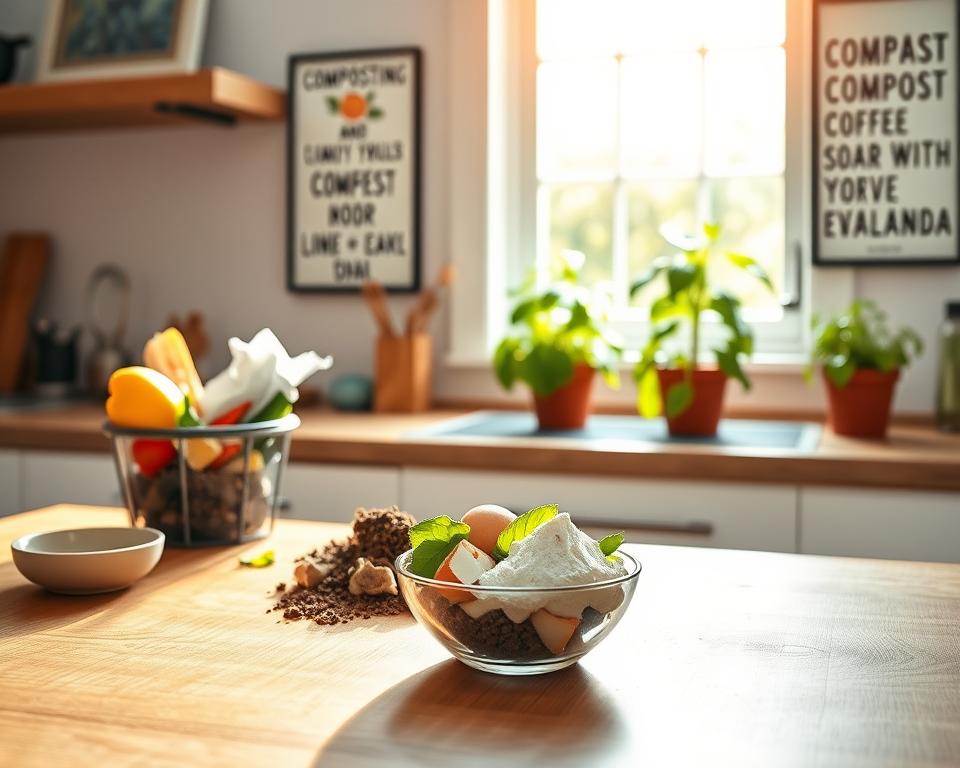
Did you know that nearly 40% of household waste can be composted? This reduces landfill waste and makes nutrient-rich soil for your garden. But, kitchen composting can sometimes cause bad smells. As someone who composts, I know how key it is to keep things fresh and clean while cutting down on waste.
I’ve found that a few easy kitchen composting tips can help reduce odors and boost composting benefits. In this article, I’ll share my knowledge. I’ll show you how to manage compost odors well, keeping your kitchen smelling good and your composting successful.
Key Takeaways
- Simple tips to minimize compost odors
- Effective ways to maintain a fresh kitchen environment
- Maximizing the benefits of composting
- Easy steps to manage compost odors
- Creating a nutrient-rich soil for your garden
Understanding Compost Odors
To reduce kitchen compost smells, it’s important to know what causes them. Compost odors are not just annoying; they show how well your compost is working. By knowing what leads to these smells, you can handle them better.
What Causes Compost Odors?
Compost odors come from the breakdown of organic matter by microorganisms. If this process is off balance, it can create bad smells. The kind of food waste and the bin’s conditions greatly affect these smells.
Too much green material without enough brown can cause anaerobic conditions. This leads to bad smells. As Rodale’s Organic Life points out, mixing green and brown materials is key for a healthy pile.
The Role of Microorganisms
Microorganisms are vital in composting. They break down organic matter, releasing gases and heat. But, too much moisture or green material can favor anaerobic microbes. These microbes create strong, bad smells.
“The presence of microorganisms is essential for composting, but their activity must be balanced to avoid odor issues.”
The Impact of Food Waste Types
The type of food waste affects compost odors. Meat, dairy, and oils produce stronger smells than fruit and veggie scraps. Knowing how different waste impacts odors helps manage your compost better.
| Food Waste Type | Odor Impact | Recommendation |
|---|---|---|
| Fruit and Vegetable Scraps | Low to Moderate | Add in moderation, balance with brown materials |
| Meat, Dairy, and Oily Foods | High | Avoid or compost in small amounts, ensure good aeration |
| Bread and Grains | Moderate | Balance with green materials, ensure regular turning |
Understanding and managing compost odors leads to a healthier composting process.
Benefits of Composting at Home
Composting at home is easy and helps the planet. It keeps organic waste out of landfills and cuts down on pollution. Plus, it makes a great fertilizer for your garden.
Environmental Advantages
Composting at home is good for the environment. It cuts down on methane from landfills, a harmful gas. This way, you help the air and the planet.
It also helps your garden grow without harming the environment. Instead of using harmful chemicals, compost is a natural choice.
Reducing Kitchen Waste
Composting is a smart way to cut down on kitchen waste. Turning food scraps into compost means less trash in landfills.
This is good for the planet and saves you money on trash pickup. It’s a win-win for your wallet and the Earth.
Enriching Your Garden Soil
Composting makes your garden soil better. It adds nutrients and improves soil health. This helps plants grow strong and healthy.
Using compost in your garden also helps with water and keeps soil in place. It makes your garden more stable and beautiful.
Choosing the Right Compost Bin
Choosing the right compost bin is key to controlling odors at home. There are many options, each with its own benefits. The right bin can greatly improve your composting experience.
Types of Compost Bins
There are several types of compost bins, each with its own features. Here are some common ones:
- Open Bins: Simple and affordable, they let in air but might let odors out.
- Closed Bins: These bins keep odors in but need more care to ensure air gets in.
- Tumblers: Easy to turn and aerate, they’re great for reducing odors.
- Worm Composters: Use worms to break down waste, perfect for indoor composting.
Size and Location Considerations
The size and where you put your compost bin matter a lot for odor control. Think about these points:
- Pick a bin that’s big enough but not too big to handle.
- Put it in a spot with good air flow to cut down on smells.
- Make sure the bin is easy to get to for regular maintenance.
Using Airtight Containers
Airtight containers help keep odors in and moisture levels right. But, they must also let in some air to avoid bad smells.
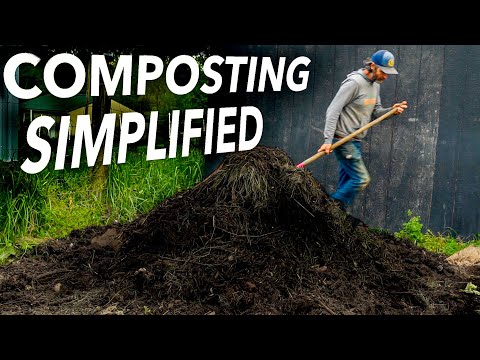
When picking a compost bin, think about what you need, how much space you have, and what you’ll compost. The right bin and good composting habits can reduce odors and make great soil for your garden.
Measuring Carbon to Nitrogen Ratio
The secret to less kitchen compost smell is knowing the carbon to nitrogen ratio. This ratio is key because it affects how well microorganisms break down compost.
Understanding Brown vs. Green Materials
To get the right carbon to nitrogen ratio, you need to know the difference between brown materials and green materials. Brown materials, like dried leaves and shredded newspaper, are high in carbon. Green materials, such as food scraps and grass clippings, are rich in nitrogen. Mixing both is essential for good composting.
Maintaining the Ideal Ratio
The perfect carbon to nitrogen ratio is about 25:1 or 30:1. This means for every 25-30 parts of carbon, you need 1 part of nitrogen. Keeping this balance helps microorganisms break down compost well, which reduces smells.
Tips for Balancing Ingredients
To balance your compost ingredients, follow these tips:
- Add brown materials like dried leaves or straw to increase carbon content.
- Incorporate green materials such as food scraps or grass clippings to boost nitrogen levels.
- Monitor your compost pile’s moisture and aeration to support microbial activity.
- Avoid adding too many green materials at once, as this can lead to anaerobic conditions and unpleasant odors.
By following these guidelines and keeping the ideal carbon to nitrogen ratio, you can greatly reduce kitchen compost odors. This way, you’ll make a nutrient-rich compost for your garden.
Best Practices for Adding Kitchen Waste
Composting kitchen waste is a delicate task. It’s about making nutrient-rich soil without bad smells. To do this, follow some key practices.
What Not to Compost
Not all kitchen waste is good for composting. Items like meat, dairy, and oily foods attract pests and smell bad. They also stop the composting process.
Don’t add pet waste or diseased plants either. They can harm humans and plants with harmful pathogens.
| Materials to Avoid | Reason |
|---|---|
| Meat, Dairy, Oily Foods | Attract pests, create odors |
| Pet Waste | Contains pathogens |
| Diseased Plants | Spreads disease |
The Importance of Small Chopping
Chopping kitchen waste into small pieces is key. Smaller pieces break down faster and better. This reduces odors and improves compost quality.
Layering Techniques
Layering waste in your bin helps with airflow and smell. Mix “green” materials (kitchen waste, grass clippings) with “brown” materials (dried leaves, straw).
- Start with brown materials at the bottom.
- Add green materials on top.
- Keep alternating, ending with brown on top.
By following these tips, you can make great compost from kitchen waste. It’s good for your garden.
Keeping Your Compost Aerated
Aerating your compost is key to managing odors and keeping it healthy. Microorganisms need oxygen to break down organic matter well. Without enough air, compost can become anaerobic, causing bad smells.
Importance of Airflow
Adequate airflow is vital for a balanced compost ecosystem. Oxygen helps beneficial microorganisms grow, breaking down matter fast and efficiently. This not only cuts down on odors but also speeds up composting.
Techniques for Aeration
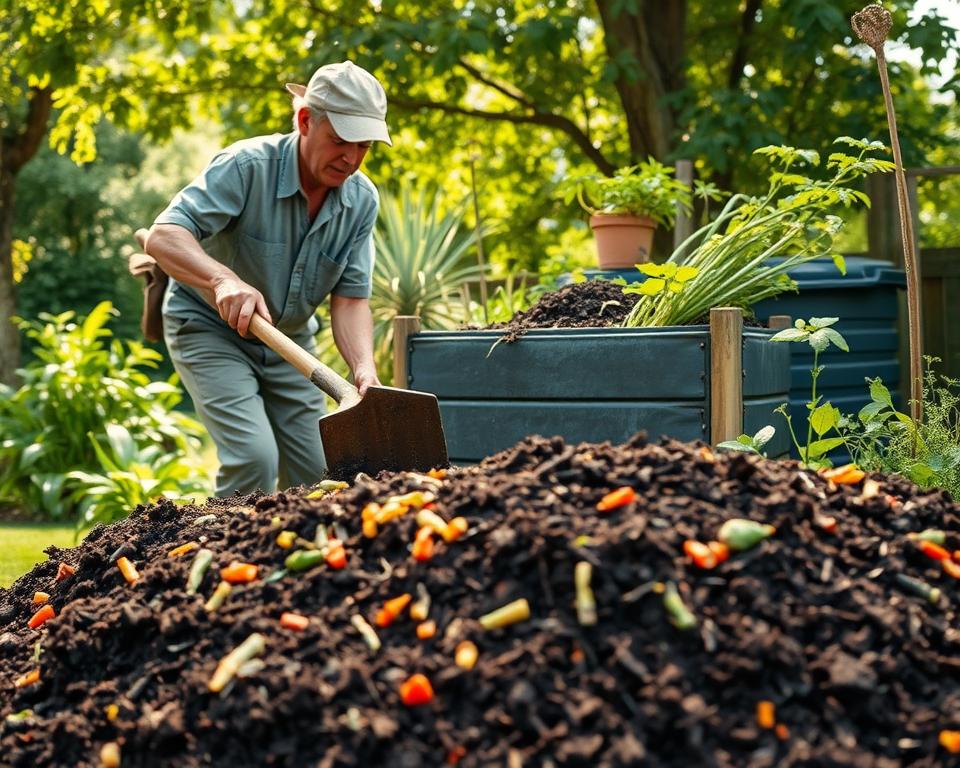
There are several ways to aerate your compost well. One method is to regularly turn the pile with a pitchfork or shovel. This action redistributes materials and brings oxygen into the pile. Another way is to add bulking agents like straw or coconut coir, which help keep air flowing.
- Use a compost turner or pitchfork to aerate your compost pile.
- Add bulking agents like straw or coconut coir to improve airflow.
- Monitor the moisture level to prevent anaerobic conditions.
Signs of Anaerobic Conditions
If your compost turns anaerobic, you’ll notice a strong, bad smell. You might also see a slimy texture and pests or maggots. To fix this, turn your compost pile right away and add dry materials to soak up extra moisture.
By keeping good airflow and watching your compost, you can avoid anaerobic conditions and keep it smelling fresh. Regular aeration is a simple yet effective way to ensure your compost stays healthy.
Moisture Management in Compost
Keeping the right moisture in your compost is key to eliminating kitchen compost odors. It should be as damp as a sponge to help microbes work well. Too much water can cause bad smells, while too little slows things down.
The Right Level of Moisture
The perfect moisture for compost is between 40% and 60%. This helps microbes grow without creating bad smells. To check, squeeze a handful of compost. It should be damp but not wet.
How to Add Dry or Wet Material
If your compost is too dry, add wet stuff like fruit peels or grass clippings. If it’s too wet, add dry stuff like straw or newspaper. It’s important to balance these to keep the right moisture.
- Add dry materials to soak up extra water.
- Use wet materials to add moisture.
- Mix well after adding new stuff.
Using Drainage Techniques
Good drainage is key to handling too much water in your compost. Add coarse stuff like twigs or straw at the bottom of your bin. This stops water from pooling and keeps your compost healthy.
By managing moisture well, you can cut down on bad smells from your compost. Keep an eye on it and make changes as needed to keep it healthy.
Regular Turning and Mixing
One of the most important composting tips is to turn your compost regularly. This keeps your compost pile healthy and reduces odors.
Turning your compost adds oxygen. This speeds up decomposition and stops bad smells. It’s a simple way to keep your compost working well.
How Often Should You Turn Compost?
How often you turn your compost depends on a few things. These include the size of your pile and what you’re composting. Generally, turn it every few days to once a week.
This helps keep oxygen flowing and makes sure everything breaks down evenly. But, if your compost is too dry or wet, you might need to turn it more or less often.
Tools for Turning Compost
Using the right tools makes turning compost easier. A pitchfork or compost fork is best. They help turn materials gently without damaging them.
You can also use a compost aerator. It’s made to add oxygen to your pile without turning it all over.
Benefits of Mixing
Mixing different materials in your compost pile makes it better. Combining ‘green’ materials (like kitchen scraps) with ‘brown’ materials (like dried leaves) creates a balanced mix. This supports healthy decomposition.
Regular mixing also spreads heat evenly. This ensures all materials break down well.
Identifying and Preventing Smells
Finding out where compost smells come from is key to a better composting experience. Different smells can show problems like too much green stuff or not enough air.
Recognizing Common Odors
Compost smells can vary, from ammonia to rotten eggs. Ammonia-like odors happen when there’s too much green stuff. Rotten egg smells mean there’s not enough oxygen.
| Odor Type | Possible Cause | Solution |
|---|---|---|
| Ammonia-like | Too much green waste | Add more brown materials |
| Rotten Egg Smell | Anaerobic conditions | Turn the compost pile |
Quick Fixes for Odor Issues
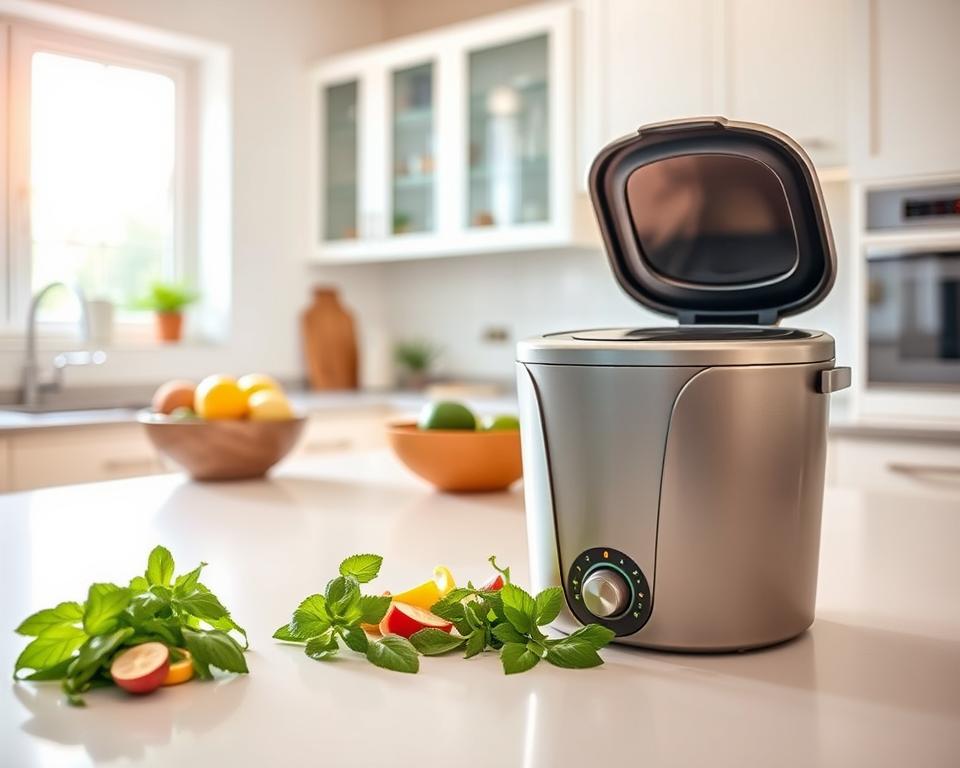
For quick fixes, check the carbon-to-nitrogen ratio and adjust it. Add more brown stuff like dried leaves or straw. Also, make sure your compost has enough air by turning it often.
- Add brown materials to balance the carbon-to-nitrogen ratio.
- Turn the compost pile to improve aeration.
- Check moisture levels and adjust as needed.
Long-term Solutions
For lasting solutions, keep your compost pile balanced. Watch its moisture and mix green and brown materials well.
By following these tips and managing your compost well, you can greatly reduce kitchen compost smells. This makes composting healthier.
The Role of Additives in Odor Control
Additives are key in controlling compost odors. By adding the right materials, you can cut down on bad smells. This makes your compost pile healthier.
Kitchen Herbs and Natural Additives
Certain herbs and natural additives can fight off compost odors. For example, mint leaves or basil can add a nice scent. Lime or dolomitic limestone can also balance the compost’s pH. This reduces acidity and smells.
Using natural additives not only controls odors but also adds nutrients to your compost. Here are some examples:
- Cinnamon: It fights off bad bacteria and smells.
- Crushed eggshells: They add calcium and improve air flow, reducing odors.
- Coffee grounds: They are rich in nitrogen, balancing the compost and reducing smells.
Commercial Odor Neutralizers
For a quick fix, there are commercial odor neutralizers. These products are made to get rid of compost smells. Make sure to pick ones that are safe for your compost and the environment.
When using commercial products, remember these tips:
- Ensure the ingredients are eco-friendly.
- Follow the instructions for how much to use.
- Watch how your compost reacts and adjust as needed.
Chemical-Free Solutions
If you don’t want to use commercial products, there are other ways. Adding more brown materials like dried leaves can help. This absorbs moisture and cuts down on odors.
| Method | Description | Benefits |
|---|---|---|
| Increasing Carbon Content | Add more brown materials like dried leaves or shredded newspaper. | Absorbs excess moisture, reduces odors. |
| Using Natural Additives | Add materials like lime, dolomitic limestone, or kitchen herbs. | Balances pH, introduces beneficial nutrients. |
| Aeration | Regularly turn your compost pile. | Improves airflow, reduces anaerobic conditions. |
By using these methods, you can manage compost odors well. Whether you choose natural additives, commercial products, or go chemical-free, finding the right balance is key.
Maintaining a Compost Schedule
Creating a compost schedule is key for effective kitchen composting and less odor. A regular schedule keeps the compost bin balanced. This ensures the composting process works well.
Frequency of Adding Waste
The amount of waste you add to your compost bin varies. It depends on your bin’s size and how much waste you have. Add waste often, but not too much to avoid bin overload.
Choose a day each week to add kitchen waste. This keeps the carbon-to-nitrogen ratio balanced. It also keeps the compost pile well-aerated.
Monitoring Compost Progress
It’s important to watch your compost’s progress. Look for signs like a rich smell and dark, crumbly texture.
Check the compost’s moisture and temperature too. The ideal temperature is between 130°F and 140°F. This shows active decomposition.
Knowing When to Harvest
Knowing when to harvest your compost is key. It’s ready when it’s dark, crumbly, and smells earthy.
To check if it’s ready, squeeze a handful. If it feels like a damp sponge and crumbles, it’s ready to use.
| Compost Status | Characteristics | Action |
|---|---|---|
| Ready to Harvest | Dark, crumbly, earthy smell | Use in garden |
| Not Ready | Smells bad, not crumbly | Turn and monitor |
“Composting is a simple and effective way to reduce kitchen waste and create a nutrient-rich soil amendment for your garden.”
By following these tips and keeping a regular compost schedule, you can enjoy composting. This reduces odors and improves your compost’s quality.
When to Seek Professional Help
If you’re having trouble with compost odors or pests, it might be time to get help. Even with your best efforts, some compost piles can get out of control. In these cases, you might need expert advice.
Persistent Problems
Signs that your compost needs help include bad smells, pests, or mold. If changing how you compost doesn’t solve the problem, it’s time to ask for professional advice.
Local Resources
Local compost facilities can give you great tips on composting. They might have workshops, online guides, or one-on-one help. You can also volunteer to learn more.
Getting Expert Guidance
Getting professional help can teach you how to keep your compost healthy. This knowledge helps you avoid mistakes and makes your composting successful.