


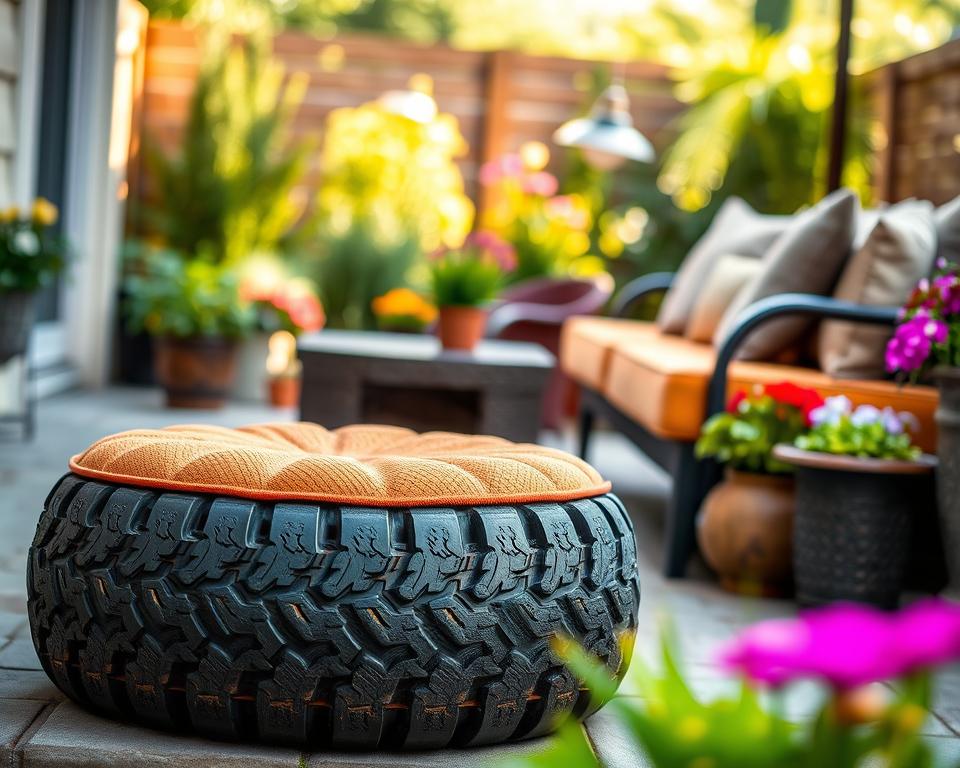
Did you know millions of tires are thrown away each year? This adds to environmental waste. But, many of these tires can be turned into useful and stylish furniture, like a DIY footstool.
Making a footstool from upcycled tires helps reduce waste. It also brings creativity to your home decor. This project is great for those who like furniture making and want something unique for their home.
Key Takeaways
- Create a unique piece of furniture while reducing waste.
- Upcycling old tires is a creative way to enhance your home decor.
- This DIY project is perfect for those who enjoy furniture making.
- A DIY footstool can add a touch of personality to any room.
- Repurposing old tires is an eco-friendly way to create functional furniture.
The Growing Trend of Upcycling Tires
Tire repurposing is more than a trend; it’s a big step towards sustainable living. As we all become more eco-friendly, we’re finding new ways to cut down on waste. Upcycling old tires into cool furniture, like footstools, is a great example.
Environmental Benefits of Repurposing Tires
Upcycling tires is good for the planet. It cuts down on the number of tires in landfills and saves raw materials. This helps reduce waste and supports eco-friendly living.
| Environmental Benefits | Description |
|---|---|
| Reduced Waste | Less tires in landfills |
| Conservation of Resources | Less need for new raw materials |
Why Tire Footstools Are Gaining Popularity
Tire footstools are loved for their mix of function and style. They bring creativity to your home and support They’re also versatile, making them a top choice for eco-friendly furniture.
Materials You’ll Need for Your Tire Footstool
To make a DIY tire footstool, you need the right materials. This ensures it’s both durable and looks good. You’ll need to pick the perfect tire, choose the right fabric, and get all the extra stuff you need.
Selecting the Right Tire Size and Type
Choosing the right tire is key. Look for one that’s 14 to 16 inches in diameter for a standard height. Make sure it’s clean and in good shape. “Upcycling old tires not only reduces waste but also gives new life to discarded materials”, experts say.
Upholstery Materials and Options
The upholstery fabric you pick will change how comfy and stylish your footstool is. You can go for tough outdoor fabrics, fancy leathers, or bright cotton prints. Think about where and how you’ll use it when picking.
Additional Supplies Checklist
For your DIY project, you’ll need more than just a tire and fabric. Here’s what else you’ll need:
- Sturdy foam cushioning
- High-density batting for extra comfort
- Strong thread and needles for sewing
- Staple gun and staples for securing fabric
- Decorative elements (optional)
With these materials and supplies, you’re ready to make a unique and useful tire footstool.
Essential Tools for This DIY Project
To do this DIY tire footstool project right, you’ll need the right tools. Having the right tools makes the job easier and more fun.
Basic Tools Every DIYer Should Have
Some tools are must-haves for any DIY job, like this tire footstool. You’ll need a hammer for tapping things into place. A tape measure is key for getting measurements right. And a utility knife is great for cutting different materials.

Optional Tools That Make the Job Easier
Some tools are nice to have but not essential. A staple gun is super helpful for upholstery. And a jigsaw is good for curved cuts. A clamp is also useful for holding pieces together.
Having both essential and optional tools ready will make you feel ready to take on this DIY project.
Safety Considerations When Working with Tires
When you start making an old tire into a footstool, safety is key. Tires can be risky, with dangers like harmful chemicals and physical injuries. These can come from sharp objects or heavy lifting.
Proper Ventilation Requirements
It’s important to work in a well-ventilated area when cleaning or cutting tires. Open windows or use a fan to keep the air moving. This helps avoid breathing in harmful fumes or particles.
Protective Gear You Should Wear
Protective gear is a must when working with tires. Wear gloves to protect your hands from cuts and abrasions. Also, safety glasses to keep your eyes safe from debris. And don’t forget a dust mask to block dust and particles.
Safe Handling Practices
Handling tires safely is essential to avoid injuries. Always lift correctly to prevent back strain. Use tools to cut or manipulate the tire, not your hands. Remember, the tire’s weight and size can cause accidents.
By following these safety tips, you can have a safe and successful DIY project.
Preparing Your Tire for Transformation
Before you start making your old tire into a footstool, you need to prepare it. This step is key to making sure your DIY project works well and is safe.
Cleaning and Sanitizing the Tire
Cleaning the tire is the first thing to do. It helps get rid of dirt and debris that might be on it.
Removing Dirt and Debris
To clean the tire, start by brushing off any loose dirt. Then, use soap and water to wash it well. Rinse it with clean water to get rid of any soap left behind.
Disinfecting Methods
After cleaning, disinfect the tire with a bleach solution. Mix 1 part bleach with 10 parts water. Apply it to the tire and let it sit for 10-15 minutes. Then, rinse it off with clean water. This step kills bacteria and mold.
Measuring and Marking for Precision
When the tire is clean and dry, measure and mark it. Use a tape measure to find its circumference and diameter. Mark the center with chalk or a marker. These measurements will guide you in your DIY project.
| Measurement | Value |
|---|---|
| Circumference | Measure around the tire |
| Diameter | Measure across the tire |
As Jane Smith, a DIY expert, once said, “Measuring twice is key when working with tires.” This focus on detail makes your footstool both useful and good-looking.
“The art of upcycling is not just about transforming old items into new ones; it’s about giving them a new life with purpose.”
How to Make a DIY Footstool from Old Tires: Step-by-Step Guide
Turning an old tire into a footstool is a fun DIY project. It needs creativity and hard work. We’ll show you how to make a comfy and stylish footstool from an old tire.
Creating a Stable Base
A stable base is key for your footstool. It keeps the tire steady and prevents it from falling over. To make a stable base, cut a plywood circle that fits inside the tire.
Cutting the Plywood Base
Measure the tire’s inside diameter to find the plywood size. Use a jigsaw or circular saw to cut it. Make sure the cut is exact to fit the tire perfectly.
Securing the Base to the Tire
After cutting the plywood, attach it to the tire with strong adhesive and screws. This step is vital for a solid footstool base. As “a good base is the foundation of a great piece of furniture”, it’s essential.
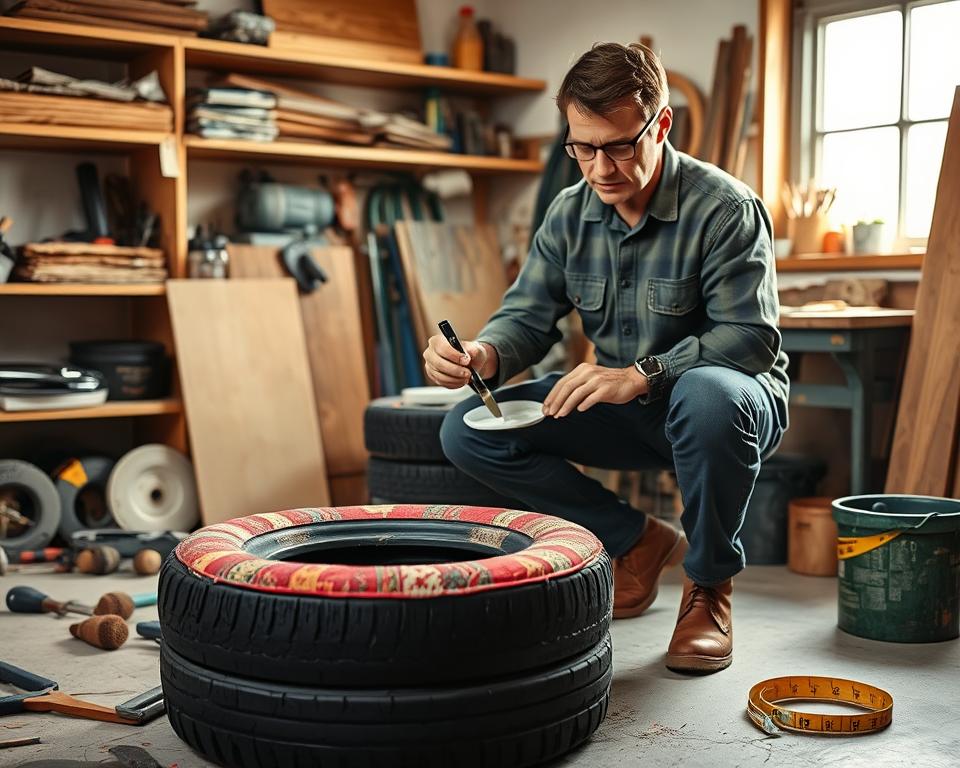
Adding Internal Support Structures
To make your footstool comfy, add internal support. You can use foam or extra plywood layers. This makes the surface comfy without weakening the tire.
Preparing for Upholstery
Before upholstering, clean and dry the surface. Sand any rough spots for a smooth finish. Choosing the right fabric is important for looks and durability.
Follow these steps to make a unique and useful footstool from an old tire. This guide helps you upcycle and add character to your home.
Upholstering Your Tire Footstool
Upholstering your tire footstool is where creativity meets functionality. This step turns your recycled tire into a comfy and stylish piece of furniture.
Choosing the Right Fabric
Choosing the right fabric is key for looks and durability. Look for durable, stain-resistant materials that can handle daily use. Outdoor fabrics or heavy-duty canvas are great because they’re tough and easy to clean.
Padding Techniques for Comfort
Adding the right padding makes your footstool look good and feel great. There are two main techniques to think about:
Foam Layer Application
A high-density foam layer gives the support and comfort you need. Measure the tire’s inside to cut the foam right, so it fits perfectly.
Batting for Smooth Contours
Putting a layer of batting on top of the foam makes the contours smooth. It also stops the fabric from touching the foam, making it look better.
Securing Fabric to the Tire
To keep the fabric in place, start by wrapping it tightly around the tire. Make sure it covers evenly. Use heavy-duty staples or a strong adhesive to stick the fabric to the tire. For a nicer look, add a decorative trim or piping along the edges.
By picking the right fabric, adding the right padding, and securing it well, you can make a beautiful and comfy footstool from an old tire.
Adding Decorative Elements to Your Footstool
To make your tire footstool unique, add decorative elements. These not only look great but also make your DIY project special.
Button Tufting Techniques
Button tufting adds texture and interest to your footstool. It involves threading buttons through the upholstery for a unique, tufted design. This technique takes patience but is worth it for the results.
Trim and Piping Options
Trim or piping around your footstool’s edges can really improve its look. You can pick from many materials and colors to match or contrast with your fabric. Piping gives a clean finish, while trim adds patterns or textures.
Decorative Nail Heads and Other Embellishments
Decorative nail heads can add a stylish touch to your footstool. They help secure fabric and add a decorative element. You can arrange them in patterns or use them sparingly for a subtle look. Other embellishments, like studs or rivets, can also give your footstool a customized look.
With these decorative elements, you can turn your tire footstool into a beautiful, unique piece that shows off your style.
Optional Features to Enhance Your Footstool
Your DIY footstool can be more than just a seat. It can be a piece of furniture that does many things. Adding some smart optional features can make it more useful and flexible.
Adding Storage Capabilities
One great way to make your footstool better is by adding storage. You can make a hinged top or a cushion that can be taken off. This lets you get to the storage inside the tire.
This feature is super useful in places like living rooms or bedrooms. It’s great for storing things like blankets, books, or toys.
| Feature | Benefit |
|---|---|
| Storage | Extra space for storing items like blankets, books, or toys |
| Casters | Ease of movement, making it simple to reposition the footstool |
| Lift-Top Design | Convenient access to storage and a versatile design element |
Installing Casters for Mobility
Adding casters to your footstool makes it easy to move around. This is really helpful for big or heavy footstools. They can be hard to lift.
Creating a Lift-Top Design
A lift-top design looks good and makes it easy to get to storage. It’s a smart feature that makes your footstool more useful.

Finishing Touches for a Professional Look
As I finish my DIY tire footstool, I see how important the little things are. A professional look isn’t just about how it looks. It’s also about how well it lasts and works.
Hiding Staples and Rough Edges
To get a clean look, hiding staples and rough edges is key. I use fabric glue and decorative elements to cover up any flaws. It’s all about the details to get a smooth, professional finish.
Adding Protective Feet
Protective feet on the bottom of your footstool stop it from scratching floors and make it stable. I suggest using felt pads or rubber feet, which are simple to put on and work well. As “a small addition that makes a big difference”, these feet are a great way to improve your footstool.
Final Cleaning and Detailing
The last step is a deep clean and detailing. I check the footstool for any flaws, clean the fabric, and tighten screws. A saying that sticks with me is,
“The devil is in the details.”
This ensures your footstool looks good and is ready to use.
By following these steps, you can make your DIY tire footstool look professional. The finishing touches really make the project stand out.
Maintenance and Care for Your Tire Footstool
To keep your tire footstool looking great, regular care is essential. A well-kept footstool boosts your room’s look and lasts longer.
Cleaning Methods for Different Fabrics
Different fabrics need different cleaning ways. Cotton and polyester can often be cleaned with a damp cloth. But, delicate materials might need special cleaners. Always check the fabric’s care label first.
Addressing Wear and Tear
Check your footstool often for wear signs like loose threads or fading. Fixing these problems early stops more damage. Tightening screws or re-stapling can help a lot.
When to Reupholster
Knowing when to reupholster your footstool is important. If the fabric is too worn or damaged, it’s time for a new look. Reupholstering not only refreshes your footstool but also makes it last longer.
Conclusion
Turning old tires into a footstool is a fun project. It gives new life to things we might throw away. Plus, it adds a unique touch to your home.
This project is about more than just making something. It’s about living sustainably and showing off your creativity. You get to make something special that’s all your own.
Starting this project, you learned how to make a tire footstool. It’s a journey from preparing the tire to adding your own style. It’s a chance to make something that’s both fun and functional.
Whether you want something quirky for your living room or a useful piece for your office, this is a great start. It’s a way to bring your creativity to life in your home.
Now that you’ve finished this project, think about other ways to reuse old items. With a bit of imagination, you can make almost anything into something beautiful and useful. This is the start of a journey in upcycling, and it’s just the beginning.