

Did you know that a lot of energy is lost because water heaters and pipes aren’t insulated? A typical home can save up to $400 a year by insulating these systems. As a homeowner, I always look for ways to cut down on utility bills and make my home more energy-efficient.
Insulating your water heater and pipes is a simple DIY project that can make a big difference. It not only cuts down on heat loss but also protects your pipes from freezing. This can save you from expensive repairs. By doing this project, you’re taking a big step towards a more energy-efficient home.
Key Takeaways
- Insulating your water heater can save you up to $400 annually.
- Proper insulation reduces heat loss and protects your plumbing system.
- DIY insulation is a simple and effective way to boost energy efficiency.
- Insulated pipes are less likely to freeze in cold temperatures.
- This project can help reduce your utility bills and enhance your home’s overall energy efficiency.
The Benefits of Insulating Your Water Heater and Pipes
Insulating your water heater and pipes is a simple way to make your home more energy efficient. This easy project can save you money and protect your plumbing from damage.
Energy Efficiency Improvements
Insulation cuts down on heat loss from your water heater and pipes. This keeps the hot water you pay for warm as it reaches your faucets. Your water heater works less hard, saving energy and reducing your carbon footprint.
Cost Savings on Utility Bills
Insulating your water heater and pipes can lower your utility bills. The less energy your water heater uses, the less you’ll pay. The U.S. Department of Energy says you could save $30 to $60 a year.
| Benefits | Description | Potential Savings |
|---|---|---|
| Energy Efficiency | Reduced heat loss | Up to 10% |
| Cost Savings | Lower utility bills | $30-$60 per year |
| Protection Against Freezing | Prevents pipe damage | Priceless |
Protection Against Freezing
In cold areas, insulating your pipes is key to avoid them freezing and bursting. Frozen pipes can cause expensive repairs and hassle. Insulating your pipes helps protect your plumbing from freezing damage.
Understanding Heat Loss in Your Plumbing System
It’s important to know where and how heat loss happens in your plumbing. This knowledge helps you use energy better. Heat loss can make your energy bills go up and your system less efficient.
Common Areas of Heat Loss
Heat loss often happens where pipes are not covered or are poorly insulated. This includes unheated basements, crawl spaces, and outdoor piping. Pipes in these areas lose a lot of heat, mainly in the cold months.
How Insulation Prevents Energy Waste
Insulating your pipes and water heater is a simple way to save energy. Proper insulation keeps the water in your pipes warm. This means your water heater doesn’t have to work as hard.
Calculating Your Savings
Insulating your plumbing can lead to big savings on your energy bills. The amount you save depends on a few things. These include your current insulation, the size of your plumbing system, and your local energy prices.
Types of Insulation Materials
Choosing the right insulation materials is key for your water heater and pipes. Each material has its own benefits. The right one can make a big difference in how well your insulation works.
Fiberglass Insulation
Fiberglass insulation is a favorite because it’s affordable and easy to put in. It comes in batts or blankets that fit around pipes or water heaters. It’s good at keeping heat in and is easy to find.
Foam Pipe Sleeves
Foam pipe sleeves are great for pipes. They’re simple to use and fit snugly. They’re perfect for small spaces and help keep pipes from freezing.
Reflective Insulation
Reflective insulation reflects heat instead of absorbing it. It’s good for warmer places or where you don’t want heat to get in. It works well with other insulation for better results.
Heat Tape Options
In very cold places, heat tape is a good choice. It wraps around pipes to keep them from freezing. It uses more energy but is essential in some cases.
Tools and Materials You’ll Need
Before starting to insulate your water heater and pipes, gather all needed tools and materials. Having everything ready will make the process smoother and more efficient.
For Water Heater Insulation
To insulate your water heater, you’ll need a water heater blanket or insulation kit. Make sure it fits your water heater type. You’ll also need tape or straps to keep the insulation in place.
For Pipe Insulation
For pipe insulation, foam pipe sleeves or fiberglass insulation are needed. Measure your pipes to figure out how much insulation you need. For complex pipe setups, use a mix of insulation materials.
Safety Equipment
Remember safety equipment for your DIY insulation project. Gloves protect your hands from cuts and abrasions. Safety glasses shield your eyes from debris. A dust mask is also key when working with fiberglass insulation to avoid inhaling particles.
By gathering the right tools and materials, you’ll be ready to complete your insulation project safely and effectively.
Assessing Your Water Heater Before Insulation
Before you start insulating, you need to check your water heater. This is key to make sure it works well and insulation will help.
Checking for Leaks and Damage
Look for leaks or damage on your water heater. Check the tank, pipes, and connections for moisture or rust. Fix any problems before you insulate.
Determining the Type and Age of Your Water Heater
Find out what type and how old your water heater is. Knowing this helps choose the right insulation. Older heaters might need extra care.
Measuring for Proper Insulation Fit
Measure your water heater’s size to fit insulation right. Use the table below to note your measurements:
| Dimension | Measurement |
|---|---|
| Height | Record height here |
| Diameter | Record diameter here |
By doing these steps, you’ll get your water heater ready for insulation. This boosts your plumbing system‘s efficiency.
How to Insulate Your Water Heater and Pipes: Step-by-Step Guide
To start insulating your water heater and pipes, prepare your work area and gather materials. This guide will help you do it right, making your home more energy efficient.
Preparing Your Work Area
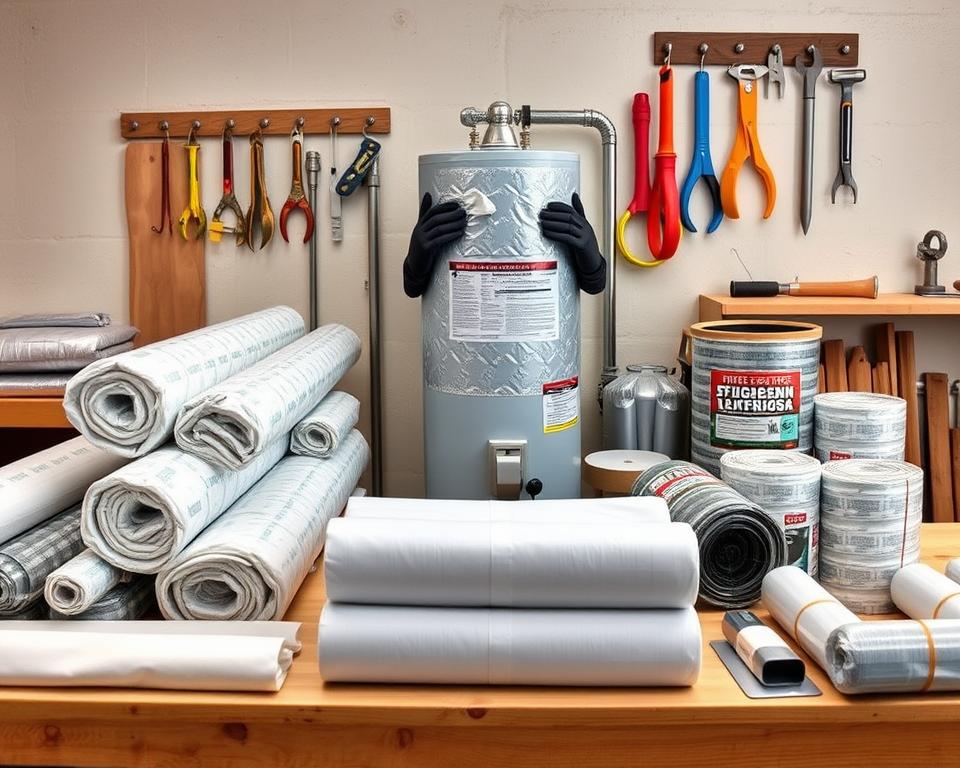
Clear the area around your water heater and pipes before starting. Remove any clutter or obstructions for easy access. Cover the floor and surrounding surfaces with drop cloths or old sheets to protect them from dust and debris. Get all the insulation materials and tools ready, like insulation blankets, foam pipe sleeves, and tape.
Safety Precautions to Take
When working with insulation, safety is key. Wear protective gear like gloves, safety glasses, and a dust mask to avoid irritation. Make sure the area is well-ventilated to avoid inhaling dust or particles. Be careful with sharp objects or tools, and keep children and pets away.
Basic Workflow Overview
The insulation process has several steps. First, check your water heater and pipes to see what insulation you need. Then, measure and cut the insulation to fit. Lastly, install it, making sure it fits snugly and securely. This DIY insulation guide will help you insulate your water heater and pipes well, saving energy and money.
By taking the right safety precautions and following this guide, you can successfully insulate your home. Enjoy the benefits of a more energy-efficient home.
Insulating Your Water Heater Tank
Insulating your water heater tank boosts your home’s energy efficiency. It cuts down on heat loss and lowers your bills.
Installing a Water Heater Blanket
To begin, you’ll need a water heater blanket. This is a special insulation wrap for water heaters. Make sure it fits your water heater type. Wrap it around the tank, covering it all over.
Securing the Insulation Properly
After placing the blanket, use straps or tape to hold it in place. Keep it tight but not too tight to avoid damage. This ensures the insulation works well for a long time.
Working Around Controls and Valves
When insulating, be careful around controls and valves. Don’t cover the thermostat, heating elements, or safety valves. For gas heaters, keep the blanket from the burner and pilot light.
Gas Water Heater Considerations
For gas heaters, make sure the insulation doesn’t block airflow. This is key for safe use and to avoid risks.
Electric Water Heater Considerations
For electric heaters, don’t insulate over the heating elements or thermostats. These need to be easy to reach for upkeep and use.
By following these steps and considering your water heater’s needs, you can insulate it well. This will help you save energy and cut costs.
Insulating Hot Water Pipes
To keep your hot water hot for longer, insulating your pipes is a simple yet effective solution. Insulating hot water pipes reduces heat loss, saves energy, and lowers your utility bills. It’s a straightforward DIY project that requires the right materials and a bit of know-how.
Measuring and Cutting Pipe Insulation
Before you start, measure the length and diameter of your hot water pipes to determine how much insulation you’ll need. Most pipe insulation comes in pre-cut lengths, but you may need to cut it to size. Use a utility knife or pipe cutter to cut the insulation, ensuring a snug fit around your pipes.
Installing Foam Pipe Sleeves
Foam pipe sleeves are a popular choice for insulating hot water pipes due to their ease of installation and effectiveness. Simply slip the sleeve over the pipe, ensuring it’s fully covered. For pipes with fittings or valves, you may need to cut the sleeve to fit around these areas.
Securing Insulation with Tape or Zip Ties
Once the insulation is in place, secure it with tape or zip ties. This ensures the insulation remains in position, even around bends or fittings. Use a durable tape or zip ties that can withstand the temperatures around your hot water pipes.
Insulating Copper Pipes
Copper pipes are common in many homes, and insulating them is relatively straightforward. Use foam pipe sleeves or wrap them with fiberglass insulation, securing it with tape or wire. Be sure to cover all exposed areas to prevent heat loss.
Insulating PEX and PVC Pipes
For PEX and PVC pipes, the insulation process is similar, but you should check the manufacturer’s recommendations for any specific insulation requirements. Generally, foam pipe sleeves work well for these types of pipes, providing a snug fit and effective insulation.
By following these steps, you can effectively insulate your hot water pipes, reducing energy consumption and saving money on your utility bills. Remember to check your work to ensure all pipes are properly insulated and secured.
Insulating Cold Water Pipes
Insulating cold water pipes is not just a good idea; it’s essential. It helps prevent condensation and damage. By insulating your pipes, you’re protecting your plumbing system.
When and Why to Insulate Cold Pipes
You should insulate cold water pipes in unheated areas like basements, crawlspaces, or garages. This prevents them from freezing or sweating. Condensation on cold pipes can lead to water damage and create a perfect spot for mold to grow. For more detailed guidance, you can refer to resources like this article on pipe insulation.
Special Considerations for Condensation Prevention
To prevent condensation, you need the right insulation materials. Foam pipe insulation is a popular choice because it’s easy to install and works well. Make sure the insulation fits tightly around the pipe to stop moisture buildup.
Basement and Crawlspace Pipe Protection
Basements and crawlspaces are prone to moisture, making pipe insulation even more critical. Protecting your pipes in these areas can prevent costly repairs down the line. Use insulation that’s designed for high-moisture environments.
Addressing Challenging Pipe Areas
Insulating pipes is key, but some areas are harder than others. Pipe joints and elbows need extra care. This is because they can lose a lot of heat if not properly insulated.
Insulating Pipe Joints and Elbows
Insulating these tricky spots is a challenge. You can use custom-cut foam inserts or flexible insulation materials to fit the pipes. For example, foam pipe sleeves can be cut to size for a perfect fit around elbows and joints.
Working Around Fixtures and Tight Spaces
Insulating pipes in tight spaces is tough. Thin, flexible insulation materials work well here. They can be shaped to fit into small areas.
“The key to effective pipe insulation is flexibility and adaptability.”
Using the right tools, like a utility knife or insulation saw, helps too. These tools make it easier to work with complex pipe shapes.
Solutions for Outdoor and Exposed Pipes
Outdoor pipes face harsh weather. To protect them, use UV-resistant insulation materials and weatherproof coatings. For example, foam board insulation can cover pipes in cold places like garages or basements.
By focusing on these tough areas, your plumbing system will be well-insulated. This means it will run more efficiently.
Troubleshooting Common Insulation Problems
Fixing insulation problems is key to keeping your plumbing system working well. Even if it’s installed right, issues can pop up. These can make your insulation less effective.
Dealing with Moisture and Condensation
Moisture and condensation can harm your insulation. Make sure there’s good air flow around your insulated pipes. Choose insulation that can handle moisture well. For example, foam sleeves are good at standing up to moisture.
Fixing Gaps and Incomplete Coverage
Insulation gaps can cause big energy losses. Check your insulation for any gaps or loose spots. Seal gaps with more insulation or use tape/zip ties to keep it in place.
When to Call a Professional
If you’re not sure how to fix insulation issues, or if they keep coming back, get professional help. Look for signs like constant moisture, high energy bills, or if DIY repairs seem too hard.
Signs Your Insulation Needs Replacement
Knowing when to replace insulation is important. Look for signs like visible damage, mold, or if your system isn’t working as well. Here’s a simple guide to help you decide:
| Condition | Indication | Action |
|---|---|---|
| Visible Wear and Tear | Insulation is damaged or deteriorated | Replace insulation |
| Mold or Mildew Growth | Presence of mold or mildew | Clean or replace insulation |
| Decreased System Performance | Notable increase in energy bills or reduced system efficiency | Inspect and potentially replace insulation |
By tackling insulation problems early, you can keep your plumbing system running smoothly and safely.
Conclusion
You now know how important insulating your water heater and pipes is. It helps you save money and energy. This easy DIY project can really cut down your utility bills.
This guide has given you the skills to do your own insulation. Insulating your water heater and pipes makes your plumbing system work better. You’ll use less energy and pay less for it.
When you finish this project, you’ll see how great it is to have well-insulated pipes. Your home will be more comfortable and cheaper to run. This DIY project is a smart choice for your home.