


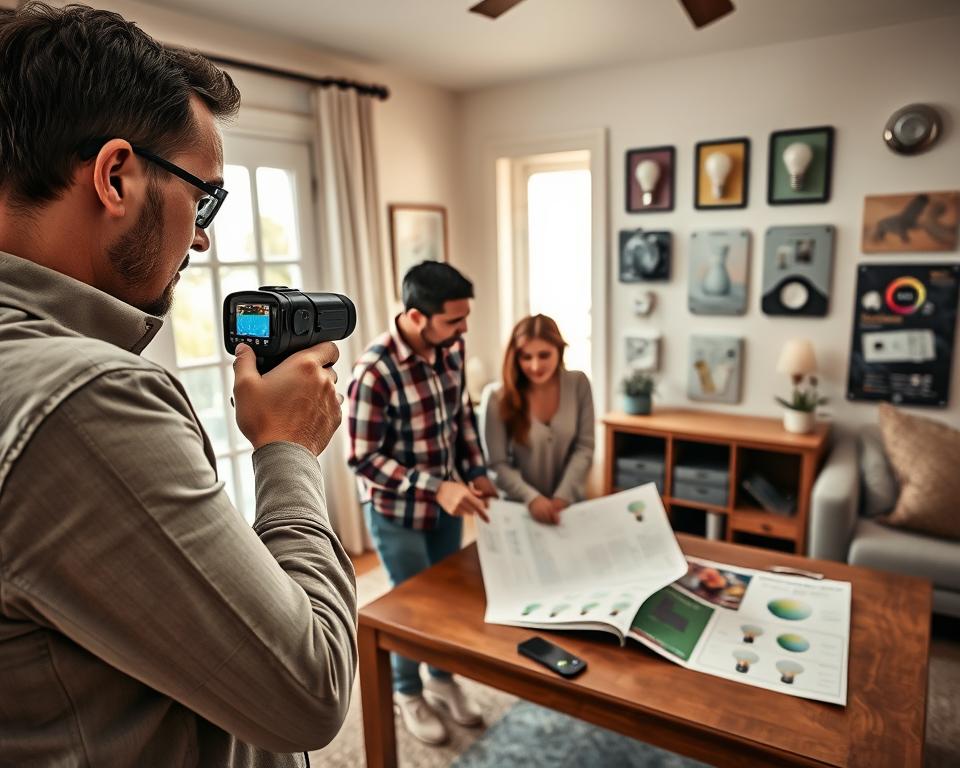
Did you know a typical American household wastes about $1,300 a year on energy bills? This is because of inefficiencies. A home energy audit can help find these waste spots. It lets you fix them and save money.
I’ll show you how to check your home’s energy use easily. By following this guide, you can find where energy is wasted. Then, you can make changes to use less energy and help the planet.
Key Takeaways
- Understand the importance of a home energy audit
- Learn how to identify areas of energy inefficiency
- Discover simple steps to improve your home’s energy efficiency
- Reduce your energy bills and environmental impact
- Take control of your home’s energy usage
Understanding the Importance of a Home Energy Audit
A home energy audit is more than just a tool. It’s a way to make your home more sustainable and comfortable. By finding out where your home loses energy, you can fix it.
Let’s explore why doing a DIY home energy audit is a smart move.
Benefits for Your Wallet
One big reason to do a home energy audit is to save money. It helps you find where your home loses energy. Then, you can choose the best upgrades or repairs to lower your bills.
- Lower energy use means lower bills.
- Buying energy-efficient stuff can save you a lot in the long run.
- Small changes, like better insulation or sealing leaks, can help a lot.
Environmental Impact
Lowering your home’s energy use also helps the planet. It cuts down on greenhouse gas emissions from energy production.
Key environmental benefits include:
- Less carbon footprint
- Less need for fossil fuels
- A better home for future generations
Increased Comfort
A home energy audit also makes your home more comfy. It helps with drafts, insulation, and heating and cooling. This means a more even and cozy indoor climate.
Enhanced comfort is achieved through:
- Less drafts and even temperatures
- Better air inside
- A cozier home
Preparing for Your Energy Audit
To get the most out of your home energy audit, preparation is essential. A well-prepared homeowner can spot energy-wasting spots better. This leads to saving money and helping the environment. The U.S. Department of Energy says, “A home energy audit is a detailed check of your home’s energy use. Getting ready is key to a good audit.”

Gathering Necessary Tools
Before starting your energy audit, get the tools you need for a thorough check. You might need:
- a flashlight for dark spots like attics and crawlspaces
- a candle or incense stick to find air leaks
- a screwdriver for tight spots
- a tape measure to check insulation and window sizes
Having these tools ready makes the audit smoother. You can then focus on finding ways to save energy.
Creating a Checklist
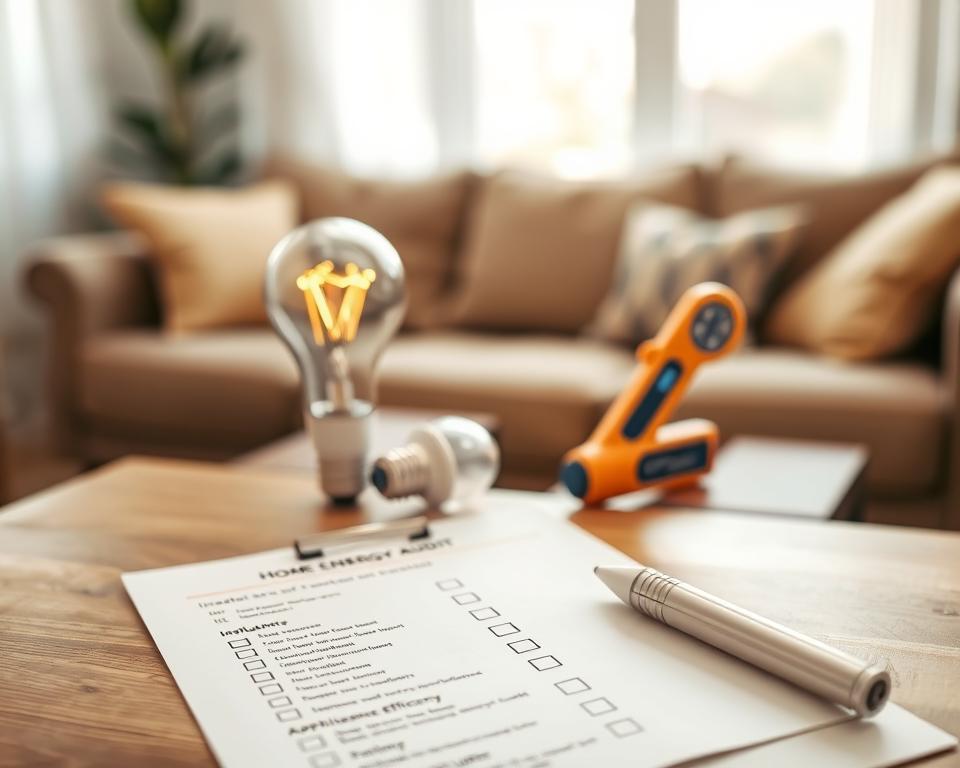
A detailed checklist is key for a good home energy audit. Your checklist should include:
- checking exterior walls, windows, and doors for leaks and damage
- looking at attic, wall, and floor insulation
- checking heating and cooling systems’ condition and efficiency
- examining lighting and appliance efficiency
Using a checklist helps you not miss any important areas during the audit.
Choosing the Right Time
The time you pick for your energy audit matters a lot. It’s best to do it when the weather is very cold or very hot. This helps spot energy-wasting spots better. Energy experts say, “Doing an energy audit when it’s really hot or cold shows how much energy your home uses.”
Also, think about the time of day. For example, checking for air leaks on a windy day can show a lot.
Inspecting Your Home’s Exterior
When you do a DIY energy audit, don’t forget to check your home’s outside. The outside is key to your home’s energy use. Looking closely can show you where energy is being wasted.
The outside of your home is your first defense against weather. So, it’s important to find any weak spots.
Checking for Air Leaks
Air leaks outside can really hurt your home’s energy use. Look at these spots for leaks:
- Windows and doors for gaps or cracks
- Electrical outlets and switches on exterior walls
- Vent pipes and chimneys where they go through the roof or walls
Fixing these leaks is easy with caulk or weatherstripping. For bigger gaps, you might need spray foam or to replace parts.
Evaluating Insulation
Good insulation keeps your home warm or cool. Here’s what to check:
| Insulation Type | Typical Locations | Key Benefits |
|---|---|---|
| Fiberglass Batts | Walls, attics | Cost-effective, easy to install |
| Spray Foam | Walls, attics, crawl spaces | High R-value, fills gaps |
| Reflective Insulation | Attics, crawl spaces | Reduces radiant heat gain |
Observing Windows and Doors
Windows and doors let in air and water. They also affect your home’s energy use. Look for:
- Signs of wear or damage
- Gaps between the frames and the walls
- The condition of the weatherstripping
Think about getting new, energy-saving windows or doors. Or seal any gaps to save energy.
By carefully checking your home’s outside, you can find and fix energy-wasting spots. This will make your home more energy-efficient.
Assessing Your Heating and Cooling Systems
To save a lot on energy, it’s key to check and improve your home’s heating and cooling systems. These systems use a lot of energy and how well they work affects your bills.
Cleaning and Maintaining HVAC Units
Keeping your Heating, Ventilation, and Air Conditioning (HVAC) units in good shape is important. This means changing filters often, cleaning condenser coils, and making sure the system fits your home right.
Tips for Maintaining HVAC Units:
- Change filters every 1-3 months, depending on usage and manufacturer recommendations.
- Clean condenser coils annually to improve heat transfer efficiency.
- Schedule professional maintenance at least once a year.
Checking Ductwork for Leaks
Duct leaks can cause a lot of energy loss. This is because conditioned air gets out through gaps and holes in the ductwork. Fixing these leaks can make your HVAC system work better.
Steps to Check Ductwork:
- Inspect ducts for visible leaks, specially at connections and joints.
- Use a duct leakage test kit or hire a professional to detect leaks.
- Seal leaks with mastic sealant or foil tape.
Evaluating Thermostat Settings
Your thermostat settings are very important for your energy use. Changing these settings can save you a lot of money.
| Season | Recommended Thermostat Setting | Potential Savings |
|---|---|---|
| Winter | 68°F (20°C) when home, lower when away or sleeping | 3-5% per degree of extra reduction |
| Summer | 78°F (25°C) when home, higher when away or sleeping | 3-5% per degree of extra increase |
By following these tips, you can make your heating and cooling systems more efficient. This will lower your energy bills and make your home more comfortable.
Analyzing Appliances and Electronics
Checking how my appliances and electronics use energy is key in my energy audit. Knowing how they affect my energy use helps me find ways to save. This also means I can cut down on my utility bills.
Energy-Saving Appliances
Using energy-saving appliances is a great way to cut down on energy use. When I buy new appliances, I look for the ENERGY STAR label. This label means the appliance meets high energy standards set by the U.S. Environmental Protection Agency. Appliances with this label can save me up to 30% on my energy bills.
Here are some examples of energy-saving appliances:
- LED bulbs, which use much less energy than incandescent bulbs
- Energy-efficient refrigerators and freezers, which use less energy thanks to better insulation and compressors
- Smart power strips, which can turn off devices automatically when not in use
Standby Power Consumption
Many modern devices keep using power even when turned off but plugged in. This is called standby power consumption or “vampire power.” It can use a lot of energy. To reduce this, I unplug devices when not in use or use smart power strips.
Here are some common devices that use a lot of standby power:
- Televisions and home theaters
- Computers and peripherals
- Phone chargers and other small appliances
Proper Use of Power Strips
Power strips can help manage standby power consumption. By plugging devices into a power strip and turning it off when not in use, I can stop standby power. Some power strips also offer surge protection and automatic shut-off, making them even more useful.
To get the most out of power strips, I:
- Use them for devices that are used together, like my home entertainment system
- Choose power strips with surge protection to protect my devices
- Consider smart power strips that can be controlled remotely or programmed to turn off devices at specific times
Evaluating Lighting Solutions
When you do a basic home energy audit, checking your lighting is key. Lighting uses a lot of energy, but you can cut down on this. The right steps can make a big difference.
Benefits of LED Bulbs
Switching to LED bulbs is a simple way to make your lighting better. LEDs use much less energy and last a lot longer. The U.S. Department of Energy says LEDs use up to 90% less energy and last 25 times longer than old bulbs.
| Lighting Type | Energy Consumption | Lifespan |
|---|---|---|
| Incandescent | High | 1,000 – 2,000 hours |
| LED | Low | 25,000 – 50,000 hours |
Natural Lighting Optimization
Using more natural light is also smart. Make sure your windows are clean and use light curtains or blinds. This lets more sunlight in, cutting down on the need for artificial light. Plus, it makes your home feel better.
Using Smart Lighting
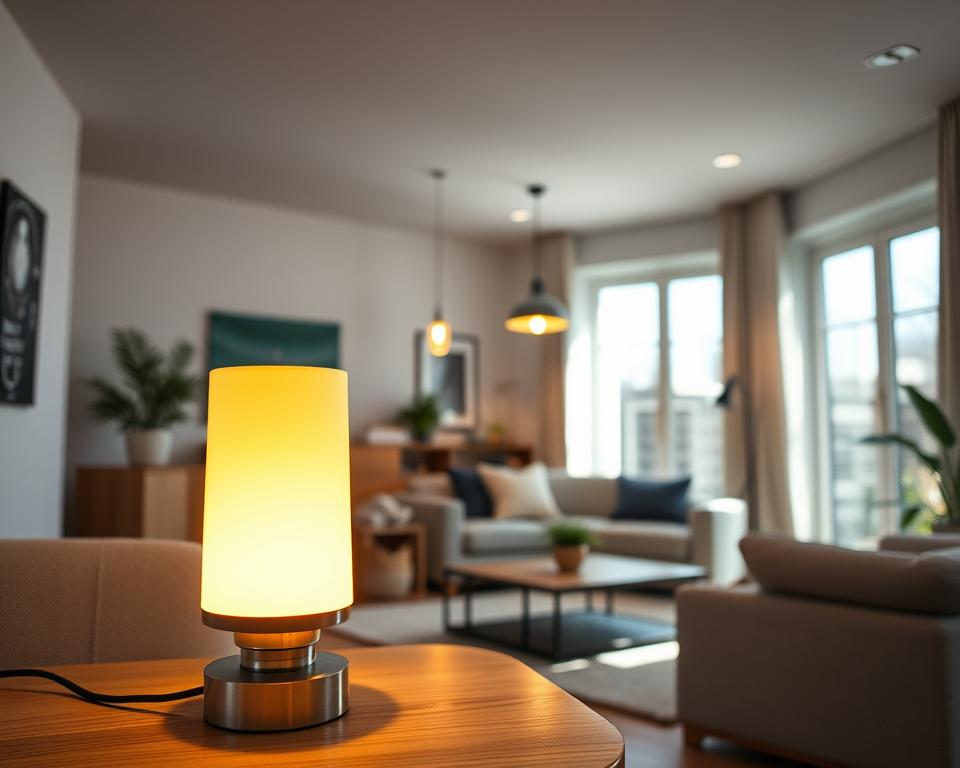
Smart lighting lets you control your lights better, saving energy. You can set them to turn off when not needed or adjust brightness. Some even work with your home’s automation, making lighting easy and efficient.
By using these lighting tips, you can use less energy and help the planet. As you keep working on your home energy audit, think about how these ideas fit into your plan.
Conducting a Comfort Assessment
A comfort assessment helps me find out where my home is not comfy and wastes energy. It lets me know which spots need fixing.
Identifying Drafty Areas
Drafty spots can make my home less comfy and less energy-efficient. I find these areas by using a lit candle or incense stick near gaps. If the flame dances or smoke drifts, it means there’s air getting in. Sealing these gaps helps keep the temperature steady.
Room Temperature Discrepancies
It’s important to notice if some rooms are warmer or cooler than others. This could mean poor insulation, wrong thermostat settings, or heating and cooling problems. Fixing these can make my home’s temperature even.
Humidity Levels
Keeping humidity levels right is key for comfort and saving energy. I use a hygrometer to check my home’s humidity. It should be between 30-50%. If it’s off, using a dehumidifier or humidifier can help. Right humidity makes my home cozy and cuts down on heating and cooling needs.
By tackling these issues, I make my home more comfy and energy-smart. It becomes a nicer place to be and saves me money on energy bills.
Taking Action Based on Findings
After your home energy audit, it’s time to act on what you found. This step is key to making your home more energy-efficient.
Prioritizing Improvements
First, sort out the improvements by how urgent they are and how much they can save. Focus on the biggest energy drainers first, like air leaks or old HVAC systems. Use the Green Energy Audit Guide to help you decide what to do first.
Think about the cost, how hard it is, and how much you’ll save. This way, you can plan a mix of quick fixes and long-term projects.
DIY vs. Hiring Professionals
After picking what needs fixing, decide if you can do it yourself or if you need a pro. Simple jobs like sealing air leaks or adding insulation are easy DIY tasks. But, big jobs like new HVAC systems need a pro.
As
“A well-informed homeowner can make big changes, but knowing when to get a pro is important for doing it right.”
Budgeting for Upgrades
Setting a budget is essential. Plan for the upfront costs of materials and labor, and also for the savings on energy bills later.
- Look for rebates or incentives for energy-saving upgrades.
- Explore financing options or loans for home energy improvements.
- Choose upgrades based on how much they’ll save you.
By tackling the issues from your home energy audit, you can make your home more comfortable, cut down on energy bills, and help the planet.
Keeping Track of Energy Usage Over Time
After doing a basic home energy audit, it’s key to watch your energy use. This helps keep your efforts to save energy going. You’ll save money and keep your home comfy.
Setting Energy Reduction Targets
Setting clear energy goals helps you stay on track. For example, aim to cut your energy use by a certain percent in a set time. This lets you see how you’re doing and tweak your plan if needed.
Regular Reassessments
Checking your home’s energy use often is vital. It shows you where you can do better. This way, you catch any new issues or changes from your first audit.
Leveraging Energy Monitoring Tools
Energy monitoring tools give you deep insights into your use. They spot where you’re wasting energy and help you use less. Use these tools with your goals and regular checks to keep your home energy-smart.