
Imagine having fresh herbs at your fingertips all year. This is possible with an indoor herb garden. I’ve grown one myself, and it’s a joy for cooking.
Starting an indoor herb garden is easy. With the right steps, you can have many culinary herbs all year. I’ll share my knowledge to help you succeed.
Key Takeaways
- Learn how to create a thriving indoor herb garden.
- Discover the best herbs to grow indoors for year-round flavor.
- Understand the essential care and maintenance tips.
- Explore the benefits of having fresh herbs indoors.
- Get started with simple, effective techniques.
The Benefits of Growing Culinary Herbs Indoors
Indoor herb gardening has many perks, like fresher tastes and saving money. It lets you add fresh ingredients to your cooking. Plus, it’s good for your mental health.
Fresh Flavors at Your Fingertips
Having fresh herbs right there can make your food taste better. Store-bought herbs are often old and lack flavor. But your indoor herbs are always fresh, adding great taste and smell to your meals.
Cost Savings Over Store-Bought Herbs
Growing herbs indoors saves you money. You don’t have to buy them at the store anymore. You can just pick what you need, cutting down on waste and saving cash.
Health Benefits of Fresh Herbs
Fresh herbs are not just tasty; they’re also good for you. They’re full of vitamins, minerals, and antioxidants. For example, basil is rich in vitamin K, and rosemary has antioxidants that fight cell damage. Adding fresh herbs to your meals makes them healthier.
In short, growing herbs indoors is great. It makes your food taste better, saves you money, and makes your meals healthier. With a little care, you can enjoy these benefits all year.
Selecting the Best Herbs for Indoor Growing
Choosing the right herbs for indoor growing is key to success. With many herbs to pick from, knowing what each needs helps create a thriving garden. This knowledge makes growing herbs indoors easier.
Easy Herbs for Beginners
For beginners, starting with easy herbs is a smart move. These herbs help build confidence in indoor gardening. Here are some favorites:
- Basil: A favorite for indoor gardens, basil is easy to care for and grows well in different light.
- Chives: Chives are tough, need little care, and can be picked often for fresh flavor.
- Mint: Mint grows well indoors but must be kept in check to avoid taking over.
Parsley, Cilantro, and Thyme
Parsley, cilantro, and thyme are also easy to grow. They add fresh flavor to many dishes. For more ideas, see this article on my top ten herbs to grow in pots and on the.
More Challenging but Rewarding Herbs
For those with more experience, there are herbs that offer a bigger challenge but are worth it. These include:
- Rosemary: A fragrant, evergreen herb that needs careful watering and pruning.
- Sage: Sage is hardy but can be sensitive to too much water, making it a good choice for careful gardeners.
- Oregano: Oregano is a low-growing herb that’s picky about its soil and light.
Dill, Tarragon, and Lemongrass
Dill, tarragon, and lemongrass are also in this category. They require more attention but add unique flavors to dishes.
Herbs to Avoid Growing Indoors
Not all herbs do well indoors. Some need a lot of sunlight, have big roots, or are sensitive to temperature changes. Knowing what each herb needs helps choose the right ones for indoor gardens.
Essential Supplies for Your Indoor Herb Garden
To start an indoor herb garden, you need some key supplies. These include containers, soil, fertilizers, and lighting. These items help your indoor herb plants grow well.
Container Options
Choosing the right containers is important. You can pick from traditional pots or modern hydroponic systems.
Traditional Pots vs. Modern Systems
Traditional pots are simple and flexible. Modern systems, like self-watering planters or hydroponics, offer advanced features. They can make care easier and help your plants grow better.
- Traditional pots have good aeration and drainage.
- Modern systems can cut down on watering.
- Self-watering planters are great for busy gardeners.
Soil and Fertilizer Requirements
The right soil and fertilizers are key for your herbs’ health. Knowing the difference between organic and conventional options helps you choose wisely.
Organic vs. Conventional Options
Organic soil and fertilizers come from natural sources. They are better for the environment. Conventional products work well but may have synthetic ingredients.
| Product Type | Characteristics | Benefits |
|---|---|---|
| Organic Soil | Natural, non-synthetic ingredients | Environmentally friendly, promotes healthy soil biota |
| Conventional Fertilizers | Synthetic ingredients, precise nutrient content | Quick results, widely available |
Lighting Solutions
Lighting is key for growing herbs indoors. You can use natural or artificial light, depending on your setup.
Natural Light Considerations
Herbs need sunlight. A sunny window, like a south-facing one, is best.
Artificial Lighting Options
If sunlight is scarce, artificial light can help. LED grow lights are popular for their efficiency and effectiveness.
With the right supplies, your indoor herb garden will flourish. It will give you fresh flavors all year.
Setting Up Your Indoor Herb Garden
To grow culinary herbs indoors, you need to set up your garden right. This means following a few key steps. These steps will help your herb garden thrive and be productive.
Choosing the Perfect Location
When picking a spot for your indoor herb garden, think about light and temperature. Most herbs love sunlight, so a south-facing window is best. If that’s not possible, grow lights can help.
Herbs prefer daytime temperatures between 65-75°F (18-24°C). They also like cooler nights.
Preparing Your Containers
Getting your containers ready is key for your herbs’ health. Make sure they have holes for drainage to avoid waterlogged soil. Use a good potting mix for indoor plants, not garden soil.
If your pots don’t have saucers, place them on trays. This catches any extra water.
Starting from Seeds vs. Seedlings
You can start herbs from seeds or seedlings. Seeds let you control growing conditions and save money. But, seedlings can give you a head start, which is helpful for slow-growing herbs.
Seed Starting Techniques
For seeds, use a seed starting mix and keep the soil moist but not too wet. Make sure it’s light enough and warm enough for germination, around 70-80°F (21-27°C). Move seedlings into their own pots when they have a few leaves.
Selecting Healthy Seedlings
If you start with seedlings, look for signs of health. Green leaves and sturdy stems are good signs. Avoid seedlings with yellow leaves or that are too long, as they might be stressed or sick.
Choose seedlings from a trusted nursery or garden center. This ensures you get high-quality plants.
Growing Culinary Herbs Indoors All Year Round: Step-by-Step Guide
To keep your indoor herb garden thriving, follow a few key steps. These include planting, watering, and lighting. This way, you can enjoy fresh herbs all year long.
Planting Your Herbs
Start by choosing the right container for your herbs. It should be at least 6-8 inches deep for good root growth. Use a potting mix that drains well and handle the herb roots carefully.
For more tips on growing herbs indoors, check out https://www.hungryhuy.com/growing-herbs-indoors/.
Make sure to space your herbs well. This prevents overcrowding and promotes healthy growth. Water them gently but thoroughly after planting.
Watering Schedule and Techniques
Watering is key to a healthy indoor herb garden. Herbs like moist soil but not too wet. Check the soil daily and water when it’s dry to the touch.
Try to avoid getting water on the leaves to prevent diseases. A regular watering schedule helps your herbs grow well. Consider using a self-watering pot or a watering globe to make watering easier.
Providing Adequate Light
Light is vital for your indoor herb garden. Most herbs need 4-6 hours of direct sunlight daily. If your home lacks natural light, use supplemental lighting.
In winter, days are shorter, and light is scarce. LED grow lights are great for extra light. They’re energy-efficient and help plants grow well.
Adjusting Light Exposure by Season
Seasonal changes mean you might need to adjust your herbs’ light. In summer, filter direct sunlight to avoid burning. In winter, use as much natural light as possible. Be ready to make these changes to keep your herbs healthy.
“The key to a successful indoor herb garden is flexibility and attention to the changing needs of your plants.”
Maintaining Your Indoor Herb Garden
Keeping your indoor herb garden in top shape is key to enjoying fresh flavors all year. To do this, you need to prune, fertilize, rotate plants, and adjust care with the seasons.
Pruning for Bushier Growth
Pruning is essential for keeping your herbs bushy and healthy. Trimming off the top leaves encourages them to grow wider. This makes your herbs fuller and more productive.
Use clean scissors or your fingers to prune. Remove any dead leaves to keep your plants healthy. Regular pruning makes your herbs look better and grow more leaves for cooking.
Fertilizing Schedule
Fertilizing your herbs is important for their growth. Use a balanced, water-soluble fertilizer. Fertilize every two weeks in spring and summer. In fall and winter, do it once a month.
Choose the right fertilizer for your herbs. Some need special nutrients. Always follow the fertilizer instructions to avoid harming your plants.
Rotating Plants for Even Growth
Rotating your plants ensures they grow evenly. Turning them regularly exposes all sides to light. This is key if your herbs are near a window or under a grow light.
Seasonal Care Adjustments
As seasons change, your herb garden needs different care. In winter, the air is drier, so water more often. In summer, protect your herbs from too much sun. Adjusting your care to the season keeps your herbs healthy.
| Season | Care Adjustment | Benefit |
|---|---|---|
| Spring/Summer | Fertilize every 2 weeks | Promotes healthy growth |
| Fall/Winter | Reduce fertilizing to once a month | Supports plants during slower growth |
| Winter | Increase watering frequency | Compensates for dry air |
| Summer | Provide shade from intense sunlight | Prevents scorching |
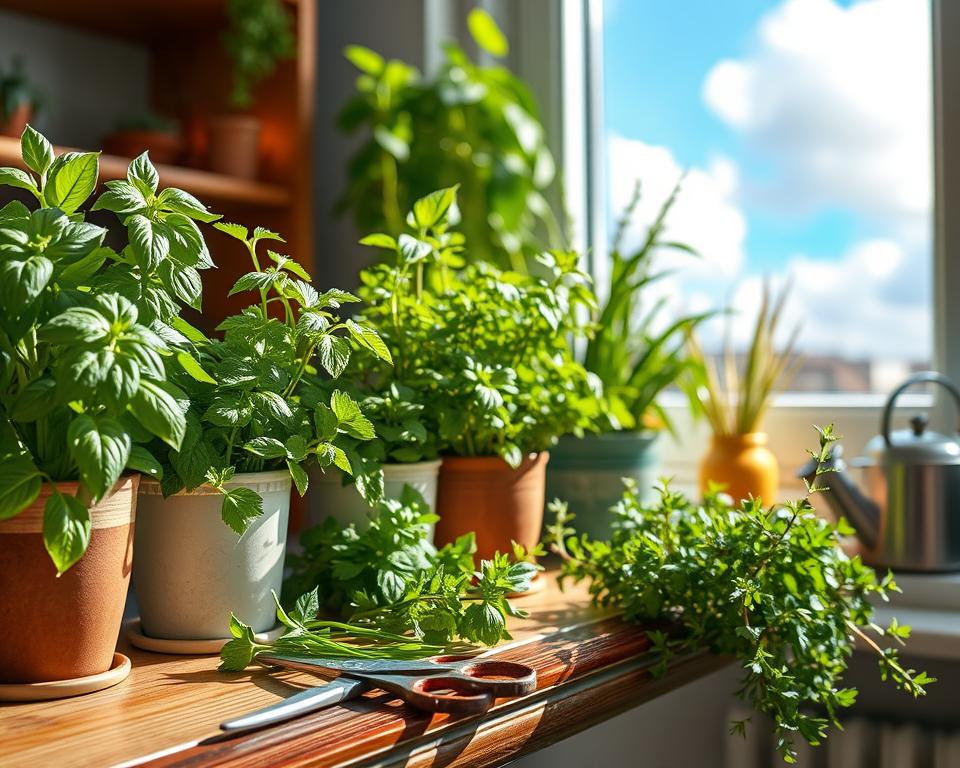
“The garden is a love song, a duet between a human being and Mother Nature.” – Jeff Cox
By following these tips, you can have a thriving indoor herb garden all year. Regular care and attention will keep your herbs vibrant and flavorful for cooking.
Advanced Growing Methods
To make your indoor herb garden better, try advanced growing methods. These techniques can make your plants healthier and more productive.
These methods give you more control over your plants’ environment. This can lead to healthier plants and more herbs. Let’s look at some of these new ways to grow herbs.
Hydroponic Herb Gardens
Hydroponic systems use a nutrient-rich solution instead of soil. This lets you control the nutrients your herbs get. This can make your herbs grow faster and produce more.
Benefits of Hydroponics:
- Water efficiency
- Increased growth rates
- Improved crop yields
“Hydroponics is the future of agriculture. It allows us to grow plants in a controlled environment, maximizing yields while minimizing waste.”
Vertical Growing Systems
Vertical growing systems stack herbs to save space. They’re great for small indoor gardens. You can use hydroponics or soil in these systems.
| System Type | Space Efficiency | Yield Potencial |
|---|---|---|
| Hydroponic Vertical | High | High |
| Soil-Based Vertical | High | Medium |
Smart Gardens and Automation
Smart gardens use technology to automate herb gardening tasks. This includes watering, pruning, and checking light levels. You can control them with your smartphone.
Using these advanced methods can elevate your indoor herb gardening. You’ll enjoy healthier plants and more herbs.
Troubleshooting Common Indoor Herb Garden Problems
Even with the best care, indoor herb gardens can face problems. But, knowing how to fix these issues can make a big difference. Issues like pests, diseases, and growth problems can be solved with the right steps.
Pest Management
Pests can be a big problem in indoor herb gardens. Identifying the issue early is key.
Identifying Common Pests
Common pests include spider mites, mealybugs, and aphids. Check your plants often to spot infestations early.
Natural Pest Control Methods
Use neem oil or insecticidal soap to fight pests without harming your plants. Isolate infested plants to stop the problem from spreading.
Dealing with Diseases
Diseases can hit indoor herb gardens, often from too much water or bad air flow.
Preventing Fungal Issues
Make sure plants have good air flow and don’t overwater to avoid fungal diseases.
Treating Common Diseases
Take off sick leaves or stems, and use a fungicide if needed. Watch your plants closely for disease signs.
Addressing Growth Issues
Growth problems, like leggy plants or slow growth, can come from not enough light or nutrients.
Leggy Plants and Yellowing Leaves
Leggy plants need more light. Yellow leaves mean too much water or not enough nutrients.
Stunted Growth and Poor Flavor
Stunted growth is often from lacking nutrients. Use a balanced fertilizer to help plants grow well and taste good.
By tackling these common problems, you can keep your indoor herb garden healthy and thriving.
“The key to a successful indoor herb garden is vigilance and prompt action when issues arise.”
Conclusion
Growing culinary herbs indoors is a hobby that offers many benefits. It brings fresh flavors and health advantages. By following the steps in this guide, you can create a thriving indoor herb garden.
This garden will give you a constant supply of your favorite herbs. You’ve learned that choosing the right herbs and setting up your garden are key. Proper maintenance is also important.
With the right techniques and care, you can enjoy growing herbs indoors all year. This is true, no matter the season or where you live.
I encourage you to start your indoor herb gardening journey today. Experience the joy of harvesting fresh herbs from your own garden. Whether you’re a seasoned gardener or just starting, the rewards are sure to enhance your cooking and well-being.