


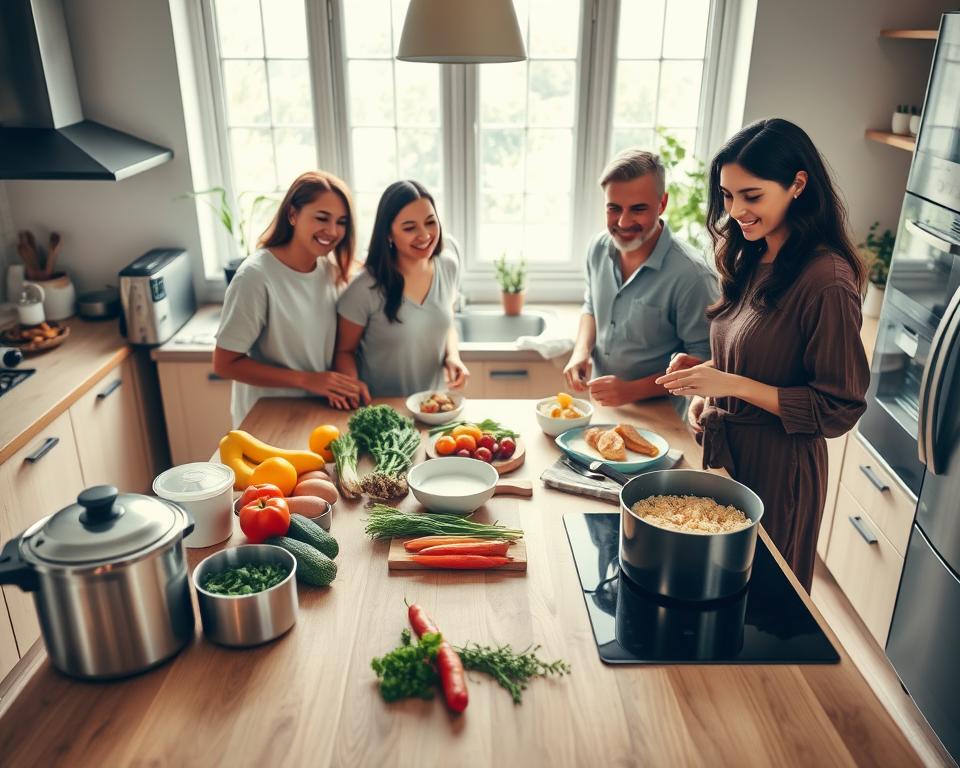
Did you know the average American household spends about $1,400 a year on energy bills? A big part of this is from cooking and baking. By using energy-efficient cooking methods, you can cut down on energy use and lower your bills.
Making small changes in your kitchen can have a big impact. For example, using the right-sized pots and pans helps. So does keeping your fridge and freezer at the right temperature. Also, using energy-saving settings on your appliances makes a difference.
You can find more tips in this infographic on saving energy in the kitchen.
Key Takeaways
- Use energy-efficient appliances and settings to reduce energy consumption.
- Optimize your cooking techniques, such as using lids and matching pot size to the burner.
- Maintain your appliances regularly, like cleaning refrigerator coils.
- Adopt batch cooking and baking to minimize oven usage.
- Consider using microwaves, slow cookers, or plug-in pressure cookers as alternatives to traditional cooking methods.
Understand Your Appliances’ Efficiency
To start saving energy in the kitchen, it’s key to know how efficient your appliances are. This knowledge helps you use them better.
Check Your Appliance Ratings
Checking your appliances’ energy ratings is a simple step. Look for the Energy Star label, which shows energy efficiency. Appliances with high Energy Star ratings use less energy, making them better for the planet.
For example, when buying a new oven or fridge, pick ones with high energy efficiency. This choice will help you use less energy over time.
| Appliance | Energy Star Rating | Annual Energy Consumption |
|---|---|---|
| Refrigerator | 4.5/5 | 400 kWh |
| Oven | 4.2/5 | 600 kWh |
| Dishwasher | 4.8/5 | 200 kWh |
Learn About Energy-Saving Settings
Many modern appliances have energy-saving settings. For instance, your oven might have an “eco-mode” for better energy use. Your dishwasher could have a “light wash” cycle that saves water and energy.
Get to know these settings and use them often. This way, you adopt energy-saving cooking techniques.
By using these features, you can greatly reduce your kitchen’s energy use. Exploring your appliances’ capabilities makes eco-friendly choices simple.
Plan Your Meals Wisely
Meal planning is a simple way to cut down on kitchen energy. It helps you avoid last-minute cooking, reduce waste, and lower bills.
Create a Weekly Menu
Start with a weekly menu to stay organized and use ingredients well. You can find many meal planning resources online. Planning meals around seasonal and sale items saves money and reduces waste.
Use Leftovers Effectively
Using leftovers is a smart way to save energy and reduce waste. You can turn leftover veggies into soup or last night’s chicken into salad. It’s a great way to reuse food.
Batch Cooking for Savings
Batch cooking saves time and energy by making multiple meals at once. It reduces the need to heat your oven or stovetop, lowering energy use. Here’s a simple table to show batch cooking’s benefits:
| Meal | Energy Used (kWh) | Time Saved (minutes) |
|---|---|---|
| Cooking individually | 2.5 | 0 |
| Batch cooking (3 meals) | 4.0 | 120 |

Batch cooking might use a bit more energy at first. But it saves energy and time overall.
By using these meal planning tips, you can make your cooking more sustainable and use less energy.
Optimize Cooking Techniques
Improving your cooking methods can greatly reduce energy waste. Start by using a few key techniques that significantly cut down energy use.
Use Lids and Covers
Using lids and covers on pots and pans helps keep heat in and cooking time short. This simple step can save a lot of energy. For example, using a lid when boiling water can cut boiling time by up to 50%, saving energy.
Choose the Right Cookware
The cookware you choose affects your energy use. Cookware that spreads heat evenly, like cast-iron or stainless steel, cooks better. These materials keep heat well, letting you cook at lower temperatures.
Try One-Pan or One-Pot Meals
One-pan or one-pot meals are both easy and energy-smart. They use fewer dishes and cook faster. This means less energy is needed for cooking.
Here’s a quick look at how different cooking methods compare in energy efficiency:
| Cooking Method | Energy Usage | Cooking Time |
|---|---|---|
| Boiling with Lid | Low | Short |
| Boiling without Lid | High | Long |
| One-Pot Meal | Medium | Medium |
By using these energy-saving cooking methods, you can make a big difference. You’ll save money on bills and help the planet too.
Utilize Your Oven Efficiently
Using your oven wisely can cut down on energy bills and carbon emissions. A few easy steps can make a big difference in how much energy your oven uses.
Avoid Opening the Oven Door
Keeping the oven door closed is key to saving energy. Every time you open it, heat gets out, making your oven work harder. This wastes energy and can also mess up your cooking.
Use a timer to check on your food without opening the door. Try to plan your cooking so you don’t need to check as often. If you must open the door, do it quickly and use the oven light to see how your food is doing.
Use the Convection Setting
The convection setting in your oven can make cooking more efficient. It circulates hot air around your food, cooking it evenly and often faster. This means you can cook at lower temperatures, saving energy.
- Reduces cooking time
- Allows for lower temperatures
- Enhances even cooking
Preheat Only When Necessary
Preheating your oven is sometimes needed, like for baking. But for many recipes, you can skip it or start with a cold oven. Always check if your recipe needs preheating.
For small meals or dishes that don’t need exact temperatures, think about using a toaster oven or microwave. They use less energy than a full oven and work well for smaller tasks.
By following these tips, you can make your oven use more efficient. This helps make your baking more eco-friendly.
Embrace the Power of Smaller Appliances
Smaller appliances are not just convenient; they’re also super efficient for cooking and baking. They help save energy and cook food more precisely.
Instant Pots and Slow Cookers
Instant Pots and slow cookers are popular for their efficient cooking. They use less energy than old methods and can make many dishes, like stews and roasts.
They’re great for busy homes because they cook meals for a long time. This means your food is always cooked right without you watching it all the time.
Microwave Versatility
Microwaves are super versatile. They’re good for cooking, reheating, and defrosting. They’re perfect for warming up leftovers, which saves energy compared to the oven.
It’s important to use microwave-safe containers and cover food to cook safely and effectively.
Sous Vide Cooking
Sous vide cooking seals food in bags and cooks it in a water bath at a set temperature. It cooks food evenly and keeps nutrients in.
Sous vide machines are energy-efficient and can cook many dishes, like eggs and steak. They make sure your food turns out right every time, without you needing to watch it.
| Appliance | Energy Efficiency | Cooking Versatility |
|---|---|---|
| Instant Pot | High | Pressure cooking, slow cooking, sautéing |
| Slow Cooker | High | Slow cooking, braising |
| Microwave | Very High | Cooking, reheating, defrosting |
| Sous Vide Machine | High | Precise temperature cooking |
Using these smaller appliances can really cut down your energy use. And you’ll get to try lots of new recipes.
Make the Most of Stovetop Cooking
To save energy in the kitchen, learning to cook well on the stovetop is key. Stovetop cooking can be both efficient and effective if done correctly.
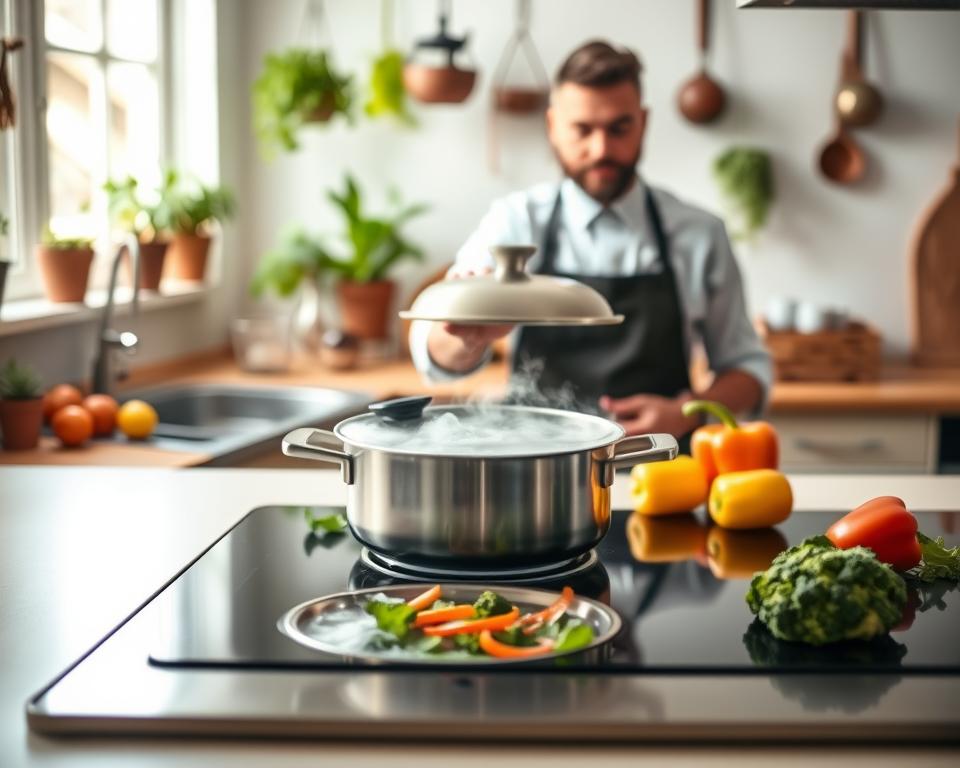
Cook with Flat-Bottomed Pans
Flat-bottomed pans spread heat evenly, cutting down cooking time. This saves energy and cooks food better. Choosing the right cookware is a simple yet effective way to make your stovetop cooking more energy-efficient.
A study found flat-bottomed pans can cut energy use by up to 10%. This is because heat spreads evenly, cooking faster.
Keep Simmering Low and Slow
Simmering cooks food in liquid at a low temperature. It’s an energy-saving method that’s better than boiling or frying. It’s great for dishes like stews or soups.
“The art of simmering is about patience; it’s about coaxing the flavors out of the ingredients slowly, which not only results in a more delicious meal but also saves energy.” – Cooking Expert
Use Induction Cooktops
Induction cooktops are great for saving energy. They heat cookware directly with electromagnetic fields. This makes them faster and more energy-efficient than traditional stovetops.
| Cooking Method | Energy Efficiency | Cooking Time |
|---|---|---|
| Traditional Stovetop | Medium | Medium |
| Induction Cooktop | High | Fast |
| Simmering Low and Slow | High | Slow |
By using these stovetop cooking methods, you can cut down energy use while cooking. Whether it’s the right cookware, low and slow simmering, or induction cooktops, every step helps make your kitchen more energy-efficient.
Use the Dishwasher Strategically
Using your dishwasher smartly can really cut down on energy use in your kitchen. Just a few simple habits can make a big impact on your energy use.
Load it Correctly
It’s key to load your dishwasher right for the best efficiency. Make sure dirty sides face in and don’t overcrowd. This lets water and detergent reach all dishes.
A well-loaded dishwasher cleans dishes in one go. This means you won’t need to wash them again.
Run Only Full Loads
Running a full load in your dishwasher saves energy. It cuts down on the number of cycles, which means less energy used. For small loads, use the energy-saving or half-load setting if your dishwasher has it.
Skip the Dry Cycle
Not using the dry cycle saves a lot of energy. Let your dishes air dry instead. This small change can save a lot of energy.
According to the U.S. Department of Energy, air drying dishes can save up to 15% of your dishwasher’s energy.
“Air drying dishes is not only energy-efficient but also helps in reducing your utility bills.” – Energy.gov
| Energy-Saving Tip | Energy Savings |
|---|---|
| Loading Dishwasher Correctly | Up to 10% |
| Running Full Loads | Up to 20% |
| Skipping Dry Cycle | Up to 15% |
By following these tips, you can greatly reduce energy consumption in the kitchen. This helps make your lifestyle more sustainable.
Store Food Effectively
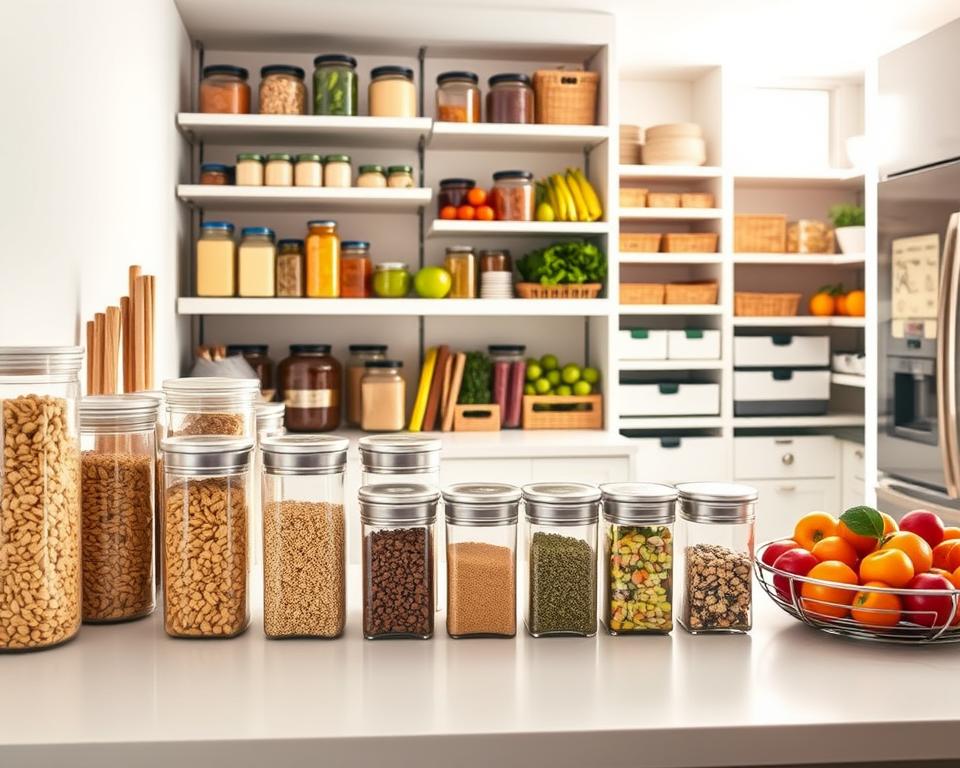
Organizing how you store food can greatly reduce energy use in cooking and baking. It’s not just about a clean kitchen. It’s also key to sustainable cooking practices. Proper food storage means less need for frequent cooking and reheating, saving energy.
Organize Your Refrigerator
Start by organizing your fridge. Arrange food so you can find what you need quickly. This cuts down on time spent with the fridge door open. I keep often-used items front and center and label shelves. This makes a big difference in efficient baking methods by keeping ingredients ready.
Store Food in Smaller Portions
Storing food in smaller portions is smart. It cuts down on waste and uses less energy when reheating. Cooking and freezing meals in portions is great for quick, energy-saving meals. This method is good for the planet and saves energy.
Utilize Freezer Space
Using your freezer well can lower energy use. Freezing food keeps it fresh longer and lets you cook in bulk. This means less daily cooking and saves energy. I freeze leftovers and seasonal produce, saving energy and supporting efficient baking methods.
In summary, storing food right is a simple way to make cooking and baking more energy-efficient. Organize your fridge, store food in smaller portions, and use your freezer. These steps reduce kitchen energy use, making cooking and baking better for the planet and more fun.
Take Advantage of Natural Resources
Exploring ways to save energy, I find using natural resources is key. Simple practices can cut down our need for artificial energy. This makes cooking and baking more eco-friendly.
Cook with Sunlight
Cooking with sunlight is a smart way to save energy. Solar ovens use mirrors to focus sunlight and cook food. It’s efficient and great for slow cooking or baking on sunny days.
Starting with solar cooking is easy. You can buy a solar oven or make one with DIY kits online. It’s a fun project for the whole family.
Use a Grill or Fire Pit
Grilling or cooking over a fire pit is another natural resource use. It saves energy and adds a smoky flavor to food. Outdoor cooking can be a fun experience, whether you’re cooking veggies, meats, or pizzas.
Remember to follow safety rules and use eco-friendly fuels when grilling or using a fire pit.
Harnessing Seasonal Ingredients
Using seasonal ingredients is a smart way to cut down on energy. Choosing in-season produce supports local farmers and reduces carbon emissions from long-distance transport.
Visit your local farmer’s market or join a CSA program to use seasonal ingredients. You’ll save energy and enjoy fresher, tastier food.
Practice Energy-Conscious Mindset
Being mindful of our energy use is key to changing our cooking habits. By paying attention to how we use energy, we can find ways to cook better. This makes our cooking more energy-efficient.
Monitor Energy Usage
First, track your energy use. Look at your utility bills to see how much you use. You can also use smart meters or energy monitors for live data.
This helps you see which appliances or cooking methods use the most energy. Knowing this lets you make choices to use less energy.
Encourage Family Involvement
Getting your family involved in saving energy can be fun and educational. Ask them to help track energy use and think of ways to save. It’s a chance to teach kids about saving energy and its impact on the planet.
Try making a game or challenge to see who can save energy in creative ways. It builds teamwork and makes saving energy fun.
Celebrate Energy-Saving Wins
It’s important to celebrate when you save energy. Whether it’s lower bills or less carbon emissions, recognizing your efforts helps keep you going.
Set goals, like cutting energy use by a certain amount, and celebrate when you hit them. Sharing your successes with others can inspire them to save energy too.
By being mindful of energy, we can make a big difference. It’s about making small changes that add up and teaching our homes to be energy-aware.
Explore Sustainable Ingredients
Adopting energy-saving cooking practices is key. Using sustainable ingredients is a big step in reducing our environmental impact. By choosing what we buy and cook wisely, we cut down on kitchen energy use.
Locally Sourced Produce
Buying locally supports local farmers and cuts down on carbon emissions from transport. This easy change can greatly reduce our energy use.
Organic Farming
Choosing organic produce helps the environment. It supports farmers who use eco-friendly methods. This choice promotes a healthier planet and lessens our cooking’s environmental harm.
Reducing Red Meat
Less red meat means less energy use in the kitchen. Livestock production is a big source of greenhouse gases. Eating more plant-based meals or eating less meat helps a lot.
By adopting these sustainable cooking habits, we help the planet. Every little change we make adds up. These adjustments can make a big difference for our environment.