


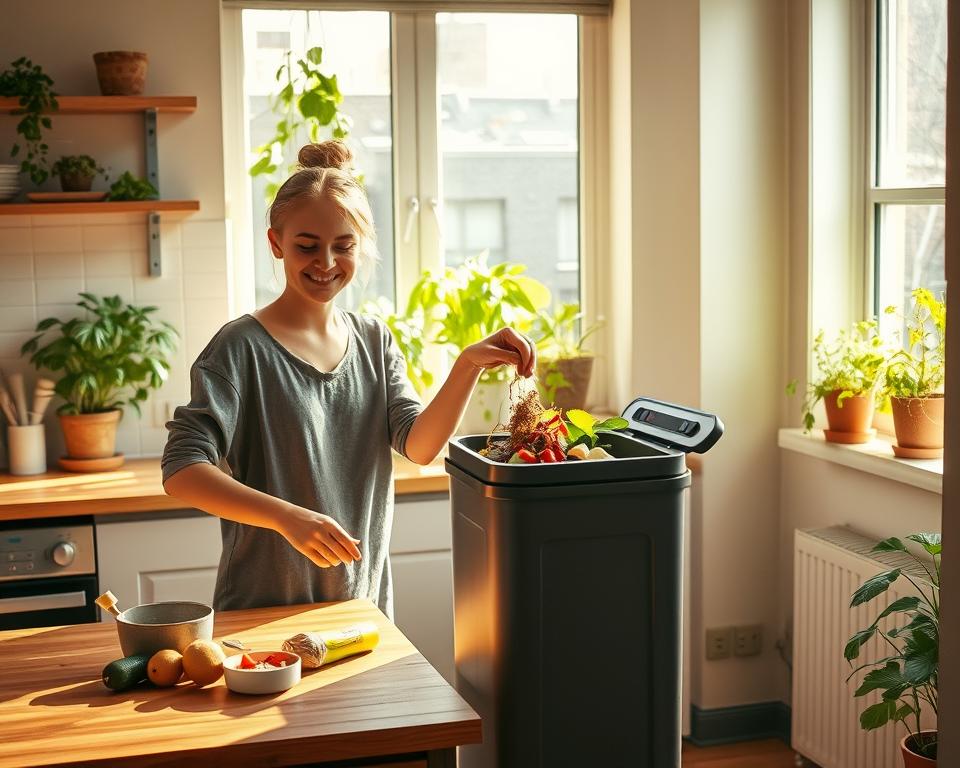
Did you know that food waste makes up nearly 20% of trash in the U.S.? Starting composting at home was easier than I thought. It’s a great way to help the environment.
Composting helps cut down on waste and makes soil better for plants. I’ll share my experience and give you a beginner composting guide. It’s all about getting started.
Key Takeaways
- Understand the basics of composting in your apartment
- Learn how to reduce your food waste
- Get a step-by-step guide to starting composting at home
- Discover the benefits of composting for your plants
- Create a nutrient-rich soil amendment
Why Composting is Essential for Urban Dwellers
Living in the city, we often feel far from nature. But composting can change that. It lets us reduce our environmental footprint and create something useful for our homes.
Environmental Benefits
Composting has many environmental benefits. It cuts down on greenhouse gases and fights climate change. By composting, we keep organic waste out of landfills, where it would produce methane.
- Reduces carbon footprint
- Helps combat climate change
- Conserves water
Reducing Waste in Landfills
Urban areas produce a lot of waste, much of it organic. Composting helps reduce waste sent to landfills. This extends landfill life and lessens environmental waste problems.
Waste that can be composted includes:
- Kitchen scraps
- Yard trimmings
- Food waste
Supporting Local Gardening
Composting also boosts local gardening. It gives plants a nutrient-rich soil amendment. For those with gardens or indoor plants, composting improves soil without synthetic fertilizers.
By composting, urban residents can live more sustainably. They help the environment and support local gardening.
Common Misconceptions About Composting
Starting to compost has shown me that many beliefs about it are wrong. It’s a simple process that works indoors, making it open to everyone. You don’t need a big garden to compost.
Many think composting smells bad and is dirty. But, with the right steps, like the right mix of materials and air, it can be clean. For more on clearing up composting myths, check out this resource.
It’s Smelly and Unhygienic
Bad smells in compost usually come from too much nitrogen or not turning it enough. A beginner composting guide can help you avoid these problems. Just remember to mix “green” and “brown” materials and turn it often.
It Requires Too Much Space
Some think you need a big outdoor area for composting. But, easy composting methods like Bokashi or worm composting work in small spaces. They’re great for apartments or small homes.
Only Gardeners Can Compost
While gardeners benefit from compost, it’s not just for them. Anyone can compost. It’s about reducing waste and making something useful for plants or gardens.
In short, composting is for everyone. By knowing the truth about it, more people can start composting. It’s a fun and useful practice.
Choosing the Right Composting Method for Apartments
Apartment residents have many composting options. The best method is one that fits your lifestyle well. It should be effective, easy to use, and not smell.

When picking a composting method, think about your space, waste, and how much effort you want to put in. We’ll look at three good options for apartments: Bokashi composting, vermicomposting, and traditional bins.
Bokashi Composting
Bokashi composting uses microorganisms to break down waste. It’s great for apartments because it’s compact, doesn’t smell, and keeps pests away. You layer kitchen scraps with Bokashi mix in a bin, then seal it for fermentation.
This method can handle lots of kitchen waste, like meat, dairy, and bread. But, you need to watch the fermentation and drain liquid now and then.
Vermicomposting
Vermicomposting uses worms to break down waste. It’s eco-friendly and makes great compost for plants. Vermicomposting bins are small and fit in a corner.
To keep worms happy, they need the right conditions. This includes moisture, temperature, and a balanced diet of kitchen scraps. It’s easy to care for but costs money for worms and a bin.
Traditional Composting Bins
Traditional composting bins are good for balconies or small outdoor spaces. They come in different sizes and handle kitchen and yard waste.
These bins need more space than Bokashi or vermicomposting. But, they’re good for managing a lot of waste. Make sure to balance the mix, keep it moist, and aerated to avoid smells and pests.
In conclusion, the best composting method for your apartment depends on your needs and likes. Whether it’s Bokashi, vermicomposting, or a traditional bin, start small and be consistent. This way, you’ll reduce waste and make something good for your plants.
Essential Composting Supplies for Beginners
To start composting at home, you’ll need some key supplies. These make the process easier and more efficient. It’s important for beginners to know the basics of what they need.
Composting Bins
The first thing you’ll need is a composting bin. There are many types, including indoor and outdoor bins, in various sizes. Think about the space you have and how much waste you’ll compost. Apartment dwellers might prefer a compact indoor bin.
“The right composting bin can make all the difference in your composting journey,” says composting expert, Rhonda Sherman. “It’s not just about containing the waste; it’s about creating an environment that fosters decomposition.”
Carbon and Nitrogen Sources
To make balanced compost, you need both carbon-rich and nitrogen-rich materials. Carbon sources include dried leaves, straw, and shredded newspaper. Nitrogen sources are green materials like kitchen scraps, grass clippings, and manure. Aim for 2/3 carbon materials and 1/3 nitrogen materials.
- Dried leaves
- Shredded newspaper
- Kitchen scraps
- Grass clippings
Tools for Mixing and Aerating
To keep your compost pile healthy, mix and aerate it regularly. Use a compost turner or a simple pitchfork for this. These tools add oxygen, which is key for decomposition.
Tips for Choosing the Right Supplies:
- Consider the size of your space and the amount of waste you produce.
- Choose bins that are easy to clean and maintain.
- Select materials that are readily available and affordable.
How to Set Up Your Composting System
Setting up a composting system at home is easy. It involves a few important steps. Knowing these steps is key for beginners to compost indoors successfully.
Selecting a Suitable Location
Finding the right spot for your compost is the first step. Look for a place that’s well-ventilated and easy to get to. For indoor composting, think about spots like under the sink or in a pantry. If you have a balcony, that works too.
Make sure the spot isn’t in direct sunlight. It should also stay at a steady temperature.
Layering Your Materials
Layering is a big part of composting. Start with a 4-6 inch layer of materials like dried leaves or shredded newspaper at the bottom. This helps with drainage and air.
Then, add a layer of materials high in nitrogen, like kitchen scraps or grass clippings. Keep alternating between carbon and nitrogen layers. Finish with a carbon layer on top.
- Carbon-rich materials: dried leaves, shredded newspaper, straw
- Nitrogen-rich materials: kitchen scraps, grass clippings, manure
Adding Moisture
Keeping the right moisture is key for your compost. It should be moist, like a damp sponge. Don’t overwater, as this can cause bad smells and anaerobic conditions.
Check the moisture by squeezing a handful of the compost mix. It should hold its shape but not drip water.
| Moisture Level | Description |
|---|---|
| Too Dry | Compost is dry and crumbly |
| Optimal | Compost holds its shape but doesn’t drip water |
| Too Wet | Compost is soggy and dripping water |
By following these steps, you can make a great composting system in your apartment. The secret to success is balance and regular care.
What Can and Cannot Be Composted
To compost in an apartment, knowing what to compost is key. Composting helps reduce waste and makes soil better for plants. But, not everything can be composted.
Acceptable Kitchen Scraps
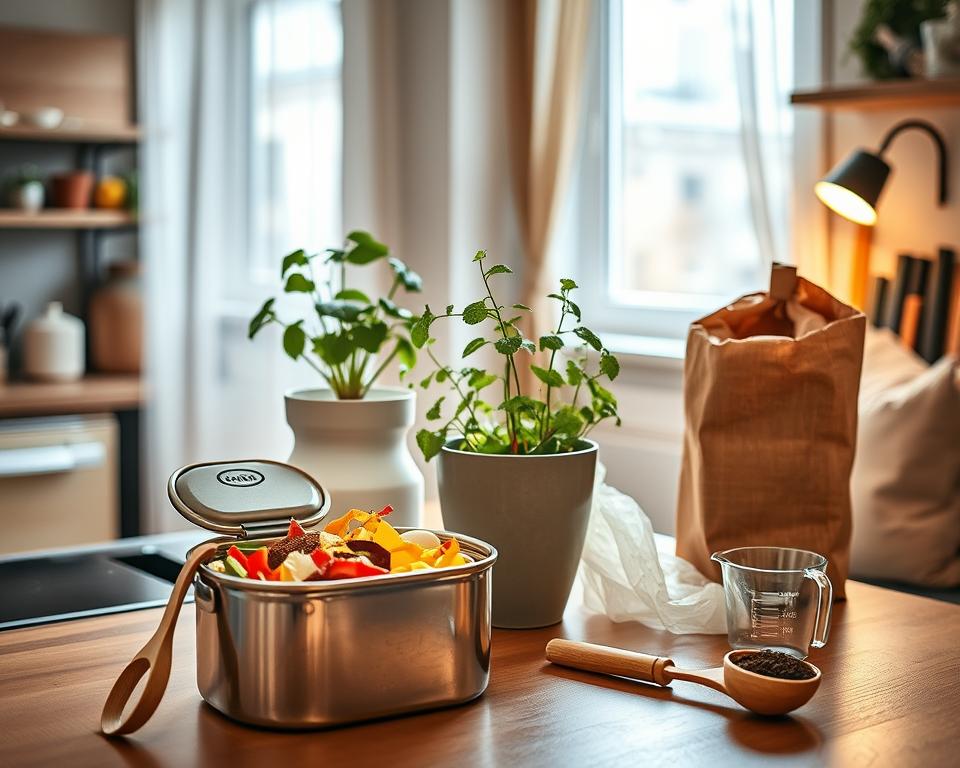
Kitchen scraps are a big part of composting. Vegetable and fruit peels are great because they add nutrients. Other good kitchen scraps include:
- Coffee grounds and tea bags
- Egg shells
- Bread and grains
- Small amounts of shredded paper
These items are full of carbon and nitrogen, which are good for compost. Adding them makes compost that’s good for plants.
Items You Should Avoid
While many kitchen scraps can be composted, some can’t. Meat, dairy, and oily foods attract pests and smell bad. Other things to skip include:
- Pet waste
- Diseased or moldy materials
- Weeds with seeds
- Chemically treated materials
Staying away from these items keeps your compost healthy and avoids problems.
How to Handle Meat and Dairy
If you want to compost meat and dairy, a Bokashi bin might work. Bokashi composts these items through fermentation. But, it’s important to follow the right steps to avoid bad smells.
For traditional composting, it’s safer to skip meat and dairy. Focus on composting vegetable and fruit scraps instead. They’re easier to manage.
Knowing what can and can’t be composted helps you compost well in an apartment. The main thing is to keep your compost balanced and healthy.
Caring for Your Compost
To keep your compost thriving, it’s essential to understand the basics of compost care. As someone who has been composting in apartments for a while, I’ve learned that regular maintenance is key. In this section, I’ll share some valuable apartment composting tips to help you keep your compost pile thriving and odor-free.
Regular Turning and Aeration
One of the most critical aspects of compost care is regular turning and aeration. This process helps to speed up decomposition, reduce odors, and prevent pests. I recommend turning your compost pile every few days, depending on the size and composition of your materials. For indoor composting for beginners, it’s important to start with a manageable size to ensure you can maintain it properly.
| Turning Frequency | Benefits |
|---|---|
| Every 3-4 days | Speeds up decomposition, reduces odors |
| Weekly | Maintains aeration, prevents matting |
| Bi-weekly | Monitors moisture, checks for pests |
Monitoring Moisture Levels
Moisture is another critical factor in compost care. Your compost pile should be kept moist, like a damp sponge. If it’s too dry, decomposition slows down; if it’s too wet, it can become a breeding ground for pests and odors. I check my compost regularly to ensure it’s at the right moisture level, which is important during dry or wet spells.
Managing Odor Issues
While composting can sometimes be associated with unpleasant odors, there are ways to minimize this issue. Ensuring the right balance of carbon and nitrogen sources, maintaining adequate aeration, and monitoring moisture levels can all help. If you do notice a strong smell, it’s usually a sign that your compost needs turning or that you’ve added too many green materials at once.
By following these apartment composting tips and being mindful of your compost’s needs, you can enjoy the benefits of indoor composting for beginners without the drawbacks. Happy composting!
Troubleshooting Common Composting Problems
Starting your composting journey can bring up some common problems. But, with the right knowledge, you can solve them easily. Composting is a natural process that needs a bit of understanding to keep it healthy.
Overly Wet Compost
One big issue is compost that’s too wet. This can cause bad smells and slow down the composting. To fix it, add dry materials like straw or shredded newspaper to soak up the extra moisture.
- Check your compost bin regularly to ensure it’s not too wet.
- Add dry materials to balance the moisture.
- Turn the compost to aerate it and speed up the drying process.
Unpleasant Smells
Bad smells are another common problem. These smells often mean there’s too much nitrogen or not enough carbon in your mix. To get rid of the smell, add more carbon-rich materials like dried leaves or shredded paper to balance it out.
- Identify the source of the smell.
- Add carbon-rich materials to balance the mix.
- Turn the compost to improve aeration.
Pests and Insects
Pests and insects can be a problem in composting. To keep them away, don’t add meat, dairy, or oily foods to your compost. If pests show up, try turning the compost to disrupt their home. Or, add a layer of finished compost or soil on top to keep them out.
- Avoid adding meat, dairy, and oily foods.
- Turn the compost to disrupt pest habitats.
- Add a layer of finished compost or soil on top.
By following these tips, you can keep your composting system healthy and efficient. For more detailed advice, check out the EPA’s guide on composting.
Using Finished Compost in Your Home
Now that you’ve composted, it’s time to use your finished compost. Apartment dwellers can greatly benefit from it. You can use it indoors and outdoors.
Compost can make your plants healthier and improve soil. It also supports sustainable living. I’ll show you how to use it for indoor plants, container gardens, and more.
Fertilizing Indoor Plants
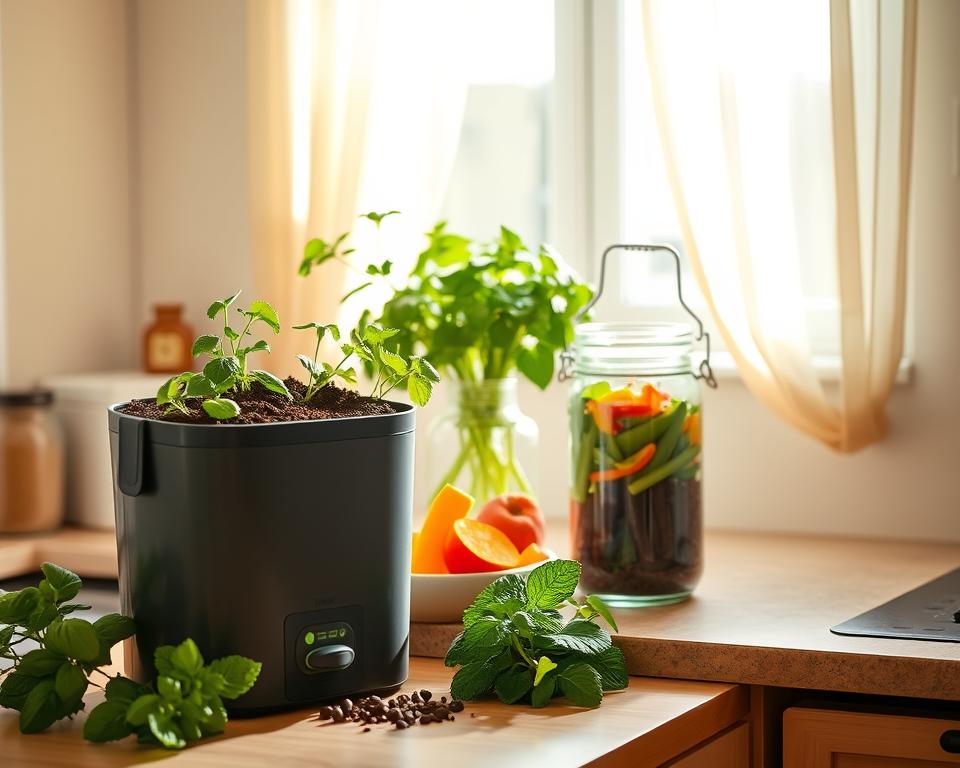
Indoor plants love compost’s nutrients. Mixing compost into their soil gives them what they need to grow well. Gardening expert, Jeff Cox, once said, “Compost is the key to unlocking the full potential of your plants.”
To fertilize, add 1-2 inches of compost to the top 4-6 inches of soil. This boosts soil fertility and structure. Your plants will thank you.
Enriching Container Gardens
Container gardens also benefit from compost. It improves drainage, aeration, and soil health. This is great for plants in small spaces, like apartments.
To enrich your container gardens, mix 10-20% compost into the soil. This creates a nutrient-rich environment for your plants.
Donating Excess Compost
If you have more compost than you can use, donate it. Give it to local community gardens, friends, or family. It’s a way to share composting’s benefits and support sustainable living.
As composting advocate, Rhonda Sherman, notes, “Composting is not just about reducing waste; it’s about creating a more sustainable future for our communities.” Donating compost helps achieve this goal and positively impacts your community.
Connecting with Local Composting Communities
Being part of local composting groups has really helped me. It makes me feel more confident and keeps me going. It’s great for beginners to have support.
Finding Composting Workshops
Workshops are a great way to meet other composters. They’re led by experts who teach you about indoor composting for beginners. You can find them at gardening stores, community centers, or online.
Engaging with Online Forums
Online forums are also a good place to connect. Websites and social media groups let you ask questions and share tips. Facebook groups and Reddit forums are popular for composting and sustainable living.
Local Initiatives and Resources
Many cities have programs to help with composting. They offer bins, workshops, and educational materials. Joining these programs helps you learn and supports sustainability.
To start, here’s what you can do:
- Look online for local composting groups or workshops.
- Join online forums or social media groups about composting.
- Contact local gardening stores or community centers for composting resources.
Connecting with local composting groups helps you overcome challenges. You also get to share your experiences and help beginners.
Being part of a composting community is more than just composting. It’s about connecting with people who care about sustainability. This community support can really motivate you to keep going with your beginner composting guide and explore easy composting methods.
The Benefits of Composting for Small Spaces
Composting in small spaces is not only possible but also very beneficial for city folks. I started composting in my apartment and found many advantages. These changes have made my living space better.
Enhancing Apartment Air Quality
One big plus of composting in tight spaces is cleaner air. By turning organic waste into compost, we cut down on landfill waste. This means less methane, a harmful gas, is made. Plus, composting makes the air cleaner by cutting down on pollutants.
“Composting is a simple yet effective way to contribute to a healthier environment, even in the confines of your apartment,” as noted by urban gardening experts.
Encouraging Sustainability
Composting promotes a green lifestyle by recycling organic stuff. It’s a way to lessen our carbon footprint and support green living in cities.
- Reduces waste sent to landfills
- Creates nutrient-rich soil for plants
- Fosters a sustainable lifestyle
Building a Sense of Community
Composting in small spaces also brings people together. Sharing tips and resources helps build a community that supports green living.
Connecting with local composting groups has been rewarding. Sharing knowledge and resources has not only improved my composting but also strengthened our community bond.
By embracing composting, we can collectively make a significant positive impact on our environment.
Tips for Sticking with Your Composting Journey
Starting your Easy Apartment Composting for Beginners journey is exciting. But, staying committed and motivated is key. Here are some practical tips to help you stay on track.
Practical Strategies for Success
Setting realistic goals is important when you start composting at home. Start small and grow as you get more comfortable. Make a routine by picking a day each week for composting.
It’s important to celebrate your small wins. This keeps you motivated. For more tips, check out apartment composting guides. They offer great advice for beginners.
Maintaining Momentum
To keep going, watch your progress and adjust as needed. This will help you become a skilled composter. Your hard work will also help the environment.