
Did you know gardening can make you happier and more productive? As an urban gardener, you face challenges like keeping your garden alive while being busy. I get how hard it is to balance your time with caring for your plants.
Creating your own self-watering containers can change everything. These systems let you enjoy gardening without always having to water. It’s all about using your space and time wisely.
I’ll show you how to make your own urban gardening solutions for those short on time. By using container gardening, you’ll have more control over your garden’s health. Plus, you’ll worry less about watering every day.
Key Takeaways
- Learn to create self-watering containers for a low-maintenance garden.
- Discover how container gardening can improve your urban space.
- Understand the benefits of urban gardening for your well-being.
- Implement simple, effective solutions for busy gardeners.
- Enhance your gardening experience with innovative watering systems.
The Urban Gardener’s Dilemma: Time vs. Green Thumbs
As an urban gardener, you know the struggle of loving plants and city life. City folks often face space and time limits that make gardening hard.
Space and Time Constraints in City Living
Space is a big issue for city gardeners. Many have to garden on small balconies, patios, or windowsills. Fast city life also means little time for gardening. For example, a busy worker might only have a few minutes each day for plants.
Some big challenges are:
- Limited space for gardening
- Busy schedules that leave little time for plant care
- Difficulty in maintaining consistent watering schedules
How Self-Watering Systems Solve These Problems
Self-watering containers are a smart fix. They let plants get water when they need it, cutting down on watering. Houzz says these systems are getting popular in cities for their ease and success.
Self-watering systems offer:
- Less need to water
- Healthier plants with steady moisture
- More freedom for gardeners with tight schedules
The Science and Magic Behind Self-Watering Containers
Self-watering containers are changing urban gardening. They use science to make caring for plants easier. This makes them great for people who are always busy.
Understanding Capillary Action and Wicking
Capillary action is how water moves through soil in self-watering containers. It’s key for getting water to plant roots. Wicking is when a material pulls water up through its pores. Together, they help water reach the soil efficiently.
Anatomy of an Effective Self-Watering System
A good self-watering system has a few parts. There’s a water reservoir that holds extra water. This reservoir is linked to the soil by a wicking system. It pulls water up as the soil dries.
The container lets plants take water as they need it. This cuts down on waste and keeps the soil moist. With these parts, you can make container gardening easy, even if you’re new to it.
Gathering Your Arsenal: Materials and Tools
Before starting your DIY self-watering container project, gather the right materials and tools. This step is key to a fun and successful urban gardening journey. With the right components, you can make your garden thrive, even in tough urban spots.
Container Options for Different Spaces
Urban gardeners have many container choices based on their space. For small balconies, use compact plastic or wooden containers. For bigger patios, go for larger pots or repurposed wooden barrels.
- Compact plastic containers for small spaces
- Wooden containers for a natural look
- Repurposed barrels for larger areas
Essential Materials Checklist
To make a self-watering system, you need a few key items. These are a water reservoir, a wicking system, and a potting mix that drains well. For more urban gardening tips, check out Lemon8.
- Water reservoir (e.g., plastic bottle or container)
- Wicking system (e.g., rope or fabric)
- Well-draining potting mix
Basic Tools Every Urban Gardener Needs
The right tools are vital for a great DIY gardening experience. You’ll need a trowel for planting, pruning shears for upkeep, and a watering can for the first watering.
- Trowel for planting
- Pruning shears for maintenance
- Watering can for initial watering
DIY Self-Watering Containers for Busy Urban Gardeners: The Bucket Method
Busy urban gardeners can use the bucket method for a simple DIY self-watering solution. It lets you make a useful gardening system with easy-to-find materials.
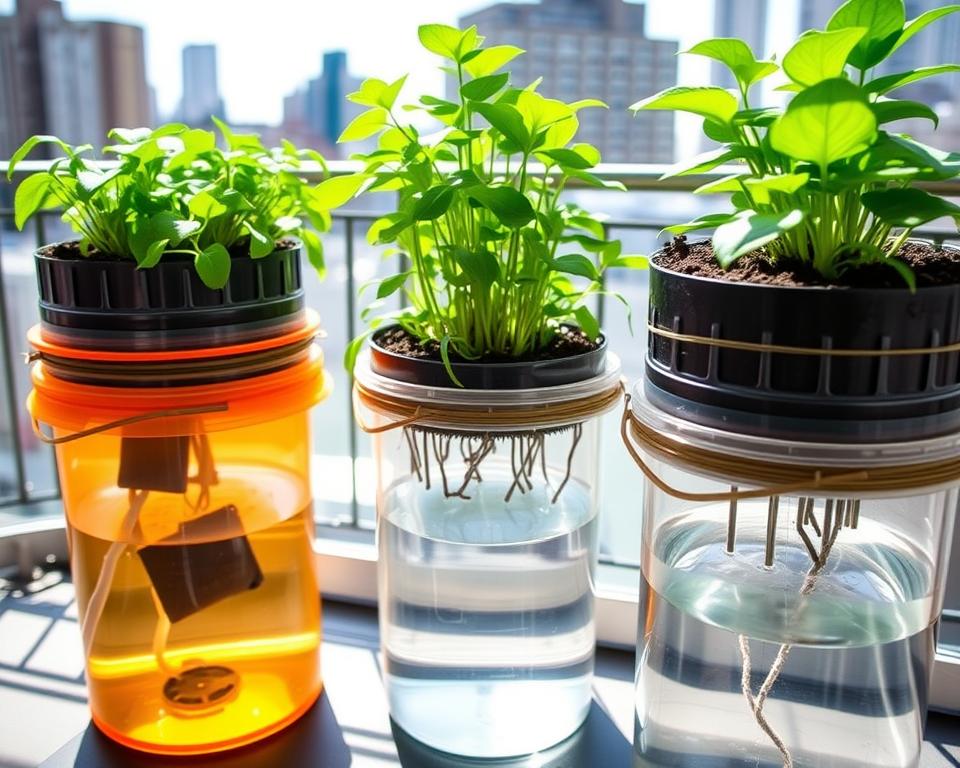
Materials List for the Basic Bucket System
To start, you’ll need some basic items. These include:
- A large bucket or container with a lid
- A smaller pot or container for the growing chamber
- Wicking material (such as rope or fabric)
- Potting soil
- Water reservoir material (like a plastic bottle)
Step-by-Step Construction Guide
Building your self-watering container with the bucket method has several steps.
Creating the Reservoir
The first step is making the water reservoir. Cut a hole in the bucket’s bottom. Attach a plastic bottle or another container to act as the water reservoir.
Building the Wicking System
Next, make the wicking system. Thread the wicking material through the growing chamber and into the water reservoir. This lets water move up as needed.
Setting Up the Growing Chamber
The growing chamber is where your plants live. Fill it with potting soil, leaving space for roots to grow.
Adding the Fill Tube
Lastly, add a fill tube for easy reservoir watering. Attach a small tube or pipe to the bucket’s lid.
Troubleshooting Your First Build
Even though the bucket method is simple, you might face some issues. Common problems are leaks in the reservoir or not enough wicking. To fix these, make sure all connections are tight and adjust the wicking as needed.
The Two-Container Method: Perfect for Balconies and Patios
The two-container self-watering system is a game-changer for urban gardeners. It separates water from soil, perfect for small spaces like balconies and patios.
Materials for a Durable Two-Container System
To build a durable two-container system, you’ll need a few essential materials. You’ll need two containers, a wicking material, and basic tools like a drill and PVC pipes.
- Two containers (plastic or ceramic)
- Wicking material
- PVC pipes and drill
- Waterproof sealant
Assembly Instructions with Photos
Assembling your two-container system involves several steps.
Preparing Your Containers
First, clean your containers thoroughly. If using plastic, make sure they’re UV-resistant for outdoor use.
Creating the Water Reservoir
One container will be the water reservoir. Drill a hole for the PVC pipe, which will draw water up.
Installing the Wicking Chamber
The wicking material draws water from the reservoir to the soil. Cut it to size and place it in the soil container, ensuring it reaches the water reservoir.
Final Assembly and Testing
Assemble the system by placing the soil container on top of the water reservoir. Fill the reservoir and test it to make sure it works.
| Component | Function |
|---|---|
| Water Reservoir Container | Holds water for the plants |
| Wicking Material | Draws water to the soil |
| Soil Container | Holds the soil and plants |
Design Variations for Different Urban Spaces
The two-container method is versatile and can be adapted to various urban spaces. For smaller balconies, use smaller containers or stack them vertically. For larger patios, scale up the containers or use multiple systems.
Upcycled Wonders: Creating Self-Watering Containers from Household Items
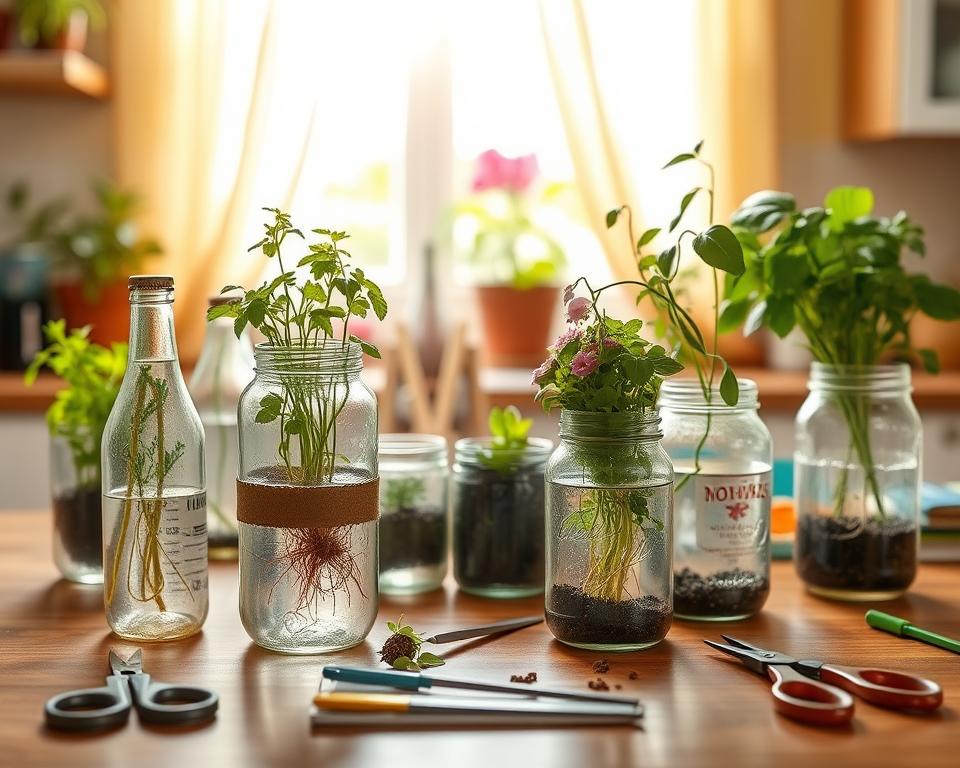
Urban gardening on a budget is now easier with DIY self-watering containers. You can make them from items you might throw away. This saves money and helps the environment by reducing waste. DIY gardening hacks like these are great for urban gardeners who want to save space and the planet.
Plastic Bottle Self-Waterers for Windowsills
Using plastic bottles as self-watering systems for windowsill plants is a smart move. Cut the bottle in half and use the bottom as a water reservoir. Place the plant in the top half, and it will draw water as needed.
Wine Bottle Irrigation for Stylish Indoor Gardens
Wine bottles can also be used as irrigation systems for indoor plants. This method is water-efficient and adds elegance to your decor. Bury the wine bottle next to your plant to slowly release water, keeping it hydrated without mess.
Repurposing Food Containers for Herb Gardens
Food containers can be turned into self-watering planters for herbs. This DIY gardening hack is ideal for small kitchens. Drill holes in the bottom for drainage, add a watering system, and you’re set.
By using these urban gardening tips and DIY gardening hacks, you can grow a garden in tiny spaces. It’s good for the environment and your wallet.
Weekend Project: Building a Multi-Container System for Small Spaces
Turn your small urban area into a green paradise with a DIY multi-container self-watering system. It’s ideal for those with little space who want to garden without much work.
Designing Your System to Maximize Limited Space
Think about the space you have and the plants you want to grow when designing your system. Vertical gardening is a smart choice for saving space. Use a trellis or a wall-mounted setup for plants like tomatoes or cucumbers.
- Assess your space: Measure the area where you plan to install your system.
- Choose the right plants: Pick plants that do well in containers and fit your climate.
- Plan for drainage: Make sure your system drains well to avoid soggy soil.
Construction Process from Start to Finish
Building your multi-container system takes a few steps. You’ll start with the base structure and end with the growing containers.
Building the Base Structure
Begin with a strong base that can hold the containers and soil. Use durable materials like cedar or recycled plastic for lasting results.
Connecting the Water Distribution System
Then, set up the water system. This means installing tubes that bring water from a central tank to each container. Make sure the tubes are well attached to avoid leaks.
Put in the growing containers, making sure they’re fixed to the base. Choose containers that fit your plants well.
Adding Automatic Water Level Indicators
To simplify care, add automatic water level indicators. They’ll tell you when it’s time to refill the water, keeping your plants hydrated.
Space-Saving Mounting Options for Urban Dwellers
If you have very little space, think about wall-mounted or hanging systems. These can go on balconies, walls, or ceilings, saving floor space.
By following these steps, you can make a thriving multi-container system. It will bring life to even the smallest urban areas.
Urban-Friendly Plants That Thrive in Self-Watering Containers
Choosing the right plants for self-watering containers is key in urban gardening. Not all plants do well in these systems. Some plants really thrive in them.
The right plants are essential for a successful urban garden. Self-watering containers keep the soil moist. This is great for plants that like well-drained soil but can’t handle drying out.
Apartment-Friendly Vegetables for Self-Watering Systems
Self-watering containers are a big help for city gardeners with little space. Vegetables like cherry tomatoes, leafy greens, and herbs are perfect for small spaces. They do well in the moist conditions of self-watering containers.
- Cherry Tomatoes: Produce fruit all season long.
- Leafy Greens: Love the moist soil of self-watering systems.
- Peppers: Even compact varieties do well in these containers.
Low-Maintenance Herbs for Busy Cooks
Herbs are a must-have in many kitchens. Growing them in self-watering containers is super convenient. Basil, mint, and parsley are great because they need little care and can be picked often.
- Basil: Loves warm weather and is a favorite in many dishes.
- Mint: Hardy and spreads easily, perfect for keeping in check with self-watering containers.
- Parsley: Needs steady moisture, making it a great choice for self-watering systems.
Air-Purifying Ornamentals for City Environments
Ornamental plants not only beautify urban areas but also clean the air. Plants like peace lilies and snake plants are known for cleaning the air. They do well in self-watering containers with little care.
- Peace Lilies: Elegant white blooms and air-purifying benefits.
- Snake Plants: Easy to care for and can handle neglect, perfect for busy gardeners.
Creating the Perfect Growing Environment: Soil and Nutrients
To get the most out of your self-watering containers, you need to create the best growing space. This means picking the right soil mix and knowing how to feed your plants.
Specialized Soil Mixes for Self-Watering Success
The soil mix is key to a self-watering container’s success. A specialized soil mix made for these systems can greatly improve plant health. These mixes hold moisture but also let excess water drain, preventing root rot. They have:
- High water-holding capacity
- Good aeration for healthy root growth
- Slow release of nutrients
Choosing the right soil mix boosts your self-watering pots’ efficiency and supports water-efficient gardening.
Slow-Release Fertilizers for the Busy Gardener
Slow-release fertilizers are a big help for busy gardeners. They give out nutrients slowly, so plants get a steady feed without needing constant attention. This saves time and prevents over-fertilizing, which can hurt plants. When picking a slow-release fertilizer, think about your plants’ needs and how long you want the fertilizer to last.
By mixing a specialized soil mix with slow-release fertilizers, you can make your self-watering containers a thriving garden. You’ll enjoy the ease and efficiency of DIY gardening hacks.
Set It and (Almost) Forget It: Maintenance Tips for Busy Gardeners
Self-watering containers are a big help for busy city gardeners. But, they do need some care. To keep your garden healthy, make a routine that fits your life.
Regular care keeps your plants and system in good shape. Spend a few minutes each day and week on simple tasks. This way, you can have a beautiful garden without much work.
5-Minute Daily and Weekly Maintenance Routines
To keep your containers working well, follow these easy routines. Every day, check the water level in the reservoir. Every week, look for signs of stress or disease in your plants and trim dead leaves.
- Daily: Check water level
- Weekly: Inspect plants, trim dead leaves
- Bi-Weekly: Fertilize plants (if necessary)
Solving Common Problems Before They Start
Self-watering containers help prevent many problems. But, being ready can stop issues before they start. Watch for pests and make sure plants have good air flow to avoid fungal diseases.
| Problem | Solution |
|---|---|
| Pests | Inspect plants regularly, use organic pest control |
| Fungal Diseases | Ensure good air circulation, remove infected leaves |
Adapting Your System Through the Seasons
As seasons change, your containers need adjustments. In summer, plants might need more water. In winter, they might need less. Be ready to change your care routine as needed.
By following these tips, you can have a thriving, easy-to-care-for garden. A little regular care makes a big difference. It keeps your DIY self-watering containers healthy and successful.
Conclusion
Creating your own DIY self-watering containers is a rewarding project. It can change how you garden in the city. By following the steps and tips in this article, you’ll have a thriving garden with little effort.
DIY self-watering containers help you use your space wisely and keep gardening simple. These projects are great for both new and experienced gardeners. They turn your city space into a green oasis.
Starting your urban gardening journey is exciting. Remember, self-watering containers are just the start. Try out different plants, designs, and techniques. This way, you can make a garden that’s truly yours.