

I remember the day I found out about the harsh chemicals in my cleaning supplies. It made me look for alternatives to clean my home. Making my own glass cleaner was a simple change.
Did you know many glass cleaners have ammonia and other harmful substances? These can hurt your health and the planet. But, making a DIY glass cleaner lets you avoid these dangers and get a streak-free shine. It’s easy and won’t break the bank.
By making your own cleaner, you choose what goes into it. This makes cleaning safer and better for the planet. With a few basic ingredients, you can make a cleaner that’s kind to surfaces and the environment.
Key Takeaways
- Create a safer cleaning routine with non-toxic ingredients.
- Achieve a streak-free shine without harsh chemicals.
- Save money by making your own cleaner at home.
- Customize the recipe to suit your cleaning needs.
- Reduce your environmental footprint with eco-friendly cleaning.
Why Choose a Natural Glass Cleaner?
Choosing a natural glass cleaner makes your home healthier and more sustainable. We’re learning how daily products affect our health and the planet. It’s clear that the cleaning products we pick matter a lot.
One big reason to pick a natural glass cleaner is to avoid harsh chemicals. These chemicals can harm the environment and our health. They’re often found in commercial cleaning products.
Benefits of DIY Cleaners
DIY cleaners, like the natural glass cleaner we’re talking about, have many advantages. They’re made from simple, non-toxic ingredients you might already have at home. This makes them cost-effective and safe for you and the environment.
Also, making your own cleaner lets you control what’s in it. This is great for homes with pets or people who are sensitive. You can avoid harmful chemicals.
Environmental Considerations
From an environmental standpoint, choosing an eco-friendly glass cleaner is a big step. Many commercial cleaners have chemicals that can hurt aquatic life. By choosing a natural, eco-friendly glass cleaner, you’re helping to prevent pollution.
Also, making your own cleaner in reusable containers cuts down on waste. This simple change can make your home more sustainable.
In conclusion, switching to a natural glass cleaner is a simple way to make your cleaning routine better. By understanding the benefits and how it helps the environment, you can make choices that are good for your home and the planet.
Essential Ingredients for Your Cleaner
To make a great homemade glass cleaner, you need just a few things. This recipe is simple and works well because of its natural ingredients.
Distilled Vinegar
Distilled vinegar is a main part of your vinegar glass cleaner. It’s a natural cleaner that gets rid of grime and makes glass shine. Vinegar’s acid helps break down dirt, making it easy to clean.
Water
Water is the other key ingredient. It makes the vinegar safe to use on glass without leaving streaks. Using distilled water helps avoid mineral spots on your glass.
Optional Essential Oils
Adding a few drops of essential oils can make your cleaner smell nice. Lemon or lavender oils not only smell good but also make your glass feel clean.
With these ingredients, you’ll have a homemade glass cleaner that’s good for the planet and works well.
Step-by-Step Guide to Making Your Cleaner
With just a few simple steps, you can make your own effective DIY window cleaner. It leaves your glass surfaces sparkling.
To start, gather the necessary ingredients and equipment. You’ll need a clean container, a measuring cup, and a spoon for stirring. Clean equipment is key to avoid contamination and ensure your streak-free glass cleaner works well.
Measuring the Ingredients
To make your DIY window cleaner, accurately measure the ingredients. Mix 1 cup of water with 1 cup of distilled vinegar. You can tweak this ratio based on your cleaning needs.
- For tougher grime, increase the vinegar ratio.
- For a diluted solution, add more water.
Mixing and Storing the Solution
After measuring, pour the ingredients into your mixing container. Stir gently to mix well. If you want a scented cleaner, add a few drops of essential oil now.
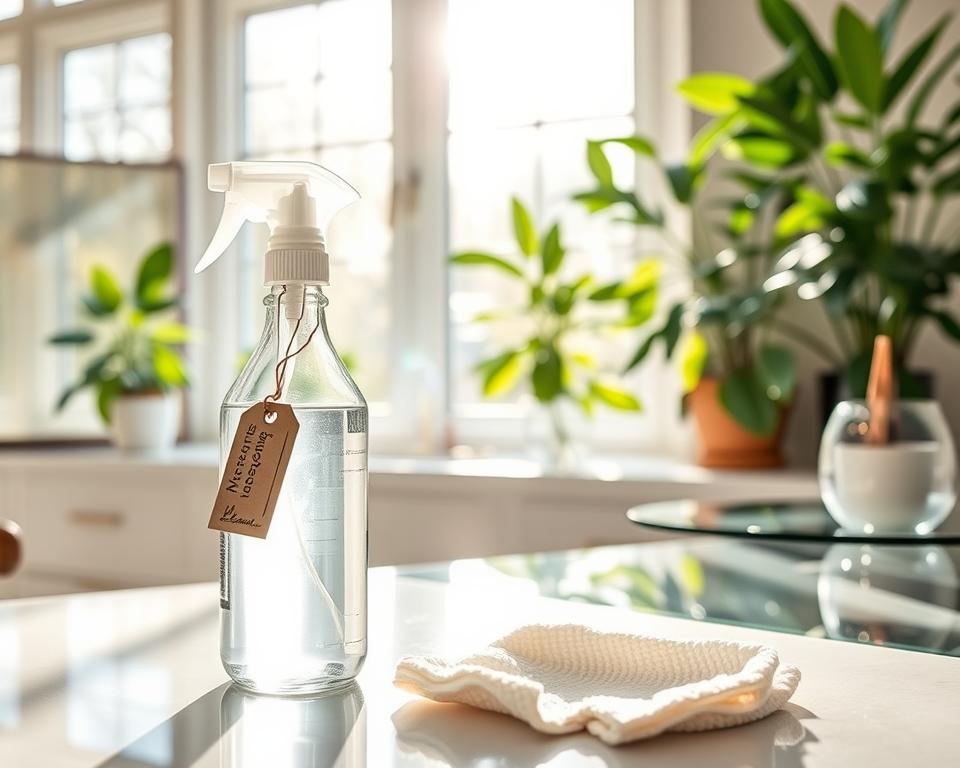
- Pour the mixture into a clean spray bottle.
- Label the bottle with the date and contents.
- Keep the bottle in a cool, dark place to keep the cleaner effective.
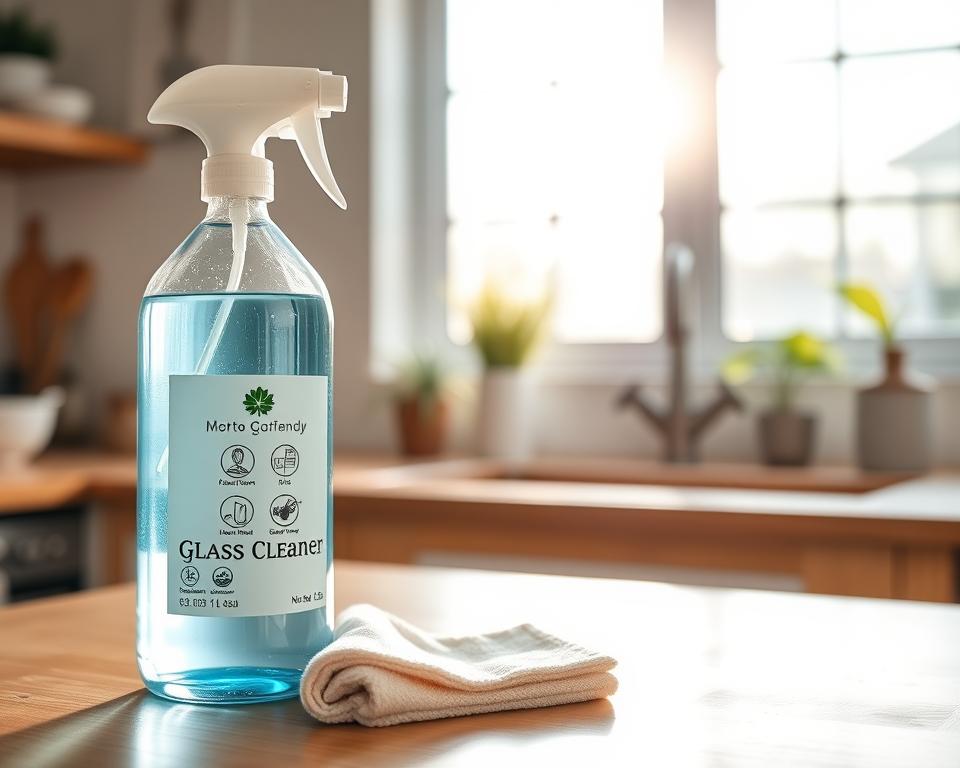
Your homemade streak-free glass cleaner is now ready. Spray it on your glass surfaces and wipe clean with a lint-free cloth or paper towel for the best results.
Tips for Achieving a Streak-Free Finish
Getting a streak-free glass surface is all about the right cleaning solution and technique. Making your own natural cleaning solution can work well. But, it’s also key to know how to apply it.
Use the Right Cloth
The cloth you choose is very important for a streak-free finish. Microfiber cloths are the best because they’re lint-free and soak up well. When you use your natural cleaning solution, a microfiber cloth can stop streaks and give a clean look.
- Make sure your microfiber cloth is clean and dry.
- Don’t use paper towels or cloths with lint, as they can leave residue.
Technique Matters
How you clean your glass surfaces affects the outcome. For a streak-free shine, clean in a circular motion with your essential oil glass cleaner or homemade solution. This spreads the cleaner evenly and avoids streaks.
- Start from the top and work down to avoid drips.
- Use a dry part of the microfiber cloth to remove any streaks or moisture.
What Not to Use on Glass Surfaces
To get a streak-free shine on glass, stay away from certain chemicals and tools. Cleaning glass means removing dirt and grime without damaging it or leaving residue.
Avoiding Certain Chemicals
Some chemicals can harm or etch glass. For example, ammonia-based cleaners are too harsh and can leave streaks or damage glass coatings. Also, abrasive cleaners can scratch the glass. When making your homemade mirror cleaner, use gentle ingredients like vinegar and water.
- Avoid ammonia-based cleaners.
- Steer clear of abrasive cleaners.
- Opt for gentle, non-toxic ingredients.
Tools to Steer Clear Of
The tools you use are as important as the cleaning solution. Avoid using paper towels because they can leave lint and streaks. Instead, use a microfiber cloth, which cleans glass well without leaving residue.
- Use microfiber cloths for cleaning.
- Avoid paper towels and other lint-producing materials.
- Choose soft, non-abrasive sponges or cloths.
By avoiding the wrong chemicals and tools, you can clean your glass surfaces well. This method not only gives a streak-free finish but also keeps your glass surfaces in good condition for longer.
Cleaning Different Glass Surfaces
Different glass surfaces in our homes need special cleaning methods. Whether it’s windows, mirrors, or glass tables, each has its own needs. We must use the right cleaning techniques for each.
Windows
Windows are a common glass surface that needs regular cleaning. To get a streak-free shine, the right cloth and technique are key. A microfiber cloth is best because it picks up dirt without leaving streaks or marks.
For more info on making your own natural glass cleaner, check out this helpful guide. It shows how to make a non-toxic and easy recipe.
Mirrors
Mirrors need a different cleaning approach than windows. They are often in bathrooms and can get water spots. Using a DIY Natural Glass Cleaner helps avoid streaks and spots.
Avoid using paper towels or dirty cloths. They can leave lint or streaks, making the mirror look dirty.
Glass Tables
Glass tables can get fingerprints, dust, and marks, making them look dull. Regular cleaning with a natural glass cleaner keeps them shiny. Use a soft, lint-free cloth to avoid scratching the glass.
| Glass Surface | Cleaning Tip | Recommended Cloth |
|---|---|---|
| Windows | Use a microfiber cloth for a streak-free shine. | Microfiber Cloth |
| Mirrors | Dry thoroughly after cleaning to avoid water spots. | Lint-Free Cloth |
| Glass Tables | Regularly clean to prevent dust accumulation. | Soft Microfiber Cloth |
Maintaining Your Glass for Long-Lasting Shine
Using an eco-friendly glass cleaner makes keeping your glass surfaces easy. Regular care keeps your glass looking great and lasts longer. It stops grime and streaks from building up.
Creating a routine is key. It’s not just about cleaning; it’s about making it a habit. This keeps your glass sparkling.
Regular Cleaning Schedule
Keeping a regular cleaning schedule is important. Clean your glass surfaces at least once a week. This stops dirt and grime from turning into tough stains.
For everyday care, a quick wipe with a microfiber cloth works well. But for a deeper clean, your eco-friendly glass cleaner is best. It keeps your surfaces streak-free and shiny.
Seasonal Deep Cleaning
Don’t forget about seasonal deep cleaning. It’s a more detailed clean, focusing on areas that get dirty easily.
For your seasonal deep clean, mix your eco-friendly glass cleaner with a soft scrubber. This gently removes tough stains or grime. It keeps your glass surfaces clear and shiny.
By following a regular cleaning schedule and doing seasonal deep cleaning, your glass will stay shiny for a long time. This makes your home look better and keeps it cleaner and healthier.
Common Mistakes to Avoid
Even the best homemade glass cleaner can fail if you make common mistakes. Knowing these pitfalls can greatly improve your cleaning results.
To get the most from your non-toxic glass cleaner, avoid mistakes that cause streaks, residue, or damage. Here are some key errors to watch out for.
Overusing Ingredients
One big mistake is using too much of your homemade glass cleaner’s ingredients. Too much vinegar or essential oils can leave residue. For example, too much vinegar causes streaks, and too many essential oils make a sticky film.
- Always measure your ingredients carefully.
- Start with the recommended dilution ratio and adjust as needed.
- Be cautious when adding essential oils; a little goes a long way.
Ignoring Drying Techniques
Another mistake is ignoring how to dry your glass surfaces after cleaning. Not drying them right can cause streaks and water spots. I suggest using a microfiber cloth to dry them well.
- Clean your glass surface with your homemade glass cleaner.
- Wipe the surface with a lint-free cloth or paper towel.
- Use a dry microfiber cloth to finish and prevent streaks.
By avoiding these common mistakes, you can keep your glass surfaces clean and streak-free. Remember, a sparkling finish comes from using your cleaner right.
Frequently Asked Questions
Starting to use your homemade vinegar or essential oil glass cleaner? You might have questions about cleaning glass surfaces. I’ll answer some common ones to help you get a streak-free shine with your DIY cleaner.
Cleaning Frequency
How often to clean glass surfaces depends on where they are and how much they’re used. For example, windows and glass doors might need more frequent cleaning than glass tables or mirrors. Cleaning them once a week with a streak-free glass cleaner can keep them clear and shiny.
Storage and Shelf Life
You can keep your homemade glass cleaner in an airtight container for weeks. It’s important to check it often for any signs of spoilage or separation. If you see any changes, it’s best to make a new batch to keep the cleaner working well.