


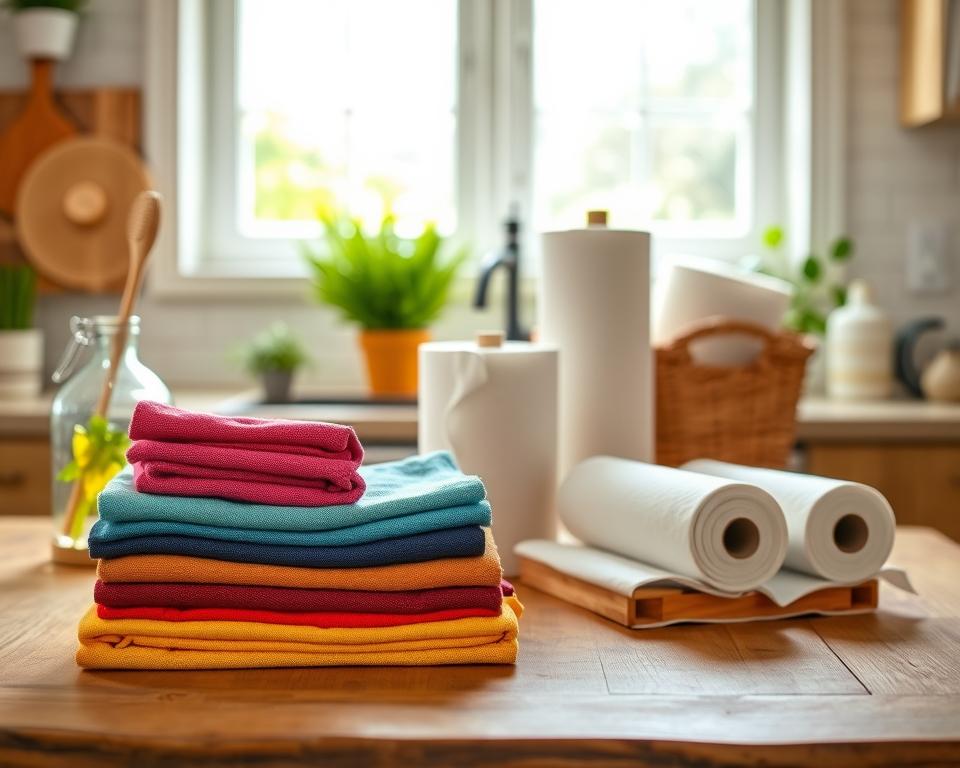
I was shocked to learn that the average American uses about 50 pounds of paper towels each year. This fact made me think about how our daily actions affect the environment.
Disposable paper towels harm our forests, pollute water, and create waste management problems. As someone who cares about the planet, I’ve looked for eco-friendly alternatives to help.
Choosing sustainable options helps our planet and improves our health. In this article, I’ll share why we should avoid disposables and introduce some new solutions.
Key Takeaways
- Understanding the environmental impact of disposable paper towels.
- Exploring eco-friendly alternatives for a sustainable lifestyle.
- Benefits of switching to reusable paper towel options.
- Innovative products that are changing the game.
- Practical tips for making the transition.
The Environmental Impact of Disposable Paper Towels
When we grab paper towels to clean up, we often overlook the big picture. The truth is, using disposable paper towels has a big environmental cost.
Let’s look at how paper towels affect our planet. They cause several big problems.
The Waste Problem
Paper towels create a lot of waste. In the U.S., millions are used and thrown away every day. This adds to the huge problem of trash in cities.
Statistics on Paper Towel Waste
| Category | Annual Waste (tons) | Percentage of Total Municipal Waste |
|---|---|---|
| Paper Towels | 2,540,000 | 2.3% |
| Other Paper Products | 25,430,000 | 23.1% |
| Total Municipal Solid Waste | 110,000,000 | 100% |
Deforestation Concerns
The need for paper towels leads to logging. Forests are cut down for timber and to make pulp and paper. This harms nature and the health of ecosystems.
Carbon Footprint of Production
Making paper towels uses a lot of energy. From pulping to shipping, each step adds to the carbon footprint. Choosing reusable paper towels or green alternatives for paper towels can help cut down on this.
Choosing environmentally friendly paper towel options is a smart move. It helps reduce waste, saves forests, and lowers carbon emissions. By making better choices, we can make a big difference.
Benefits of Switching to Sustainable Alternatives
Exploring zero-waste paper towel alternatives shows many benefits. They save money, improve our homes, and help the planet. Simple changes in our daily habits can greatly reduce our environmental impact. They also make our air cleaner and save us money in the long run.
https://www.youtube.com/watch?v=lpwnIjfBqhg
Cost Savings Over Time
Switching to sustainable paper towel alternatives can save a lot of money. While they might cost more upfront, they save money over time. For example, a good set of cloth towels can last hundreds of uses, cutting down on paper towel needs almost to zero.
Reduction of Household Waste
Another big plus is the reduction of household waste. Paper towels add a lot to landfills and oceans. Switching to reusable options greatly reduces waste. This makes our homes cleaner and more organized, and helps the environment too.
Improved Indoor Air Quality
Using sustainable kitchen products like cloth or bamboo towels also improves air quality. Unlike paper towels, they don’t leave lint or particles in the air. This is great for people with allergies or breathing problems.
In summary, switching to sustainable paper towel alternatives is a smart move. It saves money, reduces waste, and improves air quality. Making this change is easy and has a big positive impact on our homes and the planet.
Reusable Cloth Towels: A Simple Solution
Reusable cloth towels are a smart and green choice over paper towels. Making a few easy changes in our cleaning habits can greatly help the environment.
Types of Cloth Towels Available
There are many kinds of cloth towels for different needs and likes. Some favorites include:
- Cotton towels for their breathability and softness
- Microfiber towels for their absorbency and durability
- Bamboo towels for their eco-friendly and antibacterial properties
Washing and Care Tips
To keep cloth towels in good shape, it’s important to wash and care for them right. Here’s how:
- Wash cloth towels in warm water with a mild detergent
- Don’t use fabric softeners or bleach, as they can harm the towel
- Dry towels on a low heat setting or air dry to avoid shrinkage
The Versatility of Cloth Towels
Cloth towels are very useful and can be used in many ways around the house. Here’s how they compare:
| Use Case | Traditional Paper Towels | Reusable Cloth Towels |
|---|---|---|
| Cleaning Spills | Used once and thrown away | Can be used many times |
| Wiping Down Surfaces | May leave lint or residue | Leaves surfaces clean without residue |
| Drying Hands | Not good for drying hands | Good for drying hands |
Using reusable cloth towels daily can greatly cut down on household waste. It helps make our future more sustainable.
Bamboo Paper Towels: Eco-Friendly Innovation
Bamboo paper towels are a step towards a greener lifestyle. Bamboo grows fast and is sustainable. It’s perfect for making paper towels that are good for the planet.
Key Features of Bamboo Towels
Bamboo paper towels are great for cleaning up spills. They are highly absorbent and gentle on surfaces. Plus, they are made from sustainable bamboo, which is better for the environment.
Making bamboo paper towels uses less energy and chemicals. This makes them eco-friendly and safe for your home.
Comparisons to Traditional Paper Towels
Bamboo paper towels differ from regular ones in many ways. Here’s a quick comparison:
| Feature | Bamboo Paper Towels | Traditional Paper Towels |
|---|---|---|
| Sustainability | Made from renewable bamboo | Often made from wood pulp |
| Absorbency | Highly absorbent | Moderately absorbent |
| Environmental Impact | Lower carbon footprint | Higher carbon footprint |
Where to Buy Bamboo Alternatives
You can find bamboo paper towels in stores and online. Look for them at eco-friendly product stores or online. Make sure to check for certifications like the Forest Stewardship Council (FSC).
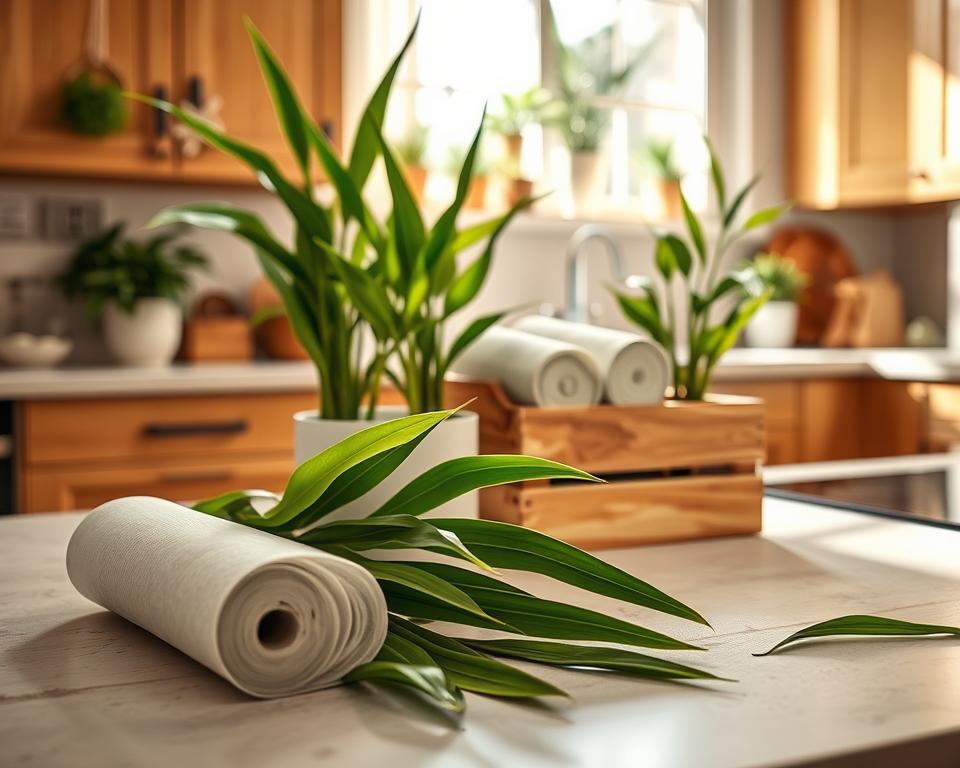
Choosing bamboo paper towels helps the environment. It also supports sustainable forestry. It’s a small change that makes a big difference.
Microfiber Cloths: Effective and Sustainable
Looking for eco-friendly paper towel options? Microfiber cloths are a great choice. They’re durable and versatile. Switching to them has greatly reduced waste in my kitchen.
Advantages of Using Microfiber
Microfiber cloths are a top pick for many reasons. They’re exceptionally absorbent, making quick work of spills. Plus, they’re lint-free, leaving surfaces clean without streaks or residue.
They’re also super versatile. Use them for cleaning countertops, glass, and more. This makes them a must-have in any kitchen.
Proper Cleaning Techniques
To keep microfiber cloths effective, clean them right. Rinse them with warm water after use. For tough stains, a mild detergent is okay. But avoid bleach and fabric softeners.
Wash them in a gentle cycle. It’s best to wash them alone to avoid lint. Air-dry or tumble-dry on low heat.
Longevity and Durability
Microfiber cloths last a long time with care. A good one can be used hundreds of times. This saves money and reduces waste.
| Feature | Microfiber Cloths | Disposable Paper Towels |
|---|---|---|
| Absorbency | High | Medium |
| Lint | No | Yes |
| Reusable | Yes | No |
| Environmental Impact | Low | High |
In summary, microfiber cloths are a smart choice. They’re absorbent, versatile, and durable. Using them helps make your home cleaner and greener.
Unpaper Towels: A Clever Twist
Exploring eco-friendly alternatives, unpaper towels are a smart choice. They help reduce waste and support sustainability in our daily lives.
What Are Unpaper Towels?
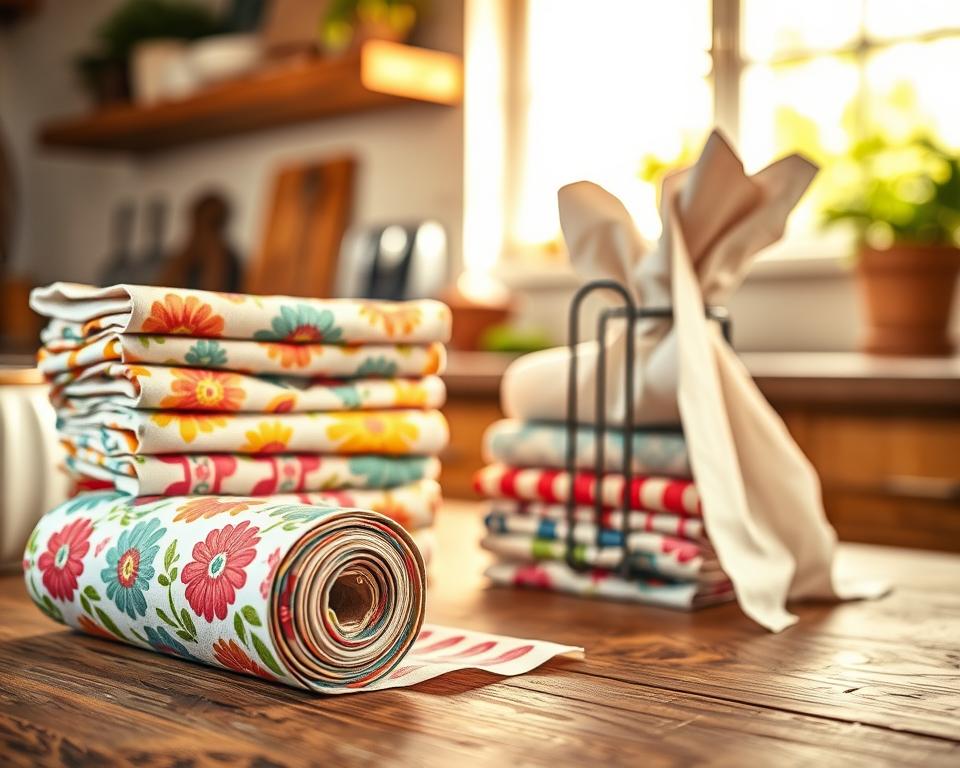
Unpaper towels are reusable cloths for paper towel’s job. They’re made from materials like cotton or bamboo. This makes them durable and easy to wash.
Switching to unpaper towels cuts down on disposable paper use. It’s a step towards a greener lifestyle.
How to Use and Care for Them
Using unpaper towels is easy. Just replace paper towels for cleaning or drying. Then, wash them with your laundry.
To keep them lasting, wash in cold water. Avoid fabric softeners to keep them absorbent.
DIY Unpaper Towels
Making your own unpaper towels is a fun DIY project. Use old t-shirts or towels to create them.
For a guide on making unpaper towels, check out this resource. It has step-by-step instructions and tips.
Choosing unpaper towels, bought or homemade, is a big step towards a greener future. It reduces waste and supports sustainability.
Natural Fiber Options: The Power of Nature
Choosing natural fibers is a simple way to make our homes greener. Starting with paper towels, natural fibers are durable and eco-friendly. They help reduce our environmental impact.
Hemp Towels and Their Benefits
Hemp towels are becoming popular for their strength and ability to soak up water. Made from hemp, one of the strongest natural fibers, they last a long time. This makes them a smart choice for saving money over time.
- High Absorbency: Hemp towels can soak up to 5 times their weight in water.
- Durable: They can handle many washes without losing quality.
- Antimicrobial Properties: Hemp naturally fights bacteria and odors.
Switching to hemp towels has cut down my household waste. I also use fewer paper towels now.
Organic Cotton Towels: A Greener Choice
Organic cotton towels are a great choice for those wanting to avoid paper towels. They’re made without harmful chemicals, making them better for our health and the planet.
“Choosing organic cotton is not just about the product itself, but about supporting a more sustainable agricultural practice.”
The perks of organic cotton towels include:
- They’re soft and comfy against your skin.
- They’re as absorbent and durable as hemp towels.
- They have a lower environmental impact thanks to organic farming.
By using natural fiber towels like hemp and organic cotton, we can use fewer disposable products. This helps us live more sustainably.
Upcycled Towels: A Creative Recycling Option
Upcycled towels are a great way to avoid using disposable paper towels. They give old materials a new life. This helps reduce waste and makes kitchens more sustainable.
How Upcycling Works
Upcycling turns old or discarded materials into new products. For towels, it means making cleaning cloths from old towels or fabric scraps. This cuts down on landfill waste and saves resources by reusing materials.
You can turn old t-shirts or towels into cleaning rags. This action helps lower the need for paper towels and other disposable items. Environmentalists say, “Reducing, Reusing, and Recycling are key to a sustainable future.”
“The earth has enough for everyone’s need, but not enough for everyone’s greed.” – Mahatma Gandhi
To start upcycling, look for DIY tutorials online. Or check out websites like Moss and Fog for creative ideas.
Where to Find Upcycled Products
If making things yourself isn’t your style, you can buy upcycled products. Many eco-friendly brands sell upcycled towels made from repurposed materials. These towels are good for the planet and add a creative touch to your kitchen.
| Product | Material | Benefits |
|---|---|---|
| Upcycled Towels | Old towels, fabric scraps | Reduces waste, conserves resources |
| Reusable Cloth Towels | Cotton, bamboo | Eco-friendly, durable |
Choosing upcycled towels helps reduce your environmental impact. It also supports sustainable kitchen products. As more people look for green alternatives, businesses will likely use upcycling more. This will help reduce waste and support a circular economy.
The Role of Kitchen Sponges
Kitchen sponges are a must-have in every home. They have a big impact on the environment, but we can make a change. Let’s look at how we can use eco-friendly sponges instead of paper towels.
Eco-Friendly Sponge Materials
Most kitchen sponges are made from materials that don’t break down easily. This means they end up in landfills. But, there are eco-friendly alternatives like sponges made from cellulose or natural fibers. These are better for the planet.
Some brands are now making sponges from recycled stuff or plant-based materials. This helps cut down on waste and supports a greener home.
The Lifespan of Kitchen Sponges
Kitchen sponges don’t last long, usually needing a new one every month or three. This leads to a lot of waste and the need for more resources.
To make your sponge last longer, clean it well after each use. Also, sanitize it often to stop bacteria from growing.
Tips for Sustainable Sponge Use
Here are some ways to use your kitchen sponge in a more eco-friendly way:
- Opt for sponges made from green materials.
- Swap out sponges often to keep things clean.
- Sanitize sponges by microwaving or soaking in vinegar.
- Use a sponge with a built-in scrubber to cut down on cleaning tools.
By following these tips, you can lessen the environmental harm caused by your sponge use. This helps make your home more sustainable.
DIY Alternatives to Paper Towels
Looking to reduce our environmental impact? Making our own cleaning cloths is a key step. Simple changes in our daily lives can cut down our use of disposable paper products.
Homemade Cleaning Cloths
Making your own cleaning cloths is a fun DIY project. Use old clothes like t-shirts or towels and cut them into sizes you need. This not only cuts down on waste but also makes you feel proud of your work.
To start, you’ll need a few basic things:
- Old cotton clothes or towels
- Scissors
- A washing machine for cleaning
Just cut the fabric, wash it, and you’re set to use your eco-friendly cleaning cloths.
Crafting Your Own Unpaper Towels
Making your own unpaper towels is another great way to avoid disposables. You can use materials like cotton flannel or terrycloth to make these reusable towels.
Here’s a quick guide to get you started:
- Choose your fabric: Pick something that’s both absorbent and strong.
- Cut the fabric: Cut it into the size you want for your unpaper towels.
- Finish the edges: Hemming or using a serger can stop fraying.
- Wash and use: Wash them first to make sure they’re clean and ready.
By choosing these DIY options, you’re not just helping the planet. You’re also saving money. Adopting a zero-waste lifestyle means making smart choices. Making your own cleaning cloths and unpaper towels is a big step in that direction.
Making the Switch: Tips for a Smooth Transition
Switching to sustainable alternatives to disposable paper towels is a big step towards a greener lifestyle. It’s important to set up a new cleaning routine for a smooth transition.
Establishing New Habits
First, pick a spot to store your reusable paper towels, like cloth or bamboo towels. This makes them easy to find and use, helping you form new habits.
Involving Household Members
It’s key to teach everyone in your home about the benefits of eco-friendly options. When we all work together, we can make a bigger difference. Talking about why we choose these alternatives can motivate others to join us.
Monitoring Progress
Keeping track of how well we’re doing is important. By watching our use of reusable towels, we can see what works and what doesn’t. This helps us keep up our new habits and cut down on disposable products.