
Did you know that millions of birds visit backyard feeders every year?
I recently found out that an old juice carton can be turned into a cute DIY bird feeder. This easy project not only cuts down on waste but also gives birds a cozy spot to visit.
With my simple guide, you can make a budget-friendly feeder that will draw birds to your garden. It’s a great way to have fun and learn something new.
Key Takeaways
- Repurpose old juice cartons into a functional bird feeder.
- Follow simple DIY instructions to create a budget-friendly project.
- Attract birds to your garden with a charming feeder.
- Reduce waste and contribute to the well-being of local birds.
- Create a fun and educational activity for yourself or others.
Introduction to DIY Bird Feeders
Turning everyday items like juice cartons into bird feeders is a fun DIY project. It lets you get creative and helps reduce waste. Plus, it supports local wildlife.
Why Create a Bird Feeder?
Making a bird feeder is a wonderful way to draw birds to your garden. It gives them food, even when it’s cold. You can make it just right for the birds you like. It’s also a great way to teach kids about wildlife and recycling.
Benefits of Recycling Juice Cartons
Using juice cartons for bird feeders is a great example of upcycling. It gives old materials a new life and cuts down on waste. Making a bird feeder from a carton is a fun, educational activity that teaches about sustainability.
Here are some key benefits of recycling juice cartons for bird feeders:
| Benefit | Description |
|---|---|
| Reduces Waste | Gives old juice cartons a new purpose, keeping them out of landfills. |
| Promotes Sustainability | Encourages the reuse of materials, reducing the demand for new resources. |
| Educational | Teaches individuals, including children, about the importance of recycling and conservation. |
By doing this DIY project, you’re helping birds and the environment. Making a bird feeder from a juice carton is a simple yet powerful way to help.
Materials Needed for Your Bird Feeder
Before starting your DIY bird feeder, gather the right materials. This makes your project easy and lets you enjoy watching birds at your feeder.
Essential Tools for the Project
You’ll need basic tools to begin. Use scissors to cut the juice carton and other materials. You’ll also need glue, like hot glue or white glue, for putting the feeder together. A pencil or marker is needed to mark the carton for cutting or drilling holes.
List of Supplies to Gather
Along with tools, you’ll need these supplies:
- A clean, dry juice carton (any size works, but bigger ones hold more birdseed)
- Birdseed (a mix of seeds good for birds in your area)
- String or twine for hanging the feeder
- Optional: decorative items like paint, stickers, or tape to make your feeder more attractive
Having all these materials ready makes creating your eco-friendly bird feeder project fun and easy. By using a juice carton, you’re making a fun project and reducing waste. It’s a great activity for the whole family.
Preparing the Juice Carton
Starting a DIY bird feeder project begins with preparing the juice carton. This first step is key to success.
To start, we must clean and dry the carton. This simple process is essential.
Cleaning the Carton
To clean the carton, follow these steps:
- Rinse the carton well with water to remove juice.
- Scrub with a mild detergent for tough stains or residue.
- Rinse again with clean water to get rid of soap.
- Let it dry completely to avoid mold or bacteria.
Ensuring the carton is dry is vital before moving on.
Cutting Open the Carton
After drying, it’s time to cut the carton open. Here’s how:
- Use a craft knife or scissors to cut along one side.
- Open the carton flat for the bird feeder surface.
- Trim edges for smoothness and evenness.
Be cautious when handling sharp objects to avoid accidents.
By following these steps, you’ll have a clean, ready carton for your bird feeder project. This is a great start.
Designing Your Bird Feeder
Designing your bird feeder is where creativity meets functionality. You get to think outside the box. Create something that attracts birds and looks good in your outdoor space.
Choosing the Right Shape
The shape of your bird feeder matters a lot. Think about the birds you want to attract. Choose a shape that fits them well.
- Simple Designs: Easy to make and clean, simple designs are great for beginners.
- Complex Designs: If you’re more experienced, you can opt for complex designs that offer more features, such as multiple feeding ports.
Adding Access Holes for Birds
Access holes are key for birds to feed. Here are some tips:
- Place holes at a comfortable height to allow easy access for the birds.
- Ensure the holes are large enough for the birds to comfortably retrieve the seed.
- Consider adding a roof or overhang to protect the seed from the elements.
When designing your bird feeder, think about looks too. You can make it simple or fancy, using the juice carton as your base.
By focusing on these aspects, you can make a bird feeder that works well and looks good. It will make your backyard better.
Painting and Decorating Your Feeder
It’s time to get creative and make your bird feeder stand out. Use paint and decorations to add a personal touch. This will make it more attractive to birds and fun for you to watch.
Selecting Safe Paint Options
When painting your bird feeder, choose safe paint. Acrylic latex paint is a good choice because it’s water-based and non-toxic. Avoid oil-based paints or those with lead or harmful chemicals. Always check the label for safety certifications.
Creative Decoration Ideas
Decorating your bird feeder can be a fun project. You can use stencils for patterns or paint it in bright colors. Adding natural elements like twigs or leaves can give it a rustic look. Here are some ideas to get you started:
- Use bright colors to attract different bird species.
- Add patterns or designs with stencils for a personal touch.
- Incorporate natural elements like twigs or leaves for a rustic look.
By following these tips, you can create a unique and inviting bird feeder. It will enhance your backyard’s appeal to birds and provide hours of entertainment.
Adding Birdseed
The last step in making your homemade bird feeder tutorial is adding the right birdseed. Your juice carton bird feeder is ready. Now, pick the best birdseed to draw different birds to your garden.
Choosing the right birdseed is key. Different birds like different seeds. For example, sunflower seeds are loved by many birds. Nyjer seeds, on the other hand, attract finches and small birds.
Types of Birdseed to Use
There are many birdseed types for your feeder. Here are some popular ones:
- Sunflower Seeds: These are a hit among many bird species, including cardinals and blue jays.
- Nyjer Seeds: Also known as thistle seeds, these are ideal for attracting finches and other small birds.
- Safflower Seeds: These are a good alternative to sunflower seeds as they are less likely to attract squirrels.
- Mixed Birdseed: A blend of various seeds can attract a diverse range of bird species.
For more creative ideas on using recycled materials for bird feeders, you can visit Red Ted Art. They offer innovative DIY projects.
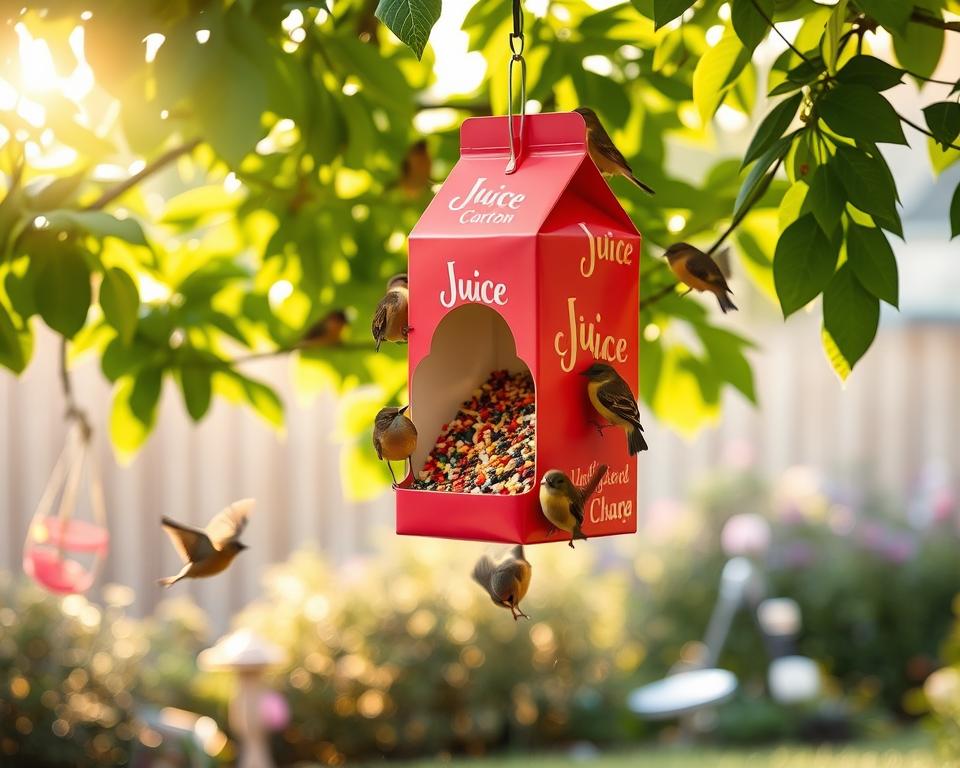
How to Fill the Feeder Effectively
Filling your bird feeder right is as important as choosing the right birdseed. Here are some tips:
- Fill the Feeder Completely: Fill the feeder to the top so birds have enough food.
- Avoid Overfilling: Don’t overfill, as seeds can spill out when birds land.
- Use a Variety of Seeds: Mixing different seeds attracts more bird species.
- Keep it Fresh: Clean and refill the feeder often to keep the birdseed fresh and prevent mold.
By following these steps and tips, you’ll create a bird-friendly garden. This will attract many birds, making your upcycling juice cartons for birds project a success.
Hanging Your Bird Feeder
Your eco-friendly bird feeder is now ready. It’s time to find the perfect spot to hang it. The location you choose can greatly affect how many birds visit your feeder.
Best Locations for Placement
When picking a spot, look for a place that is easily visible and safe for the birds. You want it in an area with the right sunlight and protected from bad weather.
Don’t hang it too close to places predators like, like trees with low branches or fences cats can jump from. Keep it at least 10 feet away from these spots.
Choosing the Right Hanging Mechanism
The hanging mechanism should be sturdy and reliable. You can use a simple rope or twine. But, for more durability, think about a metal hook or a strong chain that can handle the feeder’s weight.
Make sure it’s easy to adjust or lower for refilling or cleaning. This makes taking care of your bird feeder easy.
By picking the right spot and hanging mechanism, your DIY bird feeder will be a hit. It will give you a great bird-watching experience.
Maintenance Tips for Your Bird Feeder
A well-maintained bird feeder attracts more birds and keeps them healthy. To keep your DIY bird feeder in great shape, follow some simple tips.
Regular Cleaning Procedures
Cleaning your bird feeder often is key to stop diseases from spreading among birds. Here’s how to do it:
- Remove any leftover birdseed and debris from the feeder.
- Wash the feeder with mild soap and warm water.
- Rinse thoroughly and let it dry completely before refilling.
Tip: Clean your feeder every two weeks. But, clean it more often if it’s used a lot.
How to Keep Birds Coming Back
To keep birds coming back, make sure your feeder is a reliable food source. Here are some tips:
- Maintain a consistent supply of fresh birdseed. Birds will return if they know they can count on your feeder.
- Offer different birdseed types to attract various species.
- Put your feeder in a safe spot, away from predators and harsh weather.
By following these tips, you can enjoy watching birds at your feeder. This ensures their health and safety. A well-maintained bird feeder makes your yard a welcoming place for birds.
Observing the Birds
Creating a bird feeder is more than just a craft. It’s about enjoying the thrill of watching birds. Once your DIY bird feeder from juice cartons is ready, you can see various species in your backyard.
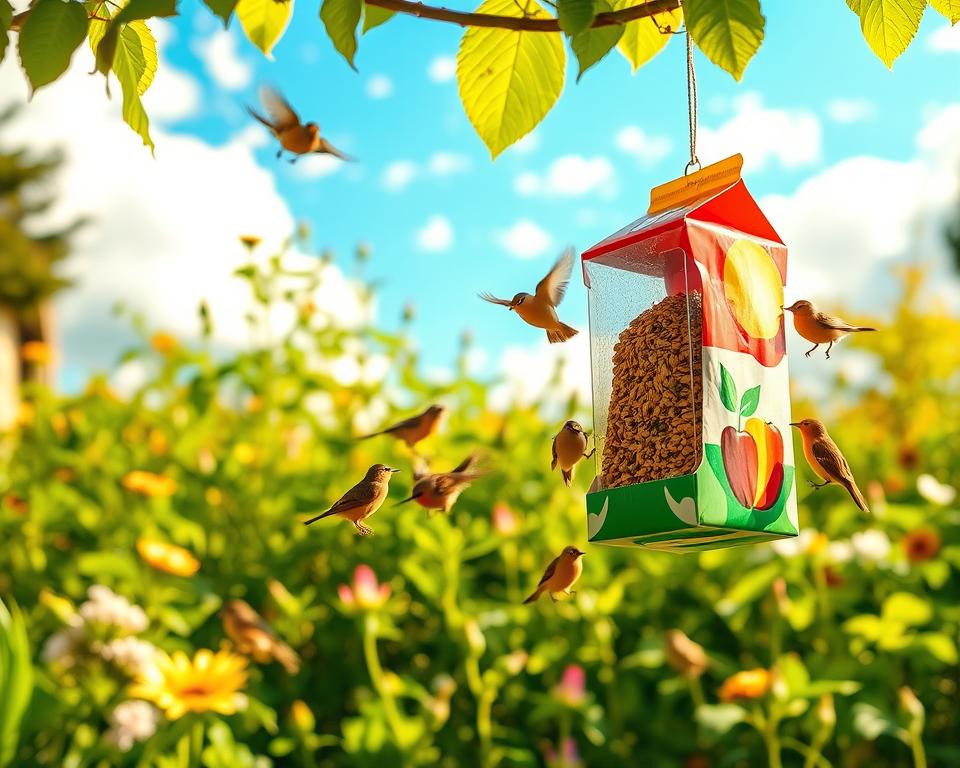
Best Times to Watch
The best times to see birds at your feeder are early morning and late afternoon. Birds are most active during these times, looking for food to start their day or get ready for night.
Morning Observations: In the morning, you’ll see birds like sparrows and finches. They’re early risers, looking for energy for their day.
Afternoon Delights: Afternoons bring different birds, like cardinals and blue jays. These birds visit when it’s less busy around the feeder.
Birdwatching Tips for Beginners
Here are some tips for beginners to enjoy birdwatching:
- Be Patient: Sit quietly near the feeder. Birds feel safer and are more likely to visit.
- Use Binoculars: Binoculars let you see birds up close without disturbing them.
- Keep a Journal: Writing down what you see is fun. It helps you track different species and their behaviors.
By following these tips and knowing the best times to watch, you can have a great birdwatching experience with your DIY bird feeder.
Troubleshooting Common Issues
Keeping your homemade bird feeder in top shape is key. While making a DIY bird feeder is fun, it can be tough to keep it working well and looking good for birds.
Addressing Squirrels and Other Pests
Squirrels and other pests are a big problem for bird feeders. They eat all the birdseed, making it hard for birds to eat. To stop them, use squirrel-proof birdseed or add a squirrel baffle to your feeder.
Also, place your feeder at least 10 feet away from any place squirrels can jump from. Try feeders with perches that collapse under squirrels’ weight, keeping them out of the seed.
Fixing Design Flaws
Design problems with your bird feeder can be fixed easily. If the feeder leaks seed, check the seams and refill holes for gaps. Sealing these with waterproof sealant fixes the leak.
If birds can’t get to the seed, make the feeding ports bigger or add more perches. A well-designed feeder attracts more birds and makes bird-watching better.
By fixing these common problems, your DIY bird feeder will last longer and be a great place for birds. Follow these DIY bird feeder instructions to keep your feeder in great shape.
Expanding Your DIY Bird Feeder Projects
After making your first bird feeder, you’re ready for more. You can turn different recyclable items into bird feeders. This will make your garden more attractive to birds.
Other Recyclable Items to Use
There are many materials you can use for bird feeders, not just juice cartons. For example, plastic bottles and milk cartons can be turned into unique feeders. The trick is to think outside the box with what you have.
Here are some other items to think about:
- Old wooden spoons or utensils for perches
- Unused wire mesh for creating a protective layer
- Cardboard tubes from paper towel rolls for additional feeding tubes
Building Multiple Feeders
Once you’ve tried different materials, start making more feeders. This will make your garden a haven for birds. It also gives them more places to eat.
To make your eco-friendly bird feeder project even better, place feeders in different spots. Put them near flowers that attract birds or in quiet, safe places.
By expanding your DIY bird feeder projects, you’re making your garden better and helping the environment. So, get creative and watch the birds enjoy your new feeders!
Conclusion
By following the steps in this article, you’ve learned to make a bird feeder from a juice carton. This feeder will attract different bird species to your yard.
Benefits of Your New Bird Feeder
Your bird feeder is a creative idea that makes your outdoor space special. It also helps local birds by giving them food.
Watching birds at your feeder brings joy. You’ll feel proud of making something useful and good for the environment.
Start Your Birdwatching Journey
I encourage you to keep exploring bird feeder ideas and share your story. With your DIY feeder, you’re ready to enjoy birdwatching. It offers many rewards.