
Did you know that nearly 30% of municipal solid waste is organic and can be composted? As an avid composter, I’ve learned that even with the best intentions, mistakes can happen in the composting process.
Whether you’re a seasoned composter or just starting out, it’s easy to fall into bad habits or overlook important steps. These can harm your compost pile. In this article, I’ll share my personal experience and insights to help you avoid common pitfalls and achieve a thriving compost.
Key Takeaways
- Understand the importance of balancing green and brown materials in your compost.
- Learn how to maintain optimal moisture levels.
- Discover the role of aeration in composting.
- Identify common compost pests and how to manage them.
- Improve your composting process with simple troubleshooting tips.
1. Not Adding Enough Green Materials
One common mistake in composting is not adding enough green materials. These are key for a balanced compost pile. Green materials are high in nitrogen and help break down organic matter.
What Are Green Materials?
Green materials include food scraps, grass clippings, and manure. They are rich in nitrogen. This is important for microorganisms to work well.
Benefits of Green Materials
Adding green materials to your compost pile has many benefits. They speed up decomposition, improve compost quality, and help microorganisms grow.
Key Benefits:
- Accelerates decomposition
- Enhances nutrient content
- Supports beneficial microorganisms
How to Balance Green and Brown Materials
It’s important to balance green and brown materials in your compost. Brown materials, like dried leaves and straw, are high in carbon. Aim for 2/3 brown materials and 1/3 green materials.
| Material Type | Examples | Carbon/Nitrogen Content |
|---|---|---|
| Green Materials | Food scraps, grass clippings | High in Nitrogen |
| Brown Materials | Dried leaves, straw | High in Carbon |
Understanding green materials and balancing them with brown materials is key. This will create nutrient-rich compost for your garden. Regular checks and adjustments will help you get the mix right for effective composting.
2. Overloading With Brown Materials
Brown materials are key for composting, but too much of them can be bad. They include dried leaves, straw, and shredded newspaper. These materials are high in carbon and help microorganisms break down organic matter.
Identifying Brown Materials
Brown materials are dry and high in carbon. Examples include:
- Dried leaves
- Straw
- Shredded newspaper
- Cardboard
- Branches and twigs
They’re important for balancing green materials, which are high in nitrogen. Mixing both types helps microorganisms thrive.
Consequences of Too Many Browns
Too many brown materials in your compost pile can cause problems:
| Issue | Description |
|---|---|
| Slow Decomposition | Too many browns slow down decomposition because there’s not enough nitrogen for microbes. |
| Imbalanced C:N Ratio | Too many browns upset the carbon-to-nitrogen ratio. This makes it hard for microbes to break down organic matter. |
| Dry Compost Pile | Brown materials are dry. Too much of them makes the pile dry, slowing down decomposition. |
To avoid composting pitfalls, balance green and brown materials. This will help improve your composting process and make nutrient-rich soil for your garden.
Fixing problems with too many brown materials means watching the carbon-to-nitrogen ratio. Add the right amount of green materials. Regularly turning the pile and adding green materials keeps the composting process healthy.
3. Ignoring the Right Carbon to Nitrogen Ratio
Ignoring the carbon-to-nitrogen ratio is a big mistake in composting. It greatly affects how well the compost decomposes. A good compost pile needs the right mix of “green” and “brown” materials.
Microorganisms need a balance of carbon and nitrogen to work well. If the ratio is wrong, decomposition slows down, smells bad, or can even harm you.
What Is the Ideal Ratio?
The best carbon-to-nitrogen ratio is about 25:1 to 30:1. This means for every 25-30 parts of carbon-rich stuff, add 1 part of nitrogen-rich stuff.
To get this ratio, mix “brown” and “green” materials right. For example, use 2/3 “brown” stuff like dried leaves and 1/3 “green” stuff like kitchen scraps.
Tips for Balancing Carbon and Nitrogen
To balance carbon and nitrogen, first list what you have. High-carbon materials are dried leaves, straw, and shredded newspaper. High-nitrogen materials are kitchen scraps, grass clippings, and manure.
- Layer your compost pile with “brown” and “green” materials to achieve a mix.
- Check the moisture and air in your compost pile for the best conditions.
- Turn your compost pile often to keep oxygen flowing and speed up breakdown.
By focusing on the carbon-to-nitrogen ratio and following these tips, you can make a compost pile that works well. It will give you rich soil for your garden.
4. Failing to Aerate the Pile
Not aerating your compost pile can cause anaerobic conditions. This slows down decomposition and leads to bad smells. Aeration is key for a healthy compost pile. It lets oxygen reach the microorganisms that break down organic matter.
Why Aeration Matters
Aeration is vital because it gives oxygen to the microorganisms that decompose. Without enough oxygen, decomposition turns anaerobic. This leads to methane and other bad gases.Aeration speeds up decomposition and stops bad smells.
To aerate your compost pile, you can use simple methods. One way is to turn the pile over completely. This mixes the materials well and ensures oxygen reaches all parts.
Techniques for Effective Aeration
There are several ways to aerate your compost pile well. Here are a few:
- Turning the pile: This involves physically turning the compost pile over to mix the materials and introduce oxygen.
- Using a compost aerator: A compost aerator is a tool designed to aerate compost piles without turning them over completely.
- Layering: Creating layers of different materials can help improve aeration. It allows air to pass through the pile more easily.
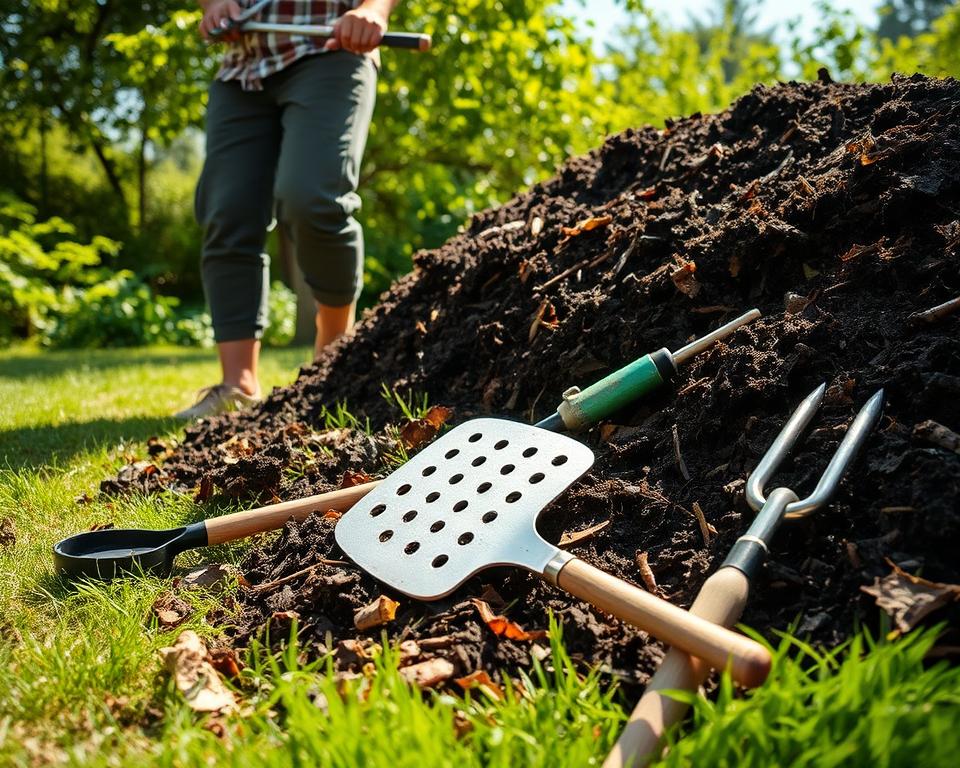
To show why aeration is important, let’s compare compost piles with and without it:
| Characteristics | Aerated Compost Pile | Non-Aerated Compost Pile |
|---|---|---|
| Decomposition Rate | Fast | Slow |
| Odor Presence | Minimal | Strong Unpleasant Odors |
| Microorganism Activity | High | Low |
5. Using Contaminated Ingredients
Contaminated ingredients can harm your compost pile’s health. Adding unwanted substances can mess up the decomposition process. This can also harm your plants. It’s important to know and avoid these contaminants for a healthy compost.
Identifying Contaminated Ingredients
Some materials are not good for composting. These include chemically treated waste, pet waste, and coal or charcoal ash. Chemicals from treated plants can harm your compost.
Pet waste can have harmful pathogens. Coal or charcoal ash may have heavy metals that can pollute your soil.
Safe Composting Practices
To keep your compost safe, follow safe practices. Only add organic materials that are free from chemicals and contaminants.
Check your compost pile often and be careful with what you add. Keeping the right balance of materials and ensuring good air flow helps in safe decomposition.
6. Composting Meat and Dairy Products
Exploring composting, I found some materials are best avoided. Meat and dairy products are tricky to compost.
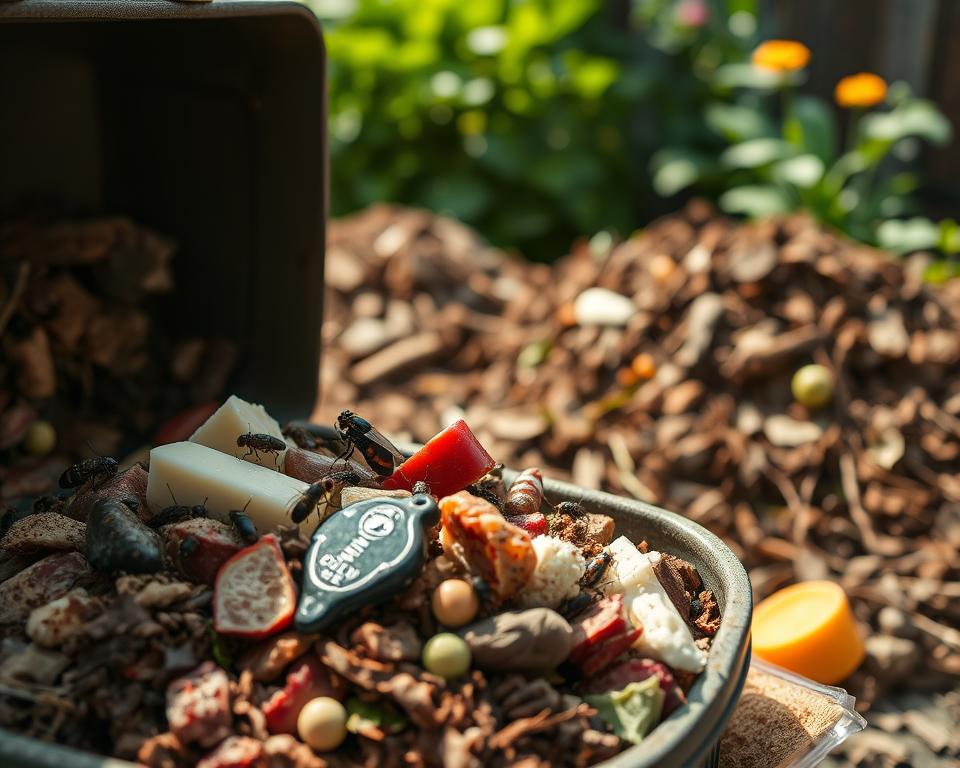
They can draw pests and cause bad smells. Knowing the risks is key. For more on composting mistakes, check this resource.
Risks Associated with Composting Animal Products
Composting meat and dairy can cause problems. These include:
- Attracting pests like rodents and flies
- Creating unpleasant odors that can be a nuisance to neighbors
- Potential contamination with pathogens like E. coli and Salmonella
Alternative Disposal Methods
So, what’s a better option than composting meat and dairy? Here are some alternatives:
| Disposal Method | Description |
|---|---|
| Proper Trash Disposal | Wrap meat and dairy products securely and dispose of them in the trash |
| Burying | Bury these products deep in the ground, away from gardens and water sources |
| Animal Feed | If possible, use them as feed for animals like chickens or pigs |
Understanding the risks and alternatives helps Improve Your Composting Process. It keeps your compost pile healthy. This supports sustainable gardening.
7. Neglecting Moisture Levels
Keeping the right moisture in your compost is very important. Moisture helps break down materials in composting. It’s key for a healthy compost pile.
Signs of Too Much or Too Little Moisture
Too little moisture slows down composting. Too much can cause bad smells. To check moisture, squeeze some compost. It should feel like a damp sponge.
If it’s too dry, it falls apart. If too wet, it’s soggy.
Signs of improper moisture include:
- Pests or rodents attracted to dry, decomposing materials
- Unpleasant odors from anaerobic conditions
- Slow decomposition rates
How to Maintain Proper Moisture
To keep moisture right, mix “green” and “brown” materials. Green stuff like food scraps adds moisture. Brown stuff like leaves absorbs it. Check moisture often and turn the pile as needed.
The US Environmental Protection Agency says composting is good for waste reduction. Keeping moisture balanced is key.
“The key to successful composting is finding the right balance between carbon-rich ‘brown’ materials and nitrogen-rich ‘green’ materials, as well as maintaining adequate moisture.”
By following these tips, you can keep your compost healthy. This will give you rich soil for your garden.
8. Skipping the Turning Process
Turning your compost pile regularly is key for aeration and faster decomposition. Skipping this step can make materials compacted. This leads to slow decomposition and bad smells.
Importance of Regularly Turning
Turning your compost pile often is vital for a healthy process. It makes sure all materials get oxygen, which is essential for breaking down. It also spreads heat evenly, killing off harmful pathogens and weed seeds.
Benefits of Regular Turning:
- Increased oxygen flow
- Improved heat distribution
- Reduced odors
- Faster decomposition
Let’s look at how turning impacts composting:
| Turning Frequency | Decomposition Rate | Odor Level |
|---|---|---|
| Weekly | Fast | Low |
| Monthly | Moderate | Moderate |
| Rarely | Slow | High |
Best Tools for Turning Compost
Using the right tools makes turning compost easier. Some top tools include:
- A pitchfork, perfect for gently mixing without damage.
- A compost aerator, great for adding oxygen without full turning.
- A shovel, useful for moving materials and turning the compost.
Regular turning keeps your compost pile healthy and speeds up results. Remember, successful composting balances green and brown materials, keeps moisture right, and turns the pile often.
9. Ignoring Temperature Changes
Ignoring temperature changes in your compost pile can lead to disappointing results. Temperature plays a key role in the composting process. It affects how fast things decompose and the quality of the compost.
What Temperature Is Ideal for Compost?
The ideal temperature for composting is between 130°F and 140°F. Most experts agree on this range. It helps decompose materials efficiently and kills off harmful pathogens and weed seeds.
Key temperature ranges to remember:
- 130°F – 140°F (54°C – 60°C): Optimal for decomposition and pathogen kill.
- 100°F – 130°F (38°C – 54°C): Active composting phase.
- Below 100°F (38°C): Slow decomposition.
How to Monitor and Adjust Temperature
It’s important to monitor your compost pile’s temperature. Use a compost thermometer to check it often. If the temperature is off, you can adjust by adding materials, turning the pile, or improving aeration.
Tips for maintaining optimal temperature:
- Regularly check the temperature with a compost thermometer.
- Add materials as needed to maintain the balance between green and brown materials.
- Turn the compost pile to aerate it and regulate temperature.
By watching temperature changes and making adjustments, you can avoid common composting problems. This will help you make a rich, healthy compost. For more Composting Tips and Compost Troubleshooting advice, check out resources from trusted gardening and composting groups.
Keeping the right temperature is just one part of successful composting. By also balancing green and brown materials and keeping moisture right, you can create a thriving compost ecosystem.
10. Composting Weeds and Invasive Plants
Adding weeds and invasive plants to your compost pile can have unintended consequences if not handled correctly. While composting is a great way to recycle organic materials, certain plants can cause more harm than good.
Composting weeds and invasive plants can lead to the spread of invasive species in your garden. This can result in a plethora of problems, including competition for native plants, alteration of ecosystem processes, and even economic impacts.
Why This Can Be Problematic
Weeds and invasive plants can be very resilient. When composted, they can regenerate and spread. Many weeds produce seeds that remain viable even after being composted. If the compost pile is not hot enough or if it’s not turned regularly, these seeds can survive and be distributed throughout your garden, perpetuating the problem.
How to Handle Weeds Safely
To safely compost weeds and invasive plants, it’s important to take a few precautions. First, ensure that your compost pile reaches high temperatures (at least 131°F) to kill weed seeds and pathogens. Regular turning of the compost is also vital to maintain aeration and speed up the decomposition process.
As
“Composting is a powerful tool for gardeners, but it requires careful management to avoid spreading invasive species.”
This quote highlights the importance of being mindful when composting certain materials.
Consider the following steps to handle weeds safely:
- Remove seeds and flowers before composting to prevent spread.
- Monitor your compost pile’s temperature regularly.
- Turn the compost pile frequently to ensure aeration and decomposition.
By following these guidelines, you can correct common composting problems associated with weeds and invasive plants. This ensures a healthier and more balanced garden ecosystem.
11. Being Impatient With the Process
Composting is a journey that needs patience, observation, and a desire to learn. This article has shown many common mistakes to avoid. But, even with the right techniques, the process can be slow.
The Composting Timeline
It’s important to understand that composting takes time. It can take months to a year or more for your compost to be ready. This depends on the materials, the pile size, and how well you maintain it.
To improve your composting, monitor these factors and adjust as needed.
Cultivating Patience and Observation
To get the most from composting, focus on patience and observation. Regularly check your compost pile, turning it when needed. Make sure it has the right mix of green and brown materials.
By following these tips, you’ll create a rich compost. This will benefit your garden for years.
By being patient and observant, you’ll not only improve your composting. You’ll also appreciate the natural cycles that make your garden grow. With these tips, you’ll make a nutrient-rich soil amendment. This will enhance your garden’s health and productivity.