


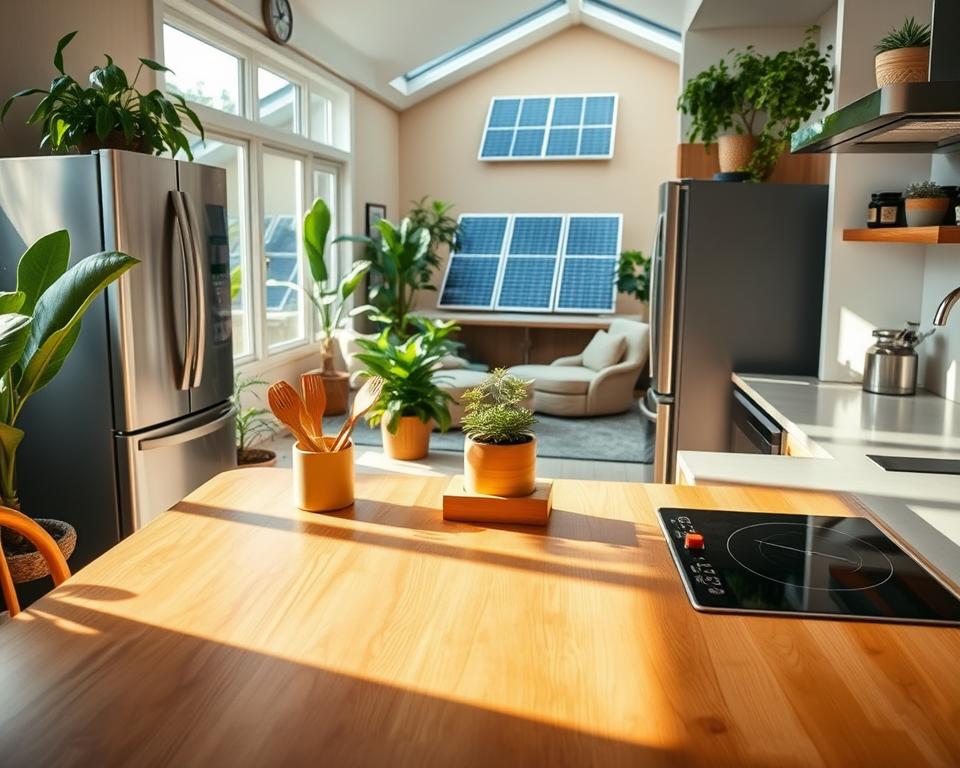
Did you know the average American household spends about $1,400 a year on energy bills? Making eco-friendly choices can cut down on this cost. One smart way to use less energy is by picking energy-efficient appliances for your home.
As we learn more about environmental issues, the need for sustainable living solutions increases. Choosing energy-efficient appliances helps lower your carbon footprint. It also saves you a lot on your utility bills.
Key Takeaways
- Energy-efficient appliances can significantly lower your energy bills.
- Eco-friendly home upgrades contribute to a more sustainable environment.
- Upgrading appliances is a simple yet effective way to reduce energy consumption.
Understanding Energy Efficiency Ratings
Energy efficiency ratings are more than just numbers. They show how much you can save and help the environment. When you’re looking for new appliances, knowing these ratings helps you save money and protect the planet.
What Do Energy Ratings Mean?
Energy ratings tell you how much energy an appliance uses. The ENERGY STAR label in the U.S. means it’s energy efficient. For more info on ENERGY STAR ratings, check out our guide on understanding ENERGY STAR ratings.
These ratings are shown on the appliance. They tell you how much energy it uses in kWh per year. They also compare it to other models, so you can see how efficient it is.
Common Energy Efficiency Labels
There are other labels and ratings to know about too. The EnergyGuide label shows how much an appliance costs to run and compares it to others.
Here’s a quick look at some common labels:
| Label | Description |
|---|---|
| ENERGY STAR | Signifies the appliance meets EPA energy efficiency standards. |
| EnergyGuide | Provides estimated yearly operating cost and energy consumption comparison. |
How Ratings Impact Your Bill
The energy rating of an appliance affects your bills. More efficient appliances use less energy, which means lower bills. For example, an ENERGY STAR certified fridge uses 15% less energy than a standard one, saving you money each year.
“By choosing appliances with high energy efficiency ratings, households can significantly reduce their energy consumption and lower their utility bills.” –
When buying new appliances, think about the long-term savings. Energy-efficient models might cost more upfront, but they save you money on bills over time.
The Benefits of Energy-Efficient Appliances
Energy-efficient appliances bring many benefits, like lower utility bills and less harm to the environment. As people want to make their homes greener, knowing these perks is key.

Cost Savings Over Time
One big reason to get energy-efficient appliances is the cost savings over time. They use less energy but work just as well, cutting down on bills. For example, ENERGY STAR-rated fridges use 15% less energy than others, saving a lot in the long run.
Environmental Impact
The green benefits of these appliances are huge. They use less energy, which means less electricity made from fossil fuels and less pollution. Choosing top-rated energy-saving devices is a big step towards sustainable living and a smaller carbon footprint.
Increased Home Value
Energy-efficient appliances also boost your home’s value. Buyers often pay more for homes with these modern, green appliances. They see them as a smart investment for saving money and living sustainably.
In summary, energy-efficient appliances offer many benefits. They help save money, protect the environment, and increase your home’s value. As we move towards greener living, choosing these appliances is a wise decision for making a difference.
Assessing Your Household Needs
To get the most out of energy-efficient appliances, start by figuring out what your home needs. Look at how much energy you use now, which appliances need to be replaced, and what you might need in the future.
Analyzing Your Current Energy Usage
Begin by looking at your past energy bills to spot trends. You can also use smart meters or energy monitors to see which appliances use the most power. For tips on tracking your energy use, check out Energy.gov.
Here are some steps to track your energy use:
- Check your energy bills from the past year to see if energy use changes with the seasons.
- Use energy monitors to see how much power each appliance uses.
- Find out which appliances use a lot of energy.
Identifying Key Appliances for Upgrade
Not all appliances are the same when it comes to saving energy. Focus on replacing big energy users like refrigerators, air conditioners, and washing machines. Look at how old your appliances are, their energy ratings, and how well they work to decide which ones to replace.
When picking appliances to upgrade, think about:
- The age of the appliance: Older ones use more energy.
- The energy efficiency rating: Choose appliances with high Energy Star ratings.
- How often you use them: Appliances you use a lot should be replaced first.
Future-Proofing Your Choices
When picking new appliances, think about your future needs too. Consider how your household might change in size, lifestyle, or energy use. Picking energy-efficient appliances that can grow with you will save you money and energy in the long run.
To make choices that last, consider:
- Choosing appliances that can grow or change with your needs.
- Looking for smart appliances that use energy wisely.
- Checking for eco-friendly home upgrades or special deals that support your choices.
Types of Energy-Efficient Appliances
Energy-efficient appliances are now a big deal for homeowners. They help us save money and the planet. It’s key to know what options are out there.
Refrigerators and Freezers
Getting a new fridge or freezer is a big step. Today’s models use less energy but work just as well. Look for ones with good insulation and smart features like automatic defrosting.
Washing Machines and Dryers
Washers and dryers are used a lot. Switching to energy-efficient ones cuts down on energy use. New washers use steam and low temps, while dryers sense moisture to save energy.
Dishwashers and Ovens
Dishwashers and ovens are also key for saving energy. New dishwashers use less water and energy. Some even have sensors to use just the right amount of water.
Energy-efficient ovens cook faster and use less energy. This includes induction and convection ovens. They help you save money and help the planet.
When picking energy-efficient appliances, think about the cost and benefits. The right choice can lower your bills and help the environment. It’s a win-win for everyone.
Understanding the Costs Involved
Thinking about getting energy-efficient appliances? It’s key to know the costs first. These appliances save money in the long run, but the initial cost can be high.
Initial Purchase Price vs. Long-Term Savings is a big deal. Energy-efficient appliances cost more at first. But, they save you a lot on bills later on.
Initial Purchase Price vs. Long-Term Savings
The extra cost of energy-efficient appliances can be worth it. For example, a high-efficiency fridge might cost more but save you money each month.
Calculating the Break-Even Point is important. This is when the savings from the appliance equal the extra cost. Knowing this helps you choose wisely.
Rebates and Incentives Available
Many places offer rebates and incentives for energy-efficient appliances. These can lower the initial cost a lot.
- Check with your local utility company for available rebates.
- Look for government programs that offer incentives for energy-efficient upgrades.
- Manufacturer offers can also provide significant savings.
Financing Options for Energy-Efficient Appliances
For many, the cost of energy-efficient appliances is a hurdle. But, there are financing options to help.
Energy-Efficient Financing Programs from banks and others offer good deals. They might have low-interest rates or longer payback times. This makes upgrading easier.
Understanding the costs, including rebates, incentives, and financing, helps you decide better. This way, you can choose energy-efficient appliances wisely.
Comparing Brands and Models
Choosing the right energy-efficient appliances can be tough. It’s not just about picking any brand or model. You need to find one that fits your needs and budget.
Top Energy-Efficient Brands in the U.S.
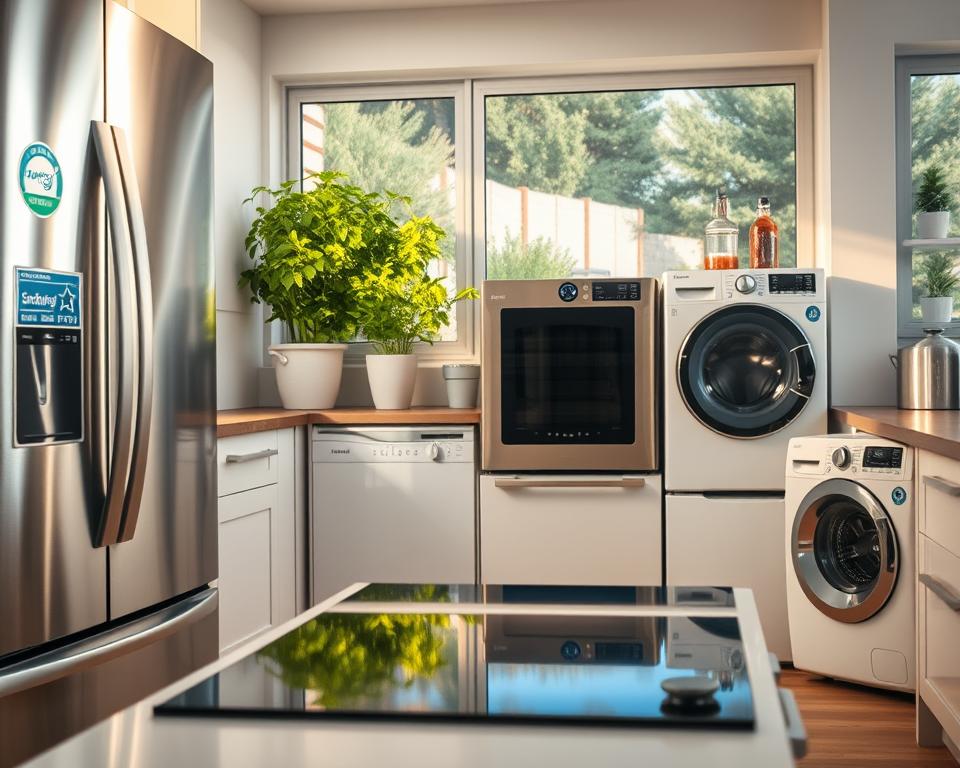
The U.S. has many brands that offer energy-saving appliances. Some of the top energy-efficient brands include:
- LG
- Samsung
- Whirlpool
- Energy Star certified products from various manufacturers
These brands focus on making appliances that save energy and work well.
Consumer Reviews and Ratings
Consumer reviews and ratings are very helpful. Sites like Home Depot, Best Buy, and Amazon share real experiences. Look for comments on:
- Energy efficiency
- Reliability
- Noise level
- Customer service experience
This helps you understand what to expect from your appliance.
Warranty and Service Considerations
Warranty and service are also key. A good warranty gives you peace of mind. Look for brands with:
- Longer warranty periods
- Comprehensive coverage (parts and labor)
- Good customer service ratings
Knowing about warranties and service can prevent future problems.
Installation Considerations
Installing eco-friendly upgrades is key to getting the most out of them. When adding energy-efficient appliances, how you install them affects their performance. It’s important to do it right.
DIY vs. Professional Installation
Choosing between DIY or professional installation is a big decision. DIY can save money upfront but might not be the best choice long-term. Professional installers ensure everything works right and often get rebates.
The U.S. Department of Energy says proper installation is essential for energy-saving appliances. This highlights the need to choose wisely.
Ensuring Proper Ventilation and Connection
Good ventilation and connection are critical for safe, efficient appliance use. For example, a clear dryer vent reduces energy use and safety risks. Also, connecting appliances to your home’s systems correctly is key.
- Check for any blockages or kinks in hoses and vents.
- Ensure all connections are secure and meet the manufacturer’s specifications.
- Consider hiring a professional if you’re unsure about any aspect of the installation.
Energy-Efficient Practices During Setup
When setting up new appliances, keep energy efficiency in mind. For instance, level your fridge and seal doors well for better temperature control. Also, think about where you place appliances to cut down on energy loss.
Key practices include: following the manufacturer’s instructions, calibrating appliances correctly, and using energy-saving features.
By focusing on these installation tips, you can get the most out of your eco-friendly upgrades. Enjoy a more sustainable home.
Maintenance Tips for Energy Efficiency
Keeping your energy-efficient appliances in good shape is key. Simple maintenance tips can help them work better for longer. This saves you money and helps the planet.
Regular Cleaning and Upkeep
Cleaning your appliances regularly is a must. For example, cleaning your dryer’s lint filter after each use boosts efficiency. Also, check and clean your fridge’s seals to keep it cool and save energy. Remember to deep clean your appliances every few months to keep them running well.
The Importance of Timely Repairs
Fixing small problems quickly is important. It stops them from turning into big energy-wasting issues. If your appliances act strangely, fix them fast. A broken oven thermostat, for instance, can waste a lot of energy. Fixing or replacing parts keeps your appliances efficient and extends their life.
Seasonal Checks and Updates
Seasonal checks are a good idea. They catch problems early. For example, cleaning your air conditioner before summer saves energy and money. Also, check your heating system before winter to ensure it works well. Regular maintenance keeps your appliances in top shape.
Following these maintenance tips will make your energy-efficient appliances last longer. You’ll save on energy bills and help the environment.
Disposing of Old Appliances Responsibly
Upgrading your appliances means more than just getting new ones. It’s also about getting rid of the old ones in an eco-friendly way. This ensures we keep our planet sustainable as we upgrade to eco-friendly home upgrades.
Recycling Options and E-Waste
Recycling is a top choice for disposing of old appliances. Many parts, like metals and plastics, can be turned into new products. This saves raw materials and helps the environment. Look for local recycling centers that take big appliances.
Some companies offer to take back your old appliances when you buy new ones. This is a great way to recycle responsibly.
Electronic waste, or e-waste, is a big problem. It contains harmful materials like lead and mercury. Make sure to recycle e-waste at certified facilities that follow strict environmental rules.
Donation Programs for Usable Appliances
If your appliances are working, think about donating them. Local charities and thrift stores often accept them. They might use them directly or fix them up for resale, helping the community.
Before donating, check that the appliances are clean and safe. Some places will even pick them up for you, making it easier to help out.
Safe Disposal Practices
For appliances that can’t be recycled or donated, safe disposal is key. Remove hazardous materials and follow local rules for throwing away big items. Don’t just throw them away, as it harms the environment and poses safety risks.
By choosing responsible disposal, you help the planet. Every choice you make, including how you get rid of old appliances, makes a difference. Keep making eco-friendly choices for a better future.
Staying Updated on Energy Standards
The world of energy efficiency is always changing. It’s key for homeowners to stay up-to-date on new standards. Knowing the latest can help you pick the best appliances for your home.
Changes in Energy Efficiency Regulations
Energy rules are always getting better to protect our planet and save energy. For example, the U.S. Department of Energy updates its appliance standards often. Keeping up with these updates helps you find appliances that are top-notch.
Key Changes to Watch:
- Updates to the Energy Star certification program
- New minimum energy efficiency standards for appliances
- Changes in labeling requirements for energy consumption
Resources for Continuous Learning
There are many ways to stay informed:
- U.S. Department of Energy Website: Gives the latest on energy standards and appliance certifications.
- Energy Star: Shares tips on energy-saving appliances and practices.
- Local Utility Companies: Offer rebates and info on energy-efficient upgrades.
| Resource | Description | Benefits |
|---|---|---|
| U.S. Department of Energy | Official updates on energy standards | Stay compliant with latest regulations |
| Energy Star | Certification for energy-efficient appliances | Identify energy-saving appliances easily |
| Local Utility Companies | Rebates and information on energy-efficient upgrades | Save money on utility bills |
Importance of Energy Audits
Regular energy audits are vital for knowing your home’s energy use. An audit spots where energy is wasted and suggests how to save. This can cut your energy bills and help the planet.
By keeping up with energy standards, using available resources, and doing energy audits, you can keep your home efficient. This ensures it meets current regulations.
Conclusion: Making the Right Choice
After reading this guide, you now know how to choose the best appliances. By picking energy-efficient ones, you cut down on energy use. This also helps make our planet a greener place.
Key Considerations
Think about the long-term gains when picking eco-friendly appliances. They save you money and are better for the planet. Look for high energy ratings and check out rebates for green living.
Next Steps
Start by checking how much energy your home uses now. Then, pick the appliances that need an upgrade. This way, you’ll choose the right energy-saving appliances for your home.
Choosing energy-efficient appliances means you’re part of a big movement towards a greener future. I’m looking forward to seeing the good changes it will bring to your home and the planet.