
As a gardener, I’ve found that finished compost can be a game-changer for potted plants. Using compost can boost potted plant yields by up to 30%. This is because compost is full of nutrients, makes soil better, and helps it hold water.
Adding finished compost to your potting mix can make a big difference. In this article, I’ll share the benefits of compost for potted plants. I’ll also give you tips on how to use it right.
Key Takeaways
- Understand the benefits of using finished compost in potted plants
- Learn how to incorporate compost into your potting mix
- Discover tips for maximizing the effectiveness of compost
- Explore the impact of compost on soil structure and water-holding capacity
- Find out how compost can boost the growth of your potted plants
What is Finished Compost?
Finished compost is made when organic materials break down into a nutrient-rich soil. It’s great for gardening, like in container gardens, where good soil is key.
Definition of Finished Compost
Finished compost is the end of the composting journey. It turns organic stuff into a stable, humus-like material. This happens when microorganisms break it down into a nutrient-rich substance.
It has a dark color, smells earthy, and feels crumbly. It’s full of good microorganisms. These help fight plant diseases and support healthy growth. That’s why it’s perfect for organic compost for indoor plants.
Key Characteristics of Finished Compost
What makes finished compost good? A few things stand out:
- It’s dark and rich, showing it’s full of organic matter.
- It smells earthy, which means it’s got good microorganisms.
- It’s crumbly, which means it’s airy and lets water in.
- It’s packed with nutrients, helping plants grow strong.
Knowing these traits helps gardeners see the value of finished compost. It boosts soil fertility and structure, which is super important for composting in container gardening.
Benefits of Using Finished Compost in Potted Plants
Using finished compost in potted plants can greatly improve their growth and health. It’s a valuable resource that can change how your plants grow. Adding it to your potting soil helps roots grow better and absorb more nutrients.
Enhances Soil Structure
Finished compost improves soil porosity and aeration. This lets roots grow deeper and take in more nutrients. In potted plants, soil can get compacted. But, finished compost helps keep the soil healthy for root growth.
Provides Essential Nutrients
Finished compost is full of essential nutrients like nitrogen, phosphorus, and potassium. These are key for plant growth. They are released slowly, giving plants a steady supply of nutrients. This cuts down on the need for synthetic fertilizers and supports green gardening.
Improves Soil Moisture Retention
Another big plus of using finished compost is its ability to improve soil moisture retention. This means the soil can hold more water. You won’t need to water as often, which helps prevent drought stress. This is great for potted plants, which can dry out fast.
Preparing Your Finished Compost for Use
Before using your compost, make sure it’s ready for your potted plants. This step makes your compost work well and blend smoothly into your garden.
There are two main steps: screening and sifting the compost to make it even, and checking the moisture level so it’s easy to mix into the soil.
Screening and Sifting Compost
Screening and sifting your compost gets rid of lumps and debris. This makes the compost even, so it mixes well into the soil. Your plants will get the nutrients they need.
- Use a compost sifter or a wire mesh screen to sift through the compost.
- Remove any large particles or debris that could cause problems for your plants.
- Sifting helps to aerate the compost, improving its overall quality.
Determining the Right Moisture Level
The moisture level of your compost is very important. It should be moist but not soggy. If it’s too dry, it won’t mix well. If it’s too wet, it can cause waterlogging.
- Check the moisture by squeezing a handful of compost. It should hold its shape but not be dripping wet.
- If the compost is too dry, you can add a bit of water to achieve the right consistency.
- If it’s too wet, let it sit for a day or two to allow excess moisture to evaporate.
By following these steps, you can make sure your compost is ready for your potted plants. It will give them the nutrients they need to grow well.
Mixing Finished Compost with Potting Soil
Adding finished compost to your potting soil is a simple way to help plants grow well. It makes the soil better at holding water and nutrients. This helps your plants thrive.
Ratios for Optimal Growth
The right mix of compost and potting soil depends on your plants and soil. A good starting point is 10-20% compost. This balance gives plants the compost’s benefits without too much.
For instance, a 10% mix means one part compost to nine parts soil. You can adjust this to meet your plants’ needs.
Best Practices for Mixing
It’s important to mix compost and soil well to avoid uneven layers. Uneven mixing can cause problems with water and root growth. This can harm your plants.
To mix right, start with a layer of soil, then compost, and keep alternating. Use a garden fork or your hands to mix until it’s even.
By mixing compost with your soil, you create a rich environment. This supports the health and growth of your potted plants.
Top Dressing with Finished Compost
One easy way to give your potted plants a nutrient boost is by top dressing with finished compost. This method involves spreading a layer of compost on the soil surface. As it breaks down, it slowly releases nutrients to your plants.
How to Apply Top Dressing
To apply top dressing, spread a thin layer of finished compost over the soil. Make sure not to cover the plant’s stem or leaves. The right thickness depends on the plant and soil, but usually, 1/4 to 1/2 inch is enough.
Benefits of Top Dressing
Top dressing with finished compost has many benefits, including:
- It provides a slow release of nutrients, helping plants grow healthy.
- It improves soil structure over time, making it better at holding water and air.
- It supports beneficial microbes in the soil, which are key for nutrient cycling and plant health.
By adding top dressing to your potting routine, you create a more sustainable and nourishing space for your plants. This way, you get the most out of finished compost.
Using Finished Compost as a Potting Medium
Finished compost is great for container gardening. You can use it alone or mix it with other materials. This method uses compost’s nutrients to help plants grow well.
It’s important to know the benefits and uses of finished compost. For example, using it right can make the soil better for plants. Gardeners find it very useful.
When to Use It Alone
Use finished compost alone for plants that love rich soil. Tomatoes and peppers do well in it. But, watch the water because compost holds a lot.
Combining with Other Materials
Mixing compost with other stuff makes a better potting mix. Adding peat moss or perlite improves drainage and structure. This mix supports plant growth better.
| Potting Medium | Benefits | Considerations |
|---|---|---|
| Finished Compost Alone | High in nutrients, supports healthy microbial activity | May retain too much water, requires careful moisture monitoring |
| Compost + Peat Moss/Perlite | Improved soil structure, better drainage, balanced nutrients | Requires mixing, may need additional fertilizers |
Incorporating Finished Compost into Watering
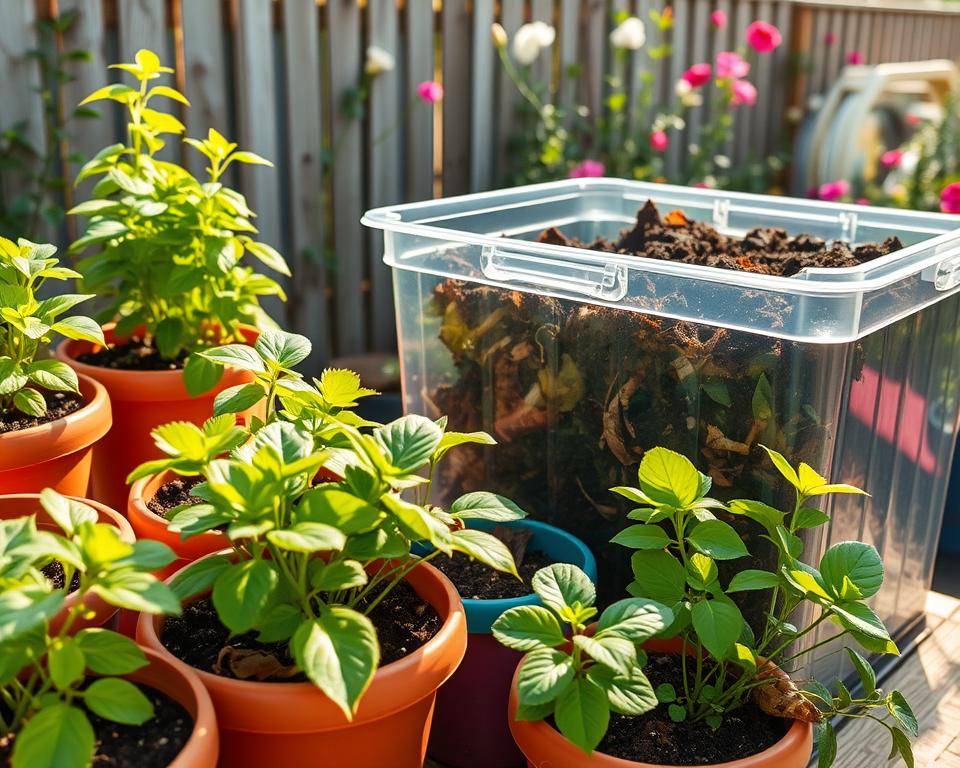
Using finished compost to make compost tea is a smart move. This liquid solution is full of good microbes. It gives your plants a nutrient boost and helps them grow strong roots.
Compost Tea: What Is It?
Compost tea is made by soaking finished compost in water. It’s great for giving plants a dose of microbes. These microbes help break down nutrients, making them easier for plants to use.
How to Make and Use Compost Tea
To make compost tea, you need a bucket, compost, and water. Mix 1 part compost with 5 parts water. Let it steep for 24-48 hours, stirring now and then.
After steeping, strain the liquid and throw away the solids. You can use the tea as a soil drench or foliar spray. It’s good to use it once a month for the best results.
Adding compost tea to your watering routine does more than just hydrate your plants. It gives them a nutrient-rich boost. This helps them grow strong and healthy. It’s a great way to use finished compost in potted plants to keep them thriving.
Fertilizing with Finished Compost
Fertilizing your potted plants with finished compost is easy and effective. It’s full of nutrients and makes the soil better. This makes it a great natural fertilizer.
Frequency of Application
How often to use finished compost as fertilizer depends on your plants and soil. Usually, you should reapply every 1-3 months. If your plants need a lot of food, you might need to do it more often.
Watch how your plants react to the compost. Too much can harm them. Finding the right amount is key.
Signs Your Plants Need More Nutrients
Knowing when your plants need more nutrients is important. Look for yellow leaves, slow growth, and less fruit or flowers.
If you see these signs, adding compost might help. But check other things like water, sunlight, and soil pH too.
| Signs of Nutrient Deficiency | Possible Causes | Compost Solution |
|---|---|---|
| Yellowing Leaves | Nitrogen or Iron deficiency | Apply finished compost to provide essential nutrients |
| Slow Growth | Lack of nutrients or poor soil structure | Mix compost into the soil to improve fertility and drainage |
| Poor Fruiting or Flowering | Insufficient nutrients or inadequate sunlight | Top dress with compost and ensure adequate sunlight |
Understanding when your plants need more nutrients and using compost can help them grow well. Regular use and watching your plants will make sure they get what they need.
Using Finished Compost for Seed Starting
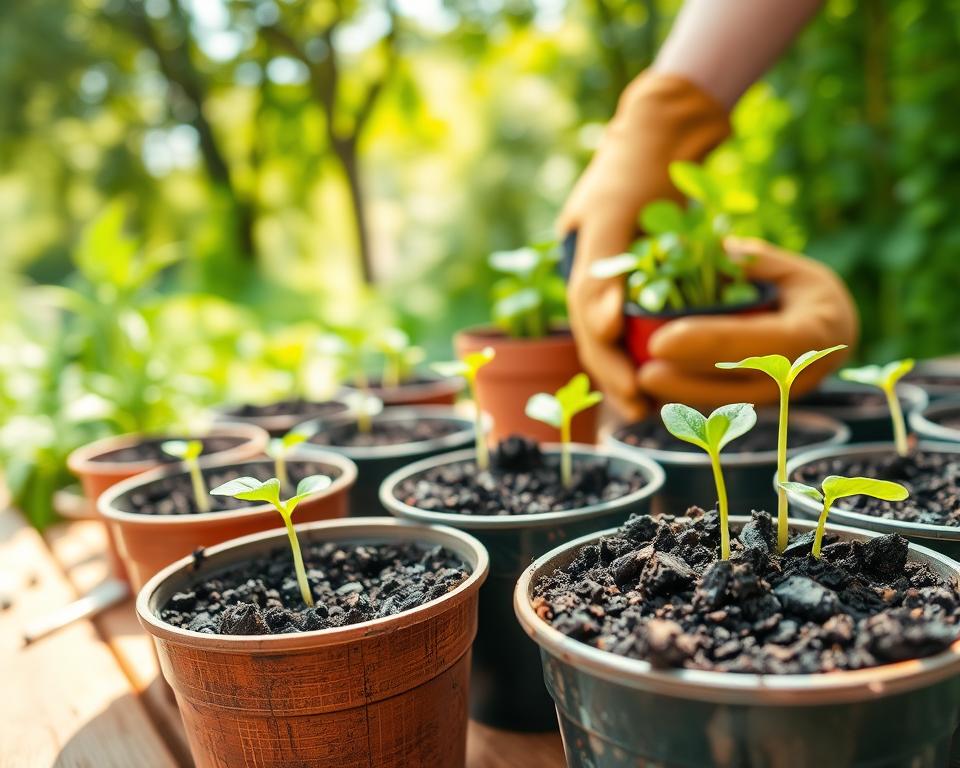
Starting seeds with finished compost can give them a healthy start. Finished compost is perfect for seed starting. It’s sterile and full of nutrients, helping seeds grow well.
Advantages for Seedlings
Using finished compost for seed starting has many benefits. It slowly releases nutrients that help seedlings grow. It also makes the soil better, helping roots grow and keeping water in.
Compost can also keep diseases and pests away from seedlings. This makes a healthier start for your plants. Adding finished compost to your seed mix gives your seedlings a great start.
Best Techniques for Seed Starting
To use finished compost for seed starting, mix it with peat moss or vermiculite. Aim for a mix of 20-30% compost. This mix balances nutrients and soil structure well.
When planting seeds, keep the compost mix moist but not too wet. Plant seeds at the right depth and keep the soil moist until they grow. Once they sprout, give them enough light and water. Then, move them to bigger pots or outside as they get bigger.
Maintaining Healthy Potted Plants with Finished Compost
Keeping potted plants healthy with finished compost is important. Finished compost gives plants the nutrients they need and makes the soil better. It’s key to know how to use it well and keep it up.
Regular Maintenance Tips
Regular care is essential for your plants to keep getting benefits from finished compost. Here are some tips:
- Check soil moisture often to avoid too much or too little water.
- Look for pests and diseases and act fast if you find any.
- Repot your plants when needed for fresh soil and a bigger pot.
- Check soil pH and adjust it if needed for best nutrient use.
For more tips on caring for your indoor plants, check out Compost Crew’s guide on dos and don’ts for.
Signs of Nutrient Deficiency
Even with regular care, plants can show signs of nutrient lack. Watch for:
- Yellow leaves, which mean a lack of nitrogen or other nutrients.
- Slow growth or weak stems, which could mean not enough phosphorus or potassium.
- Poor fruiting or flowering, which suggests not enough nutrients.
If you see these signs, you might need to change how often you use compost. Being quick to address nutrient needs helps keep your plants healthy and strong.
Troubleshooting Common Issues with Finished Compost
Using finished compost in potting soil can greatly help your plants. But, it’s important to quickly fix any problems that might come up. Finished compost can sometimes cause issues like pests, diseases, or not enough nutrients.
Identifying Problems
The first step is to figure out what’s wrong. Common problems include pest infestations, fungal diseases, and nutrient deficiencies. Check your plants often to spot any issues early.
If your plants aren’t doing well, it might be because of nutrient imbalances. Pests or diseases could also be caused by the compost if it’s not fully processed.
Solutions for Common Issues
After finding the problem, you can fix it. For pests, make sure your compost is fully broken down. This prevents pests from getting into your potting soil. If fungal diseases are a problem, improve air in the soil and might need to use a fungicide.
To fix nutrient imbalances, change how much compost you use. Too much can have too many nutrients, and too little might not help enough. Watching how your plants react to the compost and adjusting is important.
- Regularly check your plants for signs of stress or disease.
- Change the compost amount based on what your plants need.
- Make sure the soil breathes well to avoid fungal diseases.
Sustainable Gardening Practices with Finished Compost
Using finished compost in potted plants is a simple yet effective way to adopt sustainable gardening practices. By incorporating compost into container gardening, I can reduce waste, promote soil health, and support biodiversity in my garden.
Environmental Benefits
Composting in container gardening helps minimize the amount of organic waste sent to landfills. This approach also reduces the need for synthetic fertilizers, which can pollute waterways and harm ecosystems. By using finished compost, I can create a more environmentally friendly garden that thrives for years to come.
Promoting Biodiversity
Finished compost is rich in nutrients and beneficial microorganisms that support plant growth and health. By using compost as a potting medium or top dressing, I can encourage biodiversity in my garden, attracting beneficial insects and microorganisms that contribute to a balanced ecosystem. This approach to compost uses not only benefits my plants but also the environment.