

Summer heat can make our homes feel like ovens. Many of us worry about the cost and environmental impact of cooling our homes. Did you know the average American home uses over 900 kWh of electricity in summer? A lot of this goes to air conditioning.
I’ve found effective, eco-friendly cooling solutions that cut down on AC use. These can save you money and help the planet.
I’ll share my best tips for staying cool when it’s hot. You can make small changes to your daily life or try easy DIY projects. There are many natural ways to keep your house cool without losing comfort.
Key Takeaways
- Simple adjustments to your daily routine can significantly reduce the need for AC.
- Easy DIY projects can help keep your home cool.
- Eco-friendly cooling solutions are not only good for the environment, but also for your wallet.
- Reducing AC usage can lead to significant energy savings.
- Staying cool without AC is achievable with the right strategies.
Understanding the Heat: Why Our Homes Get Hot
Ever wondered why your home feels like an oven in summer? Knowing why is key to cooling it down.
The Science Behind Home Temperature
Many things affect your home’s temperature. This includes the materials used, the house design, and the outside environment. Heat gets in through conduction, convection, and radiation.
Conduction is heat passing through direct contact. Convection is heat moving with air. Radiation is heat passing through waves.
Let’s look at an example. A wall gets hot when it’s in sunlight. The sun’s rays heat the wall. Then, this heat moves through the wall to warm the room inside.
How Heat Affects Your Comfort
Heat makes our homes uncomfortable and can harm our health. It can cause dehydration and heat exhaustion. It also messes with our sleep and focus.
Here’s a table showing how different temperatures affect us:
| Temperature (°F) | Comfort Level | Health Effects |
|---|---|---|
| 75-78 | Comfortable | Minimal risk |
| 80-85 | Uncomfortable | Moderate risk of heat-related illnesses |
| Above 85 | Extremely uncomfortable | High risk of heat-related illnesses |
Understanding home temperature and its effects helps us cool our homes better. This knowledge guides us to use energy-efficient home cooling tips and sustainable cooling methods. It helps us keep our homes cool naturally.
Effective Ventilation Techniques for Cooling
To keep your home cool without air conditioning, good ventilation is essential. It helps move air and lower heat inside your home.
Opening Windows Strategically
One easy DIY heat reduction idea is to open your windows at the right time. Open them at night to let cool air in. Then, close them during the day and use curtains or blinds to block heat.
This works best in places where it gets cooler at night. It helps you use less air conditioning and keeps your home naturally cool.
Using Fans to Circulate Air
Ceiling fans and box fans are great for moving air around your home. They make it feel cooler, so you can turn up your air conditioner or use it less.
Here’s a comparison of different fan types:
| Fan Type | Effectiveness | Energy Consumption |
|---|---|---|
| Ceiling Fan | High | Low |
| Box Fan | Medium | Low |
| Pedestal Fan | Medium | Medium |
Using fans with your window strategy can make your home even cooler. For example, a box fan in a window can help remove hot air.
By using these green home cooling techniques, you can have a cooler home without relying too much on air conditioning. This makes your home more energy-efficient and good for the environment.
Harnessing the Power of Plants for Natural Cooling
Using plants for cooling is a simple trick that can really help. Plants cool the air by releasing moisture through evapotranspiration. This makes the air around them cooler.
Indoor plants are great because they clean the air and cool it down. Adding the right plants to your home can make it more comfortable. You won’t need to use air conditioning as much.
Indoor Plants that Help Lower Temperatures
Some plants are better at cooling the air than others. Here are a few:
- Snake Plant: It purifies the air and releases oxygen at night.
- Spider Plant: It’s easy to care for and cools the air well.
- Peace Lily: It humidifies and cools the air while cleaning it.
A study found that indoor plants can cool the air by up to 5 degrees Fahrenheit. They are a great way to cool your home naturally.
“The use of plants in interior design can significantly impact the indoor climate, making spaces feel cooler and more comfortable.”
Creating Shade with Outdoor Plants
Outdoor plants can also cool your home by providing shade. Planting trees or shrubs around your house blocks sunlight. This reduces heat gain.
| Plant Type | Shade Provision | Maintenance Level |
|---|---|---|
| Trees (e.g., Oak, Maple) | High | Medium |
| Shrubs (e.g., Boxwood, Holly) | Medium | Low |
| Vines (e.g., Clematis, Ivy) | High | High |
Choosing the right outdoor plants can make your home cooler and more energy-efficient. A little planning can go a long way in using plants for cooling.
The Role of Reflective Surfaces in Cooling
Reflective surfaces are key in cooling homes naturally. They help keep your home cool without AC. By adding reflective surfaces, you can cut down on heat gain and stay comfortable indoors.
Choosing Lighter Colors for Walls and Roofs
Using lighter colors on walls and roofs is a simple yet effective trick. Light colors reflect sunlight and heat, not absorb it. This keeps your home cooler. For example, a light roof can block more heat from entering, reducing cooling needs.
Benefits of Lighter Colors:
- Reduces heat absorption
- Decreases the need for air conditioning
- Enhances the overall energy efficiency of your home
Here’s a comparison of heat absorption rates for different roof colors:
| Roof Color | Heat Absorption Rate |
|---|---|
| Black | High |
| Dark Gray | Medium-High |
| Light Gray | Low-Medium |
| White | Low |
How Reflective Window Films Work
Reflective window films are another smart choice. They reflect sunlight and heat, keeping your windows cooler. These films work best on windows that get a lot of sun.
Advantages of Reflective Window Films:
- Reduces heat gain through windows
- Blocks UV rays, protecting furniture and flooring
- Enhances privacy during the day
By using reflective surfaces like light colors and window films, you can make your home cooler and more energy-efficient.
Insulation: Keeping Cool Air In
Insulation is key to keeping your home cool, which is important in the summer. It helps keep cool air inside and keeps heat out. This means you use less air conditioning and save on energy bills.
For more tips on staying cool this summer, check out 10 ways to stay cool this, which offers additional energy-efficient home cooling tips.
Importance of Proper Insulation
Proper insulation is vital for a sustainable cooling method in your home. It keeps your home at a steady temperature by blocking heat in summer and winter. This makes your home more comfortable and saves energy.
Insulation also cuts down on noise and can make your home healthier. It reduces moisture and mold risks.
DIY Insulation Tips for Beginners
If you’re new to insulation, start with simple DIY projects. Here are a few energy-efficient home cooling tips to help you:
- Check your attic for enough insulation and add more if needed.
- Seal gaps or cracks around windows and doors with weatherstripping or caulk.
- Use insulated curtains or drapes to block heat.
- Think about adding insulation to your walls, if you live in a hot area.
By using these sustainable cooling methods, you can cool your home without spending a lot or harming the environment.
Natural Cooling Through Water
Using water to cool your home is a smart way to avoid air conditioning. Water can make your living space more comfortable.
Water cools the air by evaporating. Adding water features to your home uses this natural cooling.
Utilizing Water Features in Your Home
Features like fountains or ponds cool the air. They work by evaporating water and cooling the area. This method is not only cool but also adds beauty to your home.
Think about adding a small fountain or pond. The sound of water also makes your home feel more peaceful.

The Benefits of Damp Cloths or Misting
Using damp cloths or misting systems is another smart idea. They cool the air by evaporation, just like water features. This is a simple way to beat the heat.
Misting systems are great in dry places. They cool the air and add moisture, making your home more comfortable. For a quick fix, try hanging damp cloths or using a spray bottle to mist the air.
| Cooling Method | Effectiveness | Ease of Implementation |
|---|---|---|
| Water Features | High | Moderate |
| Damp Cloths | Moderate | Easy |
| Misting Systems | High | Moderate |
These water-based cooling methods can make your home cooler without air conditioning. Whether it’s water features or damp cloths, there are many ways to use water’s cooling power.
“The use of water for cooling is an ancient practice that has been rediscovered in modern times as a sustainable and efficient method for regulating home temperatures.”
Adjusting Your Home’s Layout for Better Airflow
Improving your home’s layout is a cost-effective strategy for staying cool. A few simple changes can greatly enhance airflow and cut down on air conditioning needs.
Rearranging Furniture for Ventilation
One easy non-AC cooling hack is to rearrange your furniture for better ventilation. Move furniture away from windows and doors to clear the path for air. This small change can make a big difference in your home’s coolness.
Try creating a path for air to move around your home. For instance, opening doors between rooms can spread cool air more evenly. As they say, “A breath of fresh air can work wonders,” and rearranging your furniture can bring that fresh air into your living spaces.
“The way we furnish our homes can either trap the heat or invite the breeze. Let’s invite the breeze!”
Using Open Spaces Effectively
Open spaces, like hallways and living areas, are key for airflow. To make the most of them, keep these areas open and ensure doors and windows are aligned for a cooling cross breeze.
- Keep hallways clear to allow air to flow freely.
- Use area rugs to define spaces without blocking airflow.
- Position furniture to encourage air circulation.
By using these strategies, you can keep your home cool without air conditioning. A bit of creativity can turn your home into a cooler haven.
Choosing Thermally Efficient Curtains and Blinds
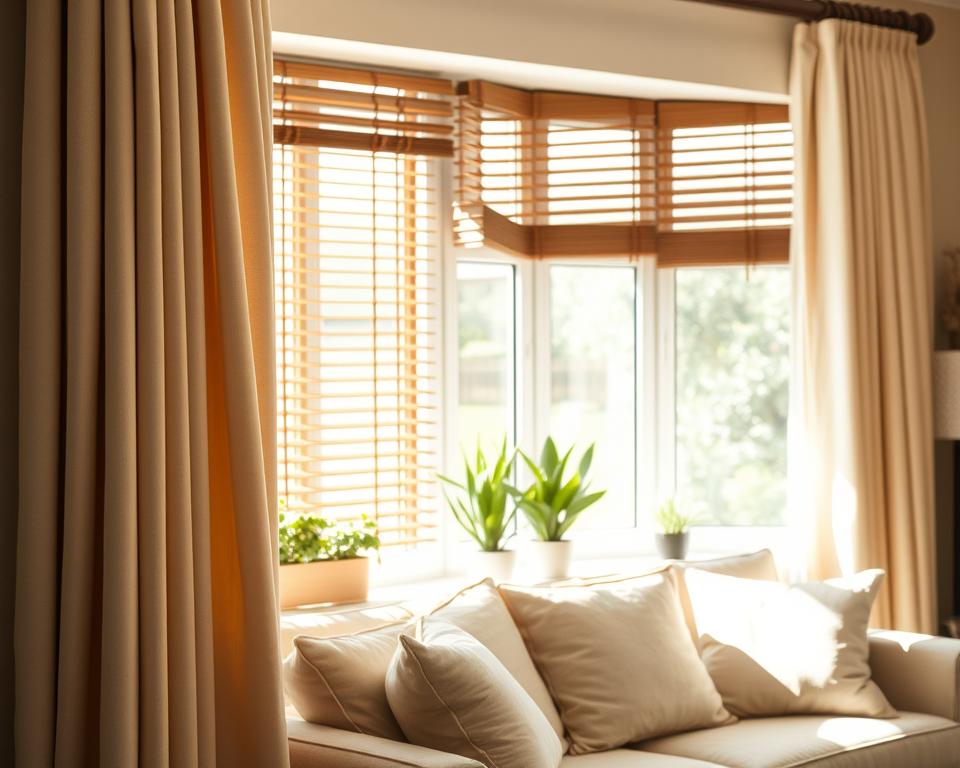
Keeping your home cool without AC is easy with the right curtains and blinds. These window treatments can block a lot of heat in summer. This makes your home cooler and more comfortable.
Best Fabrics for Blocking Heat
The fabric of your curtains and blinds is key to blocking heat. Thick, heavy fabrics like cotton, linen, or velvet work well. They block the sun’s rays effectively. Also, fabrics with a tight weave keep heat out better than loose ones.
For even better cooling, look for curtains or blinds with a reflective backing. This lining reflects sun rays, keeping your home cooler. Some also have insulating properties to keep the heat out.
How to Position Window Treatments
Where you place your curtains and blinds matters a lot. Close them during the hottest times, from 10 am to 4 pm. This helps block a lot of heat from entering your home.
Here are some tips for the best results:
- Choose curtains or blinds that fit well to block heat around the edges.
- Put curtains or blinds on all windows that get direct sunlight.
- Try using different window treatments together, like layered curtains and blinds, for better cooling.
By picking the right curtains and blinds and placing them well, you can keep your home cool without AC. This saves energy and is better for the environment.
Seasonal Maintenance to Optimize Cooling Methods
As summer gets closer, it’s important to keep your home cool naturally. Regular upkeep helps your home stay cool and saves energy.
Preparing for Summer
Before the heat hits, check your fans and vents. Make sure they’re working right. Also, look for air leaks around your windows and seal them if you find any. This can make a big difference in keeping your home cool.
Regular Maintenance for Long-Term Benefits
Keeping up with maintenance is essential for energy-efficient cooling. Check your home’s cooling features like reflective surfaces and insulation often. This way, you can stay cool without using air conditioning. It also helps your cooling systems last longer.
Following these seasonal tips can make your home cooler and more comfortable. Enjoy a cooler living space without breaking the bank.