
Starting your day in a green way can really help the planet. Did you know that a typical morning routine can generate a lot of waste? Things like disposable coffee cups and plastic toothbrushes add up fast.
I’ve found that adding eco-friendly morning habits to my day helps a lot. It not only cuts down on waste but also makes me feel better. By following a few sustainable living tips in the morning, I can make a big difference.
By adopting these habits, you can help make the world a greener place. In this section, we’ll look at why starting your day with a low-waste routine is so important.
Key Takeaways
- Reduce waste with eco-friendly morning habits
- Implement sustainable living tips in your daily routine
- Make a positive impact on the environment
- Start your day with a low-waste morning routine
- Create a more sustainable lifestyle
Understanding a Low-Waste Lifestyle
Exploring a low-waste morning routine means understanding the bigger picture of living waste-free. It’s about making choices that reduce our environmental impact. These choices start with our daily routines, including mornings.
What Does Low-Waste Mean?
Living low-waste means we try to make less waste. This includes using less, reusing items, and recycling. By doing this, we can greatly reduce waste in landfills and oceans.
For example, picking products with less packaging and buying in bulk helps. Avoiding single-use plastics is also key. It’s about being aware of what we buy and choosing sustainable options.
Benefits of Going Low-Waste
Living low-waste has many benefits for us and the planet. It helps reduce waste, saves resources, and cuts down on pollution. For us, it can mean saving money, feeling less stressed, and being more fulfilled.
Key Benefits of a Low-Waste Lifestyle:
| Benefit | Description |
|---|---|
| Environmental Conservation | Reduces landfill waste and conserves natural resources |
| Financial Savings | Buying in bulk and reducing consumption can save money |
| Reduced Stress | Living with fewer possessions can lead to a less cluttered, more organized life |
Myths About Low-Waste Living
There are many myths about living waste-free. Some think it’s too expensive or takes too much time. But, many waste-reducing actions are easy and don’t cost much, like using items again or making your own cleaners.
Another myth is that you need to change everything at once. But, starting with small changes, like a waste-free morning, can help. These small steps can lead to a more sustainable life over time.
Knowing the truth about low-waste living helps us make better choices. As we learn more about a waste-free morning routine, we see how every little change helps.
Preparing for a Low-Waste Morning
Starting your day with a low-waste morning routine is key to living more sustainably. Making a few easy changes can cut down on waste and make your morning greener.
First, take a look at your morning habits and see where you can cut waste. This might mean switching to eco-friendly sleepwear, organizing your tech, or planning breakfast better.
Choose Sustainable Sleepwear
Choosing sleepwear made from organic cotton or bamboo fabric is a smart start. These materials are comfy and better for the planet than synthetic fabrics.
Look for brands that focus on sustainability and fair labor. Choosing these brands helps reduce your morning’s environmental footprint.
Reduce Electronic Clutter
Too many gadgets and cables can add to morning waste. Try using fewer devices to simplify your morning.
Go for reusable and sustainable charging solutions like solar chargers or wireless pads. This cuts down on electronic waste.
Plan Your Breakfast
Planning your breakfast the night before can also help reduce waste. It stops you from buying things with lots of packaging.
Pick breakfast foods with minimal packaging like oats, fruits, or nuts. Use reusable containers to prepare meals and cut down on waste even more.
By following these tips, you can make your morning routine more mindful and eco-friendly. It’s good for the planet and sets a positive start to your day.
Eco-Friendly Personal Care
Switching to eco-friendly personal care is easy and helps the planet. A few simple changes can make a big difference. You’ll keep your skin and teeth healthy too.
Use Sustainable Skincare Products
Choosing sustainable skincare is a great first step. Look for products with natural ingredients and less packaging. Brands like Burt’s Bees and Lush have many options.
Try Zero-Waste Dental Care
Traditional dental care products waste a lot. Try bamboo toothbrushes and toothpaste tablets instead. They’re good for your teeth and the planet.
DIY Beauty Hacks
Making your own beauty products is fun and saves waste. Use coconut oil, honey, and oatmeal for face masks and scrubs. It’s a way to avoid packaging and tailor products to your skin.
Adding these eco-friendly habits to your routine helps the planet. Start small and make a big difference over time.
Streamlined, Low-Waste Breakfast Options
Making a few simple changes to your breakfast can greatly reduce morning waste. By choosing low-waste breakfasts, you help the environment and start your day right.
Embrace Plant-Based Foods
Plant-based foods are better for you and the planet. They make less waste than animal products. Adding more fruits, veggies, and whole grains to your breakfast is healthy and eco-friendly.
Benefits of Plant-Based Breakfasts include less greenhouse gas and water use. For instance, oatmeal with fruits and nuts is a tasty, green choice.
Utilize Reusable Containers
Reusable containers can greatly reduce single-use plastics and packaging waste. They’re perfect for breakfast on-the-go or leftovers. It’s a smart move.
Tips for Using Reusable Containers include picking durable, easy-to-clean ones. Glass containers are ideal for hot and cold foods because they’re safe and non-toxic.
Recipes for Quick, Low-Waste Meals
Quick, low-waste breakfasts are easy and tasty. Here are some ideas:
- Overnight oats with fresh fruits and nuts
- Avocado toast on whole-grain bread with a fried egg
- Smoothie bowls with frozen fruits, yogurt, and granola
Adding these low-waste breakfast ideas to your routine makes for a healthy meal. It also supports a greener lifestyle.
Efficient Coffee or Tea Rituals
Starting our day with a cup of coffee or tea is a special moment. It’s a chance to enjoy a daily ritual that’s also good for the planet. Let’s make our morning routines more eco-friendly.
One easy way to be more sustainable is by using reusable coffee filters. Unlike paper filters, they can be used many times. This cuts down on waste a lot.
Invest in Reusable Coffee Filters
Switching to reusable coffee filters is a simple step with big benefits. It reduces paper waste and lets your coffee taste better. You can find them in materials like stainless steel and cotton, which are easy to clean.
Opt for Bulk Tea or Coffee Purchases
Buying coffee or tea in bulk is another smart move. It means less packaging waste. For example, buying coffee beans in bulk from a local roaster helps a lot. Loose-leaf tea can also be bought in bulk and stored in reusable containers.
Marc and Angel say small daily changes can make a big difference. They help us feel better and protect the planet.
Alternatives to Single-Use Coffee Pods
Single-use coffee pods create a lot of waste. Millions of pods go to landfills every year. Using a French press or pour-over is a better choice. It’s good for the planet and makes your coffee taste better.
If you like the ease of pods, there are reusable ones. They let you choose your coffee and are good for the environment. Making these changes helps us enjoy our coffee while helping the planet.
Water Conservation Practices
Starting a low-waste lifestyle means using water wisely. Simple steps can make a big difference for our planet. Let’s look at how we can use water better every day.
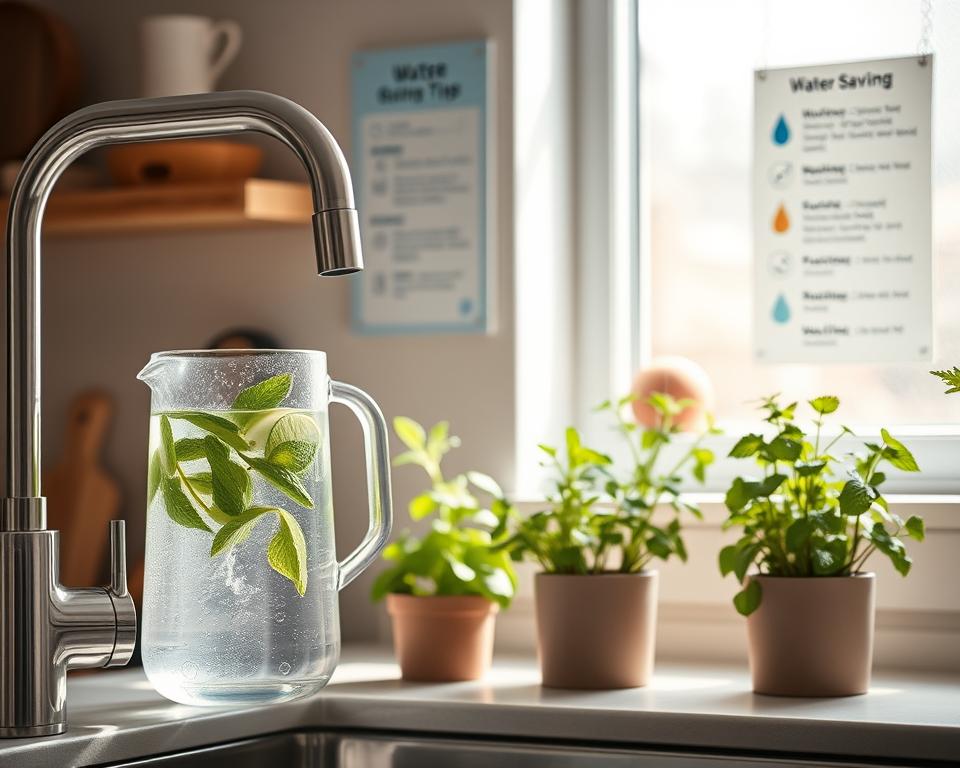
One easy way to save water is by using a reusable water bottle. Switching to a reusable bottle cuts down on plastic waste from bottled water. Look for bottles made from eco-friendly materials like stainless steel or glass.
Use a Reusable Water Bottle
Reusable water bottles are good for the planet and your wallet. They help you drink more water, stay hydrated, and cut down on waste.
Install a Water-Saving Faucet Aerator
Installing a water-saving faucet aerator is another smart move. These devices mix water with air, saving water without losing pressure. It’s a simple change that saves a lot of water over time.
Collect Rainwater for Plants
Collecting rainwater for your plants is a smart way to save water and money. A rainwater harvesting system lets you store rainwater for your garden. This cuts down on the need for tap water.
Let’s compare some water-saving methods:
| Method | Water Saved | Cost |
|---|---|---|
| Reusable Water Bottle | Up to 100% | $10-$30 |
| Water-Saving Faucet Aerator | Up to 50% | $5-$15 |
| Rainwater Harvesting System | Varies | $50-$500 |
By using these water-saving tips, we can all help reduce water use. Together, we can make a big difference for a greener future.
Mindful Commute Choices
Changing our daily commute is key to a greener lifestyle. Our daily trips offer a chance to help the planet. By choosing eco-friendly ways to get around, we can cut down on pollution and make the air cleaner.
Walk or Bike When Possible
Walking or biking is a simple way to be more sustainable. It cuts down on fossil fuel use and boosts our health. Starting the day with a walk or bike ride can clear our minds and keep our bodies healthy. Even if we can’t walk or bike all the way, mixing it with public transport is a good idea.
Use Public Transportation
Public transport is another great way to lessen our environmental impact. Buses, trains, and subways are better for the planet than driving alone. Planning our route and using apps for public transport can make it smoother and less stressful. Choosing public transport cuts down on emissions, saves money, and eases traffic.
Carpool or Share Rides
Carpooling or sharing rides with others is a smart move. It reduces the number of cars on the road, lowers emissions, and builds community. Using carpool lanes can also make our journey faster. Many places offer perks like better parking for those who carpool.
By adopting these mindful commute habits, we can greatly benefit the environment. It’s about making choices that support sustainability and reduce our ecological footprint.
Sustainable Clothing Choices
Living a minimalist lifestyle means we should think about our clothes. Making smart choices can really help the environment.
Capsule Wardrobe Essentials
Starting with a capsule wardrobe is a smart move. It’s a small set of clothes that can be worn many ways. This way, we buy less and waste less.
- Choose versatile, timeless pieces
- Invest in high-quality fabrics
- Consider the 30-wear rule: buy only what you will wear at least 30 times
Upcycle Old Clothing
Upcycling old clothes is another great idea. It gives old items a new life and helps the planet.
- Identify items that can be repurposed
- Get creative with DIY projects, such as turning old t-shirts into reusable bags
- Consider donating or swapping items with friends
Support Ethical Brands
Choosing ethical brands is key to a green fashion world. Look for brands that care about the planet and fair work.
For more tips on living green, like laundry without waste, check out The Environmental Blog.

By using these tips, we can lessen our harm to the planet. Choosing green clothes is a big step towards a better world.
Staying Motivated on Your Low-Waste Journey
As I keep working towards a greener lifestyle, staying motivated is key. Simple Habits for a Low-Waste Morning Routine have really helped. I’m excited to share tips on how to keep going.
Monitoring Progress
Tracking my progress is vital for me. I use a journal or an app to see how far I’ve come. It helps me stay on track with my green living goals.
Connecting with Like-Minded Individuals
Being part of low-waste community groups is great. We share tips and encouragement. It makes the journey fun and keeps me motivated.
Achieving Success with Realistic Goals
Setting realistic goals is important for lasting changes. I break big goals into smaller steps. This way, I can celebrate my wins and keep moving forward.