

Did you know a well-kept balcony garden can boost your home’s value and offer a peaceful retreat? But pests can ruin your garden paradise. I’ve found that eco-friendly gardening is the solution.
Using organic pest control methods keeps your plants safe and protects the environment and your health. These methods have transformed my balcony garden.
With the right techniques, you can have a lush garden without using harmful chemicals.
Key Takeaways
- Simple, effective methods to keep pests at bay
- The benefits of using natural pest control
- Tips for maintaining a healthy balcony garden
- Eco-friendly alternatives to chemical pesticides
- Personal strategies that have worked for me
Understanding Pest Problems on My Balcony
Identifying pests early is key to a healthy balcony garden. I always watch for signs of trouble while tending my plants. Knowing common pests helps me manage them effectively.
Identifying Common Pests
Common pests include aphids, spider mites, and mealybugs. Aphids are small and soft, causing curled leaves. Spider mites are tiny, leading to yellow leaves. Mealybugs are white and cottony, stunting plant growth.
| Pest | Description | Damage |
|---|---|---|
| Aphids | Small, soft-bodied insects | Curled or distorted leaves |
| Spider Mites | Tiny, spider-like insects | Yellowing or bronzing of leaves |
| Mealybugs | Small, white, cottony insects | Stunted growth |
Recognizing Signs of Infestation
Spotting infestation signs is critical for quick action. Look for pests, eggs, or plant damage. Also, watch for honeydew and webbing, signs of aphids and spider mites.
Being vigilant and acting early prevents pest problems. Regular checks and knowledge of pests keep my balcony garden healthy.
The Importance of Organic Pest Control
I’ve learned that organic pest control is key for my plants, the environment, and my family. Choosing organic methods keeps my balcony garden healthy. It also helps our planet.
Benefits for My Plants and the Environment
Organic pest control is great for my plants and the planet. It keeps the soil healthy, saves water, and supports many species. By using eco-friendly gardening, I help create a strong ecosystem. For more tips, check out this resource.
Safety for My Family and Pets
Sustainable pest management keeps my family and pets safe. Unlike harsh chemicals, organic methods are safe and kind to our planet. This lets me garden without harming my loved ones. By using organic gardening tips, I make a safe space for everyone.
Natural Remedies to Combat Pests
I’ve found that pest control on my balcony doesn’t need harsh chemicals. Instead, I use natural remedies that are gentle on my plants and effective against pests. These methods protect my plants and help create a healthier environment.
Homemade Insecticidal Soap
Making homemade insecticidal soap is a simple and effective DIY pest control method. It’s a non-toxic solution that’s easy to make and can be tailored for different pests. I mix mild dish soap with water and sometimes add vegetable oil to help it stick to leaves.
This mixture is then sprayed on the affected plants. It suffocates pests without harming the plants. The beauty of homemade insecticidal soap is its simplicity and safety. It’s a non-toxic pest solution that I can use without worrying about my family or pets. Plus, it’s affordable and reduces my need for commercial pest control products.
Diatomaceous Earth: A Powerful Ally
Diatomaceous earth (DE) is another natural remedy that works well. It’s made from the fossilized remains of tiny aquatic organisms called diatoms. When pests like slugs, snails, or insects crawl over DE, it dehydrates them, causing their death. It’s a simple, chemical-free way to protect my balcony garden.
To use DE effectively, I sprinkle it around the affected plants, avoiding inhaling it myself. While it’s safe for my plants and pets in the long term, it’s important to apply it carefully to avoid respiratory issues. DE shows the power of non-toxic pest solutions and is a valuable part of my balcony plant care routine.
By using these natural remedies, I’ve kept my balcony garden healthy and thriving. It’s rewarding to know I’m protecting my plants and helping the environment.
Attracting Beneficial Insects
As I care for my balcony garden, I’ve learned how vital beneficial insects are. They help control pests naturally, cutting down on chemical use. This keeps my plants healthy.
Beneficial insects are a gardener’s ally. They offer a natural way to fight pests. By welcoming these bugs, my garden stays lush and pest-free.
Ladybugs and Their Role
Ladybugs are great for gardens. They eat aphids and mites, protecting plants. To draw them in, I plant marigolds and calendulas. These flowers are full of pollen and nectar, ladybugs’ favorite snacks.
Lacewings and hoverflies also love these flowers. Lacewings devour aphids, while hoverflies and their larvae eat aphids too. By welcoming these insects, my garden stays balanced.
Planting Flowers to Support Pollinators
Planting various flowers is another way to attract beneficial insects. Sunflowers, zinnias, and cosmos are not just pretty. They also draw beneficial insects. These flowers offer food and shelter, helping control pests.
By using these eco-friendly gardening tips, my balcony garden thrives. Attracting beneficial insects is key. It helps manage pests and keeps my plants healthy.
As I tend to my garden, I see the value of natural pest repellents. They’re essential for a balanced ecosystem. With these strategies and other organic gardening tips, my garden stays healthy and pest-free.
Companion Planting for Pest Prevention
Companion planting is a key strategy for organic pest control in my balcony garden. It pairs plants that grow well together and resist pests. This approach helps me create a balanced ecosystem that naturally keeps pests away.
Effective Pairings for Balcony Gardens
Some plants are better together, improving growth and fighting pests. For instance, marigolds help protect tomatoes from nematodes. Basil keeps aphids away and makes tomatoes taste better. Chives and roses are another great pair; chives ward off aphids and other pests from roses.
Choosing the right companion plants for balcony gardens is key. Trailing nasturtiums spill over containers, repelling aphids and whiteflies. Dwarf marigolds are perfect for small spaces, keeping pests away.
How Companion Plants Deter Pests
Companion plants fight pests in different ways. Some release chemicals that repel or kill pests. Others make nearby plants healthier, making them less likely to get infested. For example, garlic and chives have strong scents that keep aphids and spider mites away.
Some plants also attract beneficial insects that eat pests. Dill and fennel draw in ladybugs and lacewings, which eat aphids and other pests. By adding these plants to my garden, I invite helpful insects to stay.
Essential Oils as Natural Deterrents
I’ve found that essential oils are great for keeping pests away from my balcony plants. These oils come from plants and are safe for the environment. They’re a good way to fight off common garden pests without using harmful chemicals.

Effective Oils for Common Pests
Some essential oils work well against certain pests. For example:
- Lavender oil keeps moths, flies, and mosquitoes away.
- Peppermint oil helps fight aphids, spider mites, and ants.
- Lemongrass oil controls mosquitoes and other bugs.
You can use these oils alone or mix them for a strong repellent. It’s important to pick the right oil for the pests you’re dealing with.
How to Use Essential Oils Safely
Even though essential oils are natural, they need to be used carefully. Here’s how:
- Dilute the oils: Mix a few drops of essential oil with water or a carrier oil to avoid burning plant leaves.
- Test on a small area: Before applying the oil mixture to your entire plant, test it on a small, inconspicuous area to check for any adverse reactions.
- Avoid spraying during peak sun hours: To prevent leaf scorch, spray your plants with essential oil mixtures in the early morning or late evening.
Using essential oils in your organic gardening can help control pests. It keeps your balcony garden healthy and balanced.
Maintaining Plant Health to Prevent Infestations
Keeping my balcony plants healthy is key to stopping pests. By taking good care of them, I lower the chance of pests showing up. This means regular watering, pruning, and cleaning.
Watering Wisely
It’s important to water plants right, not too much. I check the soil before watering. A good potting mix helps keep the soil dry.
Tips for Effective Watering:
- Water in the morning to cut down on evaporation.
- Don’t splash water on leaves to avoid fungal diseases.
- Use water at room temperature to avoid shocking the roots.
Pruning and Cleaning for Health
Regular pruning and cleaning keep plants looking good and pest-free. Removing dead leaves stops pests from hiding in my plants.
Pruning Techniques:
- Take off dead or dying leaves or stems.
- Trim back long branches to keep shape.
- Use clean, sharp tools to avoid spreading disease.
By following these steps, my plants stay healthy and pest-free. This way of caring for plants is good for the environment and follows organic gardening tips.
Creating an Inviting Eco-System
My gardening style focuses on making a welcoming space that keeps pests away. I use a mix of methods to balance my balcony’s ecosystem.
Building a Habitat for Beneficial Wildlife
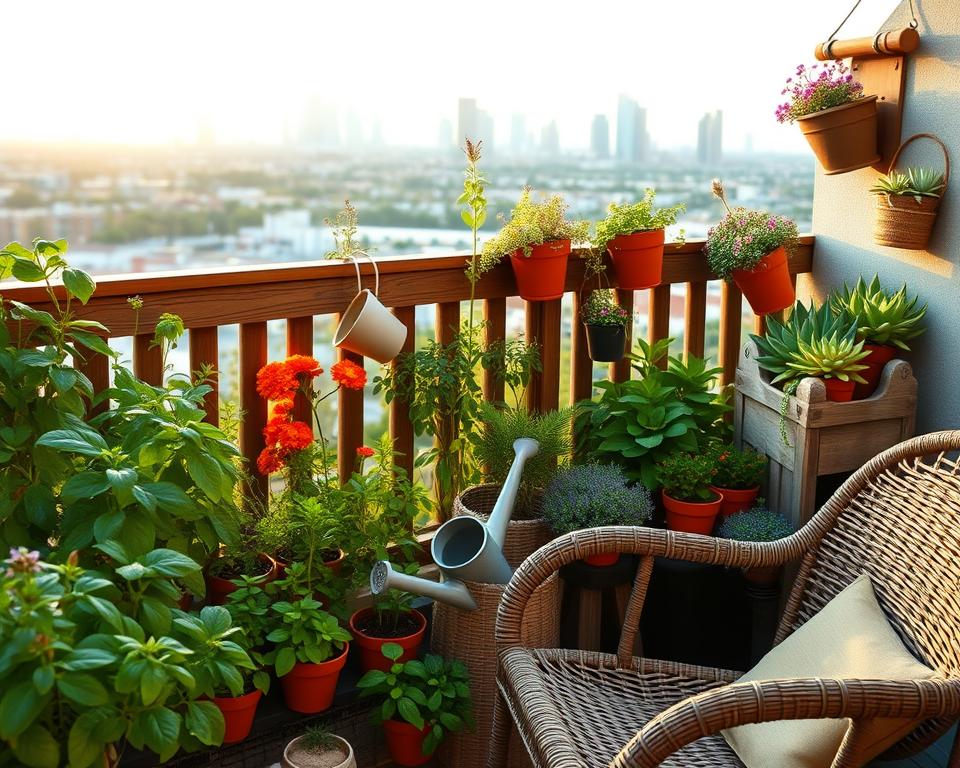
To draw in helpful insects and wildlife, I make my balcony a home. This is done by adding various plants that offer shelter, food, and places to breed for these creatures.
For instance, marigolds and nasturtiums keep pests away from my plants. They also attract ladybugs and other beneficial insects.
Implementing a Balanced Plant Diet
Having a variety of plants is key to a healthy garden. By mixing different types of plants, my balcony garden can fight off pests and other problems.
I mix flowering plants, herbs, and leafy greens. This variety attracts many beneficial animals, from bees to insects that fight pests.
| Plant Type | Beneficial for Wildlife | Pest Control Benefits |
|---|---|---|
| Marigolds | Yes | Repels nematodes and other pests |
| Nasturtiums | Yes | Repels aphids, whiteflies, and other pests |
| Basil | Yes | Repels aphids and other pests |
With these methods, my balcony becomes a thriving space. It supports my plants’ health and keeps pests away naturally.
When to Seek Professional Help
DIY pest control and non-toxic solutions can work well for balcony pests. But, there are times when you need a pro. If organic methods don’t stop pests, it’s time to call for help.
Persistent Infestations
Seeing pests again and again, or noticing a lot of plant damage, means you need help. Pests seen during the day show a big problem. A pest control service can solve these issues.
Choosing the Right Service
When picking a pest control service, look for eco-friendly options. They should use methods that protect good bugs and the environment. Choosing a service that fits your values keeps your garden safe for plants and wildlife.