

Did you know that household appliances use nearly 20% of the average American home’s energy? Refrigerators are among the biggest energy users. Making your refrigerator more energy-efficient is good for the planet and saves money on bills.
I’ll show you easy ways to improve your refrigerator’s performance and cut down on energy use. A few tweaks and smart usage can make a big difference.
In this article, we’ll look at practical tips for keeping your fridge in top shape. We’ll also cover how to adjust settings and ensure it runs efficiently.
Key Takeaways
- Simple maintenance can significantly improve your refrigerator’s energy efficiency.
- Adjusting temperature settings can make a big difference in energy consumption.
- Proper loading and unloading of your refrigerator affects its performance.
- Regularly checking and replacing worn-out seals is critical.
- Understanding your refrigerator’s features can help optimize its energy use.
Understanding Energy Efficiency in Refrigerators
Using energy-efficient refrigerators can cut down your utility bills and help the environment. It’s key to know what energy efficiency means for refrigerators.
What is Energy Efficiency?
Energy efficiency in refrigerators means they use less power but keep things cool. They use new tech and designs to cut down on energy waste. Energy-efficient refrigerators use less power without losing cooling power.
Benefits of an Energy-Efficient Refrigerator
Energy-efficient refrigerators offer many benefits. They lower your energy bills and help the planet. They use less energy, which means less strain on power plants that often use fossil fuels.
| Feature | Standard Refrigerator | Energy-Efficient Refrigerator |
|---|---|---|
| Energy Consumption | Higher | Lower |
| Environmental Impact | Greater carbon footprint | Reduced carbon footprint |
| Operating Costs | Higher utility bills | Lower utility bills |
By using energy-efficient refrigerators, you help reduce energy use and support sustainability at home.
Choosing the Right Refrigerator
Finding the right refrigerator is the first step to an energy-efficient kitchen. With many models out there, it can be hard to choose. But, knowing about Energy Star certification and the right size can help a lot.
Energy Star Certification Explained
Energy Star is a label for energy-efficient appliances. The U.S. Environmental Protection Agency sets these standards. To get this label, appliances must use less energy than usual but work well.
When you’re looking for a new fridge, check for the Energy Star label. This ensures you’re getting a model that saves energy. For more details, visit the Energy.gov website.
Benefits of Energy Star Certification:
- Less energy used
- Lower bills
- Good for the environment
Size Matters: Choosing the Right Capacity
Getting a fridge that’s just the right size is key for energy efficiency. A fridge that’s too big wastes energy, and one too small might not keep food cold enough. Think about your household size and how much food you buy.
| Household Size | Recommended Capacity (cu. ft.) |
|---|---|
| 1-2 people | 8-12 |
| 3-4 people | 14-18 |
| 5 or more people | 20 or more |
Choosing a fridge that fits your needs means better performance and less energy waste.
Ideal Refrigerator Temperature Settings
Adjusting your refrigerator’s temperature is a simple way to improve its performance. The right temperature keeps your food fresh and safe. It also makes your appliance work better.
Recommended Temperature for Optimal Performance
The best refrigerator temperature is below 40°F (4°C). The freezer should be at 0°F (-18°C). Most modern fridges have thermometers to help you adjust the temperature.
To get the best performance and reduce refrigerator energy usage, aim for a temperature between 37°F (3°C) and 39°F (4°C).
How Temperature Affects Energy Consumption
The temperature of your fridge affects how much energy it uses. A lower temperature means more work for the fridge, using more energy. A higher temperature can cause food to spoil faster and pose health risks.
By keeping the temperature in the optimal range, you can save money on bills. You also help the environment.
Organizing your fridge’s contents is also key to saving energy. Make sure there’s good airflow and don’t overload it. This boosts your fridge’s performance and efficiency.
Proper Placement of Your Refrigerator
Where you put your refrigerator matters a lot. It affects how well it works and how long it lasts. A good spot can save energy and extend its life.
Find the Best Location in Your Kitchen
Think about your kitchen’s layout and how people move around. Your fridge should be in a place where air can flow easily. This means it should not be too close to walls or other appliances.
- Make sure there’s enough room around the fridge for air to move.
- Don’t put it in a corner or against a wall that gets a lot of sunlight.
- Think about how close it is to other appliances that make heat, like ovens and dishwashers.
Avoid Heat Sources to Enhance Efficiency
Heat can make your fridge work harder. When it’s hot, your fridge uses more energy to stay cool.
Tips to avoid heat sources:
- Keep your fridge away from direct sunlight and heat-emitting appliances.
- Make sure your kitchen has good airflow to prevent heat buildup.
- Think about where your fridge is in relation to your kitchen’s heating vents.
Choosing the right spot for your fridge and staying away from heat can make it more efficient. This can also lower your energy bills.
Keeping Your Refrigerator Clean and Maintained
To make your refrigerator more energy-efficient, cleaning it regularly is essential. A clean fridge keeps food fresh longer and uses less energy. This makes it a eco-friendly practice that’s simple to follow.
Importance of Regular Cleaning
Cleaning your fridge often is key to removing dust, dirt, and bacteria. These can make your fridge work harder and use more energy. By keeping it clean, you can significantly improve its efficiency and extend its life.
- Remove all contents and wipe down shelves and walls with a mild detergent.
- Check and replace worn-out door seals to prevent cold air from escaping.
- Clean the drain pan and ensure it’s properly aligned.
How to Clean Coils for Better Efficiency
Cleaning the condenser coils is vital for better efficiency. Dirty coils can make your fridge use up to 30% more energy. Here’s how to clean them:
- Unplug your refrigerator or switch off the power at the circuit breaker.
- Locate the condenser coils, usually found at the back or bottom of the refrigerator.
- Use a vacuum cleaner or a specialized coil cleaning brush to gently remove dust and dirt.
- Once clean, plug the refrigerator back in and check its performance.
By following these easy steps, you can make sure your fridge works its best. This saves you money on energy bills and helps the environment. Regular upkeep is essential for maximizing refrigerator energy efficiency and adopting eco-friendly refrigerator practices.
Organizing Your Refrigerator Smartly
Start by organizing your fridge to save energy. A tidy fridge keeps food fresh and boosts energy efficiency. Simple steps can make your fridge work better.
The Best Way to Store Fresh Produce
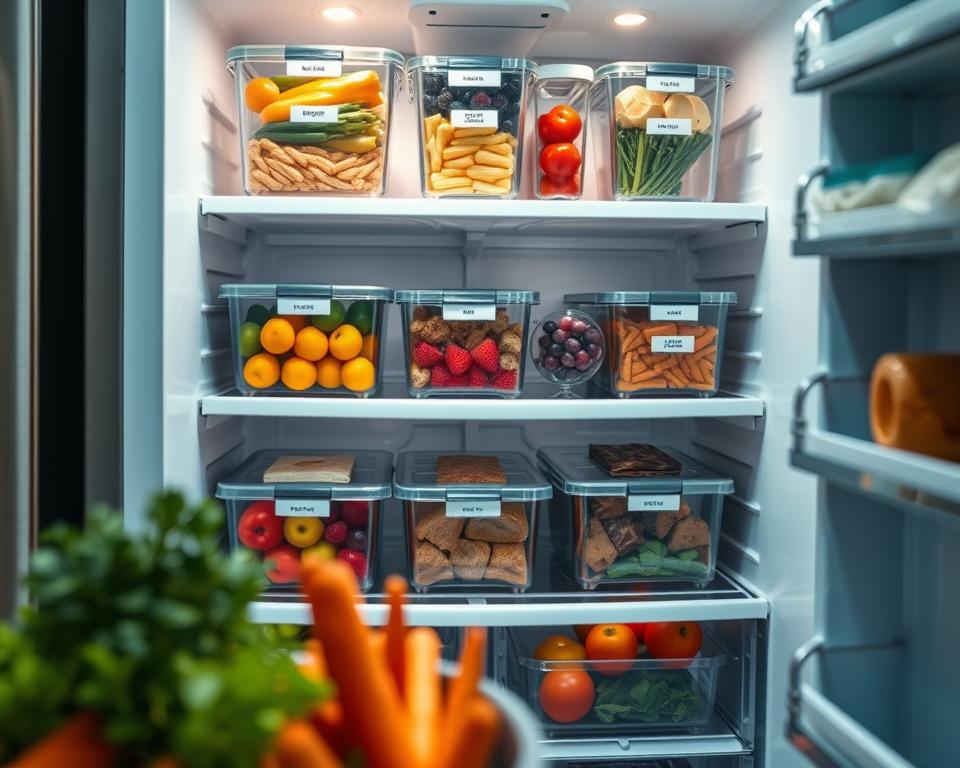
Storing produce right is key to keeping it fresh. Store fruits and veggies in separate spots to control humidity. Leafy greens need moisture, while fruits like apples prefer dry air.
Keep produce away from the fridge walls to avoid freezing. Use breathable bags or containers for the best storage.
Avoiding Overcrowding for Better Airflow
Don’t overfill your fridge to save energy. A crowded fridge blocks air, making it work harder. This wastes energy and can spoil food.
Regularly toss expired or bad food to keep things tidy. You should see all items without moving anything. A cluttered fridge wastes energy, experts say.
Organizing your fridge well saves energy and money. It also makes your fridge last longer.
Using Energy-Saving Features
One easy way to make your fridge more energy-efficient is to use its built-in energy-saving features. Today’s fridges have special settings and modes. These help cut down on energy use without losing performance.
Utilizing the Vacation Mode
Many fridges have a “vacation mode” or “energy-saving mode.” This mode cuts down energy use when you’re away for a while. Here’s how to use it:
- Look in your user manual to see if your fridge has this feature.
- Follow the manufacturer’s instructions to set it up before you leave.
- Think about how long you’ll be away. For short trips, you might not need to turn it on.
Benefits of Smart Thermostat Features
Some fridges have smart thermostat features. They adjust the temperature based on your habits and preferences. The good things about these features are:
- Enhanced Energy Efficiency: They help lower energy use by adjusting the temperature.
- Improved Food Preservation: They keep your food fresh for longer by keeping the right temperature.
- Remote Monitoring and Control: You can check and change settings from your phone. This is handy and flexible.
Using these energy-saving features can really help cut down on power use. It’s good for your wallet and the planet too.
Understanding Energy Consumption Patterns
Knowing how your fridge uses energy is key to making it more efficient. By understanding your fridge’s energy habits, you can cut down on energy bills and help the environment.
Tips for Tracking Energy Usage
To track your fridge’s energy use, start by looking at your utility bills. You can also use a smart meter or a device that plugs into your fridge’s outlet to measure energy use directly.
Here are some tips to track energy use well:
- Watch your fridge’s energy use for a month to spot patterns.
- Compare your fridge’s energy use with other kitchen appliances.
- Change your usage habits based on what you learn.
Recognizing Energy Vampires in Your Kitchen
‘Energy vampires’ are appliances that use energy even when off or in standby. In your kitchen, these include microwave ovens, coffee makers, and your fridge’s ice maker or water dispenser.
To find energy vampires, look for devices with:
- LED displays or clocks
- Remote controls
- Continuous charging functions
| Device | Standby Power Consumption (Watts) | Annual Energy Cost ($) |
|---|---|---|
| Coffee Maker | 2-5 | 5-15 |
| Microwave Oven | 3-7 | 8-20 |
| Refrigerator Ice Maker | 1-3 | 3-10 |
By tackling these energy vampires, you can reduce refrigerator energy usage and kitchen energy use. This makes your home more energy-efficient.
Regular Maintenance for Longevity
Keeping your refrigerator in good shape is key for its efficiency and life span. Regular care makes sure it works well and saves energy. Simple habits can make your fridge last longer.
Scheduling Professional Inspections
While you can do some upkeep yourself, sometimes you need a pro. Experts can spot problems early, keeping your fridge efficient. Get a pro to check it at least once a year.
They’ll look for leaks, faulty thermostats, and blocked air vents. Fixing these issues early saves money and keeps your fridge efficient.
| Inspection Item | Description | Benefit |
|---|---|---|
| Refrigerant Leak Check | Identifying leaks in the refrigerant system | Prevents energy loss and reduces environmental impact |
| Thermostat Check | Ensuring the thermostat is functioning correctly | Maintains optimal temperature, enhances efficiency |
| Air Vent Cleaning | Cleaning clogged air vents | Improves airflow, reducing strain on the refrigerator |
DIY Maintenance Tips
There are also things you can do yourself to keep your fridge in top shape. Clean the coils, check the door seals, and make sure there’s enough space around it.
- Clean the condenser coils every six months to improve efficiency.
- Check door seals for signs of wear and tear, replacing them if necessary.
- Ensure there’s adequate space around the refrigerator for proper airflow.
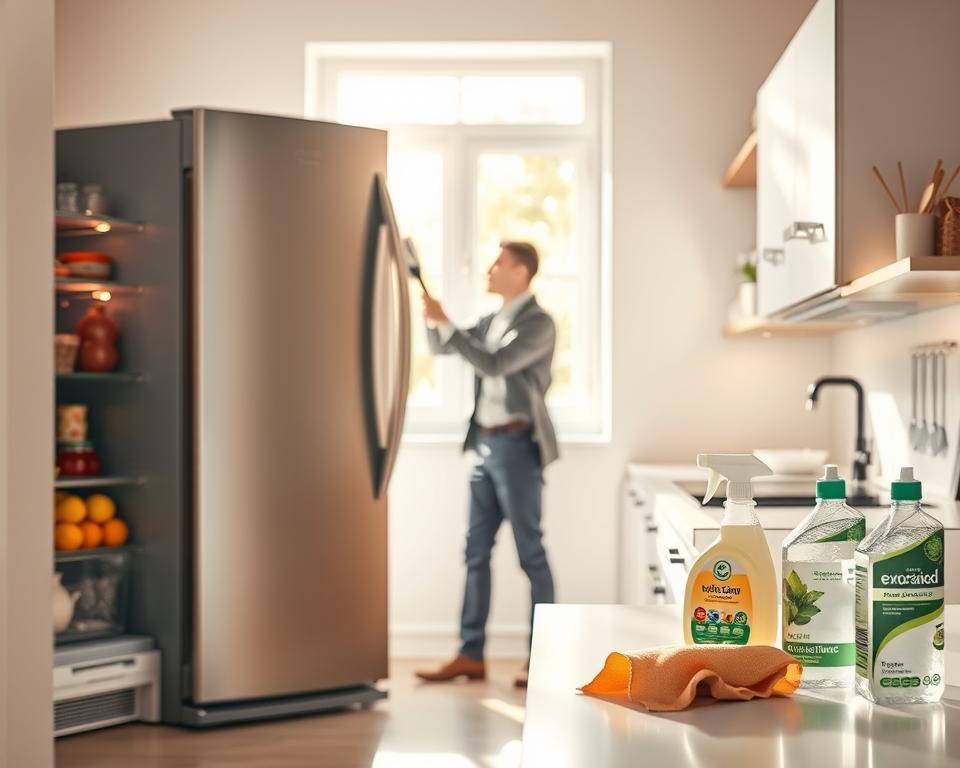
By doing both professional checks and DIY tasks, you can make your fridge more efficient and last longer. This approach is good for your wallet and the planet.
Investing in Refrigerator Upgrades
To make your fridge more energy-efficient, think about a few upgrades. Upgrading parts can make your fridge work better and last longer.
Upgrading Door Seals
One easy upgrade is to replace the door seals, or gaskets. Old seals let cold air out, making your fridge work harder and use more energy. Here’s why upgrading is good:
- Improved Energy Efficiency: New seals keep cold air in, making your fridge work less hard.
- Better Temperature Control: A tighter seal helps your fridge keep a steady temperature.
- Reduced Energy Bills: By keeping cold air in, you’ll save money on energy costs.
To get new door seals, buy them from your fridge’s maker or a third-party. Make sure they fit your model right.
Consider LED Lighting for Your Fridge
Think about switching to LED lights for your fridge. LEDs use less energy and last longer than old bulbs. Here’s why LEDs are a good choice:
- Energy Efficiency: LEDs use much less energy, saving you money on bills.
- Longevity: LEDs can last up to 50,000 hours or more, so you won’t need to replace them often.
- Cool Operation: LEDs don’t get hot, helping keep your fridge cool.
When picking LED lights, make sure they fit your fridge. Check your manual or call the maker for help.
Upgrading your fridge can make it work better, use less energy, and last longer. Regular care and these upgrades will keep your fridge running well for years.
Know When to Replace Your Refrigerator
As your refrigerator gets older, it’s key to know when it’s time for a new one. This is to keep your energy bills low. If you’re not sure, this section will help you see when it’s time to upgrade.
Signs of an Inefficient Refrigerator
An old fridge can cost you more money and harm the planet. Here are signs it’s time for a new one:
- Your refrigerator is more than 10 years old.
- It’s not keeping the right temperature.
- You see your energy bills going up.
- It makes strange noises.
- There’s wear and tear, like broken seals or rust.
If you see any of these signs, it’s time to look for a new fridge. For more tips on choosing a new one, check out this guide.
Benefits of Upgrading to Newer Models
Getting a new fridge can save you money and energy. It also means better performance. Newer models have smart tech and energy-saving features.
Key benefits of upgrading include:
- Lower energy bills thanks to better efficiency.
- Better performance and reliability.
- Advanced features for keeping food fresh.
- A smaller environmental impact.
Conclusion: Simple Steps Towards Energy Efficiency
Optimizing your refrigerator for energy efficiency is easy and can cut down your energy use. By following the tips shared, you can make your kitchen more eco-friendly and save money.
Key Strategies for Energy Efficiency
To get your fridge working better, focus on the right temperature, regular upkeep, and smart storage. Keeping your fridge at the correct temperature and cleaning it often can really help. Also, organizing your fridge for better airflow and using energy-saving features boosts its efficiency.
Take the First Step Today
Now you know how to make your fridge more energy-efficient. It’s time to start making these changes. Begin by checking your fridge habits and making small tweaks, like adjusting the temperature or cleaning the coils. Every little change adds up and can lead to big energy savings. By doing these simple things, you help the planet and lower your bills.