

A greasy oven is not just an eyesore; it’s a health concern. Food residue and grime can smoke when you cook, contaminating your meals with harmful particles. Cleaning your oven naturally is a safer, eco-friendly alternative to harsh chemicals.
I’ve discovered that a sparkling oven is achievable with simple, non-toxic methods. In this article, I’ll share my favorite techniques for eco-friendly oven cleaning, making the process easy and enjoyable. By the end, you’ll be equipped to keep your oven clean and chemical-free.
Key Takeaways
- Simple, non-toxic methods for oven cleaning
- Eco-friendly alternatives to harsh chemicals
- Easy-to-follow techniques for a sparkling oven
- Benefits of natural oven cleaning for health and environment
- Step-by-step guide to achieve a chemical-free oven
Understanding the Importance of Natural Cleaning
Cleaning your oven naturally is more than avoiding harsh chemicals. It’s about making your home safer. Natural cleaning is good for our health and the planet.
Benefits of Cleaning Without Chemicals
Natural cleaning has many benefits over chemical cleaners. It’s environmentally friendly, which means less harm to our ecosystems. Plus, natural cleaners are often cost-effective and use common pantry items.
“The use of natural cleaning products is a key step to reduce our ecological footprint and make our homes healthier.”
Some main benefits include:
- Less exposure to toxic chemicals
- Lower harm to the environment
- Save money on cleaning products
Health Implications of Chemical Cleaners
Chemical cleaners can harm our health in many ways. They can cause breathing problems and skin irritation. The fumes from these products are dangerous, even more so in small, closed spaces like kitchens.
| Chemical Cleaner | Potential Health Risk |
|---|---|
| Oven cleaners with lye | Skin and eye irritation, respiratory problems |
| Aerosol sprays | Respiratory issues, neurological effects |
Choosing natural cleaning methods can greatly lower these risks. This makes your home a healthier place for you and your family.
Common Natural Cleaning Ingredients
For a cleaner oven without harsh chemicals, some natural ingredients are great. They are effective, eco-friendly, and safe for your family.
Natural Cleaning Powerhouses include white vinegar, baking soda, and lemon juice. Each has unique benefits for cleaning your oven.
White Vinegar: The Versatile Cleaner
White vinegar is a versatile and effective cleaner. It dissolves grease and grime without leaving harmful residues. Its acidity breaks down tough stains, making cleaning easier.
To clean with white vinegar, mix it with water in a spray bottle. Spray inside the oven and let it sit before wiping clean. This keeps your oven clean between deep cleans.
Baking Soda: A Powerful Abrasive
Baking soda is a powerful natural cleaning agent. It acts as an abrasive to remove tough stains and grime. It’s gentle yet tough on grime, perfect for oven cleaning.
To use baking soda, mix it with water to make a paste. Apply it to the oven interior and let it sit overnight. Wipe clean with a damp cloth the next day. This method is great for deep cleaning and removing stubborn stains.
Lemon Juice: A Natural Degreaser
Lemon juice is a natural degreaser. It cuts through grime and leaves a fresh scent. The acidity in lemon juice dissolves grease, making cleaning easier.
Use lemon juice by squeezing it onto a cloth and wiping down surfaces. For tough grime, mix lemon juice with baking soda to create a paste. This combo is effective for removing stubborn grime and leaving a fresh smell.
Using these natural ingredients in your cleaning routine keeps your oven clean and grime-free. You avoid harsh chemicals and protect your family.
- White vinegar for dissolving grease and grime
- Baking soda for removing tough stains
- Lemon juice for degreasing and freshening
These natural ingredients are not just for oven cleaning. They can be used throughout your home for various tasks.
Preparing Your Oven for Cleaning
Before you start cleaning, make sure your oven is ready. This step helps your cleaning go smoothly and keeps you safe.
Removing Racks and Accessories
The first thing to do is take out all racks and accessories. This makes it easier to clean inside and lets you focus on each part. It’s key for a natural oven cleaning job well done.
Just pull out the racks and accessories and put them aside. You can soak them in soapy water or use a natural cleaning solution to get rid of food bits. This step is essential for a deep clean.
Creating a Cleaning Schedule
Having a cleaning schedule is important to keep your oven clean. Choose a frequency that fits your life, like after every use, weekly, or monthly. Sticking to it makes cleaning easier and keeps your oven in top shape.
Think about how often you use your oven to decide how often to clean it. If you cook a lot, you might need to clean it more. Use your calendar or set reminders to stay on track. With eco-friendly oven cleaning as part of your routine, it becomes easier.
By following these steps and keeping up with a cleaning schedule, your oven will stay clean and work well. This not only improves your oven’s performance but also makes cooking healthier. Remember, How to Clean Your Oven Naturally Without Harsh Chemicals begins with good preparation and regular upkeep.
DIY Baking Soda and Vinegar Paste
Baking soda and vinegar are common kitchen items. They can make a strong oven cleaner. This homemade solution is good for the environment and safe for families.
Mixing the Ingredients
To make the paste, you need baking soda and vinegar. Use 1 cup of baking soda and enough vinegar to make a paste. Adjust the amounts based on your oven’s size and grime level.
Mix the baking soda and vinegar in a bowl until it’s smooth and thick. The mixture might fizz a bit because of the chemical reaction.
Application Techniques for Maximum Effect
Spread the paste on your oven’s interior with a spatula or your hands. Make sure to cover all dirty spots well. For really tough grime, let it sit overnight before cleaning.
The next day, wipe away the grime and paste with a damp cloth or sponge. For any hard spots, gently scrub with a soft scrubber. Then, rinse your oven surfaces with clean water to remove any leftover paste.
Using a baking soda and vinegar paste is a simple, effective, and chemical-free way to clean your oven. Regular use can keep your oven looking new without harming you or the environment.
Utilizing Lemon and Water Solutions
Lemon juice is great for cleaning ovens because it breaks down grease. Mixing it with water makes a homemade cleaner. This method cleans your oven well and makes it smell fresh.
Making Your Lemon Cleaning Solution
To create your lemon cleaner, you’ll need:
- 2 lemons
- 1 cup of water
Cut the lemons in half and squeeze the juice into a bowl. Mix the juice with water in a spray bottle. You can change the water amount to adjust the solution’s strength.
Tip: Adding lemon halves to the water boosts the citrus flavor and cleaning power.
Best Practices for Application
Make sure your oven is cool before using the lemon solution. Spray it inside the oven, covering all surfaces. Let it sit for about 30 minutes to break down grime.
“The acidity in lemons helps break down grime, making it easier to wipe away tough stains.” – Cleaning Expert
After sitting for a while, wipe down the oven surfaces with a damp cloth or sponge. For hard stains, you might need more effort or repeat the process.
“Using lemon and water to clean my oven has been a game-changer. It’s non-toxic, easy, and leaves my oven smelling great.”
By following these steps and using lemon and water, you can clean your oven safely. This method is a perfect example of green oven cleaning.
Steam Cleaning Your Oven Naturally
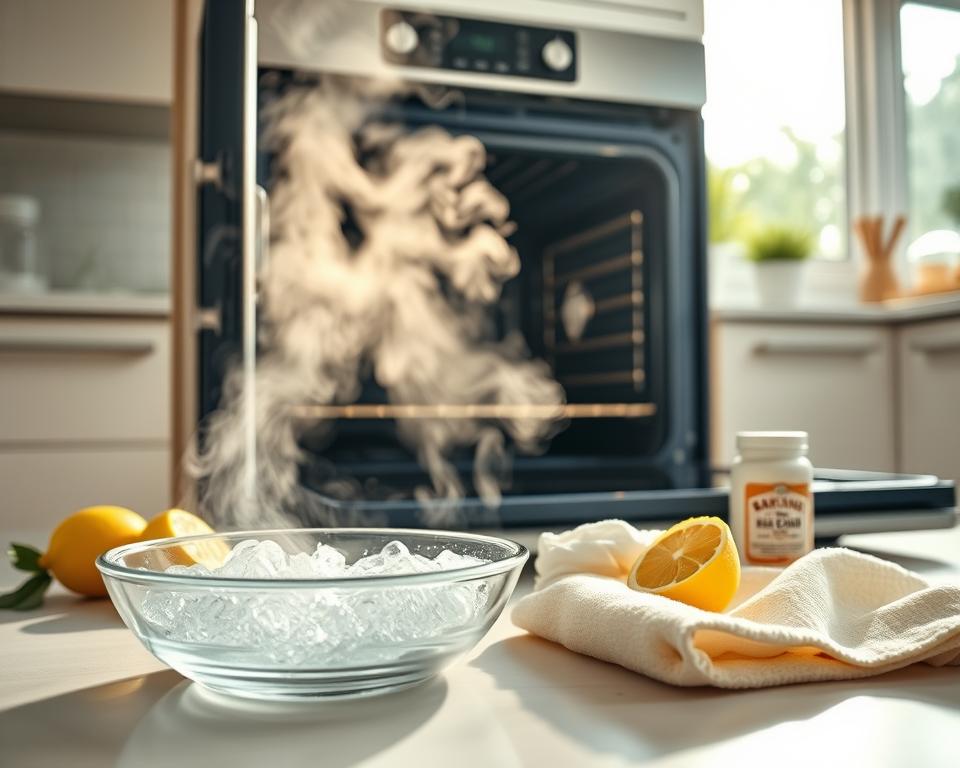
Steam cleaning your oven is eco-friendly and very effective. It removes grime and food residue easily. This method uses steam to loosen tough stains, making cleaning simpler and less hard work.
How Steam Works for Deep Cleaning
Steam cleaning uses steam to get into and loosen grime and food stuck on the oven surfaces. When steam hits the tough stains, it softens them. This makes it easy to wipe them away without harsh chemicals.
To steam clean, you heat water to make steam. Then, you direct the steam into the oven. The steam fills the oven, condenses on surfaces, and loosens grime. This method is effective and gentle on the oven surfaces.
Equipment Needed for Effective Steam Cleaning
To steam clean your oven well, you need some equipment. First, you need a steam cleaner or a device that makes steam, like a steam generator or handheld steamer. You also need a microfiber cloth or sponge to wipe away the loosened grime.
| Equipment | Description | Usefulness |
|---|---|---|
| Steam Cleaner | A device that produces steam for cleaning purposes. | High |
| Microfiber Cloth | A cloth used for wiping surfaces clean. | High |
| Handheld Steamer | A portable device for directing steam. | Medium |
For the best results, make sure your steam cleaner is set right for your oven’s size and grime level. Always check the manufacturer’s instructions for your oven and steam cleaner for safety and compatibility.
Adding steam cleaning to your oven care routine keeps your oven in great shape. It also makes your kitchen healthier by avoiding harsh chemicals. Regular steam cleaning prevents grime buildup, making future cleanings easier.
Tackling Tough Stains and Odors
Getting rid of tough stains and odors in your oven is simpler than you might think. The right natural cleaning solutions make it easy. Identifying the stain or odor is key to removing them effectively.
Identifying Common Oven Stains
Oven stains vary in type and severity. Food splatters and grime buildup are common problems. These can come from spills during cooking or not cleaning well enough. Knowing where the stain comes from is important.
- Grease stains: These are usually from oil splatters during cooking.
- Food residue: Food bits can bake onto surfaces, making tough stains.
- Carbonized food: Overheated food can stick to oven walls.
Natural Remedies for Specific Odor Issues
Odors in the oven can be as tough as stains. Natural remedies can get rid of these smells without harsh chemicals. Here are some good methods:
- Baking soda: An open box in the oven absorbs odors well.
- Lemon juice: Wipe surfaces with lemon juice for a fresh smell.
- Essential oils: Oils like lavender and tea tree have natural deodorizing properties.
Using these natural remedies can effectively remove tough stains and odors. Your oven will be clean and fresh.
The Power of Essential Oils in Cleaning
Essential oils are a natural and fragrant way to clean your oven. They come from plants and have been used for centuries. Using essential oils in your oven cleaning routine can remove grime and food residue. It also leaves your oven smelling fresh and clean.
Best Essential Oils for Oven Cleaning
Some essential oils work better than others for oven cleaning. For example, lemon essential oil is great at cutting through grease. Tea tree oil has antimicrobial properties that kill bacteria and odors.
- Lemon Essential Oil: Effective at cutting through grease and grime.
- Tea Tree Oil: Known for its antimicrobial properties.
- Eucalyptus Oil: Helps in removing tough stains and odors.
| Essential Oil | Properties | Benefits in Oven Cleaning |
|---|---|---|
| Lemon | Degreasing | Cuts through grease and grime |
| Tea Tree | Antimicrobial | Eliminates bacteria and odors |
| Eucalyptus | Deodorizing | Removes tough stains and odors |
Creating Your Own Essential Oil Cleaner
Making your own essential oil cleaner is easy and lets you choose the scent and strength. You’ll need water, white vinegar, and your favorite essential oil.
- Mix 1 cup of water with 1/2 cup of white vinegar in a spray bottle.
- Add 10-15 drops of your preferred essential oil.
- Shake the bottle well to combine the ingredients.
- Spray the solution onto the interior of your oven and wipe clean with a damp cloth.
Using essential oils for oven cleaning makes your oven clean and fresh. It also helps make your cleaning routine healthier and more eco-friendly.
Cleaning Self-Cleaning Ovens Naturally
Keeping your self-cleaning oven clean doesn’t need harsh chemicals. Natural methods work well too. The self-cleaning cycle burns off grime, but you can also clean up after it.
Tips for a Sparkling Self-Cleaning Oven
To avoid the self-cleaning cycle, regular care is essential. Here are some tips to keep your oven shining:
- Wipe down the oven surfaces with a damp cloth after each use to prevent grime buildup.
- Use a natural oven cleaner, like a mixture of baking soda and water, to tackle any tough stains before they become problematic.
- Ensure good ventilation in your kitchen to prevent the accumulation of fumes and moisture.
By following these simple steps, you can reduce the need for the self-cleaning cycle. This makes the process more efficient and easier on your oven.
Natural Solutions for Post-Cycling Cleanup
After the self-cleaning cycle, your oven will be hot and covered in ash. Here’s how to clean it safely:
- Allow the oven to cool completely before attempting to clean it.
- Use a damp cloth to wipe away the ash residue. For tougher spots, a mixture of water and white vinegar can be effective.
- For any remaining grime, apply a paste made from baking soda and water, let it sit overnight, and wipe clean the next day.
Benefits of Natural Cleaning include a cleaner oven and less chemical exposure. As “The Cleaner Way” suggests, natural cleaning makes your home healthier.
“The way we clean our homes reflects our values and affects our health and the environment. Choosing natural cleaning methods is a step towards a more sustainable lifestyle.”
Here’s a comparison of cleaning methods:
| Cleaning Method | Effectiveness | Environmental Impact |
|---|---|---|
| Chemical Oven Cleaner | High | High |
| Baking Soda and Vinegar | Medium to High | Low |
| Self-Cleaning Cycle | High | Medium |
Using natural cleaning methods keeps your oven clean and healthy, even with a self-cleaning model. Regular care and the right techniques make a big difference.
Safety Precautions When Cleaning
When cleaning your oven, it’s important to follow safety guidelines. This keeps you and your family safe from harmful chemicals. Non-toxic cleaning methods are safer but need careful handling.
Protecting Yourself and Your Family
Wear gloves and safety goggles to protect your skin and eyes. Make sure kids and pets are out of the way to avoid accidents.
Safe cleaning practices mean using cleaning products as directed. Don’t mix different cleaners, as this can cause harmful reactions.
Properly Ventilating While Cleaning
Good ventilation is critical when cleaning your oven. Open windows and doors to let air flow. A fan can help move the air around.
Ventilation tips include keeping the oven door open. This helps clear out fumes and prevents them from building up inside.
By following these safety tips, you can clean your oven safely and effectively. Always put safety first, as oven cleaning can be hazardous.
Regular Maintenance to Keep Your Oven Clean
Keeping your oven clean requires consistent effort. I’ll show you easy maintenance tips. Regular care not only keeps your oven clean but also makes it work better and last longer.
Simple Daily Cleaning Habits
Creating simple daily habits can make oven cleaning easier. After each use, quickly wipe down the oven surfaces with a damp cloth. This stops food residue from getting hard and makes cleaning simpler.
Also, think about using a non-toxic, eco-friendly cleaning solution. These cleaners are gentle on surfaces and the planet, fitting well with eco-friendly oven cleaning.
Monthly Deep Cleaning Tips
Daily habits are important, but a deeper clean is needed to get rid of grime and food particles that build up. For a monthly deep clean, try a mix of baking soda and water or a natural cleaner.
| Cleaning Method | Frequency | Benefits |
|---|---|---|
| Baking Soda and Water Paste | Monthly | Natural, non-toxic, effective for tough grime |
| Eco-Friendly Cleaning Products | As needed | Gentle on surfaces, environmentally friendly |
| Daily Wipe Down | Daily | Prevents grime buildup, easy maintenance |
By following these regular maintenance tips, you’ll find oven cleaning is easier. Remember, being consistent is the secret to a clean and efficient oven.
Encouraging Eco-Friendly Cleaning Practices
As we finish our guide to a cleaner oven, let’s think about the bigger picture. Using eco-friendly cleaning methods makes our kitchens healthier. It also helps our planet.
Environmental Impact of Chemical Cleaners
Chemical cleaners can harm our environment. They pollute water and hurt animals. Making these cleaners also adds to waste and pollution. Choosing green methods helps our planet.
Sustainable Tips for Kitchen Cleaning
To keep cleaning green, use reusable cloths and make your own cleaners. Choose products with less packaging. Simple steps like using lemon and baking soda can help a lot. Eco-friendly cleaning is good for our planet’s future.