

Did you know many wood polishes have harsh chemicals? These can harm your health and the environment. But, you can make a simple, effective polish at home with just olive oil and lemon.
Making a homemade wood polish is easy and environmentally friendly and non-toxic. It avoids the chemicals in commercial products. This makes your furniture safe for your family and the planet.
In this article, I’ll show you how to make and use this polish. It will help keep your furniture looking new.
Key Takeaways
- Create a non-toxic wood polish at home.
- Use olive oil and lemon for an effective and eco-friendly solution.
- Avoid harsh chemicals found in commercial wood polishes.
- Simple to make and easy to apply.
- Safe for your family and the environment.
Introduction to Natural Wood Polish
I started looking for healthier home options and found olive oil and lemon wood polish. Natural wood polish is safer and keeps wooden furniture looking great.
Benefits of Using Natural Ingredients
Using natural wood polish has many benefits. Firstly, it’s good for the environment because it doesn’t use harsh chemicals. Secondly, it’s safer for you and your family by avoiding toxic substances. Plus, natural ingredients can work as well as, or even better than, chemical ones.
The main points of natural wood polish benefits are:
- Eco-friendly and sustainable
- Healthier alternative to chemical-based polishes
- Effective in maintaining and improving wood furniture
Why Olive Oil and Lemon Work Well Together
Olive oil and lemon make a great wood polish combo. Olive oil keeps the wood moist and prevents it from drying out. Lemon adds a fresh scent and polish, making the wood shiny. They work together to protect and care for wood in an eco-friendly way.
The magic of olive oil and lemon comes from their unique qualities:
- Olive oil nourishes and protects the wood
- Lemon juice cleans and brightens the wood surface
Homemade Polish Recipe: Ingredients Needed
To make a natural wood polish, you’ll need just a few ingredients. Mainly, you’ll need olive oil and lemon juice. This simple recipe is not only cost-effective but also ensures you’re using organic ingredients on your wood surfaces.
Essential Ingredients for Your Polish
The core ingredients for this homemade polish are olive oil and lemon juice. Olive oil moisturizes the wood, preventing it from drying out. Lemon juice adds a natural shine and a pleasant scent.
- Olive Oil: Acts as a moisturizer for the wood, preventing it from drying out.
- Lemon Juice: Provides a natural antimicrobial effect and leaves a fresh, citrusy scent.
For a basic recipe, mix 1/2 cup of olive oil with 1/4 cup of freshly squeezed lemon juice. This mixture is easy to prepare and effective for most wood surfaces.
Optional Additives for Enhanced Shine
To enhance the shine and fragrance of your polish, you can add a few optional ingredients. Beeswax is a popular choice as it helps lock in the moisture and adds a protective layer to the wood. Essential oils can also be added for a pleasant fragrance.
- Beeswax: Adds a protective layer and enhances the shine. For more information on using beeswax and other natural ingredients for wood care, you can visit this helpful guide.
- Essential Oils: Provides a pleasant fragrance. Choose oils like lavender or tea tree oil for their calming and antimicrobial properties.
When adding beeswax, melt it gently and mix it with the olive oil and lemon juice mixture. For essential oils, just a few drops are sufficient to give your polish a pleasant scent.
By combining these ingredients, you can create a homemade wood polish that is not only effective but also eco-friendly. This polish is perfect for those looking to avoid commercial products that may contain harsh chemicals.
Step-by-Step Guide to Making Wood Polish
With just olive oil and lemon, you can make a homemade wood polish that works well and is good for the planet. Making your own wood polish is easy. It helps you avoid harsh chemicals in store-bought products. Plus, you can make it just right for your needs.
For more detailed guides and variations, you can visit this DIY natural wood furniture polish for more insights.
Preparation of the Olive Oil and Lemon Mixture
To begin, mix olive oil and lemon juice in a certain ratio. A good mix is 2 parts olive oil to 1 part lemon juice. For example, mix 2 tablespoons of olive oil with 1 tablespoon of fresh lemon juice.
- Combine the olive oil and lemon juice in a small bowl.
- Stir the mixture well until it’s fully incorporated.
- If desired, add a few drops of your favorite essential oil for a nice scent.
As Woodcraft Magazine says, “The key to a good wood polish is using high-quality ingredients that nourish the wood without leaving a residue.”
Proper Storage Techniques
After making your non-toxic wood polish, it’s important to store it right to keep it working well.
| Storage Tips | Benefits |
|---|---|
| Store in a cool, dark place | Prevents the mixture from degrading due to light exposure |
| Use a dark glass bottle | Protects the mixture from light and preserves its potency |
| Keep the bottle tightly sealed | Prevents oxidation and maintains the freshness of the polish |
By following these steps and storage tips, you can make and keep an environmentally friendly wood polish that makes your wood furniture look great.
Making your own wood polish is easy and rewarding. You save money, reduce waste, and use natural, non-toxic ingredients.
“Using natural ingredients for wood care is not only better for the environment, but it also provides a healthier alternative for your home.”
How to Use Olive Oil and Lemon Polish on Wood
To get the most out of your olive oil and lemon wood polish, it’s key to apply it right. The way you apply it can greatly affect how your wood furniture looks and lasts.
Tips for Applying the Polish Effectively
When you apply the polish, use a soft, lint-free cloth. This spreads the polish evenly and stops too much oil from staying on top.
- Start with a small amount of polish on the cloth to avoid too much oil.
- Use circular motions to rub the polish into the wood, covering the whole area.
- For detailed or carved parts, a soft-bristled brush works best to get into the nooks.
Woodcrafting Magazine advises, “The right tools and methods are key for a pro finish with wood polish.” This shows how important it is to apply it carefully.
Recommended Cleaning Tools
The right tools can make your olive oil and lemon polish work better. Here are some tools you should use:
| Tool | Description | Benefit |
|---|---|---|
| Soft, lint-free cloth | Gentle on wood surfaces | Prevents scratches and lint residue |
| Soft-bristled brush | Ideal for detailed or carved areas | Allows for precise application |
| Microfiber cloth | Great for buffing and polishing | Leaves a smooth, even finish |
Using the right tools and techniques together will help you get a beautiful, lasting finish on your wood furniture.
Precautions When Using Natural Polish
When using a natural wood polish made from olive oil and lemon, it’s important to be careful. This DIY wood polish is safe and good for the planet. But, it’s key to use it wisely.
It’s possible that the polish might not work well with all types of wood or finishes. So, taking some precautions is a good idea to avoid problems.
Testing on a Small Area First
Before using the polish on your whole surface, test it on a small, hidden area first. This is important to make sure the polish doesn’t change the color or harm the wood. Wait a few hours to see how the wood reacts before you apply it everywhere.
Avoiding Damage to Delicate Surfaces
Some wood surfaces are more delicate than others. Using a polish on them needs extra care. For example, if you have antique furniture or wood with a special finish, be careful with this non-toxic wood polish. Always check the specific needs of your wood or ask a professional if you’re not sure.
By following these precautions, you can safely use your environmentally friendly wood polish. You’ll be taking care of your wood and the planet at the same time.
Benefits of Using Olive Oil and Lemon for Wood Care
Using olive oil and lemon together is great for your wood furniture. This mix not only makes your wood look better but also protects it for a long time.
Deep Conditioning Properties of Olive Oil
Olive oil is known for its deep conditioning effects. It penetrates deep into the wood, feeding it and keeping it from drying out. This makes the wood smoother and less likely to crack.
- Moisturizes the wood, reducing the risk of cracks and splits
- Enhances the natural grain and texture of the wood
- Provides a protective barrier against spills and scratches
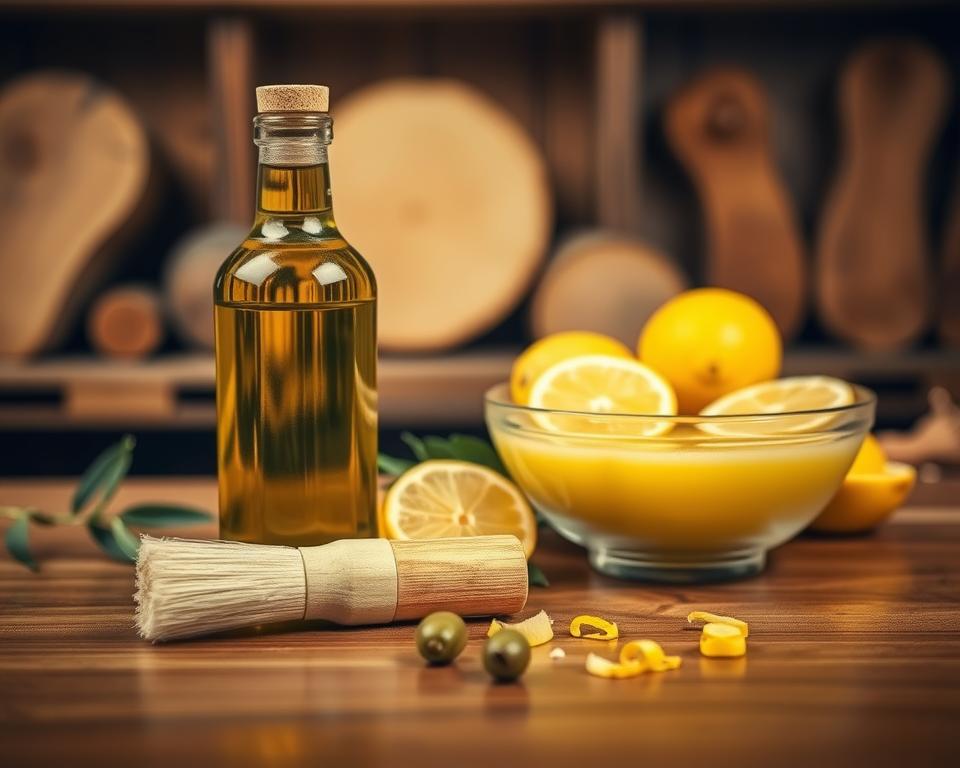
Natural Antimicrobial Properties of Lemon
Lemon is a natural fighter against bacteria and other harmful germs. The acidity in lemon keeps wood surfaces clean and germ-free. This keeps your wood looking and feeling fresh.
- Helps prevent the growth of bacteria and fungi on wood surfaces
- Leaves a fresh, clean scent on your wood furniture
- Complements the conditioning effects of olive oil for overall wood health
By mixing olive oil and lemon, you get a strong wood care solution. It makes your furniture look good and last longer. This natural method is good for the environment and works well.
Comparing Homemade Polish to Commercial Products
Making your own wood polish can change the game. But how does it compare to store-bought options? It’s key to look at the pros of DIY wood polish and the ease of commercial products.
Cost is a big factor when picking between homemade and store-bought polish. Let’s dive into the money side of things.
Cost-Effectiveness of DIY Wood Polish
Homemade wood polish is often cheaper than buying it. You likely have olive oil and lemon at home. This means you don’t need to buy extra stuff. Using homemade wood polish helps keep your wood looking good without spending a lot.
Let’s look at the costs. A bottle of commercial polish can cost $10 to $20. But, making your own polish can cost just $2 to $3. This makes homemade polish a better deal over time.
Environmental Benefits of Natural Polishes
Environmentally friendly wood polish made at home has many green perks. Store-bought polishes often have harsh chemicals and lots of packaging. By making your own, you avoid these and cut down on waste.
Also, homemade polish lets you pick the ingredients. You can choose natural, safe stuff that’s better for the planet. This choice is good for the Earth and keeps your home healthier.
In short, while store-bought polishes have their uses, making your own has clear advantages. From saving money to helping the environment, homemade wood polish is a great choice.
Frequently Asked Questions (FAQs)
Many people wonder about using olive oil and lemon as a wood polish. They ask how often to apply it and if it’s safe for all wood surfaces. Here, I’ll answer some common questions to help you use this natural polish well.
How Often Should I Use This Natural Polish?
How often you use olive oil and lemon polish depends on your wood’s condition and how much it’s used. For most furniture, apply it every 2-3 months. But, if your furniture is in a busy area, like a kitchen table, you might need to do it more often.
This polish not only makes your wood look good but also protects it. So, using it often can keep your wood healthy and looking great.
Can I Use This Polish on All Wood Types?
Olive oil and lemon polish is usually safe for most wood types. But, it’s smart to test it on a small, hidden area first. This is key for delicate or exotic woods that might react differently.
If your wood has a wax or shellac finish, be extra careful or look for another polish. But, for woods with an oil or polyurethane finish, this polish is usually safe and good.
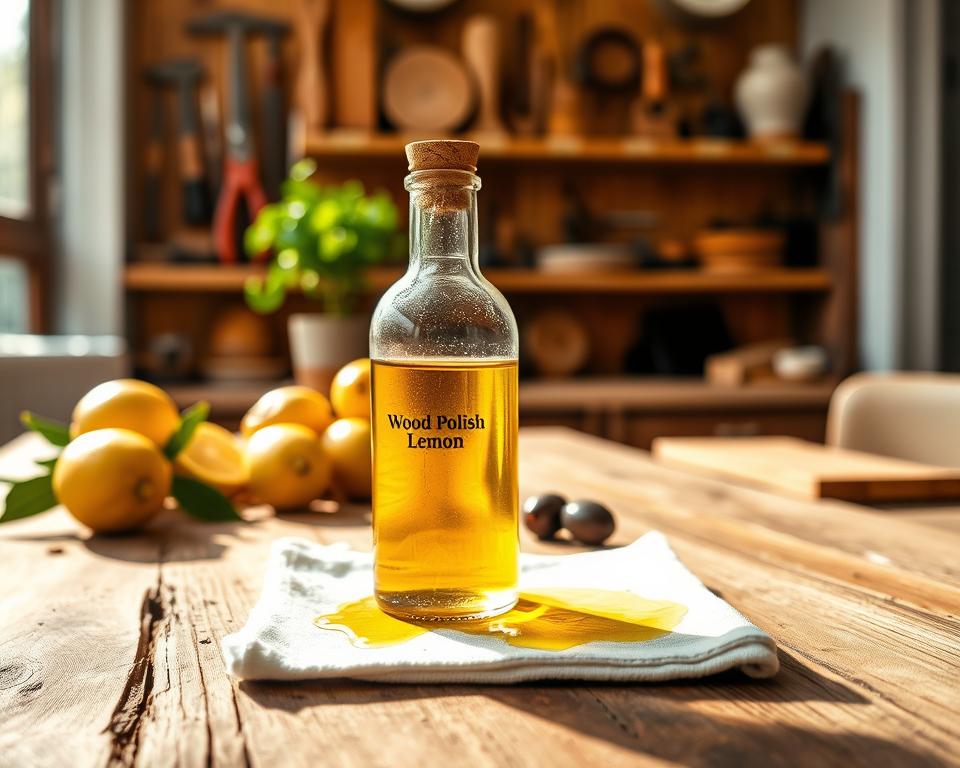
| Wood Type | Suitability | Precautions |
|---|---|---|
| Oak | Yes | None |
| Pine | Yes | Test on a small area |
| Teak | Yes | Apply sparingly |
Conclusion: The Value of Natural Wood Polish
Using a natural wood polish made with olive oil and lemon is easy and effective. It not only makes your furniture look better but also helps the planet.
Key Benefits
This polish has deep conditioning and natural antimicrobial properties. It protects your wood and helps the environment.
Try Making Your Own Polish
I suggest you make your own polish with olive oil and lemon. It’s simple and keeps your furniture in great shape. This natural choice is good for the earth.