
I love gardening and always look for new ways to grow herbs. Creating a DIY herb garden from plastic bottles caught my eye. This upcycled herb garden is good for the planet and saves space in small kitchens or on balconies.
Repurposing plastic bottles lets you make a Vertical garden DIY that looks great and works well. In this article, I’ll show you how to make your own DIY vertical herb garden. Soon, you’ll have fresh herbs from your kitchen.
Key Takeaways
- Create a space-saving herb garden using plastic bottles
- Learn how to upcycle plastic bottles into a functional garden
- Discover the benefits of a DIY vertical herb garden
- Get step-by-step instructions for creating your own garden
- Enjoy fresh, homegrown herbs in your kitchen
Why Choose a Vertical Herb Garden?
Choosing a vertical herb garden can change your home and help the planet. Using plastic bottles, you recycle and add greenery to any room.
Benefits of Growing Herbs Vertically
Vertical herb gardens have many perks. They grow more in less space. This setup also improves air flow, cutting down on diseases.
Plus, you can easily pick your herbs. This is great for those with little room to garden.
A key benefit is growing many herbs in a small area. This is perfect for city folks or those with tiny gardens.
Space-Saving Advantages
Vertical herb gardens save space. They work well on balconies, patios, or indoors. This is great for city dwellers or those with small gardens.
Eco-Friendly Gardening Solutions
Vertical herb gardens are eco-friendly. They turn plastic bottles into gardens, reducing waste. This supports green gardening and creative reuse.
It’s a simple yet effective way to help the environment. You get fresh herbs too.
Materials You’ll Need
Before starting your vertical herb garden, collect these key materials. A DIY herb garden needs careful planning and the right tools.
Essential Tools for Your Project
You’ll need basic tools to cut and assemble your garden. These include:
- A sharp utility knife or scissors for cutting the bottles
- A drill with a bit suitable for plastic for making drainage holes
- A marker or pen for marking the bottles
- A measuring tape or ruler for ensuring even spacing
- A hammer or mallet for tapping pieces into place
Types of Plastic Bottles to Use
For an indoor herb garden tutorial, pick the right plastic bottles. Look for:
| Bottle Type | Size | Condition |
|---|---|---|
| 2-liter soda bottles | Large | Clean, dry |
| 1.5-liter water bottles | Medium | No labels or sticky residue |
| 500ml juice bottles | Small | Intact, without cracks |
Gardening expert says, “The right materials are essential for a successful plastic bottle herb garden ideas project.”
Optional Decorative Elements
To enhance your garden’s look, add some decorative touches. These can include:
- Paint or varnish to protect the bottles and add color
- Twine or rope for hanging the bottles
- Decorative stones or pebbles for added texture
- A wooden or metal frame to hold the bottles in place
With these materials, you’re ready to create a stunning and useful DIY herb garden.
Preparing Your Plastic Bottles
Let’s start preparing the plastic bottles for our vertical garden. This step is key for a clean, healthy space for our herbs to grow.
Cleaning and Sanitizing
First, clean and sanitize the bottles. This step removes dirt and bacteria. Soak them in warm water and mild dish soap. Then, scrub with a bottle brush to get rid of dirt.
Rinse well and let them dry. For extra cleaning, use a mix of water and white vinegar.
Key steps for cleaning:
- Soak bottles in warm soapy water
- Scrub with a bottle brush
- Rinse thoroughly
- Sanitize with vinegar solution (optional)
Cutting the Bottles for Planting
After cleaning, cut the bottles in half. This will create a planter for your herbs. Carefully use a sharp knife or scissors to cut. The bottom half will be your planter.
Drilling Holes for Drainage
Drill holes in the bottom of the bottles for drainage. This prevents waterlogged soil. Use a drill or sharp object to make a few holes.
This allows excess water to drain, helping your herbs grow well. For more creative garden ideas, check out this inspiring project on upcycled gardening.
Tips for drilling:
- Use a drill or sharp object to create holes
- Make sure the holes are not too large
- Drill from the inside out to avoid cracking the plastic
Designing Your Vertical Garden
A well-designed vertical herb garden can be a beautiful addition to any home. As you start this sustainable gardening project, think about how to make it both functional and beautiful.
Layout Options for Maximum Sunlight
The layout of your vertical garden is key for your herbs to get enough sunlight. Most herbs need at least 4-6 hours of direct sunlight a day. Think about the garden’s orientation:
- South-facing gardens get the most sunlight all day.
- East- or west-facing gardens have gentle, indirect sunlight. It’s perfect for herbs that like partial shade.
- North-facing gardens are best for herbs that do well in shade or low light.
Creating a Sturdy Support Structure
A strong support structure is vital for your vertical garden’s life. You can use a wooden or metal frame, or even an old pallet. Make sure the structure is:
- Strong enough to hold the weight of the soil, plants, and any extra features like irrigation systems.
- Securely attached to the wall so it doesn’t tip over.
Aesthetic Considerations for Your Garden
The look of your vertical garden can make your home more beautiful. Think about:
- The color scheme: Pick colors that match your home’s interior or exterior.
- Container variety: Use different shapes and sizes of plastic bottles for interest.
- Additional decorations: Add small statues, wind chimes, or other ornaments to make it your own.
By designing your vertical herb garden with care, you can make a space that’s both thriving and lovely. It will bring joy and fresh herbs into your home.
Choosing the Right Herbs
To make your vertical herb garden grow well, pick herbs that fit vertical gardening. Know what each herb needs and how it does in a vertical setup.
Best Herbs for Vertical Gardening
Some herbs are better for vertical gardens than others. This is because of their growth habits and needs. Basil, mint, and cilantro are great picks. They grow easily and do well in a vertical garden.
- Basil: A favorite for vertical gardens, basil is easy to care for and can be picked often.
- Mint: Mint is hardy and grows well in vertical gardens. It needs little care.
- Cilantro: This herb grows fast in cooler weather. It’s good for a vertical garden.
Understanding Growing Conditions
Knowing what each herb needs is key. Most herbs need sunlight, the right amount of water, and soil that drains well. For example, rosemary and thyme like dry conditions. On the other hand, parsley and cilantro prefer more moisture.
| Herb | Sunlight Requirement | Watering Needs |
|---|---|---|
| Basil | Full Sun | Regular |
| Mint | Partial Shade | Moist |
| Cilantro | Partial Shade | Regular |
Tips for Herb Companionship
Choosing the right herbs to grow together can make them taste better and grow stronger. For instance, basil and mint taste better together. But, make sure they need similar things to grow well.
- Grow herbs that need the same amount of sunlight together.
- Don’t mix herbs that need different amounts of water.
- Think about how big each herb will get to make sure they have enough room.
By picking the right herbs and knowing their needs, you can make a lively and varied vertical herb garden. It will give you fresh flavors for your meals.
Planting Your Herbs
Choosing the right herbs for your plastic bottle garden is key. You need to pick the right soil, plant them well, and water them right.
Proper Soil Mixtures
The soil is vital for your herbs’ health. Use a potting mix that drains well to avoid waterlogged soil. Adding organic compost can also help.
A great soil mix should:
- Drain well
- Be airy
- Have lots of organic matter
Planting Techniques for Bottles
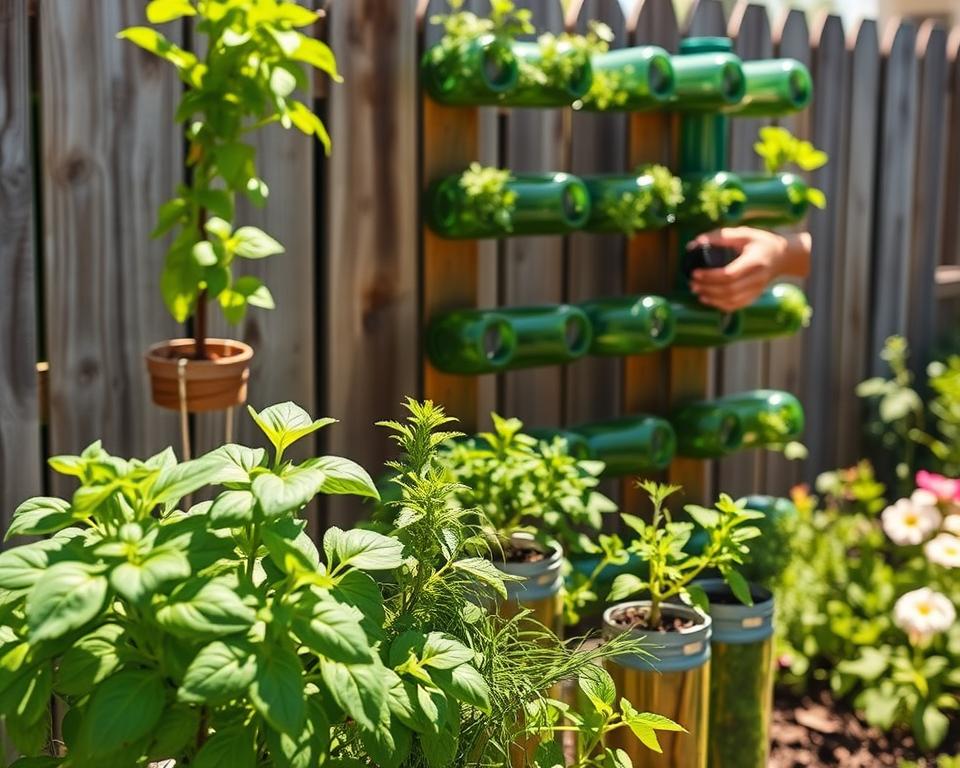
When planting herbs in bottles, gently take them out of their pots. Place them in the bottle, filling with soil around the roots. Make sure the soil is below the bottle’s top for easy watering.
Watering Guidelines for New Plants
New herbs need consistent moisture, mainly in the first weeks. Water them well but avoid too much, which can harm the roots.
| Herb Type | Watering Frequency | Soil Moisture Level |
|---|---|---|
| Basil | Every 2 days | Keep moist |
| Mint | Daily | Keep moist to wet |
| Rosemary | Every 3 days | Allow to dry slightly |
Maintaining Your Vertical Herb Garden
To keep your DIY vertical herb garden thriving, regular maintenance is key. This involves a few simple tasks. These tasks ensure your herbs remain healthy and productive.
Watering Frequency and Techniques
Watering is one of the most critical aspects of maintaining your vertical herb garden. The frequency of watering depends on several factors. These include the type of herbs you’re growing, the climate you’re in, and the time of year.
As a general rule, herbs in vertical gardens tend to dry out faster. So, they may need more frequent watering.
Check the soil moisture by sticking your finger into the soil up to the first knuckle. If the soil feels dry, it’s time to water. Use a gentle watering technique to avoid washing away the soil or disturbing the roots.
Fertilizing Your Herbs
Fertilizing your herbs is essential to promote healthy growth and maximize yields. Use a balanced, water-soluble fertilizer during the growing season. Dilute the fertilizer to half the recommended strength to avoid burning the roots.
- Choose a fertilizer that’s rich in nitrogen to promote leaf growth.
- Fertilize your herbs once a month during the spring and summer.
- Reduce fertilizing during the fall and winter when plant growth slows down.
Recognizing and Managing Pests
Pests can be a problem in any garden, including vertical herb gardens. Regularly inspect your plants for signs of pests such as aphids, spider mites, or mealybugs. Use organic pest control methods whenever possible to minimize harm to beneficial insects.
Some effective methods for managing pests include:
- Spraying plants with a strong jet of water to dislodge pests.
- Using neem oil or insecticidal soap.
- Introducing beneficial insects that prey on pests.
Harvesting Tips and Tricks
Now that your vertical herb garden is thriving, it’s time to enjoy the fruits of your labor. Harvesting herbs from your DIY herb garden is simple. It requires some knowledge and technique to get the most out of your harvest.
Best Times to Harvest Herbs
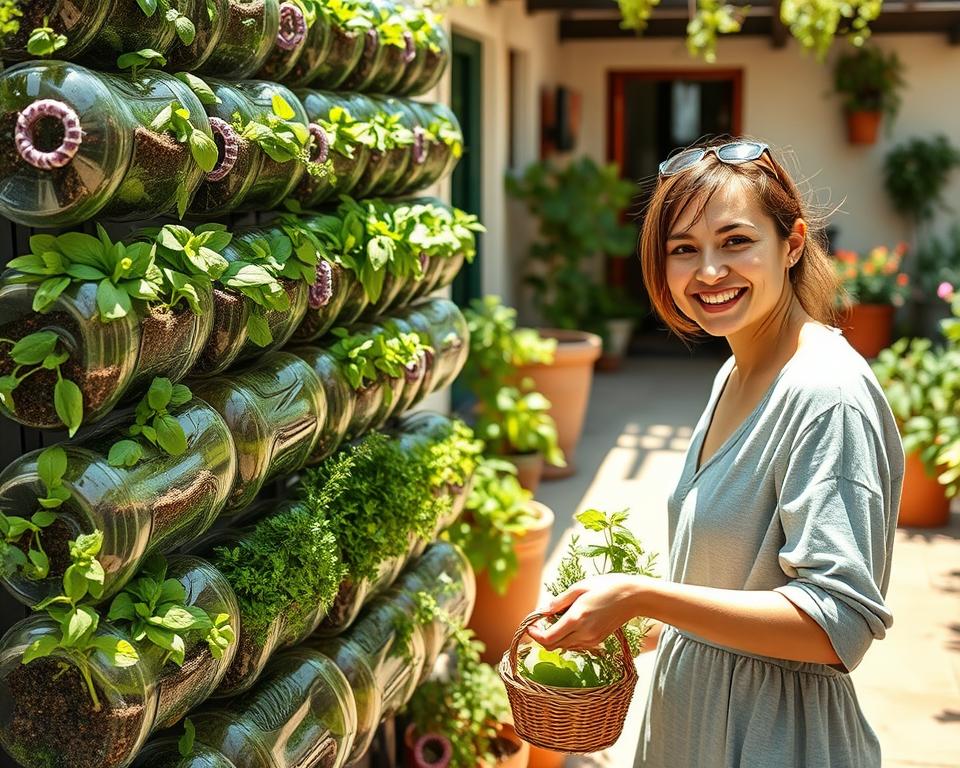
The best time to harvest herbs depends on the type and its growth cycle. It’s best to harvest in the morning, after the dew has dried but before it gets hot. This helps keep the essential oils in the leaves, making your herbs flavorful and aromatic.
Techniques for Maximum Yield
To get the most from your herbs, use the right harvesting techniques. For leafy herbs like basil and mint, pinch or cut off the top leaves. This encourages the plant to grow fuller. For herbs like rosemary and thyme, snip off the tips of the stems to promote new growth.
Using Fresh Herbs in Your Cooking
Fresh herbs from your garden can make any dish better. Add fresh basil to pasta dishes or mix chopped rosemary into roasted vegetables. The possibilities are endless, and your garden will keep inspiring you all season.
By following these tips, you’ll enjoy a bountiful harvest from your DIY herb garden. You’ll enhance your cooking with fresh, flavorful herbs all season long.
Troubleshooting Common Issues
Having a sustainable gardening project is rewarding. You learn to solve challenges as you care for your upcycled herb garden. You might face some common problems that are easy to fix with the right tips.
Identifying Growth Problems
Growth issues in your eco-friendly garden can show up in different ways. You might see yellow leaves, stunted growth, or not enough leaves. Understanding the causes is key.
Nutrient deficiencies can cause yellow leaves. Inadequate sunlight might slow down growth. Regular checks and adjustments can help.
Make sure your herbs get the right sunlight and water. Organic fertilizers can also help with nutrients.
Fixing Drainage Issues
Drainage is vital in any garden, including your DIY vertical herb garden. Bad drainage can cause waterlogged soil and root rot. Check your plastic bottle planters for drainage holes.
Drill more holes if needed. Use a potting mix that drains well. Mixes with perlite or vermiculite work great. Check the soil moisture often.
Dealing with Pests Naturally
Pests can be a big problem in gardens. But, you can fight them without harming the environment. Aphids, spider mites, and slugs are common pests.
Use neem oil or insecticidal soap to control them. These products are safe for plants but effective against pests.
“The best way to garden is to be observant and proactive. Regularly inspecting your plants and taking action early can prevent many common gardening issues.”
Encourage good insects like ladybugs and lacewings. They eat pests. A diverse garden ecosystem helps keep pests in check.
Stay proactive and use eco-friendly methods to keep your vertical herb garden healthy. Regular checks and adjustments will help you solve common problems. Enjoy a rich harvest from your sustainable garden.
Sharing Your Vertical Garden Success
Enjoying your Vertical garden DIY project? Think about sharing your story with others. Writing about your gardening journey helps you track your progress and see the creative ideas you’ve used.
Capturing Your Progress
Take photos of your indoor herb garden from start to finish. Post these on social media or a blog to inspire others to start their own vertical garden.
Connecting with Fellow Gardeners
Join online gardening communities to share tips and learn from others. There are many forums and groups focused on creative garden ideas and vertical gardening.
Inspiring Others
Share your experiences with friends and family to encourage them to start their own vertical gardens. Your indoor herb garden tutorial can help others create their own green spaces.